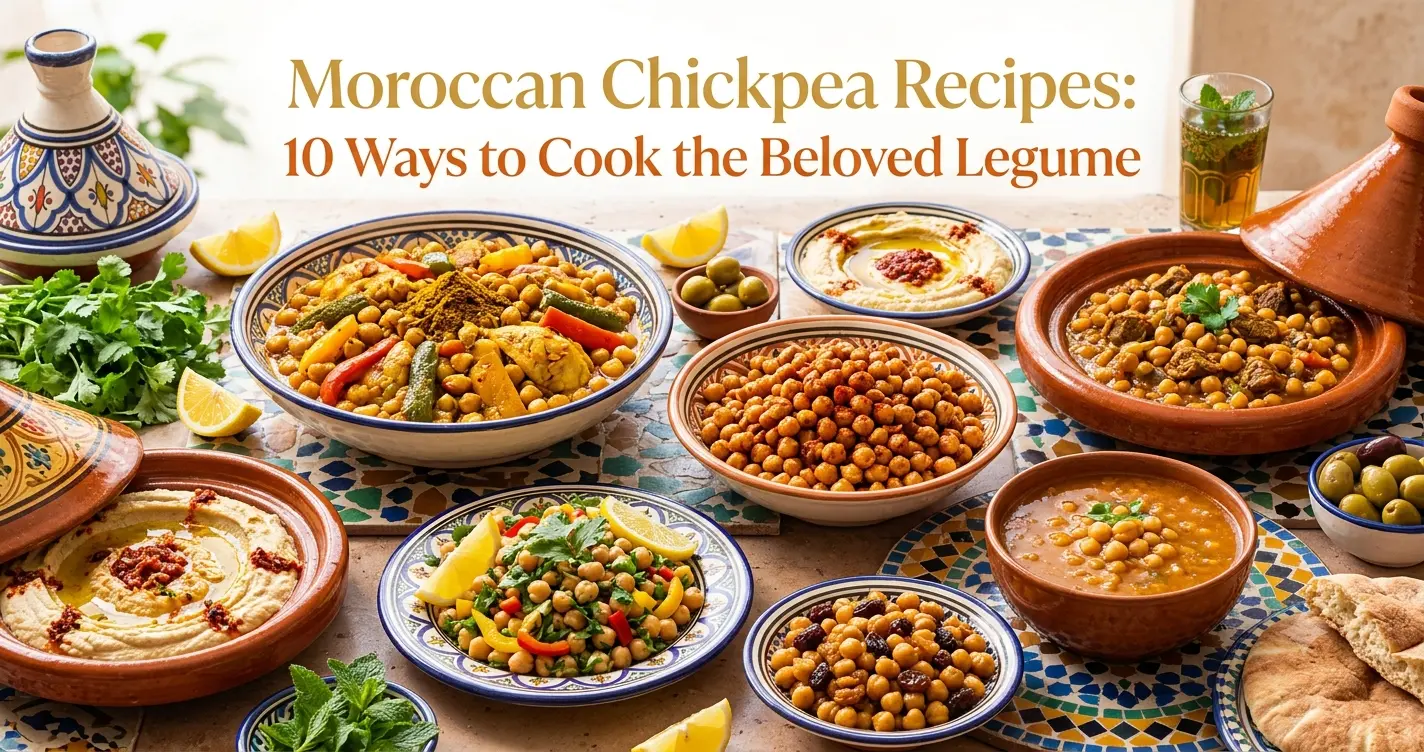
There is a moment — one that every Moroccan child knows intimately — when the smell of chickpeas slowly simmering with cumin, turmeric, and a handful of fresh cilantro begins to drift through the house. It is the smell of a Friday couscous being prepared, of a cold winter evening when a pot of harira is on the stove, of a wedding feast where the tagine has been cooking since dawn. In Morocco, chickpeas are not simply an ingredient. They are a cultural cornerstone, a nutritional anchor, and a culinary love language passed down through generations of grandmothers who measured nothing and got everything exactly right.
If you have ever stood in a Moroccan medina and watched a street vendor ladle steaming bissara into a clay bowl, or sat down at a Marrakech riad table where a lamb and chickpea tagine arrived fragrant with saffron and preserved lemon, you already understand the quiet power of this small, round legume. And if you haven't experienced that yet — well, that's precisely why we're here. At MaCooking, we have spent years documenting, testing, and celebrating the full spectrum of Moroccan cooking, and chickpeas occupy a particularly beloved corner of that world.
In this guide, we're going deep. Not just recipes — though you'll find ten of them, each genuinely worth making — but the history, the technique, the spice logic, and the cultural wisdom that separates a good chickpea dish from an unforgettable one. Whether you're a home cook in London trying to recreate something you tasted in Fez, or a food enthusiast in Toronto curious about North African cuisine, this is your complete, authoritative resource.
The Chickpea in Moroccan History: A Legume That Built Civilizations
Chickpeas — hummus in Arabic, pois chiches in French, Cicer arietinum to botanists — have been cultivated in the Middle East and North Africa for more than 7,500 years. In Morocco, their presence stretches back to the Phoenician traders who settled along the Atlantic coast, and they were firmly embedded in Berber (Amazigh) cuisine long before the Arab conquests of the 7th century brought new spice routes and new culinary vocabularies.
What makes chickpeas so enduringly central to Moroccan cooking is their remarkable versatility under constraint. Morocco has historically been a country where meat was expensive and precious — reserved for celebrations, Eid al-Adha, and honored guests. Chickpeas filled that nutritional and textural gap with extraordinary grace. They absorb spices like few other ingredients can. They hold their shape through long, slow braises. They thicken a broth into something luxurious, and they provide that satisfying density that makes a simple dish feel like a feast.
The Islamic dietary tradition further elevated the chickpea's role. During Ramadan, harira — the celebrated chickpea and lentil soup — became the canonical dish for breaking the fast, a tradition so deeply rooted that even secular Moroccan families who observe little else of religious custom will make harira during Ramadan without question. It's not just food; it's ritual.
"In my grandmother's kitchen in Meknès, a sack of dried chickpeas sat in the corner year-round like a household god. She soaked them every Friday morning, and by afternoon, the house smelled like civilization itself." — Chef Jamal, culinary director at MaCooking
Understanding Moroccan Chickpea Cooking: Essential Foundations
Before we dive into the ten recipes, let's establish the technical and cultural foundations that will make every single one of them better. Moroccan chickpea cooking is not complicated, but it has specific logic, and understanding that logic is the difference between a dish that tastes like Morocco and one that merely contains Moroccan ingredients.
Dried vs. Canned Chickpeas: The Honest Truth
Moroccan home cooks use dried chickpeas. Full stop. That said, we live in the real world, and canned chickpeas are a legitimate shortcut that we at MaCooking fully endorse for weeknight cooking. Here is an honest comparison:
| Factor | Dried Chickpeas | Canned Chickpeas |
|---|---|---|
| Texture | Superior — creamier interior, firmer skin | Good — slightly softer, can become mushy with long cooking |
| Flavor | Richer, nuttier, absorbs spices better over time | Neutral — fine for well-spiced dishes |
| Cooking time | 8–12 hours soaking + 1–2 hours cooking | Ready immediately, add in last 20–30 minutes |
| Cost | Significantly cheaper per serving | More expensive but convenient |
| Best used for | Tagines, harira, couscous, slow braises | Quick salads, pan-fried snacks, hummus |
| Aquafaba (liquid) | Cooking liquid is excellent for thickening | Canned liquid usable but saltier |
Pro tip: If using dried chickpeas, add a pinch of baking soda to the soaking water. It speeds up softening and makes the skins easier to digest. Drain and rinse before cooking — never cook in soaking water.
The Spice Architecture of Moroccan Chickpea Dishes
Moroccan spicing is not about heat — it's about layered warmth, earthiness, and aromatic depth. The spices most commonly paired with chickpeas in Moroccan cooking form a beautiful, coherent system:
- Cumin (kamoun): The most fundamental pairing. Cumin and chickpeas are inseparable in Moroccan cuisine — toasted, ground, and added generously.
- Turmeric (kharkoum): Adds golden color and a subtle bitterness that balances the chickpea's natural sweetness.
- Paprika (felfla hamra): Both sweet and smoked varieties appear — sweet for warmth, smoked for depth.
- Ginger (skinjbir): Ground ginger appears in nearly every savory Moroccan dish, bringing a gentle heat that differs from chili.
- Ras el Hanout: The complex spice blend — which can contain up to 30 ingredients including cardamom, nutmeg, cinnamon, and dried rose petals — is used in more elaborate chickpea dishes.
- Saffron (zaafrane): Reserved for special occasion dishes, particularly with chicken and chickpeas.
- Cinnamon (karfa): Used in sweet-savory combinations, especially in dishes with dried fruit.
- Black pepper and white pepper: Both used — black pepper in heartier preparations, white pepper in more refined dishes.
The Role of Preserved Lemon and Olives
Two ingredients appear with chickpeas more than almost any others in Moroccan cooking: preserved lemon (hamd m'rakad) and olives. Preserved lemon — made by packing lemons in salt and their own juice for weeks — develops a complex, fermented brininess that is completely different from fresh lemon. When added to a chickpea tagine, it creates an electrifying counterpoint to the legume's earthiness. Always rinse preserved lemon before using, and typically only the rind is used, not the pulp.
The 10 Essential Moroccan Chickpea Recipes
Recipe 1: Harira — The Soul of Morocco in a Bowl
If there is one recipe in this entire guide that you make before all others, it must be harira. This tomato, chickpea, and lentil soup is arguably the most important dish in Moroccan cuisine — not because of its complexity (it is surprisingly approachable), but because of its cultural weight. It is the dish that breaks the Ramadan fast every evening across Morocco, served with dates, chebakia (honey-sesame pastries), and hard-boiled eggs.
Harira is one of those dishes that every Moroccan family makes slightly differently, and every family believes their version is the authentic one. What is consistent: the holy trinity of chickpeas, lentils, and tomatoes; the addition of tdouira (a flour-and-water slurry that thickens the soup); and the generous finishing with fresh cilantro and parsley.
Core ingredients for 6 servings:
- 200g dried chickpeas, soaked overnight
- 100g green or brown lentils
- 400g ripe tomatoes (or one 400g tin of crushed tomatoes)
- 200g lamb or beef (optional — omit for vegetarian version)
- 1 large onion, finely grated
- 1 large bunch fresh cilantro, roughly chopped
- 1 large bunch fresh flat-leaf parsley, roughly chopped
- 2 tbsp tomato paste
- 1 tsp ground ginger, 1 tsp turmeric, 1 tsp black pepper, 1 tsp cinnamon
- 3 tbsp olive oil
- 2 tbsp flour + 100ml water (the tdouira)
- Juice of 1 lemon
- Salt to taste
Method: Brown the meat (if using) in olive oil with onion and spices. Add tomatoes, chickpeas, and enough water to cover generously — about 2 liters. Simmer for 45 minutes, then add lentils and cook another 25 minutes. Add tomato paste and half the herbs. Whisk the flour with water until smooth and stream it into the soup while stirring, then simmer 15 more minutes until thickened. Finish with lemon juice and remaining fresh herbs. The soup should be thick enough to coat a spoon but not stodgy — adjust with water as needed.
Recipe 2: Moroccan Chickpea Tagine with Preserved Lemon and Olives
This is the vegetarian chickpea tagine in its purest, most classical form — and it is startlingly good. The combination of chickpeas with preserved lemon, cracked green olives, and a base of sautéed onion and tomato, perfumed with cumin, ginger, and paprika, is one of those flavor profiles that seems almost impossibly well-designed.
You do not need an actual tagine vessel for this recipe, though it helps. A heavy-bottomed Dutch oven or casserole dish works perfectly. What you do need is patience — this dish rewards a long, gentle simmer where the chickpeas absorb every nuance of the surrounding broth.
Key technique: Build your base slowly. Sauté the onion in olive oil over medium-low heat for a full 15 minutes until it is completely soft, golden, and almost jammy. This is the flavor foundation that separates a great tagine from a mediocre one. Add spices to the onion and cook them for two minutes before adding any liquid — this blooms the spices in fat and transforms them.
Recipe 3: Couscous with Seven Vegetables and Chickpeas
The Friday couscous — couscous du vendredi — is one of the most sacred culinary traditions in Moroccan culture. Families gather after Friday prayers for a communal meal that centers on a mountain of steamed couscous topped with vegetables and often chickpeas, all moistened with a rich broth. The seven vegetables are symbolic in number (representing good fortune), though the specific vegetables vary by region and season.
Classic seven vegetables for the Fes-style couscous:
- Carrots — cut in large pieces, never small
- Turnips — their slight bitterness is essential
- Zucchini (courgettes) — added late so they don't dissolve
- Pumpkin or butternut squash — for sweetness and color
- Cabbage — a whole quarter, left in large sections
- Onions — at least two whole ones, slow-cooked until they melt
- Tomatoes — they dissolve into the broth, enriching everything
The chickpeas go in early with the tougher vegetables, and by the time the couscous is served, they've been thoroughly infused with the broth's warmth. A critical detail that many Western recipes get wrong: real Moroccan couscous is steamed over the broth in a couscoussier (a double-boiler with a perforated top), not simply soaked in boiling water. Steaming produces grains that are light, separate, and deeply flavored. If you only have the option to soak your couscous in hot liquid, it will work, but know that you're making a different dish.
Recipe 4: Moroccan Spiced Chickpeas with Eggs (Shakshuka Style)
While shakshuka is more commonly associated with the Middle East and Tunisia, Morocco has its own version of this egg-in-tomato-sauce concept, enriched with chickpeas and spiced with Moroccan flavors. It's a dish that works at any hour — served in Morocco as a substantial breakfast, a light lunch, or a casual dinner.
The Moroccan version typically includes cumin, sweet paprika, a little harissa, preserved lemon rind finely chopped, and fresh cilantro. The chickpeas are added to the tomato sauce and simmered until they've absorbed flavor before the eggs are nestled in and the pan is covered until the whites set. Serve directly from the pan with good crusty bread — khobz, the round Moroccan flatbread, is ideal.
Recipe 5: Rfissa — The Ceremonial Chickpea and Chicken Dish
Rfissa is one of those dishes that most tourists never encounter because it exists almost entirely in the domestic sphere — made for women who have just given birth, for honored family guests, for celebrations that matter. It is a dish of extraordinary depth: slow-cooked chicken and chickpeas on a bed of shredded msemen (a layered Moroccan flatbread) or trid pastry, all drenched in a fenugreek-and-ras-el-hanout-spiced sauce.
The fenugreek (helba) is what makes rfissa unlike anything else in Moroccan cooking. It gives the sauce a distinctive slightly bitter, almost maple-like character that sounds unusual until you taste it, at which point it makes complete sense. Rfissa is traditionally associated with women's health — fenugreek is believed in Moroccan herbal medicine to support lactation and postpartum recovery — but its flavor transcends its medicinal origins entirely.
What makes a great rfissa:
- The chicken must be of excellent quality — free-range if possible
- Chickpeas should be cooked from dried for maximum texture contrast
- The fenugreek seeds should be used whole and toasted briefly before adding
- The bread base (msemen) should be shredded by hand, never cut
- The sauce should be abundant — rfissa should be moist, almost soupy
Recipe 6: Zaalouk-Style Roasted Chickpea and Eggplant Salad
Moroccan cuisine features a category of dishes called khoubizat — small cooked salads served as part of a spread, warm or at room temperature, designed to be eaten with bread and enjoyed communally. The most famous is zaalouk, the smoky eggplant and tomato dip. This recipe takes zaalouk's technique and flavor profile and marries it with crispy roasted chickpeas.
Roast the eggplant directly over a gas flame or under a grill until the skin is completely charred and the interior is collapsed and smoky. Peel, drain excess liquid, and roughly chop. Roast canned chickpeas in olive oil with cumin, paprika, and a pinch of cayenne until they're crispy-edged and fragrant. Combine with the eggplant, garlicky tomato sauce, and a generous squeeze of lemon. This dish travels extremely well to picnics and potlucks and consistently astonishes people who've never tried Moroccan cuisine before.
Recipe 7: Moroccan Hummus with Cumin and Harissa Oil
Let's be honest about something: hummus as we know it in the Western world is largely a Levantine creation — Lebanese, Israeli, Palestinian in its most celebrated forms. But Morocco has its own version of puréed chickpeas with distinct personality, and it deserves recognition on its own terms rather than as a variation of something else.
Moroccan-style chickpea purée is typically less smooth than Lebanese hummus — it has a slightly more rustic texture. It leans on cumin rather than tahini (though some Moroccan versions do include tahini), and it's almost always finished with a drizzle of good olive oil — Morocco produces extraordinary olive oil, particularly from the Meknès region — and a swirl of harissa, the North African chili paste.
The technique that makes Moroccan chickpea purée exceptional: Peel the chickpeas. Yes, individually. It sounds tedious — and it slightly is — but removing the thin skins from cooked chickpeas before blending produces a dramatically silkier, lighter purée. Pinch each chickpea between your fingers and the skin slips right off. For one can of chickpeas, this takes about 5 minutes and makes an enormous difference.
Recipe 8: Lamb and Chickpea Tagine with Ras el Hanout and Apricots
This is celebration food — the kind of tagine that appears at weddings and Eid gatherings and special occasions when you want to show both generosity and culinary sophistication. The combination of lamb, chickpeas, ras el hanout, and dried apricots is one of the definitive expressions of Morocco's sweet-savory cooking philosophy, which has deep roots in the medieval Andalusian culinary tradition brought to Morocco by Muslim and Jewish refugees from Spain in 1492.
The key to this tagine is the quality of your ras el hanout. If you can source a good Moroccan blend — or better yet, make your own — the dish will have a complexity that is simply impossible to achieve with a lesser spice mixture. At MaCooking's complete spice guide, we break down what a proper ras el hanout should contain and how to evaluate commercial blends.
Building blocks for 4 servings:
- 800g bone-in lamb shoulder, cut into large pieces
- 300g dried chickpeas, soaked overnight
- 150g dried apricots
- 2 large onions, grated
- 2 tbsp ras el hanout
- 1 tsp ground ginger, 1 tsp cinnamon, pinch of saffron
- 2 tbsp honey
- 50g toasted almonds for garnish
- Fresh cilantro and sesame seeds to finish
Brown the lamb deeply on all sides — this Maillard reaction is non-negotiable for depth of flavor. Combine everything except the apricots, honey, and almonds in your tagine or Dutch oven, cover with water, and braise for 90 minutes. Add apricots and honey and cook another 30 minutes until the sauce is reduced and glossy. The chickpeas should be completely tender but still holding their shape.
Recipe 9: Bissara — Fava Bean and Chickpea Street Soup
Bissara is the working people's soup of Morocco — sold at dawn by street vendors in the medinas of Fez, Marrakech, and Casablanca to laborers, market traders, and early risers who need something hot, nourishing, and inexpensive before a long day of work. Traditionally made with dried fava beans, the street versions often include chickpeas for additional body and protein.
The soup itself is simple almost to the point of minimalism: split fava beans and/or chickpeas, simmered with garlic until completely soft, then blended into a thick purée and finished with cumin, paprika, and a heroic pour of olive oil. The finishing drizzle of olive oil is not optional — it's structural. It adds richness, carries the spice aromas, and creates the characteristic oily gleam on the surface that tells you the soup was made correctly.
Serve in wide, shallow bowls with crusty bread for dipping. Add more olive oil than you think is necessary. Add more cumin than seems prudent. This is not refined restaurant cooking — it's honest, sustaining food, and it doesn't apologize for being exactly what it is.
Recipe 10: Moroccan Chickpea and Pasta Soup (Loubia-Style)
Lesser-known outside Morocco but extremely beloved within it, this dish marries chickpeas with small pasta shapes — typically orzo or small elbows — in a richly spiced tomato broth. It occupies a space somewhere between a thick soup and a stew, and it's the kind of thing Moroccan mothers make when children come home from school on cold autumn afternoons.
The spice base here is notably different from harira — while it shares cumin and turmeric, this preparation leans more heavily on tomato paste, a little cinnamon, and often a preserved lemon rind finely minced into the base. The pasta is cooked directly in the broth, absorbing all the flavors and releasing starch that further thickens the dish. It must be served immediately — unlike a tagine that improves overnight, this dish waits for no one. Once the pasta overcooks, you have a different (inferior) dish.
Comparing the 10 Recipes: A Practical Guide
Not sure where to start? This comparison table helps you choose based on your time, skill level, and occasion:
| Recipe | Difficulty | Active Time | Total Time | Vegetarian | Best Occasion |
|---|---|---|---|---|---|
| Harira | Easy | 30 min | 90 min | Optional | Winter evenings, Ramadan |
| Chickpea Tagine with Preserved Lemon | Easy-Medium | 25 min | 75 min | Yes | Weeknight dinner, guests |
| Friday Couscous | Advanced | 60 min | 3 hours | Optional | Weekend family meal |
| Chickpeas with Eggs | Easy | 15 min | 30 min | Yes | Brunch, quick dinner |
| Rfissa | Advanced | 45 min | 3.5 hours | No | Special occasion, celebration |
| Roasted Chickpea Zaalouk | Easy | 20 min | 45 min | Yes | Appetizer, mezze spread |
| Moroccan Hummus | Very Easy | 10 min | 15 min | Yes | Appetizer, snacking, parties |
| Lamb and Chickpea Tagine | Medium | 35 min | 2.5 hours | No | Dinner party, Eid, celebrations |
| Bissara | Easy | 15 min | 60 min | Yes | Breakfast, budget meals |
| Chickpea and Pasta Soup | Easy | 20 min | 50 min | Yes | Weeknight comfort food |
Expert Tips for Moroccan Chickpea Cooking
After years of cooking Moroccan food professionally and documenting hundreds of recipes for MaCooking, here are the non-negotiable tips that will elevate your chickpea cooking:
Tip 1: Never Rush the Base
The aromatic base — onion, garlic, tomato, spices cooked in olive oil — is where Moroccan flavor lives. Rushing this step by cooking on high heat produces a dish that tastes flat and raw. Low-and-slow caramelization of onion (15-20 minutes minimum) before anything else is added is the single biggest technique that separates Moroccan restaurant quality from home cooking that disappoints.
Tip 2: Toast Whole Spices When Possible
For dishes where you're using whole cumin seeds, coriander seeds, or fenugreek, a 60-second dry toast in a hot pan before grinding transforms their flavor profile dramatically. The essential oils bloom under heat, and the resulting aroma is incomparably more complex than using pre-ground spices straight from a jar.
Tip 3: Acid Is Your Friend — Use It at the End
Whether it's a squeeze of lemon, a few chopped preserved lemon rinds, or a splash of white wine vinegar, acid added at the very end of cooking brightens every flavor in the dish and makes it taste more alive. Add acid during long cooking and it mellows to nothing. Add it at the end and it acts as a flavor amplifier.
Tip 4: Use Good Olive Oil and Use It Generously
Moroccan cooking is olive oil cooking. This is not a cuisine for reducing fat in the name of health trends. Moroccan olive oil — particularly from the Meknès and Marrakech regions — is fruity, peppery, and assertive in the best possible way. Use it for cooking and finish dishes with an additional drizzle of your best oil. The difference is profound.
Tip 5: Let Chickpea Dishes Rest Before Serving
With the exception of the pasta soup (Recipe 10), every dish on this list benefits from at least 15-20 minutes of resting after cooking. During this time, the chickpeas continue to absorb surrounding flavors, the sauce tightens, and the entire dish finds its equilibrium. Tagines and harira are almost universally better the next day — make them ahead whenever possible.
Tip 6: Respect the Herb Moment
Fresh cilantro and flat-leaf parsley are not optional garnishes in Moroccan cooking — they are structural flavor elements. But they must be added at the right moment. For most dishes, add one portion of herbs during the last 10 minutes of cooking (where they infuse the dish) and a second portion just before serving (where they provide fresh brightness). Using them all at once — either too early or too late — produces a one-dimensional result.
The Nutritional Logic of Moroccan Chickpea Cooking
Beyond cultural significance and flavor excellence, there's a compelling nutritional case for eating chickpeas the Moroccan way. The spice combinations used in Moroccan cooking aren't arbitrary — many have well-documented health properties that have been recognized in Moroccan herbal medicine (tibb beldi) for centuries and are increasingly validated by modern nutritional research.
Consider the flagship combination of chickpeas cooked with cumin, turmeric, ginger, and olive oil:
- Chickpeas provide extraordinary amounts of plant protein (approximately 15g per cooked cup), dietary fiber that feeds beneficial gut bacteria, folate, iron, and manganese.
- Cumin has demonstrated antioxidant properties and has been shown in several studies to support digestive enzyme activity — which matters because chickpeas can be challenging for some digestive systems.
- Turmeric's curcumin content is well-studied for anti-inflammatory effects. Crucially, Moroccan cooking combines turmeric with black pepper, and piperine in black pepper increases curcumin bioavailability by up to 2,000%.
- Ginger supports gastric emptying and has anti-nausea properties — again, relevant when eating legumes.
- Olive oil provides monounsaturated fatty acids and fat-soluble vitamin absorption. Many of the antioxidants in the vegetables and spices require dietary fat to be properly absorbed — another reason the generous use of olive oil in Moroccan cooking is nutritionally sound, not indulgent.
The overall pattern of Moroccan chickpea cuisine aligns well with what nutritional science increasingly identifies as health-supportive eating: high fiber, plant-forward, rich in polyphenols from spices, with quality fat from olive oil and controlled portions of meat used as a flavoring agent rather than the center of the plate.
Regional Variations Across Morocco
Morocco is not a monolith, and chickpea cooking varies significantly by region, reflecting different agricultural traditions, trade histories, and Berber, Arab, and Andalusian influences:
- Fez: The ancient imperial capital produces the most refined chickpea cooking in Morocco — complex layered flavors, refined spicing, and dishes like rfissa that reflect the city's sophisticated culinary heritage. Fez cooking uses more saffron and more ras el hanout than other regions.
- Marrakech: Bolder, more rustic flavors with more chili heat. The street food chickpea dishes of Marrakech — sold in the Djemaa el-Fna square — are deeply spiced and served with dramatic quantity of cumin.
- Casablanca and the Atlantic Coast: More Europeanized palate with lighter preparations, more fish-adjacent chickpea dishes, and influence from French colonial-era cooking techniques.
- The Rif and Atlas Mountains (Berber regions): Simpler, more elemental chickpea cooking. Dried legumes cooked with argan oil, wild herbs, and minimal spice in the oldest culinary tradition in Morocco.
- Essaouira and the South: Sub-Saharan African influences produce chickpea dishes with different spice profiles — more warm spices, more dried fruits, the occasional use of orange flower water in savory contexts.
Frequently Asked Questions About Moroccan Chickpea Cooking
Q1: Can I make Moroccan chickpea tagine in an Instant Pot or pressure cooker?
Absolutely, and it works very well — particularly if you're using dried chickpeas and want to skip the overnight soak. Pressure cook dried, soaked chickpeas with the aromatic base and spices on high pressure for 35-40 minutes, then natural release for 15 minutes. For dishes with delicate additions like preserved lemon or fresh herbs, add those after pressure cooking. The flavor won't be quite as layered as a 90-minute slow braise, but it will be genuinely excellent and dramatically more convenient. Many Moroccan home cooks in cities use pressure cookers — this is not cheating, it's practical modernity.
Q2: I can't find preserved lemons at my local store. What can I substitute?
Preserved lemons are increasingly available at Middle Eastern grocery stores, specialty food shops, and online — and they're worth seeking out because nothing perfectly replicates them. That said, for a workable substitute: combine fresh lemon zest with a small amount of lemon juice, a pinch of salt, and a tiny bit of white wine vinegar. Let this sit for 30 minutes before using. It won't have the fermented depth of true preserved lemon, but it provides brightness and some brininess. Alternatively, make your own preserved lemons — they take about 4 weeks but require almost no active work, and the result is genuine.
Q3: How do I store and reheat leftover Moroccan chickpea dishes?
Most Moroccan chickpea dishes refrigerate beautifully for 3-5 days and many improve significantly by day two as the flavors meld further. Harira thickens considerably overnight due to the starch from the tdouira and lentils — simply add water when reheating and adjust seasoning. Tagines reheat gently on the stovetop over low heat with a splash of water, covered. The chickpea and pasta soup (Recipe 10) is the exception — pasta overcooks quickly, so either cook pasta separately and add per portion, or accept that leftovers will be mushier. All chickpea dishes freeze well for up to 3 months, with the exception of dishes containing delicate fresh herb additions or eggs.
Q4: What breads and side dishes are traditionally served with Moroccan chickpea dishes?
Moroccan cuisine revolves around khobz — the round, slightly dense, wonderfully chewy flatbread that functions as both plate and utensil in traditional eating. For dishes like bissara, harira, and the chickpea and eggplant zaalouk, bread is not optional — it's the vehicle by which the food reaches your mouth. For tagines, Moroccan bread is again traditional, though couscous can serve as the base. Rfissa uses its own bread component (msemen) built into the dish. The couscous dish stands alone — couscous IS the starch component. Small salads (the khoubizat spreads), olives, and preserved lemon rounds often accompany chickpea main dishes as supporting elements.
Q5: Is Moroccan chickpea cooking suitable for special dietary requirements?
Moroccan chickpea cooking is exceptionally accommodating. The majority of the ten recipes in this guide are naturally vegetarian or easily made so (harira, the vegetable tagine, bissara, zaalouk, hummus, the egg dish, and the pasta soup). Several are naturally vegan. None contain gluten in their base form, though harira traditionally uses a flour slurry that can be replaced with cornstarch or rice flour for a gluten-free version. The dishes are naturally dairy-free. For those with legume sensitivities, cooking chickpeas from dried with the baking soda method and discarding the cooking water significantly reduces the oligosaccharides that cause digestive discomfort. Moroccan cuisine also has a long tradition of nut-free cooking, with almonds used as an optional garnish rather than a structural ingredient.
Conclusion: Chickpeas as a Gateway to Moroccan Culture
We began this journey with the smell of chickpeas in a grandmother's kitchen in Meknès, and that is where the real understanding of Moroccan chickpea cooking lives — not in technique alone, but in the cultural fabric that surrounds it. Every recipe in this guide carries within it a way of eating, of gathering, of measuring generosity through what you put in a pot and how long you're willing to tend it.
The beauty of Moroccan chickpea cooking for Western home cooks is its accessibility. You don't need a tagine. You don't need to source obscure ingredients. Chickpeas, olive oil, cumin, turmeric, ginger, paprika, and a handful of fresh herbs — these things are available in any supermarket in the US, UK, Europe, Canada, and Australia. What you need is patience, a willingness to let flavors develop slowly, and the curiosity to follow the logic of a cuisine that has spent 7,500 years perfecting this particular legume.
Start with harira if you're a beginner — it's forgiving, spectacular, and will immediately demonstrate why Moroccan cooking earns its reputation. Move to the vegetarian chickpea tagine when you want something elegant with minimal effort. Attempt rfissa on a weekend when you have time and someone worth celebrating. Each dish will teach you something about Moroccan flavor logic that transfers to everything else you cook.
For deeper exploration — more recipes, detailed spice guides, video techniques, and the kind of cultural context that makes cooking meaningful rather than merely mechanical — MaCooking is your ongoing resource. We've built the most comprehensive English-language platform for authentic Moroccan cuisine online, created by people who grew up eating this food, cooking it, and caring deeply about sharing it honestly with the world.
Now go soak some chickpeas. Tomorrow is going to smell wonderful.