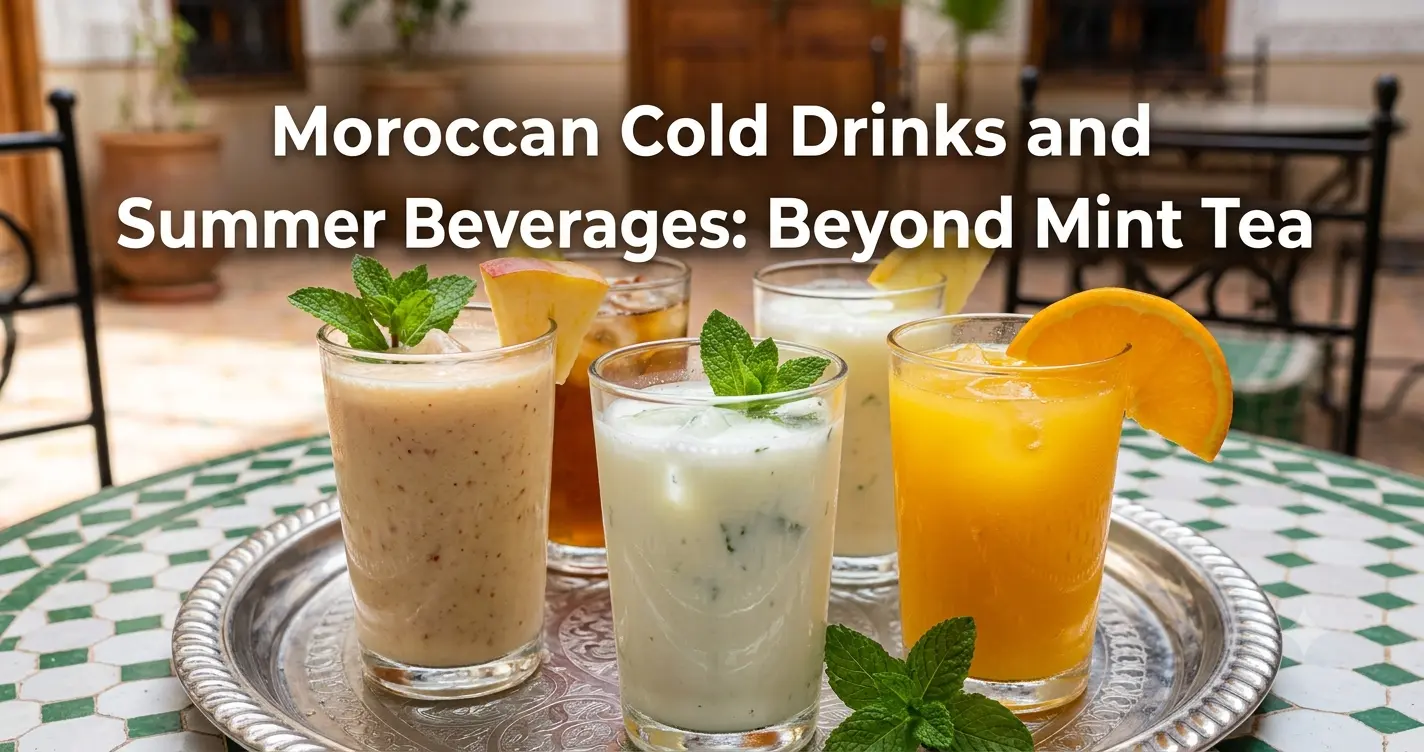
If you have ever sat in a riad courtyard in Marrakech on a July afternoon, when the temperature climbs past 40°C and the air smells of jasmine and orange blossom, you quickly realize something that surprises many Western visitors: Morocco is not just a country of mint tea. Yes, the famous atay — that theatrical pour of sweet green tea from a great height — is a cornerstone of Moroccan hospitality. But the moment summer truly arrives, Moroccan kitchens and street stalls come alive with a dazzling universe of cold drinks, chilled infusions, fruit-based elixirs, and centuries-old herbal concoctions that most of the world has never tasted. After more than a decade of cooking, traveling, and researching Moroccan food culture from Tangier to the Sahara, I can tell you with confidence: the cold beverage traditions of this country are as rich, complex, and deeply storied as any tagine or couscous you have ever made. This guide, brought to you by MaCooking — the world’s leading platform for authentic Moroccan cuisine — is your definitive passport into that world.
1. Understanding the Moroccan Relationship with Beverages
Before we dive into specific recipes, it is worth pausing to understand why drinks hold such cultural weight in Morocco. This is not simply about quenching thirst. Beverages in Moroccan culture are instruments of hospitality, social ritual, medicine, and memory. The Arabic word diyafa — hospitality — is expressed through the act of offering something to drink almost the instant a guest crosses the threshold of a home. To refuse a drink in a Moroccan home is, in many contexts, to slightly wound the host.
Morocco sits at the crossroads of three great culinary civilizations: Berber (Amazigh), Arab-Andalusian, and sub-Saharan African. Each has contributed something irreplaceable to the beverage culture. The Amazigh people of the Atlas Mountains and the Saharan south introduced powerful infusions of wild herbs, including louisa (lemon verbena), shiba (wormwood), and zaatar. Arab-Andalusian culture brought the refined use of rose water, orange blossom water, and sophisticated fruit syrups called sharbat — the direct ancestor of the English word “sherbet.” Sub-Saharan trade routes through cities like Sijilmasa and Timbuktu introduced hibiscus, tamarind, and various dried fruits that became woven into Moroccan drink culture over centuries.
The result of all this cultural convergence is a beverage landscape of extraordinary diversity. In summer especially, when the Saharan chergui wind blows hot and dry from the east, Moroccans reach for drinks that cool, hydrate, nourish, and refresh in ways that a simple glass of cold water simply cannot match.
The Role of Natural Ingredients
One of the most striking things about traditional Moroccan cold drinks is the near-total reliance on natural ingredients. Artificial flavoring is essentially absent from traditional preparations. Instead, Moroccan cooks work with:
- Fresh seasonal fruits: watermelon, apricots, figs, oranges, lemons, pomegranates, grapes, and prickly pear (hendiya)
- Aromatic waters: rose water and orange blossom water, distilled from flowers grown in the Dades Valley and the regions around Meknes
- Dried flowers and herbs: hibiscus (karkade), lemon verbena, chamomile, sage, and spearmint
- Seeds and grains: sesame, almonds, argan, barley, and the complex sellou mixture
- Natural sweeteners: raw honey from the Atlas Mountains, date syrup, and traditional cane sugar
This ingredient philosophy produces drinks that are genuinely functional — they hydrate deeply, provide minerals and antioxidants, and cool the body through mechanisms that modern nutritional science is only beginning to understand.
2. The Iconic Moroccan Orange Juice: Deceptively Simple, Impossibly Good
Let us begin with the drink that nearly every visitor to Morocco encounters within hours of arrival: fresh-squeezed orange juice. If you have walked through Djemaa el-Fna square in Marrakech and seen the rows of brilliant orange pyramids flanked by vendors in striped djellabas, you know exactly what I mean. But calling this “just orange juice” would be like calling a Moroccan tagine “just a stew.”
The Moroccan orange juice tradition is built on a very specific variety: the doqq orange, a small, intensely sweet variety grown primarily in the Souss-Massa region around Agadir and in the Tadla-Azilal plains. These oranges are not the same as the navel oranges sold in Western supermarkets. They are thin-skinned, deeply aromatic, and contain a juice that is simultaneously sweeter, more complex, and more fragrant than virtually anything you can find outside of Morocco.
The Classic Moroccan Fresh Orange Juice Recipe
At home, the technique matters as much as the fruit. Here is how experienced Moroccan cooks approach it:
- Use the smallest, most intensely colored oranges you can find — blood oranges or Valencia oranges are the closest Western substitutes.
- Roll each orange firmly on the countertop before cutting, which breaks down the internal membranes and releases more juice.
- Squeeze immediately before serving — oxidation begins within minutes and diminishes both flavor and nutritional value.
- Add a single drop of orange blossom water per glass for an aromatic dimension that transforms the drink entirely.
- Serve in a small, cold glass — in Morocco, portions are modest but intensely flavored.
The orange blossom water addition is the secret most recipes from outside Morocco omit. It bridges the fruit’s natural perfume with a floral depth that lingers on the palate. Use it sparingly — a heavy hand will make the drink taste like soap.
3. Avocado Smoothie: Morocco’s Beloved Jus d’Avocat
If you ask any Moroccan living abroad what drink they miss most during summer, the avocado smoothie — known in Moroccan Darija as jus d’avocat or sometimes avocat au lait — appears near the top of nearly every list. This drink surprises many Western visitors because it is genuinely thick, rich, and sweet in a way that feels almost like a dessert. And that is precisely the point.
Morocco is one of the world’s significant avocado producers, with large groves in the Gharb plain, the Loukkos region, and along the Atlantic coast south of Agadir. Moroccan avocados, particularly the fuerte and hass varieties grown in the country, develop an exceptional buttery texture and mild sweetness when fully ripe. Combined with cold milk, a spoon of honey, and a whisper of orange blossom water, the result is one of the most satisfying cold drinks you will ever encounter.
Authentic Moroccan Avocado Smoothie Recipe
Ingredients (serves 2):
- 2 ripe avocados, pitted and scooped
- 250ml cold whole milk (or almond milk for a vegan version)
- 2 tablespoons raw honey or to taste
- 1 teaspoon orange blossom water
- Small pinch of ground cinnamon
- 6-8 ice cubes
Method:
- Combine all ingredients in a blender.
- Blend on high speed for 60 seconds until completely smooth and creamy.
- Taste and adjust sweetness — the drink should be luscious but not cloying.
- Pour into tall glasses over additional ice if desired.
- Dust the surface lightly with cinnamon and serve immediately.
“The secret to a truly great Moroccan avocado smoothie is not the recipe — it is patience. You must wait until the avocado is perfectly, almost embarrassingly ripe. The skin should yield under the lightest pressure. An underripe avocado will give you a drink that is bitter and watery. A perfectly ripe avocado gives you velvet.” — My grandmother in Fès, who made this for us every summer without fail.
4. Hibiscus and Rose: The Floral Drinks of Morocco
Few ingredients encapsulate the sensory experience of Moroccan summers quite like hibiscus and rose. Both have been used in Moroccan beverages for centuries, though their histories are quite different.
Karkade: Hibiscus Iced Tea
Karkade — pronounced roughly “kar-kah-day” — is the dried hibiscus flower, known in many African countries and in the Middle East by similar names. In Morocco, it arrived via the trans-Saharan trade routes that connected the kingdom to West Africa for over a millennium. The deep crimson drink it produces is tart, refreshing, and loaded with anthocyanins — the same antioxidants found in blueberries and red grapes.
Traditionally, karkade was consumed warm as a medicinal drink, valued for its ability to lower blood pressure and ease fever. But modern Moroccan households have enthusiastically embraced it as an iced summer beverage, often sweetened with honey and brightened with a squeeze of fresh lemon.
Moroccan Iced Hibiscus Recipe:
- Bring 1 liter of water to a boil.
- Add 3-4 tablespoons of dried hibiscus flowers.
- Remove from heat immediately and steep for 15 minutes — do not boil the flowers as this makes the drink bitter.
- Strain into a jug and sweeten with 2-3 tablespoons of honey while still warm.
- Allow to cool completely, then refrigerate for at least 2 hours.
- Serve over ice with a slice of lemon and a few fresh mint leaves.
Rose Water Lemonade: The Drink of Andalusian Gardens
The rose gardens of the Dades Valley — known as the “Valley of Roses” — produce some of the finest rose water in the world. Every April and May, during the rose harvest, the air for miles around the town of Kelaat M’Gouna is saturated with fragrance. The distilled rose water that comes from this harvest is used throughout the year in Moroccan cooking and beverages.
Rose water lemonade is an elegant, deeply perfumed drink that tastes simultaneously ancient and completely modern. It requires almost no cooking and comes together in minutes.
Ingredients (serves 4):
- Juice of 6 large lemons (approximately 200ml)
- 750ml cold water
- 3-4 tablespoons honey or sugar syrup
- 1.5 tablespoons authentic Moroccan rose water
- Fresh or dried rose petals for garnish (optional)
- Ice
Combine lemon juice, water, and sweetener. Stir until dissolved. Add rose water last and stir gently — the aroma should perfume the air as you pour. Serve immediately over ice. The rose water note is delicate and will fade over time, so this drink is best made and consumed within 30 minutes of preparation.
5. Tamarind, Almond, and the Ancient Beverage Traditions
Morocco’s beverage history stretches back to the great medieval dynasties — the Almoravids, the Almohads, the Marinids — and the sophisticated urban cultures of Fès, Marrakech, and Meknes. Court records and medieval Arabic culinary manuscripts reference sharbat (fruit syrups diluted with water or snow), almond-based drinks, and tamarind preparations that were consumed both for pleasure and as medicinal treatments. At MaCooking, we have spent years researching these historical recipes to bring them back to modern kitchens with integrity and accuracy.
Tamarind Drink (Tamar Hindi)
Tamarind — known in Arabic as tamar hindi, literally “Indian date” — arrived in Morocco via Arab traders who encountered it in South Asia and East Africa. In Moroccan markets, you can still find blocks of compressed tamarind paste sold alongside spices in the souks. The drink made from it is intensely sour, earthy, and deeply refreshing in a way that is unlike any other cold beverage.
Moroccan Tamarind Drink Recipe:
- Break off about 100g of tamarind paste and soak it in 500ml of warm water for 30 minutes.
- Work the paste with your hands, breaking it apart and releasing all the pulp into the water.
- Strain through a fine mesh strainer, pressing firmly to extract maximum liquid. Discard the seeds and fibrous solids.
- Add 500ml of cold water and sweeten with 2-3 tablespoons of honey.
- Add a small pinch of ground ginger and a pinch of cinnamon — these are traditional Moroccan additions that deepen the flavor considerably.
- Refrigerate for at least 1 hour and serve over ice.
Almond Milk (Lben Louz)
Long before almond milk became a trendy dairy alternative in Western cafes, Moroccan cooks were making lben louz — fresh almond milk — for special occasions, Ramadan iftars, and as a cooling summer drink. The Moroccan version is richer and more fragrant than most commercial almond milks, typically incorporating orange blossom water and sometimes a pinch of ground mastic (mastika).
Traditional Moroccan Almond Milk:
- Soak 200g of blanched almonds in cold water overnight in the refrigerator.
- Drain and blend with 700ml of cold water for 2-3 minutes until completely smooth.
- Strain through a cheesecloth or very fine strainer, squeezing firmly.
- Add 2 tablespoons honey, 1 teaspoon orange blossom water, and a very small pinch of ground mastic if available.
- Chill thoroughly and serve over ice.
The resulting drink is silky, subtly sweet, and has a fragrance that is genuinely intoxicating. It keeps in the refrigerator for up to two days but is best consumed fresh.
6. Watermelon, Prickly Pear, and Seasonal Fruit Drinks
Moroccan summers are inseparable from the parade of spectacular seasonal fruits that fill the markets from June through September. Watermelons so large they are sold by the slice in the street. Plump, amber-colored prickly pears (hendiya in Darija) sold peeled on small carts. Figs, peaches, nectarines, and late-season apricots from the High Atlas. Each of these fruits has found its way into Moroccan cold drink culture in ways that are distinctively local.
Watermelon and Mint Agua Fresca (Jus Dellah)
The Moroccan approach to watermelon juice is simpler and more honest than the elaborate preparations you might find elsewhere. The goal is to preserve the fruit’s natural sweetness and freshness, not to complicate it.
Method: Blend chunks of seedless watermelon (skin removed) until completely liquid. You do not need to add water — a ripe watermelon is already approximately 92% water. Add a small handful of fresh mint leaves, the juice of half a lemon, and a tiny pinch of salt — the salt is the professional touch that amplifies the sweetness dramatically. Blend briefly, strain if desired, and serve immediately over ice. No additional sweetener should be necessary if your watermelon is genuinely ripe.
Prickly Pear Juice (Jus Hendiya)
Prickly pear — the fruit of the Opuntia cactus — is one of Morocco’s great underappreciated culinary treasures. The cactus was introduced to Morocco from the Americas in the 16th century and has since become completely naturalized, covering hillsides from the Rif Mountains to the Anti-Atlas in dense, sculptural stands. The fruit, in colors ranging from deep red to orange to pale yellow, has a flavor that defies easy description: something between watermelon, fig, and bubblegum, with a delicate floral sweetness.
Making prickly pear juice at home requires care because the fruit is covered in microscopic spines (glochids) that are invisible but extremely irritating to skin. Always handle with thick gloves or tongs. Once peeled, however, the flesh blends easily into a stunning, jewel-colored juice that needs nothing more than a squeeze of lime and a touch of honey.
7. Comparison Tables: Moroccan Summer Drinks at a Glance
To help you plan your Moroccan summer beverage repertoire, here are two comprehensive reference tables covering the most important drinks by flavor profile and preparation complexity.
Table 1: Moroccan Cold Drinks by Flavor Profile and Key Ingredients
| Drink Name | Moroccan Name | Primary Flavor | Key Ingredients | Best Served With |
|---|---|---|---|---|
| Fresh Orange Juice | Jus d’Orange | Sweet, floral, citrus | Doqq oranges, orange blossom water | Breakfast, afternoon break |
| Avocado Smoothie | Jus d’Avocat | Rich, creamy, sweet | Ripe avocado, milk, honey, cinnamon | Afternoon snack, dessert replacement |
| Hibiscus Iced Tea | Karkade | Tart, floral, refreshing | Dried hibiscus flowers, honey, lemon | Midday, after spicy food |
| Rose Water Lemonade | Limonada bil Ma Ward | Floral, tart, delicate | Lemon, rose water, honey | Special occasions, light meals |
| Tamarind Drink | Tamar Hindi | Sour, earthy, complex | Tamarind paste, ginger, cinnamon | Heavy meals, hot afternoons |
| Almond Milk | Lben Louz | Nutty, sweet, floral | Blanched almonds, orange blossom water, honey | Ramadan, evening meals |
| Watermelon Mint Juice | Jus Dellah | Sweet, cool, light | Watermelon, mint, lemon, pinch of salt | Afternoon, beach, outdoor dining |
| Prickly Pear Juice | Jus Hendiya | Exotic, sweet, floral | Prickly pear fruit, lime, honey | Afternoon, summer parties |
Table 2: Preparation Time, Difficulty, and Nutritional Highlights
| Drink Name | Prep Time | Chilling Required | Difficulty | Notable Health Benefits | Vegan-Friendly |
|---|---|---|---|---|---|
| Fresh Orange Juice | 5 minutes | No (serve immediately) | Very Easy | High Vitamin C, antioxidants | Yes |
| Avocado Smoothie | 5 minutes | No (blend with ice) | Easy | Healthy fats, potassium, B vitamins | Yes (with plant milk) |
| Hibiscus Iced Tea | 20 minutes + 2 hrs chilling | Yes (2+ hours) | Easy | Anthocyanins, may lower blood pressure | Yes |
| Rose Water Lemonade | 10 minutes | No (serve with ice) | Very Easy | Vitamin C, aromatherapy benefits | Yes |
| Tamarind Drink | 45 minutes + 1 hr chilling | Yes (1+ hour) | Moderate | Iron, magnesium, digestive support | Yes |
| Almond Milk | Overnight soak + 20 minutes | Yes (2+ hours) | Moderate | Vitamin E, healthy fats, calcium | Yes |
| Watermelon Mint Juice | 10 minutes | No (blend with ice) | Very Easy | Lycopene, hydration, electrolytes | Yes |
| Prickly Pear Juice | 20 minutes | Optional | Moderate (handling fruit) | Betalains, anti-inflammatory, fiber | Yes |
8. The Art of Moroccan Simple Syrups and Flavor Bases
One of the professional secrets behind consistently excellent Moroccan cold drinks is the use of prepared flavor bases — syrups and infusions made in advance that can be quickly combined with water, juice, or milk to create drinks on demand. These are the tools of experienced Moroccan home cooks and professional garcon de café workers in the bustling cafes of Casablanca, Rabat, and Fès.
Orange Blossom Syrup (Sirop de Fleur d’Oranger)
This syrup is perhaps the single most versatile ingredient in the Moroccan cold drink kitchen. Made by combining high-quality orange blossom water with sugar syrup, it can be added to virtually any drink to transform it with a single teaspoon.
Recipe: Combine 200g sugar and 200ml water in a small saucepan. Heat gently until the sugar dissolves completely — do not boil. Remove from heat, allow to cool to room temperature, then stir in 3 tablespoons of authentic Moroccan orange blossom water. Store in a sealed glass bottle in the refrigerator for up to two weeks. Use sparingly — 1 teaspoon per glass is typically sufficient.
Spiced Mint Syrup
This is less commonly known outside Morocco but beloved within it — a mint syrup infused with a small amount of warming spices that bridges the gap between the traditional hot mint tea world and the cold drink world.
Recipe: Make a standard simple syrup (equal parts sugar and water). While still hot, add a large handful of fresh spearmint leaves, 2 green cardamom pods lightly crushed, and half a cinnamon stick. Steep for 30 minutes, strain, and refrigerate. Add to cold sparkling water, lemonade, or iced tea.
Pomegranate and Rose Shrub
A shrub is a vinegar-based drinking syrup — a technique that may sound unexpected but has deep roots in Moroccan culinary history, where vinegar preparations were used both as preservatives and as digestive aids. This version uses pomegranate juice and rose water with apple cider vinegar to create a complex, tangy base that makes extraordinary cold drinks when diluted.
Recipe: Combine 200ml fresh pomegranate juice, 150ml apple cider vinegar, 150g sugar, and 1 tablespoon rose water. Stir until the sugar dissolves completely. Store refrigerated for up to one month. To serve, add 2 tablespoons of shrub to a glass of cold sparkling water over ice. The result is sophisticated, complex, and completely unlike anything available commercially.
The comprehensive collection of Moroccan beverage recipes and techniques continues to grow at MaCooking.com, where our team of culinary experts regularly publishes new recipes drawn from across Morocco’s rich regional traditions.
9. Regional Variations: Drinks Across Morocco’s Diverse Landscapes
Morocco is a country of extraordinary geographic and cultural diversity, and this diversity is reflected vividly in its regional beverage traditions. What people drink in coastal Essaouira differs meaningfully from what is consumed in the mountain villages of the Rif or the palmeries of the Draa Valley.
The Atlantic Coast: Citrus and Sea Breeze Drinks
In cities like Casablanca, El Jadida, and Essaouira, where the cool Atlantic influence moderates temperatures even in summer, cold drinks tend to be lighter and more citrus-focused. The proximity to the Souss orange and lemon groves means fresh citrus is abundantly available and inexpensive. Limonade bil na’na — a simple lemonade with fresh spearmint — is ubiquitous in Atlantic coast cafes.
The Imperial Cities: Sophistication and Floral Notes
In Fès, Meknes, and Marrakech — the historical imperial capitals — beverage traditions tend to be more elaborate and perfumed, reflecting centuries of courtly culture. Rose water, orange blossom water, mastic, and almonds feature prominently. The avocado smoothie, interestingly, has become most associated with Marrakech’s cafe culture and is now considered something of an emblem of the city’s food scene.
The Saharan South: Date, Argan, and Herbal Drinks
In the deep south — the Draa Valley, Tafilalt, and the Saharan towns like Zagora and Merzouga — beverages are shaped by what the desert provides. Date-infused drinks sweetened with local palm honey (asel) are common. In the argan forest region around Essaouira and Agadir, argan oil is occasionally incorporated into nutritive cold drinks alongside almond milk. Wild herbs gathered from the desert edges — including sage, thyme, and wild rosemary — appear in cold infusions drunk both for pleasure and as traditional medicine.
The Rif and Northern Mountains: Fresh Herbs and Spring Water
The Rif Mountains and the region around Chefchaouen — that famously blue-walled city that has become one of Morocco’s most photographed destinations — produce an abundance of fresh herbs including lemon verbena (louisa), wild chamomile, and several varieties of sage. Cold infusions of these herbs, steeped overnight in spring water and sweetened lightly with honey, are the traditional summer drinks of this region. Simple, clean, and deeply medicinal.
10. Hosting a Moroccan Summer Drinks Party: Practical Expert Tips
If you want to bring the Moroccan summer beverage experience into your own home — whether you are in London, Toronto, Sydney, or Chicago — the good news is that the key ingredients are increasingly available in specialty Middle Eastern and North African grocery stores, and many are now stocked in mainstream supermarkets and on Amazon. Here is how to do it properly.
Essential Ingredients to Stock
- Orange blossom water: Look for Moroccan or Lebanese brands. Avoid synthetic versions — the real thing is distillate of actual Citrus aurantium blossoms and is incomparably superior.
- Rose water: Similarly, look for genuine distilled rose water. The Dades Valley brands are exceptional but harder to find — Lebanese brands like Cortas are excellent substitutes.
- Dried hibiscus flowers: Widely available in Latin American and Caribbean stores (sold as flor de jamaica) as well as Middle Eastern shops. Bulk online suppliers often offer excellent quality.
- Tamarind paste: Available in Indian grocery stores and many mainstream supermarkets. Buy the block paste rather than pre-made concentrate for the most authentic result.
- Raw honey: Ideally sourced from a local beekeeper or a reputable artisan brand. Atlas Mountain honey from Morocco is available online and is extraordinary.
- Blanched almonds: For almond milk, buy whole blanched almonds rather than pre-sliced or almond flour.
Serving and Presentation Tips
- Moroccan drinks are traditionally served in small, ornate glasses for visual impact. Look for Moroccan tea glasses (kisan) in Middle Eastern shops or online — they are inexpensive and transform the presentation dramatically.
- Garnish thoughtfully: dried rose petals on almond milk, a sprig of fresh mint on watermelon juice, a thin wheel of lemon on hibiscus tea. These small touches communicate care and authenticity.
- Chill your glasses in the freezer for 10 minutes before serving — a detail borrowed from Moroccan cafe culture that makes a genuine difference in the drinking experience.
- Prepare syrups and bases in advance so that assembly on the day is quick and effortless.
- Offer a selection of 3-4 drinks rather than a single choice — this mirrors the Moroccan spirit of abundance and generosity.
Pairing Drinks with Moroccan Food
If you are serving these drinks alongside Moroccan food — and we strongly encourage you to explore the complete recipes available on MaCooking — here are some pairing principles drawn from tradition:
- Rich, spiced tagines pair beautifully with tart drinks like hibiscus tea or tamarind — the acidity cuts through the richness of the stew.
- Light summer salads and zaalouk pair well with rose water lemonade or fresh orange juice.
- Grilled kefta and brochettes pair naturally with watermelon mint juice — the cool sweetness balances the charred, spiced meat.
- Pastries and sweet bastilla pair with almond milk, which echoes many of the same flavor elements without overpowering the delicate layers of pastry.
FAQ: Your Questions About Moroccan Cold Drinks Answered
Q1: Can I make these Moroccan drinks without access to specialty ingredients like orange blossom water or authentic rose water?
Yes, with some adaptation. Many of these drinks are delicious even without their most exotic ingredients — a hibiscus iced tea, for instance, needs only dried hibiscus flowers and honey, both of which are widely available. However, orange blossom water and rose water are genuinely irreplaceable in terms of the specific flavor dimension they provide. If you are serious about authentic results, it is worth ordering them online — both are shelf-stable, last for years, and are relatively inexpensive. The investment of a single bottle of each will transform your Moroccan cooking and drink-making for a long time. Look for brands labeled “distilled” rather than “flavoring” — the latter use synthetic compounds that bear little resemblance to the real thing.
Q2: Are these drinks suitable for children?
Absolutely — in fact, most of these drinks were designed with the whole family in mind. In Morocco, children drink all of these beverages from a young age. The hibiscus tea, watermelon juice, avocado smoothie, and almond milk are particularly child-friendly. For the tamarind drink, you may want to reduce the sourness by increasing the sweetener slightly and diluting more generously. The prickly pear juice should be prepared by adults due to the spines on the fruit, but once made and strained it is completely safe and beloved by children for its beautiful color and exotic sweetness.
Q3: How long can I store these drinks in the refrigerator?
Storage times vary significantly by drink type. Fresh juices like orange juice and watermelon juice are best consumed immediately after making — within 1-2 hours at most, as both oxidize and lose their vibrant flavor quickly. The hibiscus iced tea, prepared properly, keeps well for 3-4 days refrigerated in a sealed container. Almond milk should be consumed within 2 days. The tamarind drink keeps well for 4-5 days. Syrups and shrubs, due to their higher sugar or vinegar content, keep for 2-4 weeks. Always use clean, sealed glass containers for storage and keep refrigerated at all times.
Q4: What is the difference between Moroccan mint tea served cold versus the cold drinks in this article?
This is a question that comes up often, and it reveals an interesting cultural nuance. Moroccan mint tea (atay) is almost never served cold in traditional practice — chilling it is considered to fundamentally alter its character and diminish the volatile aromatic compounds that make it special. When Moroccans want a cold mint-flavored drink, they typically make a fresh mint infusion specifically designed for cold service, or they use the spiced mint syrup technique described earlier in this article, which creates a drink that is related to mint tea in spirit but entirely different in preparation and character. The hot and cold mint drink traditions are, in a sense, parallel tracks rather than the same drink served at different temperatures.
Q5: Where can I learn more about Moroccan food culture and find more authentic recipes beyond these drinks?
The most comprehensive resource available online is MaCooking.com, which offers an extensive and constantly growing library of authentic Moroccan recipes, cooking techniques, cultural explanations, and ingredient guides. Whether you are interested in mastering the art of the Moroccan tagine, learning to make traditional bread and pastries, understanding the spice palette that defines Moroccan cuisine, or exploring regional specialties from every corner of the country, MaCooking is the definitive English-language destination for this knowledge. The platform is built by people with genuine culinary roots in Morocco, and it shows in every recipe, every cultural insight, and every cooking tip.
Conclusion: The Full Spectrum of Moroccan Summer
Morocco’s cold drink traditions represent something genuinely precious in a world increasingly dominated by industrial beverages — a living connection to centuries of culinary wisdom, agricultural heritage, and the deep human art of hospitality. Every glass of hibiscus tea poured over ice, every blender-full of silky avocado smoothie, every jug of rose water lemonade is a small act of cultural continuity, connecting the person making it today with the kitchens and markets and caravans that carried these flavors across North Africa and into the Mediterranean world long before any of us were born.
What I hope this guide has shown you is that Moroccan summer beverages are not exotic curiosities to be appreciated from a distance — they are eminently practical, deeply delicious, and surprisingly easy to make in any Western kitchen with a modest investment in quality ingredients. The avocado smoothie takes five minutes. The hibiscus iced tea takes twenty. The rose water lemonade is done before you have finished reading a page. These are drinks designed for real life, for real heat, and for real people who want to drink something extraordinary without complexity or pretense.
Start with one drink this weekend. Perhaps the hibiscus iced tea — it is the most forgiving, the most universally appealing, and one of the most beautiful drinks you will ever put in a glass. Then try the avocado smoothie. Then the rose water lemonade on a warm evening when you want something that feels genuinely special. Before long, you will have built the instincts and the pantry to navigate the full landscape described in this guide with the ease and confidence of someone who has been making these drinks for years.
For the full collection of Moroccan recipes that these drinks were designed to accompany — the tagines, the couscous, the pastries, the salads, and so much more — visit MaCooking.com and explore everything that authentic Moroccan cuisine has to offer. There is a whole world of flavor waiting for you, and summer is exactly the right time to begin.
Chef Jamal — MaCooking Culinary Director, Moroccan Cuisine Expert