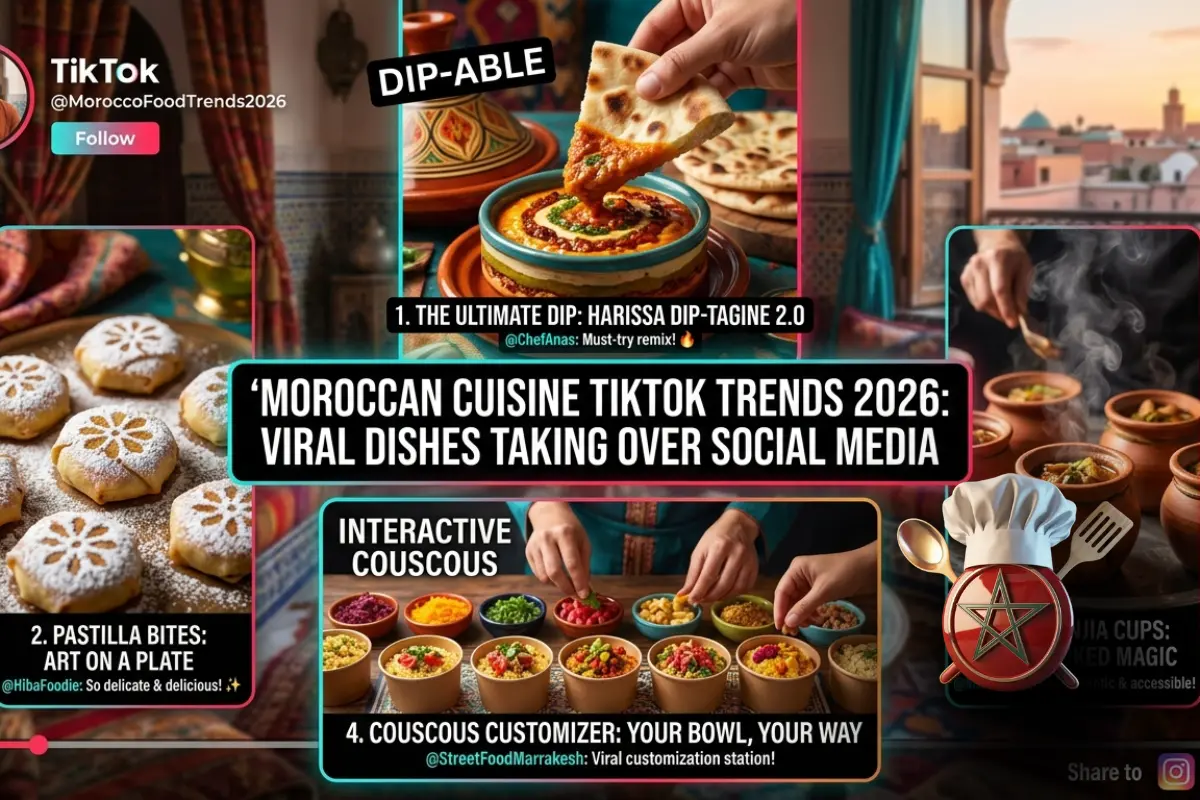
The Social Media Revolution: How Moroccan Cuisine Conquered TikTok in 2026
The year 2026 has witnessed an unprecedented explosion of Moroccan cuisine across social media platforms, with TikTok leading the charge in introducing Western audiences to the rich, aromatic world of North African flavors. From visually stunning tagine presentations to innovative fusion creations that blend traditional Moroccan techniques with modern culinary trends, the platform has become a gateway for food enthusiasts across the United States and Europe to discover authentic Moroccan cooking.
This digital culinary revolution represents more than just fleeting food trends; it's a cultural bridge that connects the ancient spice routes of Morocco with contemporary kitchens in New York, London, Paris, and beyond. Food creators and home cooks alike have embraced the vibrant colors, complex flavor profiles, and Instagram-worthy presentations that characterize Moroccan cuisine, transforming traditional recipes into viral sensations that accumulate millions of views and inspire countless recreations.
The appeal of Moroccan cuisine on social media platforms extends far beyond its photogenic qualities. Western audiences are drawn to the health-conscious aspects of Mediterranean and North African cooking, with its emphasis on fresh vegetables, lean proteins, heart-healthy olive oil, and aromatic spices that offer both flavor and potential health benefits. As consumers become increasingly interested in global cuisines that offer both nutritional value and exciting taste experiences, Moroccan food has positioned itself as the perfect intersection of wellness and indulgence.
The Rise of Aesthetic Tagine Bowls: Instagram-Worthy Presentations
The traditional Moroccan tagine has undergone a stunning transformation in the hands of social media creators, evolving from its humble clay pot origins into elaborate, visually striking presentations that dominate TikTok feeds. The "aesthetic tagine bowl" trend has captured the imagination of Western food enthusiasts, who are drawn to the colorful, artfully arranged ingredients that create natural rainbow patterns in the serving dish.
Content creators have mastered the art of layering ingredients not just for optimal flavor development, but for maximum visual impact. Bright orange carrots, deep purple eggplants, golden preserved lemons, emerald green olives, and ruby-red tomatoes are strategically placed to create stunning color contrasts that translate beautifully to smartphone cameras. The steam rising from these aromatic creations adds an element of drama that performs exceptionally well in short-form video content.
The most viral tagine presentations feature what creators call "ingredient reveals" – videos that begin with a covered tagine pot, building suspense before the dramatic unveiling of the colorful contents within. These videos consistently achieve engagement rates that far exceed typical cooking content, with viewers commenting on both the visual appeal and their desire to recreate these dishes at home.
Popular Tagine Variations Taking TikTok by Storm
- Rainbow Vegetable Tagine: Featuring seven different colored vegetables arranged in perfect symmetry, this plant-based creation appeals to both health-conscious viewers and those seeking visually stunning content
- Chicken and Apricot Sunset Tagine: Named for its golden-orange color palette, this sweet and savory combination has become synonymous with Moroccan cuisine on social media
- Seafood Tagine Towers: Featuring prawns, mussels, and fish arranged in vertical presentations that create dramatic height and visual interest
- Mini Individual Tagines: Perfect for meal prep content and portion control messaging, these single-serving presentations have gained massive popularity among fitness influencers
The success of aesthetic tagine presentations has led to a surge in tagine pot sales across Western markets, with retailers reporting significant increases in demand for both traditional clay vessels and modern adaptations suitable for contemporary kitchens. Many creators have partnered with cookware brands to showcase how traditional cooking methods can be adapted for electric stovetops and modern ovens, making Moroccan cuisine more accessible to international audiences.
Fusion Pastilla: The Sweet-Savory Sensation Going Viral
Perhaps no dish better exemplifies the fusion trend in Moroccan TikTok cuisine than the reimagined pastilla, a traditional flaky pastry that has been transformed into countless viral variations. The classic combination of tender meat, aromatic spices, and delicate phyllo pastry has proven to be an ideal canvas for creative experimentation, resulting in fusion creations that honor traditional techniques while appealing to contemporary palates.
The most successful viral pastilla videos focus on the transformation process – showing viewers how simple ingredients evolve into an elegant, restaurant-quality dish through traditional Moroccan cooking techniques. The contrast between the crispy, golden exterior and the complex, flavorful filling creates natural "crunch moments" that translate exceptionally well to TikTok's audio-focused format.
Western audiences have been particularly drawn to pastilla variations that incorporate familiar ingredients alongside traditional Moroccan elements. Creators have successfully introduced fusion concepts like "Thanksgiving Pastilla" featuring turkey and cranberries, "Mediterranean Pastilla" with feta and sun-dried tomatoes, and "Breakfast Pastilla" combining scrambled eggs with traditional Moroccan spices.
Trending Pastilla Fusion Creations
| Fusion Style | Key Ingredients | Target Audience | Viral Factor |
|---|---|---|---|
| Asian-Moroccan | Duck, five-spice, preserved lemon | Fusion food enthusiasts | Cross-cultural appeal |
| Mexican-Moroccan | Beef, chipotle, ras el hanout | Spice lovers | Bold flavor combinations |
| Italian-Moroccan | Ricotta, basil, harissa | Mediterranean diet followers | Familiar yet exotic |
| American Southern | Fried chicken, honey, za'atar | Comfort food seekers | Unexpected combinations |
The technique-focused nature of pastilla preparation has made it particularly suitable for educational content, with creators breaking down complex folding techniques and timing considerations that help viewers successfully recreate these dishes at home. Many viral pastilla videos include "mistakes to avoid" segments that address common pitfalls, creating content that provides genuine value while entertaining viewers.
Food scientists and culinary historians have noted that the pastilla fusion trend represents a natural evolution of Moroccan cuisine, which has always incorporated influences from various cultures due to Morocco's position as a historical crossroads between Africa, Europe, and the Middle East. This historical context adds depth to fusion creations, providing creators with rich storytelling opportunities that elevate their content beyond simple recipe demonstrations.
Moroccan Street Food Goes Global: Msemen, Baghrir, and Beyond
The democratization of Moroccan street food through social media has been one of 2026's most significant culinary phenomena. Traditional street foods like msemen and baghrir, once known primarily within Moroccan communities, have achieved global recognition thanks to their perfect combination of visual appeal, interactive preparation methods, and accessible ingredients.
Msemen, the flaky, layered flatbread that's traditionally prepared fresh throughout Morocco, has become a particular favorite among TikTok creators due to its dramatic preparation process. The stretching, folding, and cooking techniques create natural content opportunities, with the satisfying sizzle of the bread hitting the hot pan providing perfect audio elements for viral videos.
The versatility of msemen has allowed creators to develop countless variations that appeal to different dietary preferences and cultural tastes. Sweet versions featuring Nutella, honey, or fresh fruit have gained massive popularity among younger audiences, while savory adaptations incorporating cheese, herbs, or protein fillings appeal to those seeking more substantial meal options.
Viral Msemen Variations and Their Appeal
- Nutella Msemen Rolls: The melted chocolate creates dramatic "cheese pulls" that perform exceptionally well in short-form video content
- Egg and Cheese Msemen Pockets: These protein-rich breakfast options appeal to fitness enthusiasts and busy professionals seeking quick, satisfying meals
- Rainbow Vegetable Msemen: Featuring colorful bell peppers and herbs, these creations appeal to health-conscious viewers and create stunning visual content
- Sweet Cinnamon Msemen Spirals: These dessert-style preparations compete directly with popular pastry trends while offering exotic flavor profiles
Baghrir, known as "thousand-hole pancakes" for their distinctive spongy texture, has gained viral status primarily through satisfying "butter soaking" videos. The sight of melted butter and honey disappearing into the pancake's natural holes creates oddly satisfying content that has accumulated millions of views across various creators' accounts.
The success of Moroccan street food on social media has led to increased availability of specialty ingredients in Western markets. Middle Eastern grocery stores report significant increases in semolina flour sales, while mainstream supermarkets have begun stocking ingredients like orange blossom water and rose water to meet growing consumer demand.
The Spice Challenge Phenomenon: Ras El Hanout and Harissa Take Center Stage
The intersection of Moroccan cuisine and TikTok's challenge culture has produced some of the platform's most engaging content, with Moroccan spices taking center stage in various taste tests, cooking challenges, and educational series. The complex spice blends that define Moroccan cooking, particularly ras el hanout and harissa, have become stars in their own right, inspiring dedicated content that educates viewers about proper usage while entertaining them with bold flavor experiences.
Ras el hanout, the "top of the shop" spice blend that can contain anywhere from ten to thirty different spices, has become the subject of numerous viral videos where creators attempt to identify individual components through taste alone. These "spice detective" videos combine education with entertainment, teaching viewers about the complexity of Moroccan flavor profiles while creating engaging, interactive content.
The harissa challenge, where creators test various levels of spiciness while preparing traditional Moroccan dishes, has introduced Western audiences to the nuanced heat of North African cuisine. Unlike simple spice tolerance tests, these videos focus on how harissa's complex flavor profile enhances rather than overpowers traditional dishes, educating viewers about the sophisticated use of heat in Moroccan cooking.
Popular Spice-Focused Content Formats
| Content Type | Format | Educational Value | Entertainment Factor |
|---|---|---|---|
| Spice Identification Challenges | Blind taste tests | High - teaches spice recognition | High - competitive element |
| Homemade Ras El Hanout | Recipe demonstrations | Very High - technique focused | Medium - process oriented |
| Harissa Heat Levels | Progressive spice testing | Medium - heat tolerance | Very High - reaction content |
| Spice Pairing Experiments | Flavor combination tests | High - culinary principles | Medium - discovery focused |
The educational aspect of spice-focused content has proven particularly valuable for Western audiences, many of whom are unfamiliar with the proper application of complex spice blends. Creators have developed series that break down the individual components of traditional blends, explaining how each spice contributes to the overall flavor profile and providing guidance on adjusting blends to personal preferences.
Food industry professionals have noted that the spice challenge phenomenon has significantly impacted retail sales, with specialty spice companies reporting substantial increases in orders for traditional Moroccan spice blends. This trend has also encouraged innovation, with several companies developing "beginner-friendly" versions of complex blends that provide authentic flavors while being more approachable for newcomers to Moroccan cuisine.
Modern Moroccan Desserts: A Sweet Revolution
The transformation of traditional Moroccan desserts for social media consumption has created an entirely new category of viral content that bridges the gap between authentic Moroccan flavors and contemporary presentation styles. Modern interpretations of classics like chebakia, sellou, and various honey-based sweets have been reimagined with Instagram-worthy plating, innovative flavor combinations, and preparation techniques that translate beautifully to short-form video content.
The most successful viral Moroccan desserts typically feature elements that create natural "wow moments" – the satisfying drizzle of honey over delicate pastries, the dramatic reveal of layered desserts, or the transformation of simple ingredients into elaborate presentations. These visual elements, combined with the exotic appeal of traditional Moroccan flavors, have proven irresistible to Western audiences seeking both entertainment and culinary inspiration.
Creators have been particularly successful in developing "deconstructed" versions of traditional desserts that maintain authentic flavor profiles while presenting them in formats that appeal to contemporary aesthetic preferences. These modern interpretations often incorporate elements like edible flowers, gold leaf, or artistic drizzling techniques that enhance visual appeal without compromising the integrity of traditional recipes.
Trending Modern Moroccan Dessert Innovations
- Chebakia Towers: Traditional flower-shaped cookies stacked into dramatic vertical presentations with cascading honey drizzles
- Sellou Energy Balls: The traditional mixture of roasted flour, almonds, and dates reformed into Instagram-perfect spheres rolled in various coatings
- Rose Water Panna Cotta: Italian technique meets Moroccan flavors, creating elegant individual desserts perfect for dinner party content
- Moroccan Mint Macarons: French pastry technique infused with traditional Moroccan tea flavors, creating cross-cultural dessert fusion
- Honey-Soaked Briouats Bouquet: Traditional triangle pastries arranged like flowers and presented as edible gift arrangements
The dessert trend has also embraced the growing demand for dietary accommodation, with creators developing gluten-free, vegan, and sugar-reduced versions of traditional sweets that maintain authentic flavor profiles while meeting contemporary nutritional preferences. These adaptations have significantly expanded the potential audience for Moroccan dessert content, making these treats accessible to viewers with various dietary restrictions.
The success of modern Moroccan desserts on social media has influenced professional pastry chefs worldwide, with many incorporating traditional Moroccan flavors and techniques into their contemporary dessert menus. This crossover between social media trends and professional culinary applications has elevated the profile of Moroccan cuisine within the broader culinary industry.
Cultural Authenticity vs. Social Media Appeal: Finding the Balance
The explosive growth of Moroccan cuisine on social media platforms has raised important questions about cultural authenticity, culinary tradition, and the responsibilities of content creators when presenting traditional foods to global audiences. The tension between maintaining authentic preparation methods and creating content that resonates with Western viewers has sparked conversations throughout the culinary community about the evolution of traditional cuisines in the digital age.
Many successful Moroccan food creators have found ways to honor traditional techniques and ingredients while adapting their presentation and explanation methods for international audiences. This approach typically involves maintaining authentic preparation methods while providing cultural context and historical background that educates viewers about the significance of various dishes within Moroccan society.
The most respected creators in the Moroccan food space consistently emphasize the stories behind traditional dishes, explaining the cultural significance of ingredients, the historical development of cooking techniques, and the role of specific foods in Moroccan celebrations and daily life. This educational approach has proven highly successful, with audiences expressing appreciation for content that provides cultural depth alongside entertainment value.
Strategies for Maintaining Authenticity in Viral Content
- Ingredient Respect: Using traditional ingredients whenever possible and explaining suitable substitutions when necessary
- Technique Preservation: Demonstrating authentic cooking methods even when adapting for modern kitchen equipment
- Cultural Context: Providing background information about the cultural significance of dishes and cooking traditions
- Language Integration: Teaching proper pronunciation of dish names and ingredient terms
- Seasonal Awareness: Explaining traditional timing for specific dishes and their connection to Moroccan seasons and celebrations
The authenticity discussion has also highlighted positive aspects of social media food culture, particularly its ability to preserve and transmit traditional knowledge to younger generations who might otherwise lose connection with their culinary heritage. Many creators report that their content has inspired family members to reconnect with traditional cooking methods and has facilitated intergenerational knowledge transfer in ways that might not have occurred without the social media platform.
Food anthropologists have noted that the adaptation of traditional cuisines for global audiences is a natural part of cultural evolution, similar to historical processes that occurred through trade routes and migration patterns. The key difference in the social media age is the speed and scale of cultural transmission, which requires more conscious attention to maintaining respect and accuracy in cultural representation.
The Economic Impact: How Viral Trends Drive Global Food Markets
The viral success of Moroccan cuisine on social media platforms has created measurable economic impacts that extend far beyond individual creator revenues, influencing global food supply chains, restaurant industry trends, and international trade in specialty food products. The transformation of traditional Moroccan ingredients from niche ethnic products to mainstream culinary staples represents a significant shift in global food consumption patterns.
Import data from major Western markets shows substantial increases in demand for traditional Moroccan ingredients, with preserved lemons experiencing a 340% increase in sales, argan oil imports rising by 280%, and various spice blends seeing growth rates exceeding 200%. These figures reflect the direct influence of social media content on consumer purchasing behavior and demonstrate the economic power of viral food trends.
Restaurant industry professionals have reported significant changes in menu development strategies, with many establishments incorporating Moroccan-inspired dishes to capitalize on increased consumer awareness and demand. Fine dining restaurants have introduced elevated interpretations of traditional dishes, while fast-casual chains have developed Moroccan-spiced proteins and sides that appeal to adventurous consumers seeking familiar yet exotic flavor experiences.
Economic Impact Across Different Sectors
| Industry Sector | Impact Type | Growth Percentage | Key Drivers |
|---|---|---|---|
| Specialty Food Import | Ingredient demand increase | 200-340% | Home cooking trends |
| Restaurant Industry | Menu diversification | 45% | Consumer demand for variety |
| Cookware Sales | Tagine pot purchases | 180% | Authentic cooking equipment |
| Cookbook Publishing | Moroccan cuisine titles | 220% | Educational content demand |
| Culinary Tourism | Morocco travel bookings | 65% | Authentic experience seeking |
The economic benefits have extended to traditional producers in Morocco, with many small-scale spice producers, argan oil cooperatives, and artisanal food makers experiencing increased international demand for their products. This direct economic impact has provided valuable income opportunities for traditional food producers while encouraging the preservation of authentic production methods.
Food industry analysts predict that the current trend toward Moroccan cuisine represents a sustainable shift rather than a temporary fad, pointing to the cuisine's alignment with broader consumer trends toward health-conscious eating, global flavor exploration, and Instagram-worthy food presentations. This long-term perspective has encouraged significant investment in supply chain infrastructure to support continued growth in Moroccan food imports and related products.
Frequently Asked Questions About Viral Moroccan Cuisine Trends
What makes Moroccan dishes so popular on TikTok compared to other cuisines?
Moroccan cuisine possesses several unique characteristics that make it particularly well-suited for social media success. The vibrant colors of traditional ingredients create visually striking content that performs well on platforms optimized for visual engagement. The aromatic nature of Moroccan cooking provides natural "sensory moments" that translate effectively to video content, while the complex layering of flavors creates educational opportunities that add value beyond entertainment. Additionally, the hands-on preparation methods common in Moroccan cooking, such as stretching msemen dough or arranging colorful tagine ingredients, provide natural "process content" that viewers find satisfying and engaging.
Are the viral Moroccan recipes authentic, or are they adapted for Western tastes?
The authenticity of viral Moroccan recipes varies significantly depending on the creator and their approach to content development. Many successful creators maintain authentic preparation methods and ingredient proportions while adapting their presentation and explanation style for international audiences. However, some viral content does feature fusion elements or ingredient substitutions designed to appeal to Western palates or accommodate ingredient availability in international markets. The most respected creators typically distinguish between traditional preparations and modern adaptations, providing viewers with clear information about any modifications made to traditional recipes.
Where can Western consumers find authentic Moroccan ingredients for these trending recipes?
Western consumers have increasingly diverse options for sourcing authentic Moroccan ingredients, reflecting the growing demand driven by social media trends. Middle Eastern and North African specialty grocery stores typically offer the widest selection of traditional ingredients, including preserved lemons, various spice blends, and specialty items like orange blossom water. Many mainstream supermarkets have expanded their international food sections to include basic Moroccan ingredients, while online retailers provide access to specialty producers and artisanal products. Some creators have partnered with ingredient suppliers to offer curated ingredient boxes that include everything needed for specific viral recipes, making authentic cooking more accessible to newcomers.
How do these TikTok trends compare to traditional Moroccan cooking methods?
TikTok trends in Moroccan cuisine generally respect traditional cooking methods while adapting presentation and explanation techniques for social media formats. The fundamental techniques – such as the slow braising methods used in tagine preparation or the layering techniques for pastilla – remain largely unchanged. However, creators often modify timing, equipment usage, or ingredient proportions to better suit home kitchens and busy lifestyles. The most significant changes typically occur in presentation style, with creators emphasizing visual elements and dramatic reveals that enhance social media appeal while maintaining the integrity of traditional flavor profiles and cooking principles.
What health benefits are associated with the Moroccan dishes trending on social media?
The Moroccan dishes gaining popularity on social media generally align well with contemporary health and nutrition trends, contributing to their widespread appeal. Traditional Moroccan cuisine emphasizes fresh vegetables, lean proteins, healthy fats from olive oil and nuts, and an abundance of antioxidant-rich spices that offer potential anti-inflammatory benefits. Many viral tagine recipes feature high vegetable content and moderate protein portions, supporting balanced nutrition goals. The extensive use of spices like turmeric, ginger, and cinnamon in traditional recipes provides natural flavor enhancement without relying on excessive salt or processed additives. However, some fusion adaptations and dessert-focused content may include higher calorie ingredients, so viewers interested in health benefits should focus on traditional preparation methods and vegetable-forward recipes.
The Future of Moroccan Cuisine in Digital Culture
As we move deeper into 2026, the integration of Moroccan cuisine into global digital culture appears to be evolving beyond simple trend cycles into a sustainable cultural exchange that benefits both content creators and traditional food communities. The success of Moroccan food content on social media platforms has established a foundation for long-term cultural appreciation that extends beyond viral moments to genuine culinary education and cultural understanding.
The most significant development in this space has been the emergence of collaborative content between Moroccan traditional cooks and international content creators, creating authentic educational experiences that honor traditional knowledge while making it accessible to global audiences. These collaborations have proven particularly effective at maintaining cultural authenticity while achieving broad appeal, suggesting a model for how traditional cuisines can successfully navigate the digital landscape.
Looking forward, industry experts predict continued growth in Moroccan cuisine popularity, driven by its alignment with major consumer trends including plant-forward eating, global flavor exploration, and visually appealing food presentation. The cuisine's natural adaptability to various dietary preferences and restrictions positions it well for sustained relevance in an increasingly health-conscious and diverse culinary landscape.
The viral success of Moroccan cuisine on TikTok in 2026 represents more than a fleeting social media phenomenon – it demonstrates the power of digital platforms to facilitate meaningful cultural exchange and introduce global audiences to the rich traditions of North African cooking. As these trends continue to evolve, they promise to create lasting connections between traditional Moroccan culinary culture and contemporary global food communities, enriching both in the process.