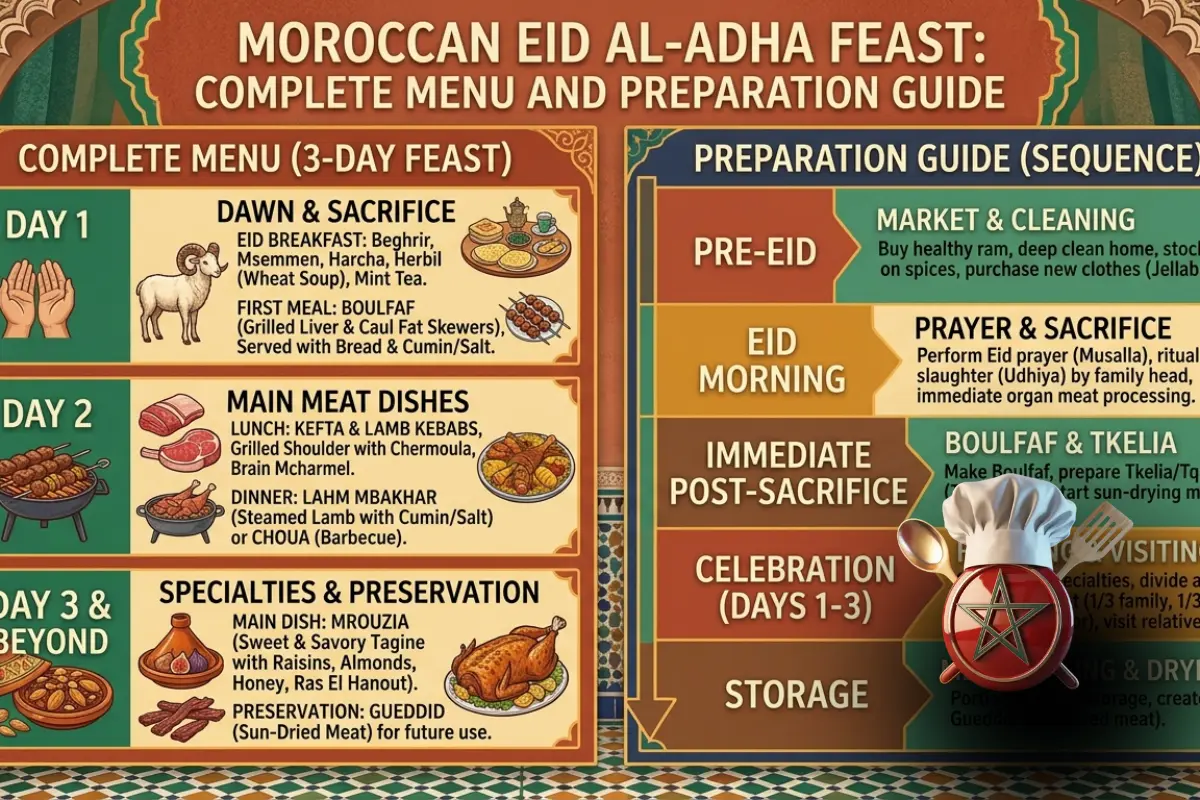
Eid al-Adha, known as the Festival of Sacrifice, represents one of the most significant celebrations in the Islamic calendar, and nowhere is this holiday more beautifully expressed through cuisine than in Morocco. This sacred occasion brings families together around tables laden with aromatic dishes that have been passed down through generations, each recipe carrying deep cultural significance and extraordinary flavors that define Moroccan hospitality.
For Western home cooks eager to explore this rich culinary tradition, preparing a Moroccan Eid al-Adha feast offers an incredible opportunity to experience authentic North African flavors while honoring the cultural importance of this religious celebration. The feast traditionally centers around lamb, symbolizing sacrifice and gratitude, but extends far beyond a single protein to encompass a symphony of spices, vegetables, grains, and sweets that create an unforgettable dining experience.
This comprehensive guide will walk you through every aspect of creating an authentic Moroccan Eid al-Adha feast in your own home, from understanding the cultural significance of each dish to mastering traditional cooking techniques that bring out the complex, layered flavors that make Moroccan cuisine so beloved worldwide. Whether you're cooking for a small family gathering or a large celebration, these recipes and techniques will help you create a memorable feast that honors both tradition and taste.
Understanding the Cultural Significance of Eid al-Adha in Moroccan Cuisine
The culinary traditions surrounding Eid al-Adha in Morocco reflect centuries of cultural evolution, blending Arab, Berber, and Mediterranean influences into a cohesive celebration of abundance and gratitude. This holiday commemorates Prophet Ibrahim's willingness to sacrifice his son as an act of obedience to God, and the subsequent divine intervention that provided a ram instead. This story of sacrifice and divine mercy permeates every aspect of the Moroccan Eid feast, from the selection of ingredients to the methods of preparation.
In Moroccan households, preparation for Eid al-Adha begins days in advance, with women gathering to share recipes, prepare spice blends, and discuss the intricate timing required to bring multiple complex dishes together for the feast. The kitchen becomes a hub of activity where traditional knowledge passes from mothers to daughters, ensuring that authentic flavors and techniques survive across generations.
The feast typically begins with the ritual sacrifice, after which every part of the animal is utilized in various dishes throughout the celebration period. This practice reflects Islamic principles of gratitude and avoiding waste, while also creating an opportunity for families to share with neighbors and those less fortunate. The abundance of the feast serves as a reminder of divine blessings and the importance of community solidarity.
Central to the Moroccan Eid al-Adha experience is the concept of baraka, or divine blessing, which is believed to be present in food prepared with intention, love, and adherence to tradition. This spiritual dimension elevates the meal beyond mere sustenance, transforming it into a sacred act that strengthens family bonds and reinforces cultural identity.
Traditional Spice Combinations and Their Meanings
Moroccan Eid cooking relies heavily on specific spice combinations that carry both culinary and symbolic significance. Ras el hanout, the "top of the shop" spice blend, represents the spice merchant's finest offerings and symbolizes the abundance appropriate for this blessed occasion. This complex mixture typically contains over twenty spices, including cardamom, cinnamon, cumin, coriander, and rose petals, creating layers of flavor that develop throughout the cooking process.
The use of preserved lemons and olives in Eid dishes connects the feast to Morocco's agricultural heritage, while saffron, one of the world's most precious spices, elevates everyday dishes to celebration status. These ingredients don't merely add flavor; they represent prosperity, tradition, and the special nature of the occasion.
Ginger, turmeric, and cinnamon feature prominently in Eid cooking, not only for their warming qualities that bring families together but also for their historical significance as valuable trade commodities that helped establish Morocco's position as a cultural crossroads between Africa, Europe, and the Middle East.
Essential Ingredients and Preparation Techniques
Creating an authentic Moroccan Eid al-Adha feast requires understanding both the essential ingredients that define this cuisine and the traditional techniques that maximize their potential. For Western cooks, sourcing authentic ingredients may require visiting specialty Middle Eastern markets or ordering online, but the investment in quality ingredients pays tremendous dividends in the final flavors of your feast.
The foundation of Moroccan Eid cooking rests on high-quality lamb or mutton, preferably from animals raised on natural pastures. In Morocco, families often know the source of their meat personally, and this connection to the ingredient's origin enhances both the flavor and the spiritual significance of the meal. Western cooks should seek out grass-fed lamb from reputable sources, as the meat's quality directly impacts every dish in the feast.
Preserved lemons represent perhaps the most distinctive ingredient in Moroccan cuisine, and their preparation requires planning weeks in advance. These lemons, cured in salt and their own juices, develop a unique flavor profile that combines intense citrus brightness with deep, fermented complexity. While preserved lemons are increasingly available in Western specialty stores, making your own ensures authenticity and allows you to control the salt level and fermentation time.
Essential Spice Preparation
The heart of Moroccan cooking lies in properly prepared spices, and Eid feast preparation begins with creating fresh spice blends that will infuse every dish with authentic flavors. Toasting whole spices before grinding releases essential oils and creates more complex flavor profiles than using pre-ground alternatives.
For your Eid feast, prepare a fresh ras el hanout blend by combining cardamom pods, cinnamon sticks, whole cloves, coriander seeds, cumin seeds, black peppercorns, dried ginger, turmeric, and rose petals. Toast each spice separately to avoid burning, then grind together in small batches to ensure even consistency. Store in airtight containers away from light and heat to preserve potency.
Chermoula, Morocco's versatile herb and spice paste, serves as both a marinade and a finishing sauce for many Eid dishes. Combine fresh cilantro, parsley, garlic, ginger, preserved lemon peel, olive oil, cumin, coriander, and paprika in a food processor to create this bright, flavorful condiment that enhances everything from grilled meats to roasted vegetables.
Traditional Cooking Vessels and Techniques
While modern Western kitchens can produce excellent results, understanding traditional Moroccan cooking methods enhances both flavor and authenticity. The tagine, Morocco's iconic cone-shaped cooking vessel, creates a unique cooking environment where steam circulates continuously, keeping ingredients moist while concentrating flavors.
For Western cooks without access to traditional tagines, heavy-bottomed Dutch ovens or braising pans can substitute effectively, though you may need to check liquid levels more frequently and adjust cooking times. The key principle remains the same: slow, gentle cooking that allows tough cuts of meat to become tender while spices meld and develop complexity.
Couscous preparation traditionally involves a specialized steamer called a couscoussier, but Western cooks can achieve excellent results using a fine-mesh steamer basket over simmering stew. The traditional method of steaming couscous multiple times, fluffing with butter and working with your hands, creates the light, separate grains that properly prepared couscous should exhibit.
The Complete Eid al-Adha Menu: Traditional Dishes Explained
A proper Moroccan Eid al-Adha feast encompasses multiple courses and dishes, each serving specific cultural and culinary purposes within the celebration. Understanding this structure helps Western hosts create an authentic experience that honors the holiday's significance while providing guests with a comprehensive taste of Moroccan cuisine.
Mechoui: The Centerpiece Roasted Lamb
Mechoui represents the heart of the Eid al-Adha feast, a whole roasted lamb that symbolizes the holiday's connection to sacrifice and abundance. For home cooks, a leg of lamb prepared with traditional spicing delivers similar flavors and significance while remaining manageable for domestic kitchens.
Traditional mechoui preparation involves rubbing the meat with a paste of garlic, ginger, cumin, coriander, salt, and butter, then roasting slowly over wood coals. The Western adaptation uses a conventional oven with careful temperature control to achieve the desired result: meat so tender it falls off the bone, with a aromatic crust that captures the essence of Moroccan spice blending.
Begin by creating your spice paste using minced garlic, fresh ginger, ground cumin, ground coriander, sea salt, and softened butter. Score the lamb leg in a crosshatch pattern and massage the paste deeply into the cuts, allowing the flavors to penetrate the meat. Marinate overnight in the refrigerator, then bring to room temperature before roasting at low heat, approximately 325°F, calculating about 20 minutes per pound for medium doneness.
Tagine Dishes: Slow-Cooked Perfection
No Moroccan feast is complete without multiple tagines showcasing different flavor profiles and cooking techniques. For Eid al-Adha, traditional households prepare several varieties, ensuring options for different tastes while demonstrating the versatility of Moroccan cooking methods.
Lamb Tagine with Prunes and Almonds combines the richness of slow-cooked meat with the sweetness of dried fruit and the texture of toasted nuts. This dish exemplifies the Moroccan mastery of balancing sweet and savory flavors, creating complexity that develops throughout the long cooking process.
Prepare this tagine by browning chunks of lamb shoulder in olive oil, then building layers of flavor with onions, ginger, cinnamon, saffron, and honey. Add dried prunes soaked in warm water and cook slowly until the meat becomes fork-tender. Finish with toasted almonds and fresh herbs for textural contrast and visual appeal.
Chicken Tagine with Preserved Lemons and Olives offers a lighter option that showcases two signature ingredients of Moroccan cuisine. The preserved lemons provide intense citrus flavor that cuts through rich meats, while olives add brininess and depth.
This tagine begins with browning chicken pieces seasoned with ginger, turmeric, and black pepper. Layer with sliced onions, crushed garlic, and a generous amount of chopped preserved lemon peel. Green olives, preferably Moroccan picholine variety, go in during the final cooking stage to prevent them from becoming too soft. The result is a bright, flavorful dish that cleanses the palate between richer offerings.
Couscous: The Grain of Celebration
Couscous holds special significance in Moroccan culture, representing prosperity and community, making it essential for Eid celebrations. Traditional preparation involves steaming the grain multiple times over aromatic stews, allowing it to absorb flavors while maintaining its delicate texture.
Seven-Vegetable Couscous is particularly appropriate for Eid al-Adha, as the number seven holds spiritual significance in Islamic tradition. This elaborate dish combines couscous with a variety of vegetables, each contributing different colors, textures, and nutritional benefits to create a complete and satisfying meal.
The vegetable selection typically includes carrots, turnips, zucchini, cabbage, chickpeas, onions, and tomatoes, though seasonal availability may dictate substitutions. Each vegetable requires different cooking times, so careful orchestration ensures everything finishes simultaneously with proper texture.
Begin by creating a flavorful broth using lamb or beef bones, onions, and spices. Add vegetables according to their cooking requirements, starting with root vegetables that need longer cooking times and finishing with delicate items like zucchini. Steam the couscous over this aromatic broth, following traditional techniques of multiple steamings and hand-working to achieve the proper texture.
Step-by-Step Feast Preparation Timeline
Successfully executing a Moroccan Eid al-Adha feast requires careful planning and precise timing, as many dishes benefit from advance preparation while others must be served immediately upon completion. This timeline assumes you're preparing for eight to ten guests and includes all the major dishes that constitute a traditional feast.
Three Days Before the Feast
Begin your preparation by checking your spice inventory and grinding fresh blends. Prepare ras el hanout by toasting and grinding whole spices, storing in airtight containers. If you haven't made preserved lemons in advance, you can create a quick version by salting lemon wedges and letting them cure for at least 72 hours, though longer curing produces better results.
Shop for specialty ingredients that may require visiting multiple stores: preserved lemons, high-quality olives, saffron, rose water, orange blossom water, and dates. Purchase your lamb from a reputable butcher, discussing your needs and asking for any special preparation such as frenching leg bones or butterflying for more even cooking.
Prepare chermoula and other spice pastes, as their flavors improve with time. Mix your lamb marinades and begin the marinating process, turning the meat periodically to ensure even flavor distribution.
Two Days Before the Feast
Begin tagine preparation for dishes that benefit from advance cooking and reheating. Many Moroccan stews actually improve after resting overnight, as flavors meld and develop complexity. Prepare your lamb and prune tagine completely, cooling and refrigerating after cooking.
Make traditional sweets such as chebakia or gazelle horns, as these time-intensive pastries can be stored in airtight containers and actually improve in texture after a day or two. Prepare almond paste for any pastries requiring this ingredient.
Prepare vegetable components for your seven-vegetable couscous, cleaning, peeling, and cutting everything into uniform pieces. Store prepared vegetables in the refrigerator in separate containers to maintain freshness and prevent cross-contamination of flavors.
Day of the Feast
Begin early in the morning with tasks that require longest cooking times. Start your mechoui by removing it from refrigeration to come to room temperature, then place in the oven at the calculated time to finish just before serving. The lamb should rest for at least 20 minutes after cooking to allow juices to redistribute.
Prepare your couscous broth and begin the first steaming of the grain. Traditional preparation involves three separate steamings with hand-working between each, so plan accordingly. Time the final steaming to coincide with completing the vegetable cooking.
Reheat prepared tagines gently, adding fresh herbs and final seasoning adjustments just before serving. Prepare your chicken tagine with preserved lemons, timing it to finish just as the couscous completes its final steaming.
| Dish | Prep Time | Cook Time | Serving Temperature | Make-Ahead Friendly |
|---|---|---|---|---|
| Mechoui (Roasted Lamb) | 30 minutes | 3-4 hours | Hot | Marinade only |
| Lamb Tagine with Prunes | 45 minutes | 2.5 hours | Hot | Yes, improves overnight |
| Chicken Tagine | 30 minutes | 1.5 hours | Hot | Partial prep only |
| Seven-Vegetable Couscous | 1 hour | 2 hours | Hot | Vegetable prep only |
| Traditional Sweets | 2-3 hours | 30 minutes | Room temperature | Yes, 2-3 days |
Traditional Sweets and Beverages
The conclusion of a Moroccan Eid al-Adha feast traditionally features an array of sweets and aromatic beverages that provide a satisfying finish to the rich, savory dishes that dominate the main meal. These desserts and drinks serve both culinary and cultural functions, offering cleansing flavors while extending the communal aspect of the celebration.
Chebakia: Honey-Sesame Pastries
Chebakia represents one of Morocco's most beloved traditional pastries, particularly associated with religious celebrations like Eid. These intricate, flower-shaped pastries require patience and skill to master, but their unique combination of textures and flavors makes them worth the effort for authentic feast presentation.
The dough combines flour, eggs, butter, and aromatic ingredients like orange blossom water, creating a pliable mixture that can be rolled thin and shaped into the traditional braided pattern. After deep-frying until golden and crispy, the pastries are immediately dipped in warm honey infused with orange blossom water, then rolled in toasted sesame seeds.
For Western cooks attempting chebakia for the first time, focus on achieving the proper dough consistency – it should be smooth and elastic enough to roll very thin without tearing. The shaping technique requires practice, but even imperfectly shaped pastries taste delicious and demonstrate respect for the tradition.
Gazelle Horns: Almond-Filled Crescents
Corne de gazelle or gazelle horns showcase the Moroccan mastery of almond-based confections. These delicate, crescent-shaped pastries conceal a sweet almond paste filling within paper-thin pastry dough, creating textural contrast and refined flavors appropriate for celebration.
The almond filling traditionally combines ground blanched almonds, powdered sugar, orange blossom water, and sometimes a touch of cinnamon. This mixture should be smooth and cohesive enough to shape but not so wet that it makes the pastry soggy. The pastry dough requires careful handling to achieve the thinness necessary for authentic texture.
Shape the filled pastries into crescents, brush lightly with egg wash for golden color, and bake at moderate temperature until just set. Properly made gazelle horns have crisp exteriors that give way to moist, flavorful filling, providing an elegant conclusion to the feast.
Traditional Beverages
Moroccan mint tea, or atay, serves as the universal beverage of hospitality and celebration throughout Morocco. The preparation ritual itself holds cultural significance, with the host demonstrating skill and respect by properly brewing and serving the tea with ceremonial flourish.
Authentic Moroccan tea combines green tea (preferably Gunpowder variety), fresh spearmint, and sugar in specific proportions, brewed in a traditional silver teapot and served in small glass cups. The tea should be poured from a height to create foam, demonstrating both the server's skill and enhancing the tea's aeration.
For variety during the extended celebration, consider preparing orange blossom tea or rose petal tea, both traditional alternatives that complement the flavors of Moroccan sweets while providing aromatic alternatives to mint tea.
| Sweet | Difficulty Level | Key Ingredients | Storage Life | Cultural Significance |
|---|---|---|---|---|
| Chebakia | Advanced | Honey, sesame, orange blossom | 1 week | Religious celebrations |
| Gazelle Horns | Intermediate | Almonds, orange blossom | 5 days | Special occasions |
| Ma'amoul | Intermediate | Dates, nuts, rose water | 2 weeks | Holiday traditions |
| Briouats | Beginner | Almonds, honey, phyllo | 3 days | Festive gatherings |
Frequently Asked Questions
Can I substitute beef or goat for lamb in traditional Eid al-Adha recipes?
While lamb holds particular significance for Eid al-Adha celebrations, both beef and goat make acceptable substitutes that maintain the spiritual and culinary integrity of the feast. Goat, in particular, is commonly used in some regions of Morocco and offers similar flavors to lamb, though with a slightly stronger taste that pairs well with traditional spice combinations. When using beef, choose cuts with good marbling like chuck roast or short ribs for tagines, and adjust cooking times accordingly as beef typically requires longer braising to achieve tenderness. The key is maintaining the celebratory nature and traditional preparation methods regardless of the protein choice.
How can I make Moroccan dishes less spicy for Western palates?
Moroccan cuisine typically emphasizes aromatic spices rather than heat-inducing ones, but you can easily modify recipes for sensitive palates. Reduce or eliminate cayenne pepper and hot paprika while maintaining flavorful spices like cumin, coriander, cinnamon, and ginger. Focus on building complexity through techniques like toasting spices and using quality saffron rather than relying on heat for impact. Most traditional Eid dishes derive their character from sweet spices, preserved lemons, and slow cooking methods rather than chili heat, making them naturally accommodating to various spice tolerances. Start with smaller quantities of any spice blend and adjust to taste during cooking.
What's the best way to source authentic Moroccan ingredients in Western countries?
Middle Eastern and North African specialty markets offer the most comprehensive selection of authentic Moroccan ingredients, including preserved lemons, ras el hanout spice blends, and high-quality olives. Many major cities have established Moroccan or general Middle Eastern communities with dedicated food stores. Online retailers have expanded access significantly, allowing you to order preserved lemons, authentic couscous, and specialty spices with home delivery. For immediate needs, many ingredients have acceptable substitutes: regular lemons with extra salt can approximate preserved lemons in a pinch, and you can create your own ras el hanout blend using individual spices available at most grocery stores.
How far in advance can I prepare components of the Eid feast?
Many elements of a Moroccan Eid feast actually benefit from advance preparation, with flavors developing and improving over time. Tagines can be prepared completely up to two days in advance and gently reheated, often tasting better after resting overnight. Spice blends and marinades should be prepared at least 24 hours ahead for optimal flavor development. Traditional sweets like chebakia and gazelle horns store well for several days in airtight containers. However, couscous should be prepared fresh on serving day, though you can prep vegetables and broth components in advance. Plan your timeline to allow for proper marinating, spice development, and the multiple cooking stages that create authentic Moroccan flavors.
Is it appropriate for non-Muslims to prepare and serve Eid al-Adha dishes?
Preparing and sharing Moroccan Eid al-Adha dishes as a non-Muslim is generally viewed positively when done with respect, understanding, and appreciation for the cultural and religious significance. Many Muslims appreciate when others show interest in their traditions through food, as sharing meals builds cultural bridges and demonstrates respect for Islamic culture. The key is approaching the preparation with genuine appreciation rather than mere curiosity, understanding that these dishes carry deep meaning beyond their delicious flavors. Consider learning about the religious significance of Eid al-Adha and sharing this knowledge with your guests to honor the tradition properly. Many Moroccan families would be pleased to know their culinary heritage is being preserved and appreciated across cultural boundaries.
Conclusion: Bringing Moroccan Hospitality to Your Table
Creating an authentic Moroccan Eid al-Adha feast represents more than simply following recipes – it offers an opportunity to experience the profound connection between food, culture, and spirituality that defines this sacred celebration. Through careful attention to traditional ingredients, techniques, and timing, Western cooks can successfully recreate the complex flavors and meaningful hospitality that characterize this important Islamic holiday.
The journey of preparing these dishes teaches patience, respect for tradition, and the value of communal celebration that transcends cultural boundaries. Each aromatic tagine, perfectly steamed grain of couscous, and delicate sweet carries forward centuries of culinary wisdom while creating new memories around your own table. The investment in time, quality ingredients, and authentic techniques pays dividends not only in extraordinary flavors but in the deeper understanding of Moroccan culture and Islamic traditions.
As you embark on preparing your own Moroccan Eid al-Adha feast, remember that perfection comes through practice and that even experienced Moroccan cooks continue refining their techniques throughout their lives. Focus on the spirit of generosity, gratitude, and community that defines this celebration, allowing these values to guide your preparation and presentation. Your guests will taste not only the complex spices and tender meats but also the care and respect with which you've approached this meaningful culinary tradition.
The true success of your feast lies not in flawless execution of every technique but in the joy of sharing these remarkable flavors with family and friends while honoring the cultural significance of Eid al-Adha. Through food, we build bridges between cultures, create lasting memories, and participate in the timeless human tradition of gathering around a table to celebrate life's blessings together.