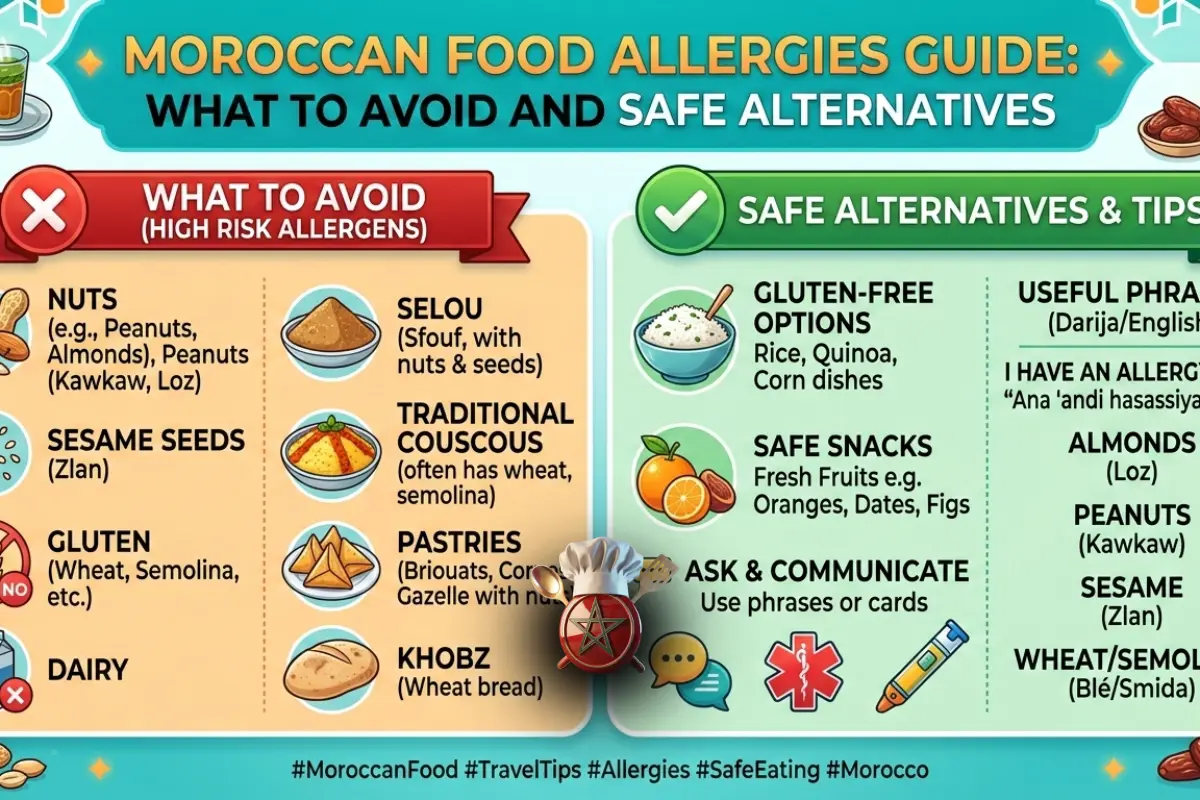
Understanding Food Allergies in Moroccan Cuisine: A Complete Western Guide
Moroccan cuisine, with its rich tapestry of flavors, aromatic spices, and diverse ingredients, presents both exciting opportunities and potential challenges for those with food allergies. This ancient culinary tradition, influenced by Berber, Arab, Mediterranean, and French cultures, incorporates ingredients that may trigger common food allergies including gluten, nuts, dairy, and various spices.
For Western travelers planning a trip to Morocco or enthusiasts wanting to explore Moroccan cooking at home, understanding potential allergens is crucial for a safe and enjoyable culinary experience. This comprehensive guide will help you navigate traditional Moroccan dishes, identify hidden allergens, and discover delicious alternatives that honor the authentic flavors of Morocco while keeping you safe.
The complexity of Moroccan cuisine lies not just in its preparation methods but in the intricate blend of ingredients that create its signature tastes. From the wheat-based couscous that forms the foundation of many meals to the almonds that garnish countless dishes, allergens can be found throughout traditional Moroccan cooking. However, with proper knowledge and preparation, those with food allergies can still experience the magic of Moroccan gastronomy.
Common Allergens in Traditional Moroccan Dishes
Understanding the most prevalent allergens in Moroccan cuisine is essential for safe dining. The traditional cooking methods and ingredient combinations can sometimes mask the presence of allergens, making it crucial to have detailed knowledge of what goes into each dish.
Gluten: The Hidden Culprit
Gluten is perhaps the most pervasive allergen in Moroccan cuisine, appearing in numerous forms throughout traditional dishes. The most obvious source is couscous, made from durum wheat semolina and served as a staple accompaniment to tagines and stews. However, gluten lurks in many other places where Western diners might not expect it.
Traditional Moroccan bread, including khubz and rghaif, contains wheat flour and is served with nearly every meal. Many sauce thickeners use wheat flour, and some spice blends may contain wheat as a filler or anti-caking agent. Even seemingly safe dishes like vegetable tagines may be thickened with wheat flour or served with bread that contaminates the serving utensil.
Pastries like pastilla (also spelled bastilla) use phyllo-like dough called warqa, which contains gluten. Many traditional sweets and desserts also incorporate wheat flour, making dessert navigation particularly challenging for those with celiac disease or gluten sensitivity.
Tree Nuts and Peanuts
Moroccan cuisine makes extensive use of tree nuts, particularly almonds, which appear in both sweet and savory preparations. Almonds are used to garnish tagines, ground into paste for sauces, and incorporated into numerous desserts. Ras el hanout, a complex spice blend, sometimes contains ground nuts, and many restaurants use the same preparation surfaces for nut and nut-free dishes.
Other nuts commonly found in Moroccan cooking include walnuts in certain regional dishes, pine nuts in some rice preparations, and pistachios in desserts. Cross-contamination is a significant concern in traditional kitchens where nuts are processed alongside other ingredients.
Dairy Products
While not as prevalent as in European cuisines, dairy appears in several traditional Moroccan preparations. Fresh cheese, particularly in northern regions influenced by Mediterranean cooking, appears in some tagines and salads. Butter is used in many pastries and some meat preparations, though olive oil is more common.
Preserved lemons, a cornerstone of Moroccan cooking, are generally dairy-free, but some commercial preparations may contain unexpected additives. Yogurt-based sauces occasionally accompany certain dishes, particularly in restaurants catering to tourist preferences.
Navigating Popular Moroccan Dishes with Allergies
Understanding how to approach Morocco's most beloved dishes while managing food allergies requires detailed knowledge of ingredients and preparation methods. Each signature dish presents unique challenges and opportunities for safe enjoyment.
Tagines: Morocco's Signature Stew
The iconic cone-shaped earthenware pot that gives tagine its name produces some of Morocco's most celebrated dishes. Traditional tagines are naturally gluten-free when served without bread or couscous, making them excellent options for those with celiac disease. However, several considerations apply depending on your specific allergies.
Chicken tagine with preserved lemons and olives is typically safe for most allergies, containing mainly chicken, preserved lemons, olives, olive oil, and spices. However, some preparations include almonds as garnish, and cross-contamination with nuts is possible in restaurant kitchens.
Lamb tagine with apricots and almonds obviously contains tree nuts and may not be suitable for those with nut allergies. However, the almonds can often be omitted upon request, and the fundamental flavors remain intact.
Vegetable tagines offer the most flexibility for various dietary restrictions. Root vegetables, squash, carrots, and zucchini slow-cooked with aromatic spices create satisfying, allergen-friendly meals. Always confirm that no nuts are used in preparation and that the tagine hasn't been thickened with wheat flour.
Couscous Challenges and Solutions
Traditional couscous presents an immediate challenge for those with gluten sensitivity or celiac disease, as it's made entirely from wheat semolina. However, the popularity of Moroccan cuisine in Western markets has led to numerous alternatives that can be substituted without significantly altering the dining experience.
When dining out, clearly communicate your gluten allergy to restaurant staff and inquire about rice-based alternatives. Many Moroccan restaurants in Western countries now offer rice or quinoa as couscous substitutes. At home, you can easily prepare gluten-free couscous alternatives using cauliflower rice, quinoa, or commercially available gluten-free couscous made from corn or rice.
The traditional Friday couscous meal, often featuring lamb or chicken with vegetables, can be adapted by focusing on the protein and vegetable components while substituting the grain base. The rich broth and tender vegetables retain all the traditional flavors that make this dish special.
Pastilla: Navigating the Flaky Favorite
Traditional pastilla presents multiple allergen challenges, containing both gluten (in the phyllo-like warqa pastry) and nuts (typically almonds in the filling). However, this shouldn't prevent you from experiencing this unique sweet-savory combination.
Some restaurants offer gluten-free versions using alternative pastry, though this is more common in Western countries than in Morocco itself. When traveling, focus on enjoying other dishes and save pastilla exploration for controlled environments where ingredients can be verified.
Spice Allergies and Moroccan Seasoning
Moroccan cuisine's complex spice profiles can present unique challenges for those with specific spice allergies or sensitivities. Understanding the composition of traditional spice blends and individual spice usage helps you navigate these flavorful waters safely.
Ras El Hanout: The King of Spices
This "top of the shop" spice blend can contain anywhere from 12 to 30+ different spices, making it a potential minefield for those with multiple sensitivities. Traditional components include cinnamon, cumin, coriander, cardamom, turmeric, ginger, and paprika, but variations exist between regions and spice merchants.
Some commercial ras el hanout blends include ground nuts, dried fruits, or even flower petals that could trigger allergies. If you have multiple spice sensitivities, consider creating your own simplified blend using only spices you know are safe, focusing on the core flavors of cumin, coriander, cinnamon, and ginger.
Individual Spice Considerations
While most individual spices used in Moroccan cooking are naturally allergen-free, cross-contamination and processing concerns apply. Cumin, coriander, cinnamon, ginger, turmeric, and saffron form the backbone of Moroccan flavoring and are generally safe for most people.
However, some individuals may have sensitivities to specific spices like paprika (nightshade sensitivity) or cinnamon (contact dermatitis). Additionally, some spice processing facilities also process nuts, creating cross-contamination risks for those with severe nut allergies.
Safe Alternatives and Substitutions
Creating authentic Moroccan flavors while accommodating food allergies requires understanding both the essential taste components and suitable substitutions that maintain the cuisine's character.
Gluten-Free Alternatives
For those avoiding gluten, numerous options exist that preserve the textural and flavor elements of traditional Moroccan meals. Quinoa makes an excellent couscous substitute, offering similar size and neutral flavor while providing complete protein. Its fluffy texture when properly prepared closely mimics traditional couscous.
Cauliflower rice provides another excellent option, particularly when seasoned with traditional Moroccan spices. Its mild flavor absorbs the aromatic broths from tagines beautifully, and its grain-like appearance maintains the visual appeal of the dish.
For bread alternatives, rice crackers or gluten-free flatbreads can serve as vehicles for scooping up tagine sauces, though they won't replicate the exact experience of traditional Moroccan bread. Focus on dishes that don't rely heavily on bread as a component rather than trying to find perfect substitutes.
Nut-Free Modifications
Eliminating nuts from Moroccan dishes often requires creativity to maintain richness and texture. Seeds can often substitute for nuts in both flavor and nutritional content. Toasted sunflower seeds or pumpkin seeds provide crunch and richness similar to almonds in many applications.
For dishes where ground almonds provide thickening or richness, tahini (sesame seed paste) can offer similar body and nutty flavor, provided sesame isn't an allergen concern. Ground sunflower seeds also work well as almond meal substitutes in many recipes.
In desserts where nuts provide texture and flavor, focus on spice-forward preparations that emphasize cinnamon, cardamom, and orange blossom water. These flavors are quintessentially Moroccan and don't rely on nuts for their impact.
Dairy-Free Options
Moroccan cuisine naturally leans heavily on olive oil rather than dairy fats, making dairy-free adaptation relatively straightforward. Most traditional tagines use olive oil as the primary fat, creating rich, flavorful sauces without any dairy products.
For recipes calling for butter, high-quality olive oil or avocado oil can often substitute directly. In baked goods, coconut oil can provide richness, though it may impart a slight coconut flavor that isn't traditional.
When yogurt sauces accompany dishes, focus on the main preparation rather than the sauce, or create dairy-free versions using coconut yogurt seasoned with traditional Moroccan herbs and spices.
Restaurant Dining Strategies and Communication
Successfully dining at Moroccan restaurants with food allergies requires preparation, clear communication, and strategic ordering. Understanding how to convey your needs and which dishes offer the safest options enhances your dining experience while maintaining safety.
Communicating Your Needs
When dining at Moroccan restaurants, especially family-owned establishments where English may be a second language, having key phrases written down can be invaluable. Learn basic terms for your allergens in Arabic or French if traveling to Morocco, or prepare clear, simple statements about your restrictions.
Avoid relying solely on waitstaff for allergen information; request to speak with kitchen staff or management who have direct knowledge of ingredients and preparation methods. Many allergens can be easily omitted from dishes if the kitchen is aware of the need before preparation begins.
Call ahead when possible to discuss your allergies and inquire about the restaurant's ability to accommodate your needs. This conversation allows kitchen staff to prepare appropriately and may reveal whether the establishment can safely serve you.
Strategic Menu Navigation
Focus on simple, traditional preparations rather than fusion dishes or complex platters where ingredient lists may be longer and less predictable. Grilled meats, simple vegetable tagines, and rice-based dishes typically offer the safest options.
Avoid dishes with complex sauces unless you can verify all ingredients, and be particularly cautious of desserts, which often contain multiple allergens. Stick to fresh fruit or simple preparations rather than elaborate pastries when dessert is desired.
Consider ordering multiple simple dishes rather than one complex plate, giving you better control over ingredients while still experiencing variety in flavors and textures.
Cooking Moroccan Food Safely at Home
Preparing Moroccan cuisine in your own kitchen provides the ultimate control over ingredients and cross-contamination, allowing you to experience authentic flavors while maintaining complete allergen safety.
Essential Ingredient Sourcing
Building a safe Moroccan pantry starts with sourcing high-quality, clearly labeled ingredients from reputable suppliers. Purchase whole spices when possible and grind them yourself to avoid cross-contamination from processing facilities that may handle allergens.
Look for certified allergen-free products when available, particularly for spice blends and preserved ingredients like olives or preserved lemons. Many specialty Middle Eastern and North African markets carry high-quality ingredients with clear labeling.
Consider making your own preserved lemons, harissa, and other condiments to ensure they're free from unexpected allergens or processing aids that might be present in commercial versions.
Safe Preparation Techniques
Establish dedicated preparation areas and utensils for allergen-free cooking if you're cooking for mixed dietary needs. Cross-contamination can occur easily with spices, flours, and nuts that may become airborne during preparation.
When adapting traditional recipes, focus on maintaining the essential flavor profiles through spices and cooking techniques rather than trying to replicate every textural element. The slow-cooking methods that characterize tagines work beautifully with substitute ingredients.
Keep detailed notes of successful adaptations, including specific brands of substitute ingredients that work well, creating your own collection of safe Moroccan recipes that you can prepare confidently.
Regional Variations and Allergen Considerations
Morocco's diverse regions each bring unique ingredients and preparation methods that can affect allergen considerations. Understanding these regional differences helps you make informed choices whether traveling or ordering from restaurants that specialize in specific Moroccan regional cuisines.
Coastal vs. Inland Preparations
Coastal Moroccan cuisine incorporates more seafood and Mediterranean influences, which can mean different allergen profiles compared to inland dishes. Coastal areas may use more dairy products influenced by European cooking styles, while inland regions focus more heavily on preserved meats and dried fruits.
Seafood allergies become a consideration in coastal areas, where fish and shellfish appear in tagines, couscous dishes, and rice preparations. However, these regions may offer more variety for those avoiding land-animal proteins.
Northern regions influenced by Spanish and French cuisines may incorporate more wheat-based preparations and dairy products, while southern regions closer to sub-Saharan Africa may use different grains and preparation methods that could be more suitable for certain dietary restrictions.
Berber vs. Arab Culinary Traditions
Traditional Berber preparations often emphasize simpler ingredient lists and may be more suitable for those with multiple food allergies. These dishes typically focus on root vegetables, legumes, and simple spice combinations rather than complex blends.
Arab-influenced preparations may include more nuts, complex spice blends, and wheat-based components, requiring more careful navigation for those with multiple allergens. However, these dishes also offer rich, complex flavors that can be adapted with proper substitutions.
Understanding which tradition influences a particular dish helps you assess its allergen risk and adaptation potential before ordering or preparing it.
Allergen-Safe Moroccan Recipe Adaptations
Creating successful allergen-free versions of beloved Moroccan dishes requires understanding the role each ingredient plays and finding appropriate substitutions that maintain the dish's character.
Adapting Classic Tagines
Traditional chicken tagine with preserved lemons adapts beautifully for most dietary restrictions. The base recipe requires only chicken, preserved lemons, olives, onions, garlic, olive oil, ginger, saffron, and cilantro. This naturally gluten-free, dairy-free, nut-free combination delivers authentic Moroccan flavors without common allergens.
For vegetarian adaptations, replace chicken with hearty vegetables like eggplant, zucchini, carrots, and chickpeas. The preserved lemon and olive combination provides the characteristic Moroccan flavor profile while maintaining allergen safety.
Beef or lamb tagines with root vegetables offer excellent options for those avoiding poultry while maintaining traditional flavors. Focus on simple spice combinations like ginger, cinnamon, and turmeric rather than complex blends that might contain allergens.
Creating Safe Spice Blends
Develop your own ras el hanout blend using only spices you can safely consume. A basic blend might include cumin, coriander, cinnamon, ginger, turmeric, and paprika, providing the warm, complex flavors characteristic of Moroccan cuisine without allergen risks.
Store homemade spice blends in airtight containers and label them clearly with ingredients and dates. This approach ensures you always have safe seasoning options available and can adjust flavors to your preferences.
Consider creating multiple versions of spice blends with different heat levels or flavor profiles, giving you variety while maintaining safety. Document successful combinations to recreate favorite blends consistently.
| Traditional Ingredient | Safe Alternative | Flavor Impact | Best Uses |
|---|---|---|---|
| Wheat Couscous | Quinoa | Nearly identical texture | All traditional couscous dishes |
| Almonds (garnish) | Toasted sunflower seeds | Similar crunch, milder flavor | Tagine garnish, rice dishes |
| Wheat flour (thickening) | Arrowroot powder | Clearer color, neutral taste | Sauce thickening |
| Butter | Extra virgin olive oil | More authentic flavor | Most preparations |
| Ground almonds | Ground sunflower seeds | Slightly different texture | Sauces, desserts |
Travel Tips for Morocco with Food Allergies
Traveling to Morocco with food allergies requires additional preparation but shouldn't prevent you from experiencing this incredible culinary culture. Strategic planning and smart precautions allow safe exploration of Moroccan gastronomy.
Pre-Travel Preparation
Research restaurants and riads in your planned destinations that have experience accommodating dietary restrictions. Many higher-end establishments and those accustomed to Western tourists understand food allergies and can adapt their offerings accordingly.
Pack essential safe snacks and backup meal options in case suitable food isn't immediately available. Protein bars, nuts (if you can eat them), dried fruits, and other non-perishable items provide security and prevent dangerous hunger-driven food choices.
Obtain a detailed letter from your doctor explaining your allergies in both English and French (widely spoken in Morocco), including emergency treatment information. This documentation helps communicate the severity of your restrictions to restaurant staff and medical personnel if needed.
On-Location Strategies
Shop at local markets for fresh fruits, vegetables, and other whole foods that don't require ingredient verification. Moroccan markets offer incredible variety in fresh produce that can supplement restaurant meals and provide safe eating options.
Consider staying in accommodations with kitchen facilities, allowing you to prepare some meals yourself while still experiencing local ingredients and flavors. This approach provides safety while maintaining cultural food experiences.
Build relationships with restaurant staff at establishments you visit multiple times, educating them about your needs and creating safe havens where you can dine confidently. Many Moroccan hospitality workers take pride in accommodating guests' needs once they understand them.
Frequently Asked Questions
Is traditional Moroccan bread safe for people with gluten allergies?
No, traditional Moroccan bread including khubz, rghaif, and other regional varieties are made with wheat flour and contain gluten. However, some modern Moroccan restaurants, particularly in Western countries, may offer gluten-free bread alternatives. When traveling in Morocco, focus on naturally gluten-free dishes like tagines and grilled meats rather than bread-based items.
Can I find nut-free versions of pastilla in restaurants?
Traditional pastilla contains both gluten (in the pastry) and almonds (in the filling), making it challenging for multiple allergies. Some Western Moroccan restaurants may offer modified versions, but it's uncommon in traditional establishments. Instead, focus on nut-free tagines and grilled dishes that showcase Moroccan flavors without nuts.
Are Moroccan restaurants generally accommodating of food allergies?
Moroccan restaurants vary in their understanding and accommodation of food allergies. Higher-end establishments and those in Western countries typically have more experience with dietary restrictions. Traditional family restaurants may be less familiar with the concept but often very willing to help once they understand your needs. Clear, simple communication is essential.
What are the safest Moroccan dishes for people with multiple food allergies?
Simple grilled meats, vegetable tagines without nuts, and rice-based dishes tend to be safest for multiple allergies. Focus on preparations with short ingredient lists where you can verify each component. Avoid complex dishes, pastries, and items with elaborate sauces until you can confirm their ingredients.
Can I make authentic-tasting Moroccan food at home with dietary restrictions?
Absolutely! Many traditional Moroccan flavors come from spices, cooking techniques, and simple ingredient combinations that can be easily adapted. The key is understanding which elements provide authentic flavor (like preserved lemons, specific spice combinations, and slow-cooking methods) versus which are purely textural and can be substituted.
Is cross-contamination a major concern in Moroccan kitchens?
Cross-contamination can be a concern, particularly with nuts, which are commonly used in Moroccan cuisine. Traditional kitchens may use the same surfaces and utensils for multiple preparations. When dining out, communicate the severity of your allergies and ask about kitchen practices. For severe allergies, consider focusing on simple grilled items that are less likely to involve shared preparation surfaces.
Are there any hidden allergens I should watch out for in Moroccan spice blends?
Yes, some commercial ras el hanout and other spice blends may contain ground nuts, dried fruits, or anti-caking agents that include wheat. Some blends might also be processed in facilities that handle nuts or other allergens. When possible, buy individual spices and create your own blends, or purchase from suppliers who provide detailed ingredient and processing information.
Conclusion: Embracing Moroccan Cuisine Safely
Navigating Moroccan cuisine with food allergies requires knowledge, preparation, and sometimes creativity, but it absolutely doesn't require missing out on this incredible culinary tradition. The rich flavors, aromatic spices, and time-honored cooking techniques that define Moroccan food can be experienced safely with proper precautions and smart adaptations.
The key to success lies in understanding both the traditional elements of Moroccan cooking and your own dietary needs, then finding the intersection where authentic flavors meet allergen safety. Many of Morocco's most beloved dishes are naturally free from common allergens or can be easily adapted without losing their essential character.
Whether you're planning to travel to Morocco, explore Moroccan restaurants in your home country, or recreate these flavors in your own kitchen, the strategies and information in this guide provide the foundation for safe, delicious experiences. Remember that some of the most memorable meals come from simple preparations that showcase quality ingredients and traditional techniques rather than complex dishes with lengthy ingredient lists.
The hospitality culture that defines Moroccan society extends to food service, and most restaurant staff and home cooks are eager to accommodate guests' needs once they understand them. Clear communication, advance planning, and focusing on naturally safe dishes will open doors to incredible culinary experiences while maintaining your health and safety.
Don't let food allergies prevent you from exploring one of the world's great cuisines. With the knowledge and strategies outlined in this guide, you can confidently embark on your Moroccan culinary journey, creating lasting memories around tables filled with aromatic tagines, perfectly spiced vegetables, and the warm hospitality that makes Moroccan dining so special.