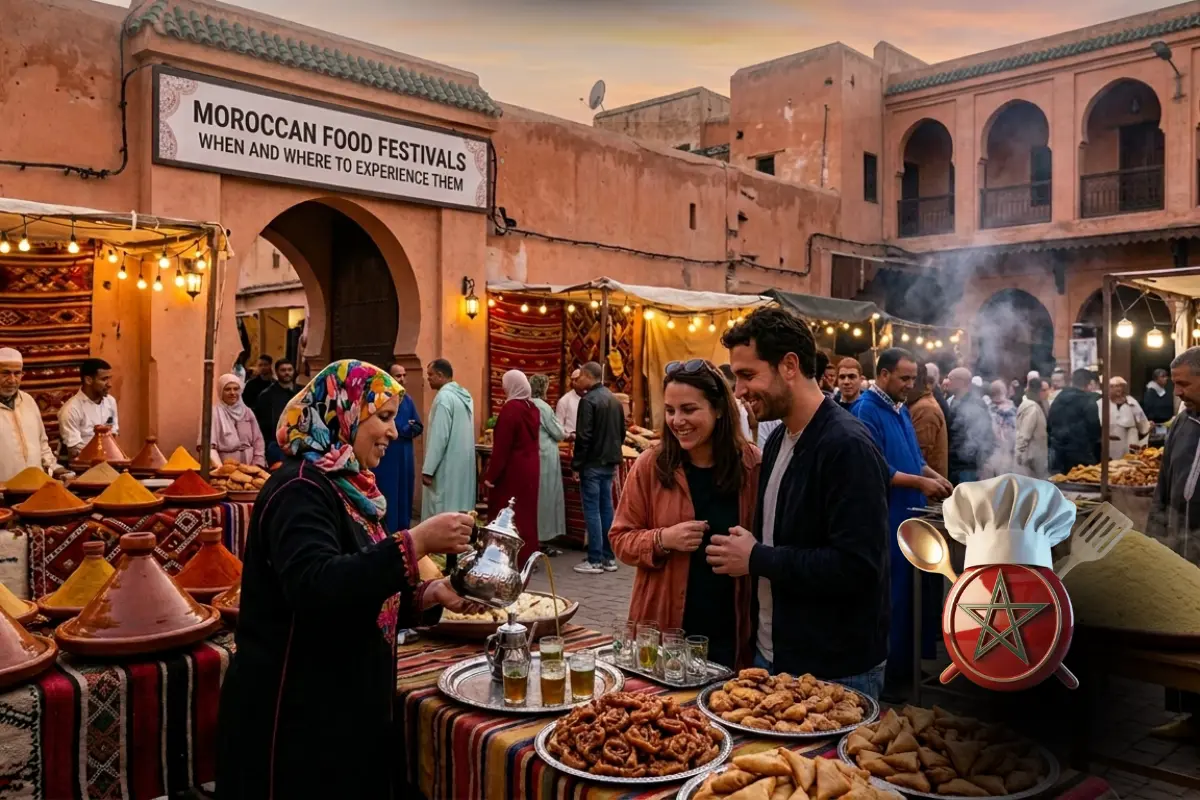
Morocco's culinary landscape comes alive throughout the year with spectacular food festivals that celebrate the kingdom's rich gastronomic heritage. For Western travelers seeking authentic cultural experiences, these festivals offer an unparalleled opportunity to immerse themselves in traditional Moroccan cuisine while connecting with local communities and age-old culinary traditions.
From the bustling souks of Marrakech to the coastal cities of Essaouira and Agadir, Morocco's food festivals showcase everything from world-famous tagines and couscous to lesser-known regional specialties that have been passed down through generations. These events not only celebrate food but also honor the cultural significance of communal dining, traditional cooking methods, and the social bonds that Moroccan cuisine creates.
This comprehensive guide will take you on a culinary journey through Morocco's most significant food festivals, providing essential information about timing, locations, featured cuisines, and practical tips for Western visitors. Whether you're a seasoned food enthusiast or simply curious about Moroccan culture, these festivals offer an authentic window into the soul of Moroccan hospitality and culinary artistry.
The Cultural Significance of Food Festivals in Morocco
Food festivals in Morocco represent far more than mere culinary celebrations; they serve as vital cultural touchstones that preserve and transmit traditional knowledge across generations. These events embody the Moroccan philosophy of terrab - the deep connection between people, land, and sustenance that has shaped the nation's identity for centuries.
Understanding the cultural context of these festivals enhances the experience for Western visitors. In Moroccan society, food preparation and consumption are inherently communal activities that strengthen social bonds and reinforce cultural values. The concept of hospitality (dliyafa) is central to Moroccan culture, and food festivals provide the perfect platform for communities to extend this warmth to visitors from around the world.
Traditional Cooking Methods and Techniques
Moroccan food festivals showcase traditional cooking methods that have remained largely unchanged for centuries. Visitors can observe master craftsmen preparing bread in communal ovens, witness the intricate process of couscous preparation by hand, and learn about the complex spice blending techniques that create Morocco's distinctive flavor profiles.
The tajine, Morocco's iconic conical cooking vessel, takes center stage at many festivals. These earthenware pots, often handcrafted by local artisans, represent the perfect marriage of form and function, creating the ideal environment for slow-cooking that allows flavors to meld and intensify. Festival demonstrations often include the seasoning process for new tajines, a ritual that connects modern cooks with their ancestors.
Regional Culinary Diversity
Morocco's food festivals celebrate the incredible regional diversity that characterizes the nation's cuisine. The mountainous regions contribute hearty tagines featuring lamb and root vegetables, while coastal areas showcase fresh seafood preparations. The Saharan regions bring their own unique flavors, including preserved meats and dates, reflecting the adaptations necessary for desert life.
Each region's festival offerings reflect local agricultural products and historical influences. For instance, festivals in northern Morocco often feature dishes with Spanish and Mediterranean influences, while those in the south showcase sub-Saharan African elements. This diversity provides Western visitors with a comprehensive overview of Morocco's complex culinary landscape in a single trip.
Major Annual Food Festivals
Morocco's festival calendar features several major annual food celebrations that have gained international recognition while maintaining their authentic character. These events typically coincide with harvest seasons, religious holidays, or historical commemorations, creating natural connections between food, culture, and community celebration.
Festival National du Couscous (Salé) - September
The National Couscous Festival in Salé represents one of Morocco's most prestigious culinary celebrations. Held annually in September, this three-day event transforms the historic city into a showcase of Morocco's national dish. The festival attracts master couscous makers from across the country, each presenting their regional variations and family recipes.
Visitors can participate in hands-on workshops where expert cooks demonstrate the traditional hand-rolling technique for couscous grains. These sessions provide invaluable insights into a process that requires years to master and represents a significant aspect of Moroccan culinary heritage. The festival also features competitions among professional and amateur cooks, creating an atmosphere of friendly rivalry that celebrates excellence in traditional cooking.
The event includes cultural performances, poetry readings, and storytelling sessions that contextualize couscous within broader Moroccan traditions. For Western visitors, this festival offers the perfect introduction to understanding how a single dish can embody an entire culture's values and history.
Festival du Tajine (Meknes) - October
Meknes, one of Morocco's four imperial cities, hosts the annual Tajine Festival each October, celebrating the iconic slow-cooked stews that have become synonymous with Moroccan cuisine worldwide. The festival showcases the incredible versatility of tajine cooking, featuring everything from traditional lamb and prune combinations to innovative vegetarian interpretations that appeal to modern dietary preferences.
The festival's educational component includes demonstrations of proper tajine seasoning, maintenance, and cooking techniques. Visitors learn about the science behind tajine cooking, understanding how the conical lid creates a unique steam circulation system that allows for flavorful cooking with minimal water - a crucial adaptation to Morocco's often arid climate.
Professional competitions feature elaborate presentations where chefs create stunning visual displays while maintaining authentic flavors. These events provide excellent opportunities for food photography and social media content, though visitors are encouraged to focus primarily on the sensory experience of tasting these masterfully prepared dishes.
Agadir Argan Festival - December
The Agadir Argan Festival celebrates Morocco's liquid gold - argan oil - and the culinary traditions of the Souss region. This December festival combines food celebration with environmental awareness, highlighting the crucial role of argan trees in both Moroccan cuisine and ecological preservation.
Festival activities include visits to women's cooperatives where traditional argan oil extraction methods are demonstrated. These experiences provide Western visitors with insights into sustainable development practices and women's economic empowerment in rural Morocco. The festival showcases argan oil's culinary applications, from traditional amlou (argan nut butter) to modern fusion dishes created by innovative chefs.
Cooking workshops focus on incorporating argan oil into various dishes, teaching visitors about its nutritional benefits and unique flavor profile. The festival also features traditional Berber music and dance performances, creating a comprehensive cultural experience that extends beyond food to encompass the broader traditions of Morocco's indigenous peoples.
Regional Specialty Festivals
Beyond the major national celebrations, Morocco hosts numerous regional festivals that highlight local specialties and traditional foods unique to specific areas. These smaller-scale events often provide more intimate experiences and greater opportunities for meaningful interactions with local communities.
Essaouira Seafood Festival - June
Essaouira's annual Seafood Festival transforms the picturesque coastal city into a celebration of Atlantic Ocean bounty. Held in June when fishing conditions are optimal, the festival showcases the incredible variety of seafood that has sustained this historic port city for centuries.
The festival features live cooking demonstrations by local fishermen and renowned chefs, highlighting traditional preparation methods for sardines, sea bream, and the prized Essaouira oysters. Visitors can participate in guided market tours that explain how to select fresh seafood and learn about sustainable fishing practices that maintain the health of Morocco's marine ecosystems.
Grilled sardine workshops teach the simple yet sophisticated techniques that transform this humble fish into a delicacy. The festival also celebrates the Portuguese and Spanish influences on Essaouira's cuisine, reflecting the city's complex history as a major trading port and diplomatic center.
Fez Date Festival - November
The ancient city of Fez hosts a unique Date Festival each November, celebrating one of Morocco's most important agricultural products. This festival occurs during peak date harvest season and showcases the incredible variety of dates grown throughout Morocco, from the famous Medjool dates to lesser-known regional varieties.
Educational components include workshops on date cultivation, harvest techniques, and traditional preservation methods. Visitors learn about the cultural significance of dates in Islamic tradition and their crucial role as a high-energy food source for desert travel and religious fasting.
Culinary demonstrations feature both traditional and modern applications for dates, from classic tagines featuring dates and nuts to innovative desserts created by contemporary Moroccan pastry chefs. The festival provides excellent opportunities to purchase high-quality dates directly from producers, often at significant savings compared to international markets.
Ouarzazate Rose and Food Festival - May
The Ouarzazate Rose Festival combines floral beauty with culinary celebration, highlighting the edible applications of roses in Moroccan cuisine. This May festival coincides with the rose harvest in the nearby Dadès Valley, one of the world's premier rose-growing regions.
Culinary workshops focus on incorporating rose water and rose petals into traditional Moroccan dishes and desserts. Visitors learn about the distillation process for rose water and its applications in both cooking and cosmetics. The festival showcases traditional sweets like rose-flavored loukoum (Turkish delight) and innovative modern interpretations of classic recipes.
The event also includes visits to rose processing facilities and organic gardens, providing insights into sustainable agriculture practices and the economic importance of rose cultivation for rural communities in the region.
Planning Your Festival Journey
Successfully experiencing Moroccan food festivals requires careful planning, especially for Western travelers unfamiliar with local customs and logistics. Understanding the practical aspects of festival attendance ensures maximum enjoyment while respecting local traditions and cultural norms.
Best Times to Visit
Morocco's festival calendar is closely tied to agricultural cycles and religious observances, creating natural rhythms that determine optimal visit timing. The period from September through December offers the highest concentration of food festivals, coinciding with harvest seasons for major crops and favorable weather conditions for outdoor celebrations.
Spring festivals (March through May) provide excellent opportunities to experience Morocco's blooming season while enjoying comfortable temperatures. Summer festivals, while less numerous due to extreme heat in interior regions, offer unique experiences in coastal areas where sea breezes moderate temperatures.
Weather considerations play a crucial role in festival planning. Interior cities like Fez and Meknes can experience significant temperature variations, requiring layered clothing for comfort during outdoor events. Coastal festivals benefit from more moderate temperatures but may feature higher humidity levels.
Accommodation and Transportation
Festival periods typically represent peak tourism seasons in host cities, necessitating advance booking for accommodations. Traditional riads offer authentic experiences but may have limited availability during major festivals. Modern hotels provide familiar amenities but may lack the cultural immersion that enhances festival experiences.
Transportation between festival cities is well-developed, with reliable train service connecting major destinations and comfortable bus services reaching smaller towns. Rental cars provide maximum flexibility but require familiarity with Moroccan driving customs and road conditions.
Local transportation within festival cities often involves walking through historic medinas where vehicles cannot access. Comfortable walking shoes are essential, as festival venues may require navigation through narrow streets and uneven surfaces.
Cultural Etiquette and Expectations
Understanding Moroccan cultural norms enhances festival experiences and demonstrates respect for local traditions. Dress codes tend to be more relaxed during festivals, but modest clothing remains appropriate, especially when visiting religious sites or traditional neighborhoods.
Festival dining often involves communal eating from shared plates, reflecting traditional Moroccan hospitality customs. Western visitors should be prepared to eat with their hands in some contexts, following local etiquette regarding the use of the right hand for food handling.
Photography permissions should always be requested before taking pictures of people, especially women and children. Many festival participants are happy to pose for photos, but asking permission demonstrates cultural sensitivity and often leads to more meaningful interactions.
| Festival | Month | Duration | Key Features | Best for Western Visitors |
|---|---|---|---|---|
| National Couscous Festival (Salé) | September | 3 days | Couscous workshops, regional variations | Learning traditional techniques |
| Tajine Festival (Meknes) | October | 4 days | Cooking competitions, tajine maintenance | Hands-on cooking experiences |
| Argan Festival (Agadir) | December | 2 days | Argan oil production, women's cooperatives | Sustainable tourism focus |
| Seafood Festival (Essaouira) | June | 3 days | Fresh seafood, coastal cuisine | Seafood enthusiasts |
| Date Festival (Fez) | November | 2 days | Date varieties, preservation methods | Agricultural tourism |
What to Expect at Moroccan Food Festivals
Moroccan food festivals create immersive experiences that engage all the senses while providing education about traditional cooking methods, ingredients, and cultural practices. Understanding what to expect helps Western visitors prepare mentally and physically for these intense cultural encounters.
Sensory Experiences
The aromatic complexity of Moroccan cuisine becomes immediately apparent at food festivals, where dozens of different spice combinations create layered scent profiles that shift throughout the day. The morning hours typically feature bread baking aromas, while afternoon cooking demonstrations release the complex fragrances of slow-simmered tagines and aromatic rice dishes.
Sound plays an equally important role in festival experiences. Traditional music often accompanies cooking demonstrations, while the rhythmic chopping of vegetables and the bubbling of cooking pots create a distinctive acoustic landscape. Vendors call out their offerings in Arabic, French, and increasingly English, creating a multilingual environment that reflects Morocco's cosmopolitan character.
Visual presentations at Moroccan food festivals showcase the aesthetic dimensions of traditional cuisine. Elaborate spice displays create rainbow patterns of colors and textures, while finished dishes demonstrate the artistic plating traditions that make Moroccan cuisine as beautiful as it is flavorful.
Learning Opportunities
Festival workshops provide structured learning experiences that go beyond simple food tasting. Expert demonstrations often include historical context, explaining how specific dishes developed and their cultural significance within Moroccan society. These educational components help Western visitors understand the deeper meanings behind culinary traditions.
Hands-on participation opportunities vary by festival but often include spice blending workshops, bread making sessions, and traditional cooking technique demonstrations. These activities provide practical skills that visitors can recreate at home while serving as tangible connections to Moroccan culture.
Language exchange opportunities naturally arise during festival activities, as local participants are often curious about Western cultures and eager to practice English or French. These interactions create meaningful cross-cultural connections that extend beyond food to encompass broader cultural understanding.
Shopping and Souvenirs
Festival marketplaces offer excellent opportunities to purchase authentic Moroccan ingredients, cooking equipment, and artisanal products directly from producers. Quality tends to be higher than tourist market offerings, and prices are often more reasonable due to the absence of middleman markups.
Spice purchases require careful consideration of customs regulations for international travel. Many festivals provide vacuum-sealed packaging and documentation to facilitate international transport of spices and preserved foods.
Traditional cooking equipment, including tajines, couscous pots, and serving dishes, makes excellent souvenirs but requires careful packing for international travel. Festival vendors often provide shipping services for larger purchases, though delivery times and reliability vary.
Insider Tips for Western Visitors
Maximizing your Moroccan food festival experience requires understanding local customs, practical logistics, and strategies for navigating unfamiliar cultural contexts. These insider tips, developed through extensive festival experiences, help Western visitors avoid common pitfalls while embracing authentic cultural encounters.
Dietary Considerations and Restrictions
Moroccan food festivals traditionally focus on meat-based dishes, but vegetarian options are increasingly available as festival organizers recognize the dietary preferences of international visitors. Traditional vegetarian dishes like vegetable tagines and legume-based stews provide satisfying alternatives to meat-centric offerings.
Halal dietary laws govern most festival food preparation, which may affect ingredient choices and cooking methods for visitors familiar with different culinary traditions. Understanding these guidelines helps appreciate the cultural context of food preparation and the religious significance of dietary practices in Moroccan society.
Food allergies require extra attention in festival settings where ingredient lists may not be readily available in English. Learning key Arabic and French terms for common allergens helps communicate dietary restrictions effectively. Festival organizers are generally accommodating when dietary needs are clearly communicated in advance.
Gluten-free options may be limited, as wheat-based products feature prominently in traditional Moroccan cuisine. However, rice dishes, certain tagines, and naturally gluten-free traditional sweets provide alternatives for visitors with celiac disease or gluten sensitivity.
Health and Safety Considerations
Food safety standards at established festivals generally meet international expectations, but visitors should exercise normal precautions regarding street food and beverages. Bottled water is widely available and recommended for Western visitors unaccustomed to local water sources.
Temperature sensitivity may affect some visitors, as Moroccan cuisine often features warm spices that can be intense for unaccustomed palates. Starting with milder dishes and gradually progressing to spicier offerings allows for better tolerance and appreciation of complex flavors.
Sun protection is crucial during outdoor festivals, as Morocco's high altitude and clear skies can create intense UV exposure even during cooler months. Sunscreen, hats, and appropriate clothing help prevent overexposure during extended festival participation.
Money and Payment Methods
Cash remains the preferred payment method at most Moroccan food festivals, though larger events increasingly accept credit cards for higher-value purchases. ATMs are widely available in festival cities, but carrying sufficient cash prevents missed opportunities for small purchases and tips.
Bargaining is expected in festival marketplaces, though food prices are typically fixed. Understanding basic negotiation customs helps secure fair prices for souvenirs and artisanal products while respecting local commercial traditions.
Tipping customs vary by service type and setting. Festival guide services typically expect 10-15% tips, while small services like directions or brief explanations appreciate small cash gratuities. Understanding these expectations helps maintain positive relationships with local service providers.
| Aspect | What to Expect | Tips for Western Visitors | Common Mistakes to Avoid |
|---|---|---|---|
| Language | Arabic, French, limited English | Learn basic Arabic food terms | Assuming everyone speaks English |
| Payment | Cash preferred, some cards accepted | Carry small bills for vendors | Relying solely on credit cards |
| Dress Code | Modest, comfortable for walking | Dress conservatively, wear good shoes | Inappropriate clothing for culture |
| Food Safety | Generally good, use common sense | Stick to busy vendors, bottled water | Being overly cautious and missing experiences |
| Photography | Ask permission for people photos | Respect privacy, offer to share photos | Taking photos without asking |
Frequently Asked Questions
When is the best time to visit Morocco for food festivals?
The optimal period for experiencing Moroccan food festivals is from September through December, when the majority of major festivals occur. This timing coincides with harvest seasons and pleasant weather conditions. Spring months (March-May) offer fewer but equally authentic festival experiences with comfortable temperatures. Summer festivals are limited but provide unique coastal experiences in cities like Essaouira where sea breezes moderate the heat.
Do I need to speak Arabic or French to enjoy the festivals?
While Arabic and French are the primary languages at most festivals, English-speaking visitors can fully enjoy the experiences. Many younger Moroccan participants speak some English, and the universal language of food transcends linguistic barriers. Learning basic Arabic food terms enhances the experience, and translation apps help with more complex communications. Festival organizers increasingly provide English-language materials for international visitors.
Are Moroccan food festivals suitable for vegetarians?
Yes, vegetarians can thoroughly enjoy Moroccan food festivals. Traditional Moroccan cuisine includes many naturally vegetarian dishes like vegetable tagines, legume-based stews, and grain dishes. Festival organizers are increasingly aware of dietary restrictions and often label vegetarian options. However, it's worth noting that some traditionally vegetarian dishes may be prepared with meat-based broths, so communicating dietary needs clearly is important.
How much should I budget for attending a Moroccan food festival?
Budget requirements vary significantly based on festival size and duration. Daily food costs at festivals typically range from $15-30 per person for comprehensive tasting experiences. Accommodation costs increase during festival periods, with budget options starting around $25/night and luxury riads reaching $200+/night. Transportation, souvenirs, and workshop fees add to overall costs. A reasonable budget for a 3-day festival experience ranges from $200-500 per person, excluding international travel.
Can I participate in cooking workshops as a complete beginner?
Absolutely! Moroccan food festivals welcome participants of all skill levels, and many workshops are specifically designed for beginners. Expert instructors are patient and experienced in teaching traditional techniques to international visitors. No prior experience with Moroccan cuisine is necessary, as workshops typically start with basic techniques and build complexity gradually. The emphasis is on cultural exchange and enjoyment rather than culinary perfection, making these experiences accessible and enjoyable for everyone.
Conclusion
Moroccan food festivals offer Western travelers an extraordinary opportunity to experience authentic North African cuisine within its proper cultural context. These celebrations transcend simple food tasting to provide deep cultural immersion that connects visitors with centuries-old traditions, cooking techniques, and community values that define Moroccan society.
From the elaborate couscous preparations of Salé to the aromatic tajines of Meknes, each festival showcases unique aspects of Morocco's incredibly diverse culinary landscape. The regional specialties, seasonal timing, and traditional preparation methods create authentic experiences that cannot be replicated in restaurant settings or standard tourist activities.
The practical aspects of festival attendance - from accommodation booking to cultural etiquette - require advance planning but reward visitors with memories and skills that last a lifetime. The cooking workshops, spice market tours, and community interactions provide tangible connections to Moroccan culture that enhance understanding and appreciation of this remarkable culinary tradition.
For Western food enthusiasts, these festivals represent more than travel experiences; they offer transformative encounters with a culture that places food at the center of social life, religious practice, and community identity. The skills learned, relationships formed, and cultural insights gained during festival participation create lasting connections between visitors and Moroccan culture.
Whether you're drawn to the coastal seafood celebrations of Essaouira, the mountain harvest festivals of the Atlas regions, or the imperial city celebrations in Fez and Meknes, Moroccan food festivals provide authentic cultural experiences that satisfy both curiosity and appetite. Plan your journey to coincide with these remarkable celebrations, and prepare for culinary adventures that will forever change your understanding of Moroccan cuisine and culture.