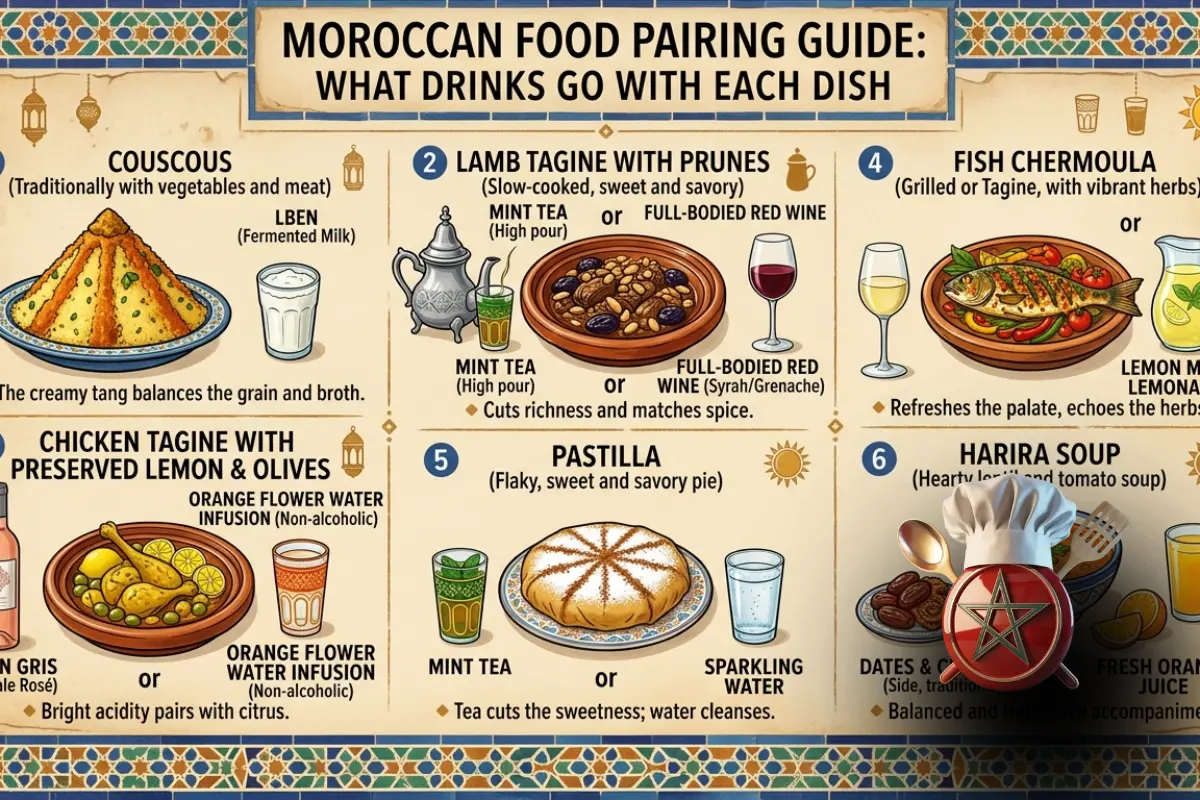
When it comes to experiencing authentic Moroccan cuisine, the harmony between food and beverages plays a crucial role in creating the perfect dining experience. The art of pairing drinks with Moroccan dishes goes far beyond simply quenching thirst – it's about enhancing flavors, balancing spices, and honoring centuries-old traditions that have shaped one of the world's most beloved culinary cultures.
Moroccan hospitality is legendary, and beverages are central to this tradition. From the ceremonial preparation of mint tea to the careful selection of wines that complement complex tagine flavors, understanding proper drink pairings will elevate your Moroccan dining experience whether you're cooking at home or dining out. This comprehensive guide will walk you through the essential principles of Moroccan beverage pairing, traditional drinks, and modern alternatives that work beautifully with Morocco's rich culinary heritage.
The key to successful Moroccan food and drink pairing lies in understanding the flavor profiles of traditional dishes – the warming spices like cinnamon and ginger, the cooling herbs like mint and cilantro, the richness of preserved lemons, and the heat from harissa and chili peppers. Each beverage choice should either complement these flavors or provide a refreshing contrast that cleanses the palate.
Traditional Moroccan Beverages: The Foundation of Authentic Pairing
Traditional Moroccan beverages form the cornerstone of authentic food pairing in North African cuisine. These time-tested combinations have evolved over centuries, creating perfect harmony between liquid and solid elements of Moroccan meals.
Mint Tea: The Heart of Moroccan Hospitality
Moroccan mint tea, known locally as atay, is far more than a beverage – it's a cultural institution. This sweet, refreshing tea made with green tea, fresh spearmint, and generous amounts of sugar serves as the perfect accompaniment to nearly every Moroccan meal. The preparation itself is an art form, involving multiple rounds of pouring from great heights to create the characteristic foam.
Mint tea pairs exceptionally well with rich, savory dishes because its sweetness and cooling mint properties provide a refreshing counterpoint to warm spices. It's particularly effective with lamb tagines, where the mint helps cut through the richness of the meat while the sugar balances the earthiness of preserved lemons and olives. The tea's natural astringency from green tea leaves also helps cleanse the palate between bites of heavily spiced foods.
For pastries and sweets like baklava, chebakia, or makroudh, mint tea creates a perfect balance. The tea's sweetness doesn't compete with desserts but rather enhances them, while the mint provides a fresh finish that prevents palate fatigue from rich, honey-soaked pastries.
Café Noir: Strong Coffee for Bold Flavors
Moroccan coffee culture centers around small cups of intensely strong, often spiced coffee. Unlike the elaborate tea ceremony, Moroccan coffee is typically served quickly and consumed in small quantities. The coffee is sometimes flavored with cardamom, cinnamon, or even a pinch of ground ginger.
This robust coffee pairs beautifully with breakfast foods like msemen (flaky pancakes), rghaif, or simple bread with honey and butter. The bitter notes in the coffee complement sweet breakfast accompaniments while providing the caffeine kick needed to start the day. Coffee also works well with afternoon snacks, particularly nuts, dates, and light pastries.
Fresh Juices and Traditional Drinks
Morocco's abundant citrus fruits and other produce create opportunities for fresh juice pairings. Orange juice, particularly from Morocco's famous Valencia oranges, provides a bright, acidic contrast to rich tagines and grilled meats. The citrus notes in orange juice echo the preserved lemon flavors common in Moroccan cooking while adding natural sweetness.
Pomegranate juice offers antioxidant benefits and a tart-sweet flavor that pairs beautifully with lamb and beef dishes. Its deep red color and complex flavor profile complement the earthiness of Moroccan spices while providing a luxurious drinking experience.
Traditional drinks like leben (buttermilk) and various herb-infused waters provide cooling relief from spicy foods. These lighter beverages are particularly effective with heavily seasoned dishes, offering both hydration and palate cleansing properties.
Wine Pairing with Moroccan Cuisine
While Morocco has a developing wine industry, the principles of wine pairing with Moroccan food can be applied using wines from any region. The key is understanding how different wine characteristics interact with the complex spice blends and cooking techniques used in Moroccan cuisine.
Red Wine Pairings
Red wines with moderate tannins and good fruit concentration work best with Moroccan red meat dishes. For lamb tagines with dates and apricots, consider a medium-bodied red wine with some sweetness or fruit-forward characteristics. Côtes du Rhône wines, with their blend of Grenache and Syrah, provide spicy notes that complement Moroccan spice blends while offering enough structure to stand up to rich meat dishes.
Beef tagines, particularly those with robust spices like ras el hanout, pair well with full-bodied reds that can match their intensity. However, avoid wines with excessive tannins, as they can clash with the warming spices and create an astringent sensation. Instead, look for wines with good fruit concentration and moderate alcohol levels.
For grilled meats and kebabs, lighter red wines work beautifully. The smoky flavors from grilling complement earthy red wines, while the char on the meat provides enough intensity to match wine tannins without overwhelming the pairing.
White Wine and Rosé Options
White wines offer excellent pairing opportunities with Moroccan cuisine, particularly for chicken tagines, fish dishes, and vegetarian preparations. Aromatic white wines like Gewürztraminer or Riesling complement the exotic spices in Moroccan cooking while providing the acidity needed to balance rich sauces.
For chicken tagines with preserved lemons and olives, crisp white wines with good minerality work exceptionally well. The wine's acidity echoes the preserved lemon's tartness while the mineral notes complement olive flavors. Sancerre, Albariño, or dry Riesling all provide this combination of acidity and mineral complexity.
Rosé wines bridge the gap between red and white wine pairings, offering the freshness of white wine with some of the body and complexity of reds. This makes rosé particularly effective with mixed dishes, seafood tagines, or meals that combine multiple flavor profiles.
Moroccan Wine Regions
Morocco's own wine regions, primarily in the Meknes and Casablanca areas, produce wines specifically designed to complement local cuisine. These wines often feature grape varieties that thrive in Mediterranean climates and are vinified with local food pairing in mind.
Moroccan red wines tend to be full-bodied with good fruit concentration, making them natural partners for local meat dishes. The country's white wines often feature crisp acidity and mineral notes that work beautifully with seafood and poultry preparations common along Morocco's extensive coastline.
Pairing Drinks with Specific Moroccan Dishes
Different Moroccan dishes require specific pairing considerations based on their ingredients, cooking methods, and flavor profiles. Understanding these individual requirements helps create optimal dining experiences.
Tagine Pairings
Tagines represent Morocco's most iconic dish category, and their diverse ingredients and cooking styles require thoughtful beverage selection. Sweet tagines featuring dried fruits like apricots, prunes, or dates pair beautifully with aromatic white wines or light red wines with some residual sweetness. The fruit flavors in the wine echo those in the dish while the wine's acidity cuts through rich meat.
Savory tagines with preserved lemons and olives work well with crisp, mineral white wines or light red wines with good acidity. The wine's brightness complements the preserved lemon's intensity while cleansing the palate between rich bites.
Vegetable tagines offer the most flexibility in pairing options. Root vegetable tagines pair well with earthy red wines, while green vegetable tagines work better with fresh, herbaceous whites or rosé wines.
Couscous Combinations
Couscous dishes vary widely in their ingredients and flavors, requiring different pairing approaches. Traditional couscous with seven vegetables benefits from light, refreshing beverages that don't compete with the dish's complexity. Mint tea remains the classic choice, but light white wines or sparkling water with citrus also work well.
Meat couscous dishes can handle more robust beverage pairings. The grain's mild flavor provides a neutral base that allows both the meat preparations and the chosen beverage to shine. Consider the meat and vegetable components when selecting wines, following similar principles to tagine pairing.
Sweet couscous desserts pair beautifully with mint tea or lightly sweetened herbal teas. The grain's texture and any added nuts or dried fruits determine the ideal beverage sweetness level.
Pastries and Sweet Treats
Moroccan pastries range from delicate, honey-soaked creations to rich, nut-filled delights. Each requires different beverage considerations. Delicate pastries like gazelle horns pair well with light teas or even champagne for special occasions. The bubbles in sparkling wine cleanse the palate while the wine's acidity balances sweet flavors.
Rich pastries like baklava or ma'amoul require beverages that can cut through their sweetness and richness. Strong mint tea, espresso, or even fortified wines provide the necessary intensity to balance these indulgent treats.
Fruit-based pastries work well with beverages that complement their specific fruit flavors. Almond pastries pair beautifully with amaretto-flavored teas or wines with nutty characteristics.
Modern Beverage Alternatives and Creative Pairings
Contemporary dining doesn't always call for traditional beverages, and modern alternatives can create exciting pairing opportunities while respecting Moroccan culinary traditions.
Craft Beer and Moroccan Food
The growing craft beer movement has created interesting pairing opportunities with Moroccan cuisine. Wheat beers and witbiers, often spiced with coriander and orange peel, complement Moroccan spice blends naturally. The creamy texture of wheat beers also provides a cooling effect against spicy dishes.
For heartier meat dishes, consider amber ales or Belgian-style ales with complex flavor profiles. These beers offer enough character to match intense Moroccan flavors without overwhelming delicate spice balances. The carbonation in beer also helps cleanse the palate between bites of rich food.
Lighter dishes like grilled fish or vegetable preparations pair well with pilsners or light lagers. These crisp beers provide refreshment without competing with subtle flavors, making them ideal for outdoor dining or casual meals.
Cocktail Pairings
Creative cocktails can incorporate Moroccan flavors while providing sophisticated pairing options. Mint-based cocktails like mojitos or mint juleps echo the mint tea tradition while adding alcoholic complexity. These cocktails work particularly well with grilled meats or as pre-dinner drinks.
Citrus-forward cocktails complement preserved lemon flavors in many Moroccan dishes. Cocktails featuring orange, lemon, or lime provide the acidity needed to balance rich foods while adding festive elements to dining experiences.
Spiced cocktails using ingredients like cinnamon, cardamom, or ginger create flavor bridges with Moroccan spice blends. These warming cocktails are particularly effective in cooler weather or with winter comfort foods.
Non-Alcoholic Sophisticated Options
For those avoiding alcohol, sophisticated non-alcoholic options can provide complex flavor pairings. Sparkling water with fresh fruit or herbs creates refreshing accompaniments to rich foods. Adding mint, citrus, or even pomegranate seeds provides flavor complexity while maintaining the cooling properties essential to Moroccan dining.
Kombucha and other fermented beverages offer complexity and slight acidity that can complement Moroccan flavors. Choose flavors that complement rather than compete with food spices – ginger kombucha with meat dishes or citrus varieties with fish and poultry.
High-quality fruit juices, particularly those featuring Mediterranean fruits, provide natural pairing opportunities. Pomegranate, orange, and grape juices all offer different characteristics that can enhance various Moroccan dishes when chosen thoughtfully.
| Moroccan Dish Type | Traditional Pairing | Wine Alternative | Modern Option |
|---|---|---|---|
| Lamb Tagine with Dates | Mint Tea | Côtes du Rhône Red | Spiced Cocktail |
| Chicken with Preserved Lemons | Mint Tea | Sancerre White | Citrus Kombucha |
| Vegetable Couscous | Mint Tea | Light Rosé | Sparkling Water with Herbs |
| Grilled Fish | Fresh Orange Juice | Albariño White | Light Pilsner |
| Honey Pastries | Strong Mint Tea | Moscato | Espresso |
Seasonal Considerations and Temperature Guidelines
Seasonal considerations play a crucial role in optimal beverage pairing with Moroccan cuisine. The same dish may call for different drink pairings depending on weather, time of year, and dining context.
Summer Pairing Strategies
During hot weather, cooling beverages become essential for comfort and digestion. Iced mint tea, served in the traditional style but chilled, provides familiar flavors with temperature relief. The cooling properties of mint are particularly beneficial when dining on spicy foods in warm weather.
Chilled white wines and rosés work better than heavy reds during summer months. The refreshing qualities of cold wine complement the natural cooling elements in many Moroccan dishes, such as cucumber, mint, and citrus. Light, chilled red wines can work for those who prefer red wine, but serving temperature becomes crucial.
Fresh fruit juices and agua frescas incorporating Moroccan flavors provide non-alcoholic cooling options. Watermelon juice with mint, citrus-based drinks, or pomegranate agua fresca all provide refreshment while complementing food flavors.
Winter Warming Options
Cold weather calls for warming beverages that complement hearty winter versions of Moroccan dishes. Hot mint tea remains perfect year-round, but consider adding warming spices like cinnamon or ginger for extra comfort during cold months.
Red wines served at proper cellar temperature provide warming alcohol content and robust flavors that match heartier winter tagines and meat dishes. The tannins in red wine also pair well with the richer, more substantial dishes typically prepared during colder months.
Spiced teas and herbal infusions offer non-alcoholic warming options. Cinnamon tea, ginger tea, or blends incorporating traditional Moroccan spices provide comfort and flavor complementarity without alcohol.
| Season | Ideal Temperature | Best Beverage Types | Flavor Focus |
|---|---|---|---|
| Summer | Chilled (45-55°F) | Iced tea, chilled wines, fresh juices | Cooling, refreshing, light |
| Winter | Warm to room temp | Hot tea, room temp wines, warm spices | Warming, robust, comforting |
| Spring | Cool (50-60°F) | Light wines, herbal teas, floral notes | Fresh, delicate, aromatic |
| Fall | Moderate (55-65°F) | Medium wines, spiced teas, fruit juices | Balanced, spiced, fruity |
Frequently Asked Questions
What is the most traditional drink to serve with Moroccan food?
Mint tea (atay) is the most traditional and versatile beverage for Moroccan cuisine. This sweet green tea with fresh mint leaves has been served with Moroccan meals for centuries and pairs well with virtually every dish, from savory tagines to sweet pastries. The tea's preparation is also part of Moroccan hospitality traditions, making it both a beverage and cultural experience.
Can I drink wine with Moroccan food, and what types work best?
Yes, wine pairs excellently with Moroccan cuisine. For red wines, choose medium-bodied options with good fruit concentration like Côtes du Rhône or Grenache blends. For white wines, crisp, mineral varieties like Sancerre, Albariño, or dry Riesling work beautifully. Rosé wines offer versatility and pair well with mixed dishes. The key is avoiding wines with excessive tannins or alcohol that might clash with delicate spices.
What drinks help cool the palate when eating spicy Moroccan dishes?
Mint tea is the traditional choice for cooling spicy foods, as the mint provides natural cooling properties while the sweetness balances heat. Other effective options include chilled white wines, fresh citrus juices, yogurt-based drinks like leben, or sparkling water with cucumber or mint. Avoid very cold drinks immediately with hot, spicy food, as the temperature contrast can be jarring.
Are there good non-alcoholic alternatives to wine for Moroccan food pairing?
Absolutely! Traditional mint tea remains the best non-alcoholic pairing, but other excellent options include fresh pomegranate juice, citrus-based drinks, kombucha (especially ginger or citrus flavors), sparkling water with fresh herbs, and high-quality grape juices. These beverages provide the acidity and complexity needed to complement Moroccan flavors without alcohol.
How do I pair drinks with different types of tagines?
Pairing depends on the tagine's main ingredients and flavor profile. Sweet tagines with dried fruits pair well with aromatic white wines or light reds with some sweetness. Savory tagines with preserved lemons work with crisp, mineral whites or mint tea. Meat tagines can handle more robust reds, while vegetable tagines pair with lighter options. Consider the dominant flavors – sweet, savory, spicy, or rich – and choose beverages that either complement or provide refreshing contrast.
Conclusion: Creating Perfect Moroccan Dining Experiences
Mastering the art of pairing beverages with Moroccan cuisine opens doors to deeper appreciation of this magnificent culinary tradition. Whether you choose traditional mint tea, carefully selected wines, or creative modern alternatives, the right beverage pairing enhances every aspect of the dining experience – from the first aromatic sip to the final satisfying swallow.
The beauty of Moroccan beverage pairing lies in its flexibility and respect for both tradition and innovation. While mint tea remains the cornerstone of authentic Moroccan dining, understanding how different beverages interact with complex spice blends, cooking techniques, and seasonal ingredients allows for creative exploration while honoring cultural traditions.
Remember that successful pairing is ultimately about balance – finding beverages that either complement the flavors in your chosen dishes or provide refreshing contrast without overwhelming delicate spice work. Consider factors like season, time of day, dining context, and personal preferences when making selections.
As you explore these pairing principles, don't be afraid to experiment while keeping traditional foundations in mind. The rich tradition of Moroccan hospitality centers around sharing food and drink in ways that bring people together and create memorable experiences. Whether you're serving an intimate dinner for two or hosting a large gathering, thoughtful beverage selection will elevate your Moroccan dining experience and honor the beautiful traditions behind this incredible cuisine.
Start with the classics – mint tea with your first homemade tagine, fresh orange juice with morning pastries, or a crisp white wine with grilled fish. As you become more comfortable with basic pairings, branch out into creative combinations that reflect your personal taste while respecting the fundamental principles that make Moroccan cuisine so special. The journey of discovery through Moroccan food and beverage pairing is as rewarding as the destination.