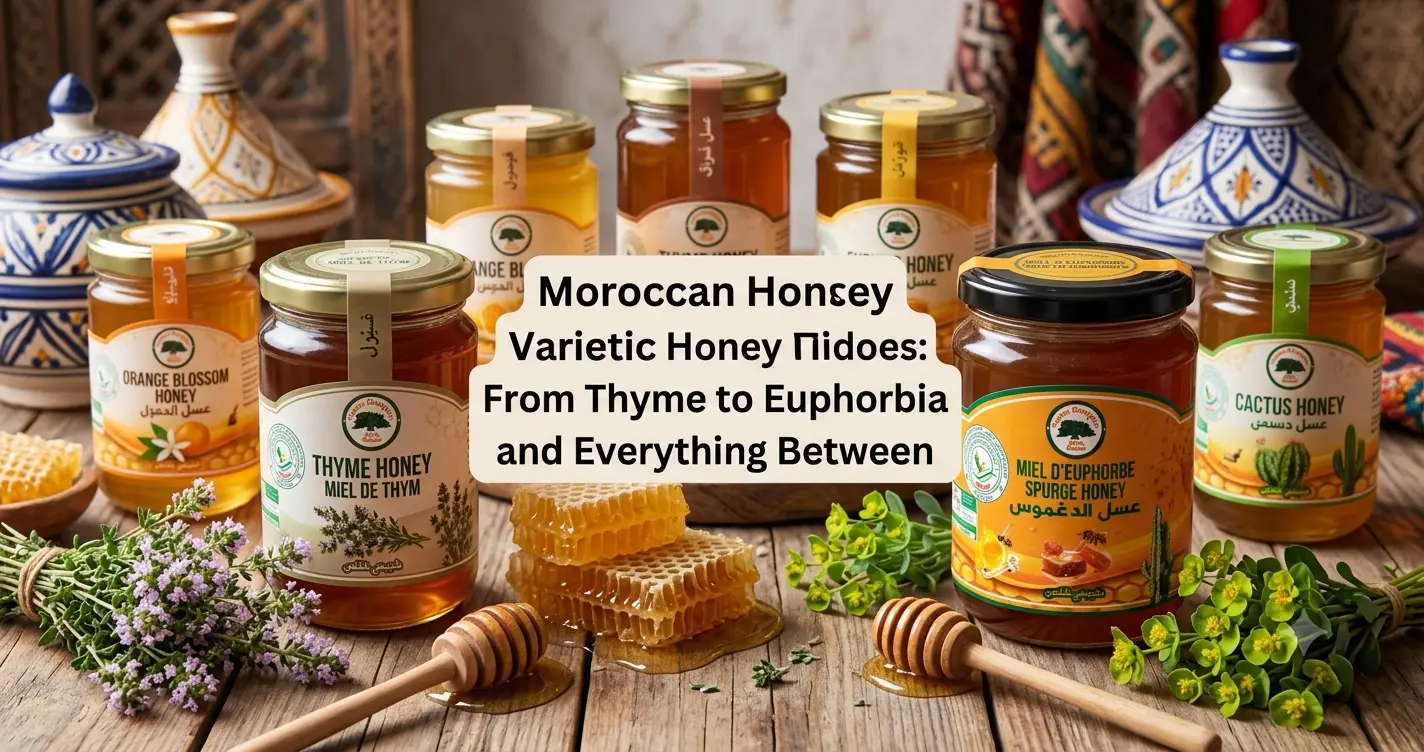
There is a moment, somewhere in the middle of a Moroccan medina, when a vendor presses a small wooden stick into a jar of amber liquid and offers it to you. You taste it, and something unexpected happens — your entire understanding of what honey can be shifts entirely. It is not simply sweet. It is resinous, herbaceous, faintly smoky, deeply complex, and unlike anything you have encountered in a supermarket aisle back home. That jar, more often than not, holds one of Morocco's extraordinary regional honeys — a product of a landscape so botanically diverse and a beekeeping tradition so ancient that the country has quietly become one of the most fascinating honey territories on earth. This is the world we are stepping into today, and I promise you, once you understand what Morocco's bees have been doing across its mountains, valleys, and coastal scrublands, you will never look at a jar of honey the same way again.
The Living Landscape Behind Moroccan Honey
Before we talk about specific honey varieties, we need to talk about Morocco itself — because the honey is inseparable from the land. Morocco occupies a remarkable geographic position. To the north, the Rif Mountains tumble toward the Mediterranean, draped in cedar forests and wild herb communities. The Middle Atlas rises dramatically through the center of the country, home to some of the world's last wild cedar stands and an extraordinary carpet of flowering plants. The High Atlas, with its peaks exceeding four thousand meters, creates entirely different ecological zones as altitude shifts the flora dramatically. To the south, the Anti-Atlas foothills melt into pre-Saharan landscapes where certain desert-adapted plants flower briefly but intensely. Along the Atlantic coast, a maritime climate supports entirely different plant communities, including argan forests found nowhere else on earth.
All of this botanical diversity translates directly into honey. Moroccan bees — primarily the Saharan honey bee (Apis mellifera sahariensis) and the Tellian bee (Apis mellifera intermissa) — have co-evolved with this landscape over thousands of years. These are not the same docile European bees raised in commercial apiaries across the United States or the UK. They are more defensive, more adaptive, and arguably more efficient foragers in challenging terrain. The honeys they produce carry the full chemical complexity of the plants they visit — and that complexity is what makes Moroccan honey so worth understanding deeply.
Moroccan beekeeping tradition stretches back well before written records. Archaeological evidence suggests honey harvesting in North Africa dates to at least the Neolithic period, and by the time Berber civilization was flourishing across the Maghreb, honey had already assumed a central role in medicine, ritual, trade, and cuisine. The Arabic word for beekeeper, nahhaal, appears frequently in medieval Moroccan texts, and Ibn Battuta himself noted the quality of honey he encountered during his travels through the Maghreb in the fourteenth century.
Thyme Honey: The Backbone of Moroccan Beekeeping
If you were to ask a Moroccan beekeeper which honey they are most proud of, there is a good chance they would say thyme honey — assel azir in Tamazight (Berber), or asel zaatar in Moroccan Arabic. And they would be right to be proud, because Moroccan thyme honey is genuinely exceptional by any global standard.
The Wild Thyme of the Atlas
The thyme that grows wild across Morocco's mountain regions is not the same as the mild, almost grassy thyme you buy in a supermarket. Moroccan wild thyme (Thymus broussonetii, Thymus satureioides, and several other endemic species) is intensely aromatic, high in thymol and carvacrol, and flowers abundantly during spring and early summer across the Middle and High Atlas slopes. When bees work these flowers, they produce a honey that is unmistakably herbal — almost medicinal in its intensity.
The color of authentic Moroccan thyme honey ranges from amber to deep reddish-amber, sometimes with a slight greenish tinge when freshly extracted. The aroma is immediately recognizable: warm, herbaceous, with a slight camphor note and a lingering floral undertone. The taste is complex — initially sweet, then distinctly herbal, with a pleasant mild bitterness in the finish that distinguishes it from anything produced from cultivated thyme elsewhere.
Regional Variations Within Thyme Honey
Not all Moroccan thyme honey is identical. Geography plays a crucial role:
- Middle Atlas thyme honey (around Ifrane, Azrou, and Midelt): Tends to be lighter in color with a brighter, more citrusy thyme note and exceptional floral complexity, because bees also visit cedar flowers, wild rose, and numerous other mountain species alongside the dominant thyme.
- High Atlas thyme honey (Ouarzazate region, Aït Benhaddou area): Deeper, darker, more resinous, with an almost balsamic quality. The altitude and drier conditions concentrate the essential oils in the thyme flowers, and this shows clearly in the honey.
- Rif Mountain thyme honey: Lighter and more aromatic, with a particularly floral character influenced by the Mediterranean microclimate and the proximity of lavender, rosemary, and rockrose growing alongside the thyme.
Thyme honey is the variety most commonly used in traditional Moroccan cooking, drizzled over msemen (square pan-fried bread), stirred into argan oil for the beloved breakfast combination known as amlou, and used as a glaze for slow-roasted lamb. You can explore many recipes that feature this honey at MaCooking, where the culinary applications are explored in depth alongside the cultural context of each dish.
Euphorbia Honey: Morocco's Most Controversial Treasure
Now we arrive at the honey that stops people in their tracks — the one that requires a conversation, a cultural lesson, and occasionally a warning. Euphorbia honey, known in Morocco as assel dag or assel al-ferbione, is produced by bees foraging on species of Euphorbia — the same genus that includes some of the world's most toxic plants.
Understanding the Euphorbia Paradox
Let's address the obvious concern immediately: euphorbia plants contain highly caustic latex — a milky white sap that causes severe burns on contact with skin and mucous membranes and is toxic to most mammals. So how is honey made from euphorbia flowers safe to eat? The answer lies in what bees actually collect. Bees harvest nectar from the nectaries at the base of euphorbia flowers — structures that produce sugary nectar without the toxic latex compounds. The bees do not collect the sap. Through the enzymatic process of honey production, any residual compounds are further neutralized. The resulting honey, when properly made, is consumed safely in Morocco — and has been for centuries.
That said, euphorbia honey does retain certain bioactive compounds that distinguish it from virtually any other honey on earth. It has a distinctive sharp, slightly peppery, almost burning aftertaste that arrives well after the initial sweetness fades. Some tasters describe it as warm, others as faintly medicinal, and a few brave souls describe it as borderline aggressive. It is, to put it plainly, not a honey for the faint of heart — and it is absolutely not a honey to drizzle carelessly over everything.
The Euphorbia Species of Morocco
Morocco hosts a remarkable diversity of euphorbia species, and different species yield honey with slightly different character:
- Euphorbia regis-jubae: Found in the southern Anti-Atlas and pre-Saharan regions, this large candelabra-like euphorbia produces nectar during winter flowering. Honey from this species is among the most intensely flavored.
- Euphorbia resinifera: Endemic to the Ourika Valley region near Marrakech, this species has been used medicinally since ancient times (its resin, euphorbium, was one of the ancient world's most important medicines). Honey from its flowers is particularly prized.
- Euphorbia echinus: Common in the Souss Valley and Atlantic-facing lower Atlas slopes, this species produces nectar during winter and early spring, filling an important gap when other forage is scarce.
Medicinal Uses and Cultural Significance
In traditional Moroccan medicine, euphorbia honey occupies a position of considerable respect. It is prescribed by traditional healers (fqihs and herbalists) for digestive complaints, respiratory conditions, and as a general tonic. There is a common saying in southern Morocco that roughly translates as: "The honey that burns in your throat is the honey that heals your stomach." This reflects a genuine folk pharmacological understanding — the bioactive compounds that give euphorbia honey its intensity are precisely the ones believed to confer its healing properties.
"In forty years of beekeeping in the Anti-Atlas, I have never seen a sick man refuse euphorbia honey when it was offered to him as medicine. The bitterness is the medicine. You do not want your cure to be easy — you want it to be true." — Brahim, third-generation beekeeper from Tiznit, interviewed during research for MaCooking's ingredient series.
Jujube Honey: The Desert Sweetness
Travel south from Marrakech into the pre-Saharan foothills, or east toward the Draa Valley, and you enter jujube country. The jujube tree (Ziziphus lotus and Ziziphus jujuba) grows with remarkable tenacity in Morocco's drier regions, and in spring, its small yellow-green flowers produce nectar in quantities that can trigger what beekeepers call a "flow" — a period of such intense nectar availability that a hive can fill supers with astonishing speed.
Flavor Profile and Characteristics
Jujube honey — called assel sidr in some regions (though purists distinguish this from true sidr/lote honey) — is one of Morocco's most visually striking honeys. It is typically a warm golden to deep amber color, sometimes with reddish undertones. The texture tends toward the thick side, and it granulates relatively slowly compared to higher-altitude honeys.
The flavor is distinctly sweet with a rich, slightly caramel-like quality, a faint fruitiness reminiscent of dates or dried figs, and a mild floral note in the finish. It lacks the medicinal sharpness of euphorbia honey or the herbal intensity of thyme honey — it is a more approachable, universally pleasing honey that makes an excellent gateway into Moroccan honey culture for those new to the subject.
In culinary terms, jujube honey pairs beautifully with Moroccan pastry — especially baklawa, chebakia (the sesame-honey cookies made during Ramadan), and the various almond pastries that are central to Moroccan celebration cooking. Its relatively mild sweetness does not compete with subtle spices the way a more assertive honey might.
Wildflower and Polyfloral Honeys: The Art of Terroir
Morocco produces a wide range of polyfloral honeys — honeys where bees have foraged across many plant species simultaneously — and these are, in many ways, the most interesting category to explore because they are the most direct expression of a specific place and season.
Atlantic Coast Wildflower Honey
The Atlantic-facing slopes of Morocco, from the Gharb plain down through the Doukkala region toward Agadir, support a maritime Mediterranean flora of extraordinary diversity. Spring honey from these regions is typically light golden to pale amber, with a bright, almost effervescent quality — floral, slightly citrusy, with notes of what might be described as sea breeze and wild herbs. The dominant nectar sources shift year by year: some years wild mustard dominates, other years it is fennel, wild carrot, or the mass flowering of various legumes after winter rains.
Cedar Forest Honey
The Atlas cedar forests around Ifrane and Azrou produce what many connoisseurs consider Morocco's most complex wildflower honey. Cedar itself does not contribute significantly to nectar production, but the cedar forest understory supports an incredibly rich flora of wild herbs, bulbs, and flowering shrubs. Honey from apiaries situated within these forests has a quality that experienced tasters often describe as "vertical" — it seems to have layers of flavor that reveal themselves sequentially, from an initial bright sweetness through herbal mid-notes to a long, slightly resinous, almost woody finish.
Argan Flower Honey
The argan tree (Argania spinosa) is endemic to Morocco's Souss Valley and surrounding regions — it literally grows nowhere else on earth in its natural habitat. Most people know argan through its oil, celebrated globally for both culinary and cosmetic uses. But argan also flowers, and during the brief flowering season, bees produce a honey that carries the unmistakable character of the argan blossom: faintly nutty, warmly sweet, with a subtle richness that feels almost buttery.
Pure argan flower honey is difficult to find even within Morocco — the flowering season is short, the trees are spread across a specific geographic zone, and most honey from the argan forest region is a blend of argan and other species (notably euphorbia, jujube, and various herbs) that coflower in the same ecosystem. If you encounter someone selling "pure argan honey," healthy skepticism is warranted. That said, honey from the argan forest zone — even if polyfloral — is genuinely distinctive and worth seeking out.
At MaCooking, we regularly feature the broader argan food culture of Morocco, including how argan oil, argan honey, and amlou (the almond-argan-honey paste) form a culinary ecosystem that is unique to this corner of the world.
Comparison of Morocco's Major Honey Varieties
| Honey Type | Primary Region | Color | Flavor Profile | Best Culinary Use | Availability |
|---|---|---|---|---|---|
| Thyme (Zaatar) | Middle & High Atlas | Amber to reddish-amber | Herbal, medicinal, warm, complex | Drizzled over bread, amlou, meat glazes | Widely available |
| Euphorbia (Dag) | Anti-Atlas, Souss Valley | Dark amber to brown | Sharp, peppery, burning finish, intense | Medicinal use, bold cheese pairings | Limited, specialty markets |
| Jujube (Sidr) | Draa Valley, pre-Saharan | Golden to deep amber | Caramel-like, fruity, mild floral | Pastries, chebakia, general sweetening | Moderately available |
| Argan Flower | Souss Valley (endemic zone) | Pale golden | Nutty, buttery, subtly sweet | Breakfast spreads, delicate desserts | Rare, highly seasonal |
| Cedar Forest Wildflower | Middle Atlas (Ifrane region) | Light to medium amber | Complex, layered, resinous finish | Cheese boards, teas, fine pastries | Limited, artisan producers |
| Atlantic Wildflower | Atlantic coastal plains | Light golden | Bright, floral, citrusy, fresh | Beverages, light desserts, yogurt | Seasonal, regional markets |
Honey in Moroccan Cultural Life: More Than a Sweetener
To understand Moroccan honey fully, you need to understand that honey in Moroccan culture is not simply a food. It occupies a space simultaneously in cuisine, medicine, religion, and social ritual that has no real equivalent in most Western cultures.
Honey and Islamic Tradition
The Quran references honey explicitly in Surah An-Nahl (The Bee), describing it as a healing for mankind — "fihi shifaa' lil-naas" — and this has given honey an elevated spiritual status in Moroccan Muslim culture that persists to this day. Offering honey to a guest is an act of generosity with religious resonance. At weddings, the bride is often offered honey as part of the ritual of crossing the threshold of her new home. During Ramadan, honey-dipped pastries are central to the iftar (breaking of fast) table. The deep connection between honey and baraka (divine blessing) is woven throughout Moroccan life in ways that are invisible to the casual observer but immediately apparent once you know to look.
Honey in Traditional Moroccan Medicine
Moroccan traditional medicine, which draws on Greco-Arabic medical theory (tibb nabawi, prophetic medicine), Berber herbal traditions, and centuries of empirical observation, has an extraordinarily sophisticated honey pharmacopeia. Different honeys are prescribed for different conditions:
- Thyme honey: Respiratory conditions, particularly coughs and bronchitis; also used as a general antimicrobial for wound treatment.
- Euphorbia honey: Digestive disorders, particularly constipation and intestinal parasites; also used for joint pain when combined with black seed (habba sawda).
- Jujube honey: General tonic, fatigue recovery, and as a nervine for anxiety and sleep disturbances.
- Forest wildflower honey: Liver complaints and seasonal immunity support.
Contemporary ethnobotanical research has validated many of these traditional uses, finding significant antimicrobial, anti-inflammatory, and antioxidant activity in Moroccan honeys — particularly thyme and euphorbia varieties, which contain exceptionally high concentrations of phenolic compounds.
The Social Ritual of Honey at the Moroccan Table
In a traditional Moroccan household, honey appears at breakfast in several forms simultaneously. There will almost always be a small jar of honey on the table alongside argan oil, olive oil, and fresh butter. Msemen, baghrir (the thousand-hole pancakes that absorb butter and honey like a sponge), and khobz (round bread) serve as vehicles. The combination of argan oil and honey — sometimes with crushed almonds to make amlou — is considered one of the great Moroccan breakfast experiences, and rightly so.
Honey also appears in the spice-heavy context of Moroccan slow cooking. The famous mrouzia tagine — lamb with raisins, almonds, ras el hanout, and honey — is one of the most sophisticated sweet-savory dishes in world cuisine, and it relies on honey's complexity to bring together what might otherwise be conflicting flavors. We cover the full history and technique of mrouzia at MaCooking, including which honey varieties work best and why.
Regional Honey Traditions: A Geographic Tour
| Region | Key Honey Types | Traditional Uses | Best Season to Find Fresh Honey | Notable Characteristics |
|---|---|---|---|---|
| Rif Mountains | Thyme, wildflower, rockrose | Breakfast, herbal medicine, mint tea sweetener | May–July | Mediterranean influence, lighter florals |
| Middle Atlas | Thyme, cedar forest wildflower | Amlou, pastries, respiratory remedies | April–June | Most complex polyfloral profiles in Morocco |
| High Atlas | Thyme, lavender, wildflower | Tagine glazes, medicinal use | June–August | Intense, darker, more resinous |
| Souss Valley | Argan, euphorbia, thyme | Traditional medicine, breakfast spreads | March–May | Unique argan floral notes, world-class euphorbia |
| Anti-Atlas | Euphorbia, jujube, wildflower | Medicinal, export, artisan market | January–April | Rare euphorbia honeys, desert intensity |
| Draa Valley / Zagora | Jujube, date palm, wildflower | Pastries, Ramadan sweets, tonic use | February–April | Rich, caramel-forward, desert terroir |
| Atlantic Coastal Plains | Wildflower, fennel, citrus blossom | Light cooking, beverages, export | March–June | Bright, accessible, mass-market appeal |
How to Buy, Store, and Use Moroccan Honey
Whether you are sourcing Moroccan honey from a specialist importer in London, a Middle Eastern grocery in Toronto, or — most exciting of all — directly from a producer at a Moroccan souk, there are a few things worth knowing before you spend your money.
Identifying Authentic Moroccan Honey
The Moroccan honey market, like all honey markets worldwide, has adulteration problems. A jar labeled "Moroccan thyme honey" in a Western supermarket may contain blended, partially synthetic, or heavily processed honey with minimal connection to actual Moroccan flora. Here is how to approach the question of authenticity:
- Source matters enormously: The most reliable route to authentic Moroccan honey is through certified fair-trade importers who work directly with small-scale Moroccan beekeepers, or through specialty food importers who can provide provenance documentation.
- Look for crystallization: Authentic raw Moroccan honey will crystallize over time, particularly at lower temperatures. Thyme honey crystallizes relatively slowly into a fine-grained texture; some wildflower honeys crystallize faster and more coarsely. Honey that never crystallizes over months has almost certainly been heavily processed or adulterated.
- Color and opacity: Raw unfiltered Moroccan honey is not crystal-clear. It has a slight haziness from pollen particles and has natural variations in color. Perfectly clear, uniformly colored honey has been filtered to the point where much of its character — and arguably its nutritional complexity — has been removed.
- Aroma is everything: Open the jar and smell it before you taste it. Authentic Moroccan thyme honey should hit you with an immediate herbal, warm, almost medicinal aroma. If it smells generically sweet with nothing distinctive, it is not a quality product regardless of the label.
Proper Storage of Moroccan Honey
- Store in glass containers, not plastic. Honey is mildly acidic and can absorb compounds from plastic over time, particularly in warm climates.
- Room temperature is ideal for most Moroccan honeys. Refrigeration is unnecessary and can cause rapid crystallization, making the honey difficult to use.
- Keep away from direct sunlight, which degrades the volatile aromatic compounds responsible for the distinctive flavors.
- Never add water to the jar. Introducing moisture encourages fermentation, and while fermented honey is interesting in its own right, it is not what you want from a premium jar you paid good money for.
- If your honey crystallizes, place the jar in warm (not boiling) water to gently reliquefy it. Never microwave honey at high power — you destroy the enzymes and volatile aromatics that make it special.
Culinary Applications: Getting the Most from Moroccan Honey
Different Moroccan honeys call for different culinary applications, and matching the right honey to the right dish is something that Moroccan home cooks do intuitively but that is worth making explicit for those approaching this tradition from outside it:
- For breakfast spreads and bread: Thyme honey or jujube honey. Both have enough character to be interesting without overwhelming the subtle flavors of fresh bread, msemen, or baghrir.
- For tagines and savory cooking: Thyme honey for its herbal notes that complement spice blends; jujube honey where a more neutral sweetness is wanted. Euphorbia honey is rarely used in cooking due to its intensity.
- For Moroccan pastries: Jujube honey and wildflower honey, both of which have a sweetness profile that complements almond, sesame, and cinnamon without overwhelming them.
- For cheese pairings: Cedar forest wildflower honey or euphoria honey (in very small amounts) with strong aged cheeses, where the boldness of the honey meets the boldness of the cheese on equal terms.
- For beverages: Light wildflower honey dissolved in warm mint tea (though purists will tell you this is unnecessary — Moroccan mint tea traditionally uses sugar, not honey), or thyme honey in warm milk as a soothing bedtime drink.
The Future of Moroccan Honey: Challenges and Opportunities
Moroccan honey production faces real challenges in the twenty-first century, and understanding them is part of understanding the product honestly. Climate change is altering flowering calendars across Morocco's mountains, creating mismatches between bee flight season and peak nectar availability. The expansion of intensive agriculture in valley regions has replaced biodiverse wildflower meadows with monoculture crops, reducing forage quality for bees even as the area under cultivation grows. Pesticide use — particularly the neonicotinoids linked to bee population collapse worldwide — is an increasing concern in Morocco's commercial agriculture zones, though the more remote traditional beekeeping regions remain largely unaffected.
On the other side of the ledger, there are genuine reasons for optimism. Moroccan honey is attracting serious international attention. In 2015, assel azir (Moroccan thyme honey) received geographical indication status, protecting the name and establishing quality standards for international trade. A growing community of young Moroccan entrepreneurs is entering artisan honey production, bringing scientific rigor to traditional practices and creating premium-positioned products that can compete at the very top end of the global honey market.
There is also a cultural revival underway. Younger Moroccans, particularly those in the diaspora in France, Spain, the Netherlands, and North America, are increasingly interested in the food heritage of their families — and honey is central to that heritage. This cultural momentum is one of the forces driving platforms like MaCooking to document, celebrate, and share Moroccan food culture with the widest possible audience, ensuring that knowledge about products like euphorbia honey and cedar forest wildflower honey does not remain locked within specialist communities but becomes accessible to anyone who is curious and hungry to learn.
Frequently Asked Questions About Moroccan Honey
Q1: Is euphorbia honey actually safe to eat, given that euphorbia plants are toxic?
Yes — when properly produced by bees foraging on euphorbia flower nectar (not the latex sap), euphorbia honey is safe for most adults to consume. The bees collect nectar from the nectaries of the flowers, not the caustic sap from the plant's vascular system. Through the enzymatic and evaporative process of honey production, any residual bioactive compounds are significantly reduced. That said, euphorbia honey is not recommended for infants, pregnant women, or individuals with known sensitivities to latex compounds. If you have any concerns, consult with a healthcare provider before consuming this variety, and always start with a small amount to assess your personal tolerance. Euphorbia honey has a very assertive flavor — a pronounced peppery, almost burning aftertaste — so even adventurous eaters should approach it initially in small quantities simply to appreciate its character.
Q2: What makes Moroccan thyme honey different from Greek or Spanish thyme honey?
Several things distinguish Moroccan thyme honey from its Mediterranean counterparts, despite all coming from the same genus of plants. First, the species differ: Moroccan wild thyme species (Thymus broussonetii and Thymus satureioides) are endemic or near-endemic to the Maghreb and have higher concentrations of certain phenolic compounds than the more commonly domesticated Thymus vulgaris used in European cultivation. Second, the beekeeping practices differ: Moroccan beekeeping is largely non-industrial, with smaller hive densities and bees foraging across much greater floral diversity, meaning the "thyme honey" often carries the complexity of dozens of co-flowering species alongside the dominant thyme character. Third, the terroir: the Atlas Mountain soil chemistry, altitude, water availability, and seasonal patterns all influence the chemical profile of the nectar produced. Greek thyme honey, celebrated as it is, comes from a different set of ecological conditions and produces a different product — equally legitimate, but genuinely distinct.
Q3: Where can I buy authentic Moroccan honey outside of Morocco?
Finding genuinely authentic Moroccan honey outside the country requires some effort but is increasingly possible. Your best options are: specialist North African or Middle Eastern food importers (look for companies that specify direct sourcing relationships with Moroccan producers); Moroccan grocery stores in cities with significant Moroccan diaspora communities (Paris, Amsterdam, Montreal, and parts of London are particularly well-supplied); certified fair-trade importers who specialize in Moroccan artisan food products; and occasionally high-end specialty food retailers who have discovered Moroccan honey as a premium product. Online direct-to-consumer Moroccan food retailers are also increasingly available. When purchasing, always look for raw, unfiltered honey with clear provenance information. Be appropriately skeptical of very cheap honey labeled as Moroccan — genuine artisan Moroccan honey is a premium product that cannot be produced cheaply, and suspiciously low prices almost always indicate adulteration or misrepresentation.
Q4: How does Moroccan honey fit into traditional Moroccan cooking? Are there specific dishes I should try?
Moroccan honey is extraordinarily versatile in traditional cooking and appears in more dishes than most outsiders expect. The most iconic uses include: Mrouzia — a celebration tagine of lamb shoulder slow-cooked with ras el hanout, preserved lemon, raisins, blanched almonds, and a generous amount of honey, traditionally prepared for Eid celebrations; Amlou — the beloved Moroccan breakfast paste of toasted ground almonds, argan oil, and honey that is eaten spread thick on bread; Chebakia — deep-fried sesame and almond cookies dipped immediately in warm honey and orange blossom water, central to Ramadan iftar tables; and various honey-glazed pastries (kaab el ghazal, for example, often includes a honey glaze). Beyond specific recipes, honey is simply present at the Moroccan table as a condiment, drizzled over bread, yogurt, and cheeses throughout the day. You will find detailed recipes for all of these preparations, with guidance on which honey varieties to use in each, throughout the recipe library at MaCooking.
Q5: How does Moroccan honey compare nutritionally to regular commercial honey?
This is a question where the honest answer requires separating genuine differences from marketing claims. All honeys share a common basic nutritional profile: primarily fructose and glucose (roughly 70-80% combined), with trace minerals, a small amount of vitamins, and the enzymes introduced by bees during processing. Where authentic raw Moroccan honey — particularly thyme and euphorbia varieties — genuinely distinguishes itself is in its phenolic compound content. Multiple peer-reviewed studies have documented exceptionally high concentrations of polyphenols, flavonoids, and thymol derivatives in Moroccan thyme honey, correlating with strong antioxidant and antimicrobial activity in laboratory conditions. Euphorbia honey has also been studied for its distinctive bioactive profile, which includes compounds not found in most commercial honey varieties. However, it is important to note that much of this research is laboratory-based, and clinical evidence for specific health benefits in humans remains an area of active study. What we can say with confidence is that raw, unprocessed Moroccan honey retains its full complement of these naturally occurring compounds in a way that heavily filtered and heat-treated commercial honey does not — which is one strong argument for seeking out authentic, minimally processed versions even at the premium prices they command.
Conclusion: A Sweet World Worth Exploring
Morocco's honey tradition is one of the great underappreciated food stories of our time. While the world has enthusiastically discovered argan oil, ras el hanout, and preserved lemon, the honey that Moroccan beekeepers have been producing for millennia — from wild thyme blooming across Atlas slopes, from the controversial but extraordinary euphorbia of the southern valleys, from jujube trees in desert oases, from cedar forest meadows where dozens of species flower simultaneously — this honey largely remains a secret shared among those who have been lucky enough to taste it from a small wooden stick in a medina market.
That is changing, and the change is worth celebrating. Premium Moroccan honey is finding its way onto the tables of food-conscious consumers in London, New York, Melbourne, and Montreal. Young Moroccan entrepreneurs are bringing rigorous quality standards to traditional beekeeping. Ethnobotanists and food scientists are documenting what traditional healers and cooks have known for centuries: that this honey is genuinely special, chemically complex, and deserving of the reverence it receives within the culture that produced it.
The best way to continue exploring Morocco's extraordinary food culture — from its honey traditions to its spice heritage, its bread culture, its tagine traditions, and the full sweep of its culinary history — is to keep learning from authoritative, culturally rooted sources. At MaCooking, we are committed to being exactly that source: a platform where genuine culinary expertise, deep cultural knowledge, and a genuine love of Moroccan food come together to give you something truly valuable — not just recipes, but understanding.
So the next time someone offers you a small wooden stick dipped in amber liquid in a Moroccan market, take it. Taste it. And pay attention to what happens next — because Moroccan honey does not simply arrive in your mouth. It tells you a story.