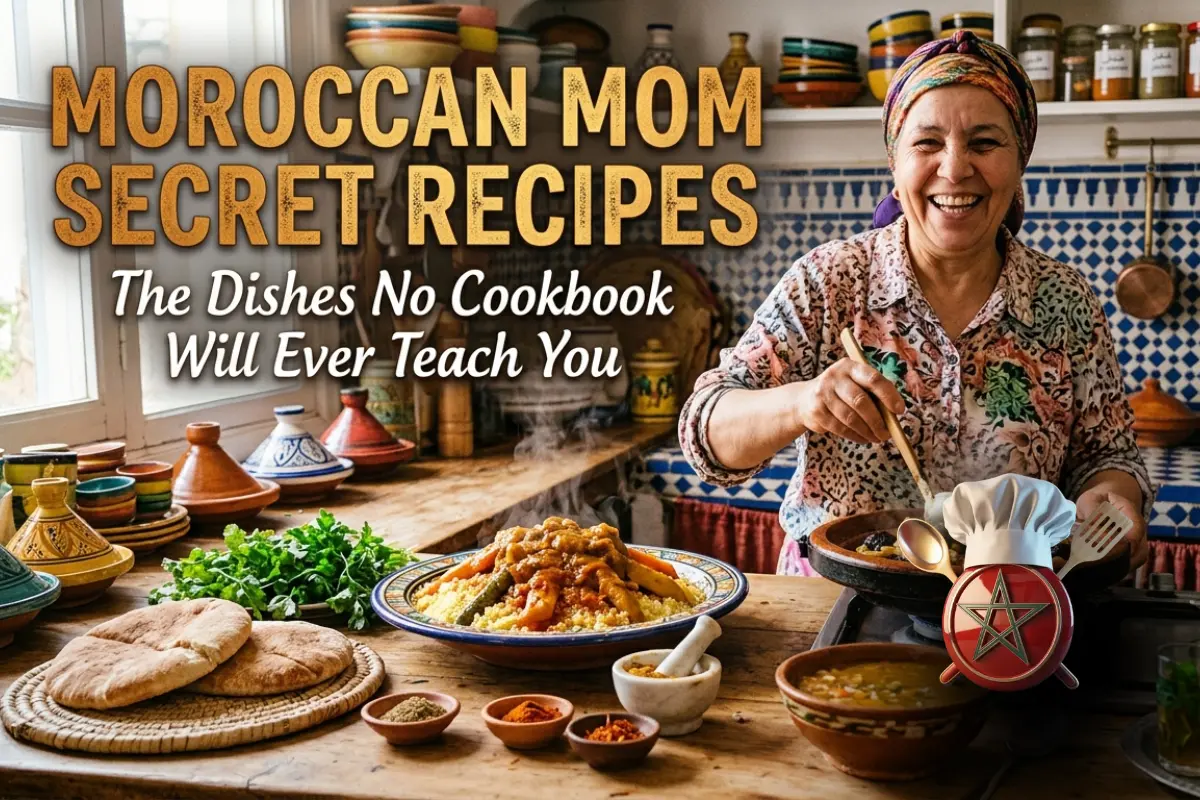
The Hidden Culinary World of Moroccan Mothers
In the bustling souks of Marrakech, the mountain villages of the Atlas, and the coastal towns along Morocco's Atlantic shore, there exists a culinary tradition that has never been fully captured in any cookbook. It's the tradition of Moroccan mothers – the lalla of the household – whose recipes have been passed down through whispered instructions, watchful eyes, and countless hours spent together in the kitchen. These are the dishes that define true Moroccan home cooking, far removed from the tourist-friendly tagines and couscous that have made their way into Western restaurants and recipe books.
What makes these recipes so special isn't just their incredible flavors – it's the techniques, the timing, the intuitive understanding of ingredients that can only come from a lifetime of cooking for family. These mothers don't measure with cups and spoons; they measure with their hearts, their hands, and their deep understanding of how food should taste, smell, and feel. They know exactly when the onions have reached that perfect golden transparency, when the spices have bloomed to their fullest potential, and when a dish has achieved that magical balance that transforms simple ingredients into something extraordinary.
Today, we're going to pull back the curtain on this hidden world. We'll explore the secret techniques, the forgotten dishes, and the family wisdom that has been carefully guarded for generations. These aren't just recipes – they're edible stories, each one carrying the weight of history, family, and the deep love that Moroccan mothers pour into every meal they prepare.
The Philosophy Behind Moroccan Home Cooking
To understand why Moroccan mother's recipes are so different from what you'll find in cookbooks, you first need to understand the philosophy that guides traditional Moroccan home cooking. In Morocco, cooking isn't just about feeding the body – it's about nourishing the soul, strengthening family bonds, and maintaining connections to ancestors and cultural identity.
Moroccan mothers approach cooking as a form of meditation and prayer. They begin each cooking session with a bismillah (in the name of Allah) and infuse every step with intention and love. This spiritual approach to cooking creates an energy that you can actually taste in the final dish. It's something that can't be replicated by simply following a recipe – it comes from the heart and the deep understanding that food is one of life's greatest gifts.
The Concept of Seasonal Harmony
Traditional Moroccan mothers cook according to the rhythms of nature, using ingredients at their peak freshness and adjusting recipes based on the season, the weather, and even the emotional needs of their families. In winter, they might add more warming spices like cinnamon and ginger to their tagines. In summer, they'll incorporate more cooling herbs like mint and cilantro. This intuitive approach to seasonal cooking ensures that every meal is not just delicious, but also perfectly suited to support the body's natural needs.
The Art of Layering Flavors
Perhaps the most closely guarded secret of Moroccan home cooking is the technique of flavor layering. Unlike Western cooking, which often combines all ingredients at once, Moroccan mothers build flavors in careful layers, allowing each one to develop fully before adding the next. This creates a depth and complexity that's impossible to achieve any other way.
For example, when making a traditional family tagine, a Moroccan mother might start by blooming whole spices in oil, then add onions and cook them to three different stages of doneness in the same pot – some until soft and sweet, others until golden, and still others until deeply caramelized. Each layer contributes its own unique flavor profile to the final dish.
Secret Ingredients and Techniques
Every Moroccan mother has her arsenal of secret ingredients and techniques that she uses to elevate everyday dishes into something extraordinary. These secrets are rarely written down and are instead passed from mother to daughter through years of cooking together.
The Magic of Preserved Lemons
While preserved lemons have gained popularity in Western cooking, most cookbooks only scratch the surface of how Moroccan mothers actually use them. The real secret isn't just in having preserved lemons – it's in knowing how to use different parts of the preserved lemon for different purposes, and how to make variations that most people have never heard of.
Traditional Moroccan mothers make several different types of preserved lemons: the standard salt-preserved version that takes a month to cure, a quick version that's ready in just a week, and a special occasion version that includes additional spices and takes three months to fully develop. They know that the rind provides intense citrus flavor, while the pulp adds a unique umami depth that can transform simple chicken or vegetables into something magical.
The Secret Spice Blends
While ras el hanout is well-known outside Morocco, most Moroccan families have their own closely guarded spice blend recipes that have been perfected over generations. These aren't just random combinations of spices – they're carefully balanced formulas that take into account not just flavor, but also the medicinal properties of each ingredient.
One such secret blend is dukkah maghrebi, a mixture of toasted nuts, seeds, and spices that's sprinkled on everything from bread to salads to tagines. Each family's version is slightly different, but the basic technique involves toasting each ingredient separately to bring out its full flavor potential, then combining them in proportions that have been refined over decades.
| Traditional Spice | Secret Preparation Method | Flavor Enhancement |
|---|---|---|
| Cumin | Toasted whole then ground fresh | Nutty, warm depth vs. bitter commercial powder |
| Coriander | Lightly crushed, not powdered | Maintains citrusy oils and texture |
| Ginger | Fresh grated with dried powder | Bright heat with lingering warmth |
| Cinnamon | Whole sticks broken just before use | Sweet spice without bitter notes |
| Saffron | Bloomed in warm water 30 minutes ahead | Full color and flavor extraction |
The Water Technique
One of the most important secrets that Moroccan mothers know is the proper use of water in cooking. This might sound simple, but it's actually one of the most critical aspects of achieving authentic Moroccan flavors. They understand that different dishes require different types of water – some need the mineral-rich water from clay vessels, others benefit from the soft water that comes from rain collection, and still others require the addition of flower waters at specific moments in the cooking process.
For tagines, the traditional technique involves adding water in small amounts throughout the cooking process, rather than all at once. This allows the flavors to concentrate gradually and prevents the meat from becoming tough. The water is added warm, never cold, to avoid shocking the ingredients and disrupting the cooking process.
Forgotten Family Dishes
Beyond the well-known Moroccan dishes that have made their way into international cuisine, there exists a whole category of family dishes that are rarely served outside Moroccan homes. These are the everyday meals, the comfort foods, and the special occasion dishes that define real Moroccan home cooking.
Harira El Bait (Home-Style Harira)
While most people know harira as the soup traditionally eaten to break the fast during Ramadan, the home version is completely different from what you'll find in restaurants or cookbooks. Family harira is heartier, more complex, and varies significantly from household to household based on family preferences and regional influences.
The secret to authentic home-style harira lies in the tedouira – a mixture of flour, tomato paste, and spices that's slowly cooked until it develops a deep, rich color and complex flavor. This base is prepared separately and then gradually incorporated into the soup, creating layers of flavor that develop over hours of slow cooking.
Traditional family harira also includes ingredients that are often omitted from simplified recipes: chunks of beef or lamb that have been browned separately, homemade noodles that are added at just the right moment, and a final garnish of fresh herbs and lemon juice that brightens the entire dish.
Khlea – The Ultimate Preservation Technique
One of the most impressive examples of traditional Moroccan food preservation is khlea – a type of preserved meat that can last for months without refrigeration. This ancient technique was developed by nomadic tribes who needed protein that could survive long journeys across the desert.
The process of making khlea is both art and science. It begins with selecting the right cut of meat – usually beef or lamb with a good fat content – and cutting it into specific sizes that will allow for even preservation. The meat is then slowly cooked in its own fat with a carefully balanced blend of spices that not only provide flavor but also have natural preservative properties.
What makes family khlea special is that each household has developed its own variation over generations. Some families add more coriander for a citrusy note, others include nigella seeds for their earthy flavor, and still others incorporate rose petals for a subtle floral undertone. The key is achieving the perfect balance between preservation and flavor.
Sellou – The Original Superfood
Long before Western nutrition science identified superfoods, Moroccan mothers were preparing sellou – a nutrient-dense mixture of roasted flour, almonds, sesame seeds, and spices that provides sustained energy and essential nutrients. This traditional preparation was especially important for nursing mothers, growing children, and anyone doing physical labor.
The secret to authentic sellou lies in the roasting process. Each ingredient must be roasted separately to its optimal point – the flour until it's golden and nutty, the almonds until they're crispy throughout, the sesame seeds until they're fragrant and lightly colored. The spices are added at different stages, with some going in early to develop deep flavors and others added at the end to maintain their brightness.
Timing and Intuition in Moroccan Cooking
Perhaps the most difficult aspect of Moroccan home cooking to capture in written recipes is the element of timing and intuition. Moroccan mothers don't cook by the clock – they cook by sight, sound, smell, and an intuitive understanding of how ingredients behave under different conditions.
The Art of Slow Cooking
Traditional Moroccan cooking operates on a completely different timeline than Western cooking. Dishes that might take 30 minutes in a Western kitchen can take 3-4 hours in a traditional Moroccan kitchen, not because the process is more complicated, but because the slow development of flavors is considered essential to achieving the proper taste.
This slow cooking philosophy extends beyond just leaving something on low heat. It involves understanding the different phases that ingredients go through as they cook, and knowing exactly when to move from one phase to the next. For example, when making a traditional lamb tagine, there are at least seven distinct phases of cooking, each one building on the previous to create the final complex flavor profile.
Reading the Signs
Experienced Moroccan cooks can tell when a dish is ready not by checking a timer, but by reading various signs that the food provides. They listen for changes in the sound of sizzling, watch for shifts in color and texture, and most importantly, follow their noses to detect the subtle changes in aroma that indicate when flavors have reached their peak development.
For instance, when making preserved lemon and olive tagine, an experienced cook knows that the dish is ready when the preserved lemons have released their oils and the olives have absorbed enough of the cooking liquid to become plump and flavorful. This might take anywhere from 45 minutes to 2 hours, depending on the specific ingredients, the weather, and even the altitude.
| Cooking Stage | Visual Cue | Aroma Indicator | Sound Change |
|---|---|---|---|
| Onion Transparency | Golden edges, translucent center | Sweet, no sharp notes | Gentle bubbling |
| Spice Blooming | Darkened color, slight movement | Fragrant, no bitter smell | Light crackling |
| Meat Browning | Caramelized surface | Rich, roasted notes | Active sizzling |
| Sauce Reduction | Coats spoon, glossy finish | Concentrated flavors | Slow, thick bubbling |
| Final Melding | Ingredients unified | Harmonious, balanced | Quiet simmering |
Regional Family Variations
Morocco's diverse geography has created distinct regional cooking styles, and within each region, individual families have developed their own variations on traditional dishes. These regional and family differences are what make Moroccan home cooking so rich and varied.
Atlas Mountain Cooking Secrets
Families living in the Atlas Mountains have developed cooking techniques adapted to high altitude and cold weather. Their dishes tend to be heartier and more warming, with generous use of spices like ginger, cinnamon, and black pepper. They've also mastered the art of cooking with clay braziers and have techniques for achieving perfect results even when cooking outdoors in challenging weather conditions.
One specialty of Atlas mountain families is tafarnout, a type of bread that's baked in the ashes of the fire. The technique involves wrapping seasoned dough in special leaves and burying it in the coals, creating a bread with a unique smoky flavor and incredibly tender texture. Each family has their own variation, with different seasonings and wrapping techniques passed down through generations.
Coastal Family Traditions
Moroccan families living along the coast have incorporated seafood into traditional recipes in ways that you'll never find in inland cookbooks. They've developed techniques for preserving fish that allow them to be used in tagines and stews months later, creating complex umami flavors that enhance vegetable dishes.
Coastal mothers also have secret techniques for cooking rice that create perfectly fluffy, separate grains even in the humid coastal climate. Their method involves pre-soaking the rice in salted water, then cooking it with a combination of steam and direct heat that results in a texture that's impossible to achieve with standard cooking methods.
Desert Edge Innovations
Families living on the edge of the Sahara have developed remarkable preservation and cooking techniques adapted to extreme heat and limited water resources. They've mastered the art of solar cooking, using the intense desert sun to slowly cook stews and dry fruits and vegetables for year-round use.
These families also have unique techniques for making the most of limited ingredients. They know how to extract maximum flavor from minimal amounts of meat by using every part of the animal in different ways, and they've developed vegetable dishes that are so rich and satisfying they can easily serve as the centerpiece of a meal.
The Social Aspect of Family Cooking
Understanding Moroccan family cooking isn't complete without recognizing its social dimensions. In traditional Moroccan families, cooking is a communal activity that strengthens relationships and passes down not just recipes, but values, stories, and cultural wisdom.
The Kitchen as Community Center
In traditional Moroccan homes, the kitchen is the heart of family life. It's where daughters learn not just how to cook, but how to manage a household, how to be hospitable, and how to maintain family traditions. The cooking process itself is designed to accommodate multiple people working together, with different family members handling different aspects of meal preparation.
This communal approach to cooking creates dishes that are impossible to replicate when cooking alone. The constant tasting, adjusting, and collaborative decision-making that happens when multiple experienced cooks work together results in a level of flavor balance and complexity that's difficult to achieve solo.
Storytelling and Recipe Transmission
Traditional recipe transmission in Moroccan families happens through storytelling as much as through hands-on instruction. While daughters and daughters-in-law learn by doing, they also absorb family history, cultural values, and practical wisdom through the stories that are shared during cooking sessions.
These stories often contain crucial information about why certain techniques are used, how recipes can be adapted for different occasions or dietary needs, and what the deeper significance of different foods is within Moroccan culture. This contextual information is what transforms a simple recipe into a living tradition.
Seasonal Celebrations and Special Occasion Dishes
Some of the most closely guarded family recipes are those associated with religious holidays, life celebrations, and seasonal observances. These dishes are often more complex and time-consuming than everyday meals, and they carry special significance that goes beyond their nutritional value.
Wedding Feast Secrets
Moroccan wedding celebrations involve elaborate multi-course feasts that showcase the culinary skills of the family's women. The preparation begins weeks in advance and involves dishes that are served nowhere else. One such dish is pastilla au lait, a delicate pastry filled with almond cream and rose water that requires days of preparation and techniques that are passed down only within families.
The secret to wedding pastilla lies in the preparation of the warqa pastry, which must be paper-thin and perfectly translucent. Traditional cooks make this pastry by hand on a special curved griddle, creating sheets so delicate they're almost transparent. The filling is prepared with almonds that have been blanched, ground, and mixed with rose water and orange blossom water in proportions that vary from family to family.
Ramadan Breaking Fast Traditions
While harira soup is the most well-known Ramadan dish, each family has additional dishes that are prepared specifically for breaking the fast. These often include special dates stuffed with nuts and spices, traditional flatbreads that are prepared fresh each evening, and beverages made from ingredients like almonds, rose water, and orange blossom water that provide quick energy after a day of fasting.
One such traditional drink is lben mixed with honey and orange blossom water, served ice-cold to provide immediate refreshment and nutrition. The preparation involves a specific technique for incorporating the flavorings that prevents separation and creates a smooth, creamy texture.
Modern Adaptations and Preservation Efforts
As Moroccan society modernizes and families become more dispersed, there's a growing recognition of the need to preserve traditional cooking knowledge. Many Moroccan mothers are now making efforts to document their family recipes and techniques, though this process presents unique challenges.
The Challenge of Measuring Intuition
One of the biggest challenges in preserving traditional Moroccan family recipes is translating intuitive knowledge into measurable instructions. Traditional cooks don't use measuring cups or precise timing – they cook by feel, sight, and experience. Attempting to quantify these techniques without losing their essential character requires a deep understanding of both traditional methods and modern cooking science.
Some families are addressing this challenge by creating detailed video recordings of their cooking processes, capturing not just the ingredients and steps, but also the subtle cues and decision-making processes that experienced cooks use. These recordings serve as a bridge between traditional oral transmission and modern documentation needs.
Teaching the Next Generation
Many Moroccan families living abroad are finding creative ways to ensure that traditional cooking knowledge doesn't get lost as younger generations become more integrated into Western cultures. This includes organized cooking sessions where extended family members gather to prepare traditional dishes together, creating opportunities for knowledge transmission even when families don't live in the same location.
Some families have also begun writing detailed family cookbooks that include not just recipes, but also the stories, techniques, and cultural context that make these dishes meaningful. These family cookbooks serve as treasured heirlooms that can be passed down through generations.
Frequently Asked Questions
What makes Moroccan family recipes different from restaurant or cookbook versions?
Moroccan family recipes differ significantly from their commercial counterparts in several key ways. First, they use traditional techniques that are time-intensive and often impractical for restaurant service, such as slow-cooking ingredients in multiple stages to build complex flavor layers. Second, they incorporate seasonal variations and family-specific ingredient combinations that have been refined over generations. Third, they're designed to serve the nutritional and emotional needs of families rather than to appeal to the broadest possible customer base. Finally, they include elements of preservation and food safety that were developed before refrigeration, resulting in deeper, more complex flavors.
Can these traditional techniques be adapted for modern Western kitchens?
Many traditional Moroccan cooking techniques can be successfully adapted for modern Western kitchens, though some adjustments are necessary. The key is understanding the principles behind the techniques rather than trying to replicate them exactly. For example, the flavor-layering technique can be achieved using modern stovetops, though it may require more attention to temperature control. Spice preparation can be done using spice grinders instead of traditional mortars, and clay tagine effects can be approximated using heavy-bottomed pots with tight-fitting lids. The most important aspect to preserve is the patient, slow development of flavors that characterizes traditional Moroccan cooking.
What are the most important ingredients to source for authentic Moroccan home cooking?
The most critical ingredients for authentic Moroccan home cooking include high-quality preserved lemons (or the ingredients to make your own), real saffron threads, whole spices for grinding fresh, good olive oil, and orange blossom water and rose water. Argan oil, while not essential for all dishes, adds an authentic nutty flavor that's difficult to replicate with substitutes. It's also important to source proper short-grain rice for dishes like rice with almonds and raisins, and to find a good source for fresh herbs like cilantro, parsley, and mint, which are used extensively in Moroccan cooking.
How long does it typically take to master these traditional cooking techniques?
Mastering traditional Moroccan cooking techniques is a lifelong journey, much like learning any complex culinary tradition. However, home cooks can begin achieving good results relatively quickly by focusing on fundamental techniques like proper spice preparation, understanding the stages of ingredient cooking, and learning to taste and adjust seasonings throughout the cooking process. Most people can produce recognizably authentic dishes within a few months of dedicated practice, but developing the intuitive understanding that allows for improvisation and perfect results typically takes several years. The key is to start with simpler dishes and gradually work up to more complex preparations as your palate and technique develop.
Are there any dietary restrictions or health considerations with traditional Moroccan family cooking?
Traditional Moroccan family cooking is generally very healthy, emphasizing fresh vegetables, legumes, whole grains, and moderate amounts of meat. The extensive use of spices provides antioxidants and anti-inflammatory compounds, while the cooking methods preserve nutrients better than many modern techniques. However, some traditional preservation methods result in high sodium content, particularly in preserved lemons and olives. The cuisine is naturally gluten-free except for wheat-based dishes like couscous and some breads. Those with nut allergies should be aware that almonds are used extensively, often in unexpected places like spice blends and meat dishes. The heavy use of olive oil makes the cuisine suitable for Mediterranean-style diets, and many dishes are naturally vegetarian or can be easily adapted.
Preserving Culinary Heritage for Future Generations
As we conclude this exploration into the secret world of Moroccan family cooking, it's important to recognize that these recipes represent far more than just instructions for preparing food. They are living documents of cultural identity, family history, and the deep wisdom that comes from generations of women who understood that nourishing the body and soul are inseparable acts.
The recipes and techniques we've discussed today are not museum pieces to be admired from a distance – they are vibrant, adaptable traditions that can enrich modern kitchens and bring families together around the universal language of good food. While we may not be able to perfectly replicate the conditions of a traditional Moroccan kitchen, we can embrace the principles that make these recipes so special: the patient development of flavors, the use of high-quality ingredients, the attention to seasonal variations, and most importantly, the love and intention that transforms simple ingredients into memorable meals.
For Western home cooks interested in exploring these traditions, the journey begins with understanding that authentic Moroccan cooking is not about following recipes precisely, but about developing a relationship with ingredients, techniques, and flavors. It's about learning to trust your senses, to taste as you go, and to understand that the best meals come from the heart as much as from the kitchen. These are the lessons that Moroccan mothers have been teaching for centuries, and they remain as relevant today as they were generations ago when the first tagine was placed over glowing coals in a humble family kitchen, filling the air with the promise of something wonderful to come.