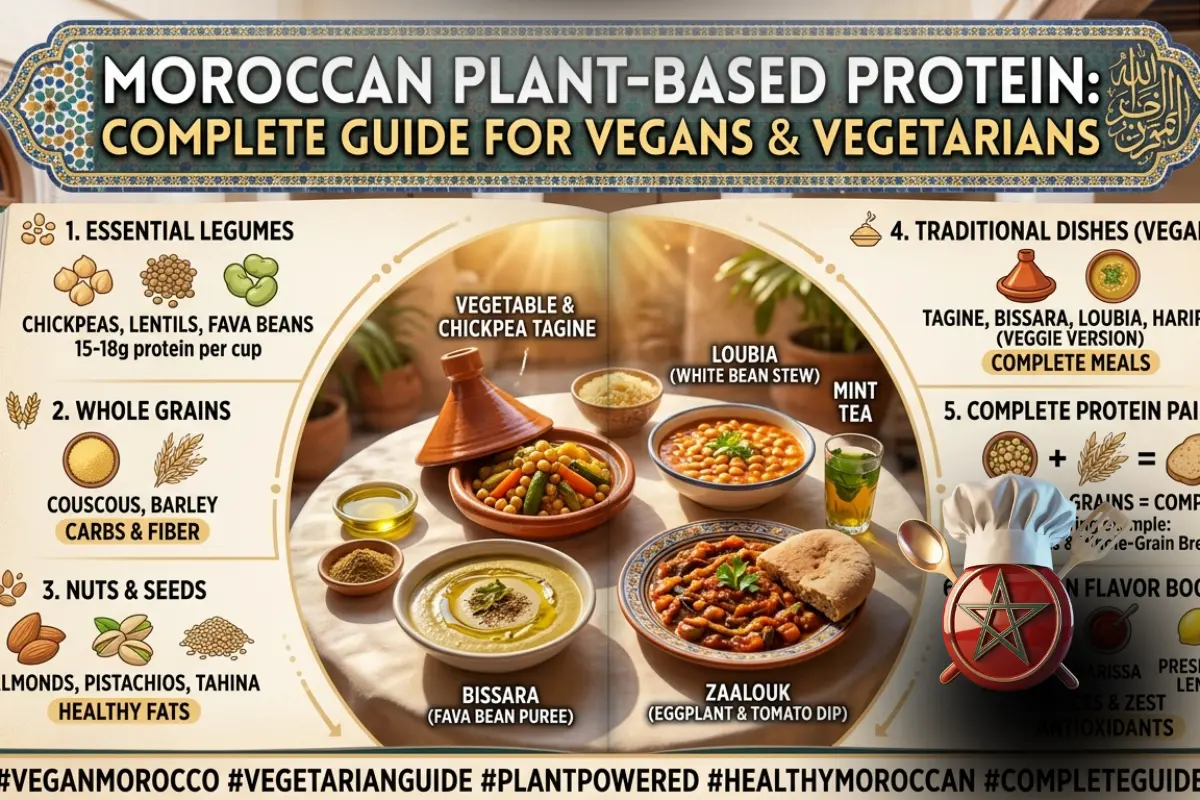
Morocco's culinary landscape offers an extraordinary treasure trove of plant-based proteins that have nourished communities for centuries. While many Western diners associate Moroccan cuisine primarily with meat-heavy tagines and couscous dishes, the reality is far more diverse and plant-forward than most realize. Traditional Moroccan cooking relies heavily on legumes, nuts, seeds, and grains that provide complete amino acid profiles and exceptional nutritional value.
For vegans and vegetarians exploring Moroccan cuisine, you'll discover that plant-based eating isn't just possible—it's deeply rooted in the country's agricultural heritage and culinary traditions. From the protein-packed chickpeas that form the base of countless dishes to the almonds that add richness to both sweet and savory preparations, Morocco's plant-based protein sources offer incredible variety and flavor.
This comprehensive guide will take you through Morocco's most important plant-based proteins, teaching you how to incorporate them into your diet while respecting traditional cooking methods and flavor profiles. Whether you're planning to cook Moroccan food at home or simply want to understand the nutritional landscape of this North African cuisine, you'll find practical advice, traditional recipes, and modern adaptations that make these ancient ingredients accessible to contemporary plant-based diets.
The Foundation: Moroccan Legumes and Pulses
Legumes form the backbone of Moroccan plant-based nutrition, providing essential proteins, fiber, and minerals that have sustained populations across North Africa for millennia. In Moroccan households, dried legumes are pantry staples, purchased in bulk from local souks and stored for year-round use.
Chickpeas: The Versatile Powerhouse
Chickpeas, known locally as hummus, are perhaps the most versatile plant protein in Moroccan cuisine. A single cup of cooked chickpeas provides approximately 15 grams of protein along with 12 grams of fiber, making them an excellent foundation for satisfying meals.
Traditional Moroccan chickpea preparations go far beyond simple boiling. In the famous Harira soup, chickpeas combine with lentils, tomatoes, and fresh herbs to create a protein-rich meal traditionally served during Ramadan. The soup provides a complete amino acid profile when the legumes are combined with the traditional accompaniment of dates and bread.
For everyday meals, Moroccan cooks prepare chickpeas in tagines with preserved lemons, olives, and aromatic spices like cumin, coriander, and cinnamon. These slow-cooked preparations allow the legumes to absorb complex flavors while maintaining their nutritional integrity.
Lentils: Ancient Nutrition for Modern Diets
Red lentils, or adas ahmar, cook quickly and break down into creamy, protein-rich bases for stews and soups. Green and black lentils, which hold their shape better during cooking, appear in salads and grain-based dishes. Each variety offers slightly different nutritional profiles, with red lentils providing about 18 grams of protein per cooked cup.
The traditional Moroccan lentil and vegetable tagine showcases how these legumes can anchor a complete meal. Combined with root vegetables like carrots and turnips, plus leafy greens such as chard or spinach, this dish provides a full spectrum of vitamins, minerals, and plant proteins.
Fava Beans: Seasonal Delicacies
Fresh fava beans appear in Moroccan markets during spring, celebrated for their tender texture and sweet flavor. Dried fava beans, available year-round, require longer cooking but provide concentrated protein and fiber. Traditional preparations include ful medames, a slow-cooked fava bean stew seasoned with garlic, lemon, and olive oil.
When preparing dried fava beans, Moroccan cooks often remove the tough outer skins after cooking, resulting in a creamy, digestible protein source that pairs beautifully with whole grains and vegetables.
Nuts and Seeds: Concentrated Plant Proteins
Morocco's position at the crossroads of Africa, Europe, and the Middle East has made it a hub for nut and seed cultivation. These concentrated protein sources add richness, healthy fats, and essential amino acids to both sweet and savory dishes.
Almonds: Morocco's Golden Protein
Morocco produces some of the world's finest almonds, particularly in the Atlas Mountain regions. Beyond their obvious use in pastries and sweets, almonds play crucial roles in savory Moroccan cooking. Ground almonds thicken tagine sauces, whole almonds add texture to grain dishes, and almond butter creates rich, satisfying bases for vegetable preparations.
A quarter-cup of almonds provides approximately 6 grams of protein along with healthy monounsaturated fats, vitamin E, and magnesium. In traditional Moroccan cooking, almonds are often combined with other protein sources to create complete amino acid profiles.
The famous almond and vegetable couscous demonstrates this principle perfectly. Steamed couscous is topped with almonds, chickpeas, and seasonal vegetables, creating a dish that provides all essential amino acids while celebrating Morocco's agricultural bounty.
Argan Seeds and Oil
Unique to Morocco, argan trees produce nuts that yield both protein-rich seeds and valuable oil. While argan oil is more commonly known for cosmetic uses, it also serves culinary purposes, particularly in traditional Berber cooking. The process of extracting argan oil leaves behind protein-rich cake that rural communities traditionally use for nutrition during lean seasons.
Though argan products can be expensive outside Morocco, they represent an important example of how traditional communities maximize protein extraction from native plants.
Sesame Seeds and Tahini
Sesame seeds appear throughout Moroccan cuisine, from bread toppings to confections. Tahini, though more associated with Middle Eastern cuisine, is increasingly used in modern Moroccan plant-based cooking as a protein-rich sauce base and flavor enhancer.
Two tablespoons of tahini provide about 5 grams of protein plus healthy fats and calcium. When combined with lemon juice, garlic, and Moroccan spices, tahini creates versatile sauces that transform simple vegetables into protein-rich meals.
Traditional Grains and Their Protein Contributions
While grains are often considered carbohydrate sources, several traditional Moroccan grains provide significant protein contributions, especially when combined with legumes to create complete amino acid profiles.
Couscous: More Than Just Carbohydrates
Traditional Moroccan couscous, made from durum wheat semolina, contains more protein than many people realize. One cup of cooked couscous provides approximately 6 grams of protein. When paired with chickpeas, vegetables, and nuts in the traditional manner, couscous becomes part of a complete protein meal.
The key to maximizing couscous's nutritional value lies in traditional preparation methods. Hand-rolled couscous, still made in many Moroccan households, retains more of the grain's natural nutrients compared to instant varieties common in Western supermarkets.
Barley: Ancient Grains for Modern Nutrition
Barley appears in traditional Moroccan soups and stews, providing both protein and significant amounts of fiber. Pearl barley contains about 4 grams of protein per cooked cup, but its real value lies in how it combines with other ingredients to create nutritionally complete meals.
In rural Morocco, barley is often ground into flour for bread-making or cooked whole in hearty stews with legumes and vegetables. These combinations provide sustained energy and complete nutrition.
Quinoa: Modern Addition to Ancient Traditions
While not traditionally Moroccan, quinoa has found its way into modern Moroccan plant-based cooking due to its complete amino acid profile and compatibility with traditional spice combinations. Quinoa provides all nine essential amino acids in a single grain, making it particularly valuable for vegan and vegetarian diets.
Contemporary Moroccan cooks incorporate quinoa into traditional dishes, substituting it for couscous or rice in tagines and salads. Its nutty flavor complements the warm spices characteristic of Moroccan cuisine.
Combining Ingredients for Complete Proteins
Understanding how to combine different plant proteins is crucial for vegans and vegetarians following Moroccan-inspired diets. Traditional Moroccan cuisine naturally incorporates these combinations, though home cooks may not always realize the nutritional science behind these time-tested pairings.
The Science of Protein Complementarity
Complete proteins contain all nine essential amino acids that human bodies cannot produce independently. While animal proteins naturally provide complete amino acid profiles, plant proteins often lack one or more essential amino acids. However, combining different plant proteins throughout the day—or even within single meals—can provide complete amino acid profiles.
Moroccan cuisine excels at these natural combinations. Legumes are typically high in lysine but low in methionine, while grains provide methionine but lack adequate lysine. When combined, as in traditional dishes pairing chickpeas with couscous, these plant proteins complement each other perfectly.
Traditional Combinations That Work
Several classic Moroccan dish combinations provide complete proteins without requiring complex nutritional calculations:
- Chickpeas and couscous: Found in traditional seven-vegetable couscous
- Lentils and bread: Common in harira soup served with khubz
- Beans and grains: Seen in various tagine preparations
- Nuts and legumes: Featured in festive dishes and everyday meals
These combinations developed over centuries of practical experience, long before modern nutrition science explained their effectiveness.
Creating Balanced Daily Menus
For Western vegans and vegetarians adapting Moroccan cuisine, the key is incorporating variety throughout the day rather than worrying about perfect protein combinations at every meal. A typical day might include:
Breakfast: Almond butter on whole grain bread with fresh fruit provides protein from nuts and grains. Adding a small portion of chickpea flour pancakes, inspired by North African cuisine, boosts protein content further.
Lunch: A hearty lentil and vegetable soup with traditional bread offers complete proteins while providing significant fiber and vitamins.
Dinner: Chickpea tagine with almonds over quinoa or couscous creates a satisfying, protein-rich meal that combines multiple complementary protein sources.
Nutritional Comparison Tables
Protein Content in Moroccan Plant Foods
| Food Item | Serving Size | Protein (grams) | Calories | Key Nutrients |
|---|---|---|---|---|
| Chickpeas (cooked) | 1 cup | 15 | 269 | Fiber, Folate, Iron |
| Red Lentils (cooked) | 1 cup | 18 | 230 | Fiber, Folate, Iron |
| Almonds | 1/4 cup | 6 | 207 | Vitamin E, Magnesium |
| Couscous (cooked) | 1 cup | 6 | 176 | B Vitamins, Selenium |
| Quinoa (cooked) | 1 cup | 8 | 222 | Complete protein, Iron |
| Fava Beans (cooked) | 1 cup | 13 | 187 | Fiber, Folate, Potassium |
Amino Acid Completeness Comparison
| Protein Source | Lysine | Methionine | Tryptophan | Complete Protein | Best Paired With |
|---|---|---|---|---|---|
| Chickpeas | High | Low | Medium | No | Grains, nuts |
| Lentils | High | Low | Medium | No | Grains, seeds |
| Almonds | Medium | Medium | Low | No | Legumes, grains |
| Quinoa | High | High | High | Yes | Versatile standalone |
| Couscous | Low | High | Medium | No | Legumes, nuts |
Frequently Asked Questions
Can I get enough protein following a Moroccan plant-based diet?
Absolutely. Traditional Moroccan cuisine provides numerous high-protein plant foods that, when combined properly, offer complete amino acid profiles. Adults need approximately 0.8 grams of protein per kilogram of body weight daily, easily achievable through varied combinations of legumes, nuts, seeds, and grains common in Moroccan cooking.
What are the most protein-rich Moroccan plant foods I should focus on?
Prioritize legumes like lentils (18g protein per cup) and chickpeas (15g per cup), followed by nuts like almonds and protein-rich grains like quinoa. These foods form the foundation of protein-adequate plant-based Moroccan meals.
How do I prepare dried legumes the traditional Moroccan way?
Soak dried legumes overnight, then cook slowly with aromatics like onions, garlic, and bay leaves. Add salt only after legumes soften to prevent tough skins. Traditional Moroccan preparation often includes a sofrito of onions, tomatoes, and spices cooked in olive oil before adding the legumes.
Are there any Moroccan plant proteins that are complete on their own?
Quinoa, while not traditionally Moroccan, provides complete proteins and works beautifully with Moroccan spice profiles. Among traditional foods, the combination of different legumes (like lentils and chickpeas together) can provide more complete amino acid profiles than single legumes alone.
How can I make Moroccan plant-based meals more satisfying and filling?
Focus on combining proteins with healthy fats (olive oil, nuts, avocados) and fiber-rich vegetables. Traditional Moroccan cooking excels at this through techniques like slow-cooking legumes with vegetables and finishing dishes with nuts or olive oil. The complex spices used in Moroccan cuisine also enhance satiety by creating deeply satisfying flavors.
Practical Cooking Tips for Maximum Nutrition
Maximizing the nutritional value of Moroccan plant proteins requires understanding both traditional techniques and modern nutritional science. These practical approaches help ensure you're getting the most from these ancient ingredients.
Preparation Techniques That Preserve Nutrients
Traditional Moroccan cooking methods, developed over centuries, naturally preserve many nutrients while enhancing flavor. Slow cooking in tagines, for example, uses minimal water and low temperatures that prevent nutrient loss while allowing proteins to become fully digestible.
When preparing legumes, save the cooking liquid rather than draining it away. This liquid contains water-soluble vitamins and minerals that leached from the beans during cooking. Use it as a base for soups or to cook grains like couscous or quinoa.
Soaking legumes not only reduces cooking time but also improves their nutritional availability. The soaking process begins breaking down complex proteins and reduces compounds that can interfere with nutrient absorption.
Spice Combinations That Enhance Protein Absorption
Moroccan spice combinations aren't just about flavor—many traditional spices actually enhance nutrient absorption. Turmeric contains compounds that improve protein utilization, while black pepper enhances the absorption of various nutrients. Cumin and coriander, staples in Moroccan cuisine, aid digestion and help the body process plant proteins more effectively.
The traditional spice blend ras el hanout often contains more than a dozen different spices, each contributing to both flavor and nutritional value. When combined with protein-rich foods, these spices create synergistic effects that improve overall nutrition.
Modern Adaptations for Western Kitchens
While traditional preparation methods are ideal, Western home cooks can adapt Moroccan plant protein techniques to modern kitchens and lifestyles without sacrificing nutritional value or authenticity.
Time-Saving Techniques
Pressure cookers and slow cookers can replicate the long, gentle cooking traditional to Moroccan cuisine while fitting busy Western schedules. Batch cooking large quantities of legumes and freezing portions ensures protein-rich ingredients are always available for quick meal assembly.
Pre-soaking legumes in larger batches and freezing them after the initial soak can save time during busy weekdays. Frozen pre-soaked legumes cook faster than dried ones while maintaining their nutritional value.
Ingredient Substitutions and Sourcing
While authentic Moroccan ingredients create the most traditional flavors, Western cooks can make successful substitutions when necessary. Local legume varieties can often substitute for specific Moroccan types—navy beans for cannellini, for example, or black beluga lentils for traditional green lentils.
For nuts and seeds, focus on finding the freshest possible ingredients from stores with high turnover. Rancid nuts and seeds not only taste poor but also lose their nutritional value over time.
Seasonal Considerations and Menu Planning
Traditional Moroccan cuisine follows seasonal patterns that modern plant-based eaters can emulate to maximize both nutrition and flavor. Understanding these patterns helps create varied, nutritionally complete menus throughout the year.
Spring and Summer Adaptations
During warmer months, focus on lighter preparations that still provide adequate protein. Cold lentil salads with fresh herbs, raw almond-based sauces, and room-temperature chickpea dishes provide protein without the heating effects of heavy stews.
Fresh fava beans, available in spring, offer opportunities to incorporate seasonal variety while maintaining protein intake. Their tender texture and sweet flavor make them excellent additions to grain salads and light tagines.
Fall and Winter Heartiness
Colder months call for the hearty, warming dishes traditional to Moroccan cuisine. Slow-cooked legume stews, nut-enriched tagines, and grain-based dishes provide the calories and protein needed during active winter months.
This is the ideal time to explore the more complex, time-intensive traditional recipes that fill homes with warming aromas while building complete protein meals from simple plant ingredients.
Conclusion
Morocco's rich tradition of plant-based protein sources offers Western vegans and vegetarians an exciting pathway to varied, nutritionally complete meals rooted in centuries of culinary wisdom. From the protein-packed legumes that anchor hearty tagines to the nuts and seeds that add richness and complete amino acid profiles, Moroccan cuisine provides a masterclass in plant-based nutrition.
The beauty of Moroccan plant proteins lies not just in their nutritional completeness but in their incredible versatility and flavor potential. These ingredients transform simple vegetables into satisfying meals, provide sustained energy throughout the day, and offer the complete amino acid profiles necessary for optimal health.
By understanding traditional combination principles and adapting them to modern lifestyles, Western plant-based eaters can enjoy the full spectrum of Moroccan flavors while meeting all their nutritional needs. Whether you're preparing a quick weekday lentil soup or an elaborate weekend feast featuring multiple protein sources, Morocco's plant-based traditions provide both inspiration and practical guidance.
As you explore these ingredients and techniques, remember that Moroccan cuisine rewards patience and experimentation. Start with simple combinations like chickpeas and couscous, then gradually incorporate more complex spice blends and preparation methods. Your taste buds—and your body—will thank you for this delicious journey into one of the world's most plant-forward culinary traditions.