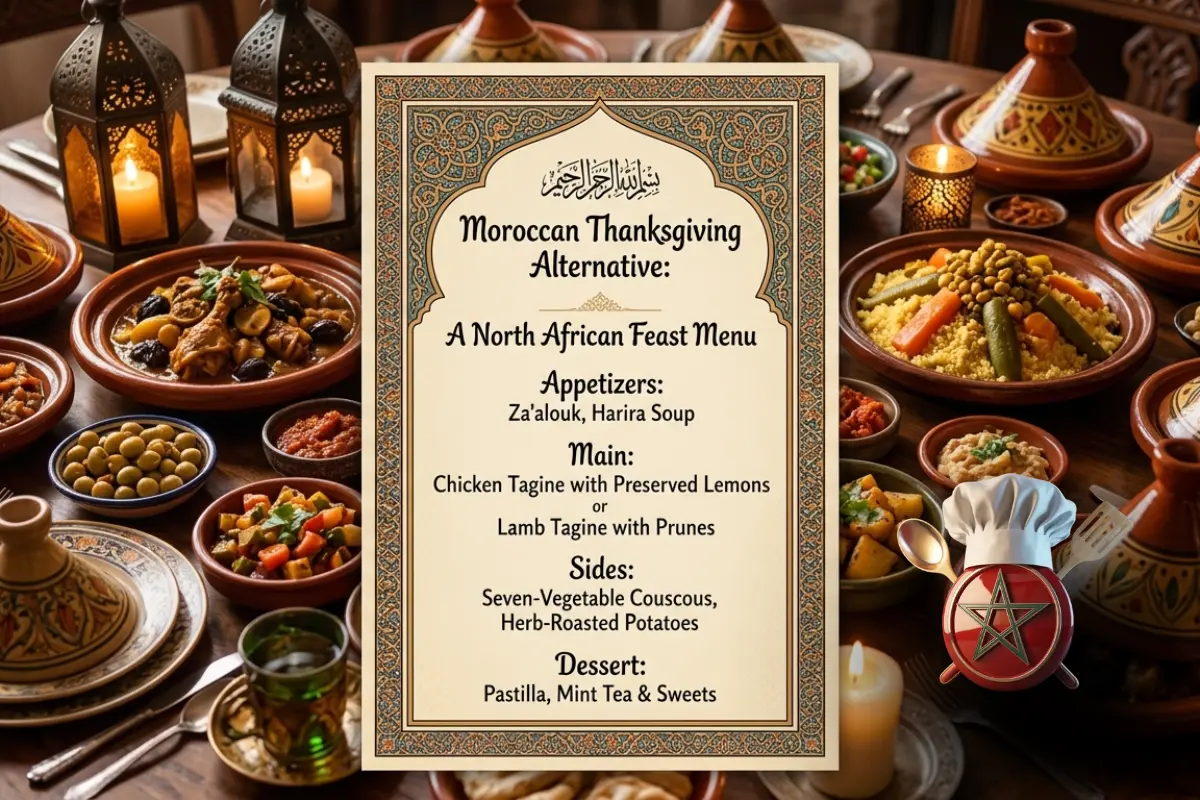
As autumn leaves fall and families gather around tables across America and Europe, many are seeking fresh alternatives to traditional Thanksgiving menus. What if this year, instead of the familiar turkey and stuffing, you transported your guests on a culinary journey to the vibrant souks of Marrakech and the aromatic kitchens of Fez? A Moroccan Thanksgiving offers an extraordinary fusion of gratitude traditions with the rich, complex flavors of North African cuisine.
Morocco's culinary heritage is built on the very principles that make Thanksgiving special: sharing abundant meals with loved ones, celebrating seasonal ingredients, and expressing gratitude for life's blessings. The communal nature of Moroccan dining, where multiple dishes are shared from the center of the table, mirrors the family-style serving that defines American Thanksgiving traditions.
This comprehensive guide will help you create an unforgettable Moroccan feast that honors both the spirit of Thanksgiving and the authentic flavors of North Africa. From the aromatic spice blends that define Moroccan cuisine to the slow-cooked tagines that will fill your home with intoxicating scents, we'll explore how to craft a menu that celebrates abundance, warmth, and togetherness in distinctly Moroccan style.
The Philosophy of Moroccan Hospitality and Thanksgiving
Moroccan culture places extraordinary emphasis on hospitality, with the Arabic concept of karam (generosity) being central to how meals are prepared and shared. This philosophy aligns perfectly with Thanksgiving's core values, making Moroccan cuisine an ideal alternative for your holiday celebration.
In traditional Moroccan households, meals are elaborate affairs designed to honor guests and demonstrate abundance. The table is laden with multiple dishes, each contributing different flavors, textures, and aromas to create a symphony of taste. This approach naturally complements the Thanksgiving tradition of preparing more food than can possibly be consumed, ensuring that everyone leaves satisfied and grateful.
The Moroccan practice of eating with the hands from shared dishes fosters intimacy and connection among diners. While Western utensils are perfectly acceptable for your Moroccan Thanksgiving, encouraging guests to tear bread and share directly from tagines creates a more authentic and bonding experience.
Central to Moroccan dining is the ritual of hand washing before and after meals, accompanied by rose water and clean towels. This ceremonial beginning and end to the meal adds a mindful, grateful quality that enhances the Thanksgiving spirit of reflection and appreciation.
Seasonal Ingredients and Moroccan Cooking Principles
Moroccan cuisine celebrates seasonal abundance in ways that perfectly complement autumn's harvest. Traditional ingredients like pomegranates, dates, figs, almonds, and winter squashes are at their peak during Thanksgiving season, making this the ideal time to explore authentic North African flavors.
The foundation of Moroccan cooking rests on three pillars that will define your feast menu:
- Complex spice blends: Ras el hanout, a mixture of up to 30 spices, creates the signature warmth and depth of Moroccan dishes
- Sweet and savory combinations: The interplay between dried fruits, honey, and savory meats or vegetables creates sophisticated flavor profiles
- Slow cooking techniques: Tagines and braises develop rich, concentrated flavors perfect for cold autumn evenings
These principles ensure that every dish on your Moroccan Thanksgiving table contributes to a cohesive, memorable dining experience that will have guests talking long after the last bite of dessert.
Essential Moroccan Thanksgiving Menu Components
Creating an authentic Moroccan feast requires understanding the traditional structure of North African meals. Unlike Western dining, where courses are served sequentially, Moroccan meals present multiple dishes simultaneously, allowing diners to sample various flavors throughout the meal.
Your Moroccan Thanksgiving menu should include representatives from each traditional category, scaled appropriately for your guest count and cooking capabilities.
The Foundation: Bread and Salads
No Moroccan meal begins without fresh bread and an array of small salads known as chouarak. These lighter dishes prepare the palate and provide fresh, bright flavors that balance the richness of main courses.
Khubz (Moroccan Bread) serves as both utensil and sustenance. The slightly dense, round loaves are perfect for scooping tagines and sopping up flavorful sauces. If baking fresh bread seems daunting, seek out Middle Eastern bakeries or use high-quality pita as a substitute.
Traditional Moroccan salads include:
- Zaalouk: A smoky roasted eggplant and tomato salad with garlic and herbs
- Taktouka: Roasted pepper and tomato salad with preserved lemons
- Carrot and orange salad: Sweet carrots dressed with orange juice, cinnamon, and almonds
- Beet and orange salad: Earthy beets paired with citrus and fresh herbs
These salads can be prepared days in advance, actually improving in flavor as ingredients meld together. Plan for 2-3 salads depending on your guest count, allowing about ¼ cup per person of each variety.
The Heart: Tagines and Main Dishes
Tagines are the centerpiece of any Moroccan feast, named after the distinctive cone-shaped clay vessels in which they're traditionally cooked. The unique shape creates a self-basting environment where steam rises to the cone's peak, condenses, and drips back down to keep ingredients moist during long, slow cooking.
For your Moroccan Thanksgiving, plan one tagine per 4-6 guests, ensuring variety in proteins and flavor profiles. Essential tagines for a memorable feast include:
Lamb Tagine with Apricots and Almonds: This classic combination showcases the Moroccan mastery of sweet-savory balance. Tender lamb shoulder braised with dried apricots, caramelized onions, and aromatic spices creates a dish that embodies autumn abundance.
Chicken Tagine with Preserved Lemons and Olives: Perhaps Morocco's most famous tagine, this dish balances the bright acidity of preserved lemons with briny olives and aromatic herbs. The result is a complex, satisfying dish that appeals to most palates.
Vegetable Tagine with Seven Vegetables: This traditional vegetarian option celebrates seasonal produce including carrots, turnips, zucchini, pumpkin, and cabbage. Cooked with chickpeas and aromatic broth, it provides a hearty option for non-meat eaters.
The Perfect Moroccan Thanksgiving Timeline
Executing a successful Moroccan feast requires careful planning and timing. Unlike traditional Thanksgiving preparation, which often involves last-minute coordination of multiple dishes, Moroccan cuisine's make-ahead nature works to your advantage.
One Week Before
Begin your preparation by sourcing ingredients and making preserved lemons if you can't find them commercially. Most Middle Eastern or North African markets will carry essential ingredients like ras el hanout, preserved lemons, and orange flower water.
Prepare and freeze your bread dough, or arrange to purchase from a local bakery. Mix your spice blends and store them in airtight containers. The flavor actually improves over several days as the various spices integrate.
Three Days Before
Prepare all salads except those containing delicate herbs. Zaalouk, carrot salad, and beet salad all improve with time. Store covered in the refrigerator and bring to room temperature before serving.
Begin marinating any proteins that will benefit from extended seasoning. Lamb particularly benefits from overnight marination in yogurt-based spice mixtures.
Day Before Thanksgiving
Complete all tagine preparation through the initial browning stage. Most tagines can be fully cooked a day ahead and gently reheated, often tasting better as flavors continue to develop overnight.
Prepare your couscous seasoning mixture and set up your steaming equipment. Fresh herbs should be washed, dried, and stored properly for maximum freshness.
Thanksgiving Day Schedule
The beauty of Moroccan cuisine lies in its forgiving nature and ability to hold at serving temperature. Begin your day by setting tagines to reheat slowly while preparing fresh elements.
| Time | Tasks |
|---|---|
| 4 hours before | Begin reheating tagines on low heat |
| 3 hours before | Prepare tea service setup, arrange serving dishes |
| 2 hours before | Start couscous preparation, warm bread |
| 1 hour before | Finish salad preparation, check tagine seasoning |
| 30 minutes before | Final couscous steaming, garnish preparation |
| Service time | Arrange all dishes on table simultaneously |
Couscous: The Crown Jewel
No Moroccan feast is complete without perfectly prepared couscous, often considered the national dish of Morocco. Traditional couscous preparation is an art form requiring patience and technique, but the results are incomparably light, fluffy, and flavorful.
Authentic couscous is steamed multiple times in a special pot called a couscoussier, but excellent results can be achieved using a fine-meshed steamer basket over a large pot. The key is multiple steamings with careful fluffing between each session.
Traditional Couscous Preparation Method
Begin with high-quality medium-grain couscous, avoiding instant varieties for the best texture and flavor. Place dry couscous in a large bowl and work in a small amount of olive oil with your fingers, ensuring each grain is lightly coated.
Add room temperature salted water gradually while continuing to work the mixture with your hands. The couscous should be moist but not wet, with individual grains beginning to swell.
Steam for 20 minutes over boiling water, ensuring the steamer doesn't touch the water below. Remove and turn into a large bowl, breaking up any clumps with a fork or your fingers as the couscous cools.
Add more water and oil as needed, working gently to maintain separate grains. Return to steamer for second 20-minute steaming. Repeat this process three times total for the lightest, fluffiest results.
Garnishing and Serving Couscous
Traditional couscous garnishes add color, texture, and flavor complexity to complement the main dishes. Classic additions include:
- Caramelized onions with golden raisins
- Toasted almonds and pine nuts
- Fresh herbs like cilantro and parsley
- Preserved lemon pieces for brightness
- A drizzle of argan oil for authentic Moroccan flavor
Present couscous on a large, shallow platter with garnishes arranged attractively across the surface. Provide serving spoons and encourage guests to take portions that include various garnishes for the full flavor experience.
Sweet Endings: Moroccan Desserts and Tea Service
Moroccan meals traditionally conclude with sweet treats and the elaborate tea ceremony that defines North African hospitality. The combination of delicate pastries, fresh fruits, and aromatic mint tea provides a perfect ending to your abundant feast.
Essential Moroccan Desserts
Chebakia: These intricate honey-soaked pastries, shaped like roses, are traditionally prepared for special occasions. The delicate, crispy layers absorb orange flower-scented honey syrup, creating an intensely flavored treat that pairs beautifully with mint tea.
Makroud: Semolina-based sweets filled with dates and shaped into diamonds, makroud offer a more substantial dessert option. The slight grittiness of semolina contrasts beautifully with the smooth, sweet date filling.
Fresh fruit with orange flower water: A lighter option featuring seasonal fruits like pears, apples, and oranges, delicately flavored with orange flower water and garnished with chopped almonds and pistachios.
The Moroccan Tea Ceremony
Moroccan mint tea, known as atay, is far more than a beverage—it's a ritual that brings people together and demonstrates hospitality. The ceremony involves specific techniques and equipment that create both theater and exceptional flavor.
Traditional preparation requires a special teapot, preferably silver-plated or stainless steel, along with small glasses designed to showcase the tea's beautiful color. The process involves multiple pourings from increasing heights to create the characteristic foam that indicates properly prepared tea.
Begin by rinsing the teapot with boiling water, then add green tea leaves and a small amount of boiling water. Swirl and discard this first infusion to remove bitterness. Add fresh mint, sugar to taste, and boiling water. Allow to steep for several minutes.
The serving ritual involves pouring tea from a height of at least 12 inches to create foam and aerate the liquid. Pour small amounts into each glass, then return the tea to the pot and repeat the process to ensure even distribution of flavors.
Comparison Tables: Traditional vs. Moroccan Thanksgiving
| Aspect | Traditional American Thanksgiving | Moroccan Thanksgiving Alternative |
|---|---|---|
| Main Protein | Roasted turkey | Multiple tagines (lamb, chicken, vegetarian) |
| Cooking Methods | Roasting, baking | Slow braising, steaming |
| Flavor Profile | Herbs, butter, simple seasonings | Complex spices, sweet-savory combinations |
| Serving Style | Sequential courses | All dishes presented simultaneously |
| Bread | Dinner rolls | Moroccan flatbread (khubz) |
| Vegetables | Green bean casserole, mashed potatoes | Seven-vegetable tagine, multiple salads |
| Menu Component | Prep Time | Cooking Time | Serves | Can Make Ahead? |
|---|---|---|---|---|
| Lamb Tagine | 30 minutes | 2.5 hours | 6-8 | Yes, 1 day |
| Chicken Tagine | 20 minutes | 1.5 hours | 6-8 | Yes, 1 day |
| Couscous | 15 minutes | 1.5 hours | 10-12 | Partially, reheat carefully |
| Moroccan Salads | 45 minutes | 30 minutes | 8-10 | Yes, 2-3 days |
| Fresh Bread | 20 minutes | 45 minutes | 8-10 | Yes, freeze dough |
Frequently Asked Questions
Can I prepare a Moroccan Thanksgiving feast without a tagine pot?
Absolutely! While traditional tagines create ideal cooking conditions, you can achieve excellent results using a heavy-bottomed Dutch oven or slow cooker. The key is maintaining low, steady heat and keeping ingredients moist throughout the cooking process. Cover tightly and check occasionally, adding liquid if needed to prevent sticking.
Where can I find authentic Moroccan ingredients in the US and Europe?
Most metropolitan areas have Middle Eastern or North African markets that carry essentials like ras el hanout, preserved lemons, and orange flower water. Online retailers also offer high-quality Moroccan ingredients. In a pinch, you can substitute: preserved lemons with fresh lemon zest and salt, ras el hanout with a mixture of cumin, coriander, cinnamon, and paprika, and orange flower water with orange zest.
How spicy is Moroccan food, and can I adjust heat levels for sensitive palates?
Traditional Moroccan cuisine is aromatic rather than fiery hot. The complex spice blends focus on warm spices like cinnamon, ginger, and cumin rather than chili heat. Most dishes are naturally mild, but you can easily adjust spice levels by reducing or omitting cayenne pepper and hot paprika while maintaining other flavorful seasonings.
What beverages pair well with a Moroccan feast besides mint tea?
Moroccan meals pair beautifully with light, fruit-forward red wines like Côtes du Rhône or Pinot Noir, or crisp white wines such as Sauvignon Blanc or Riesling. For non-alcoholic options, consider pomegranate juice mixed with sparkling water, or traditional Moroccan beverages like orange juice with orange flower water.
How can I accommodate dietary restrictions in a Moroccan Thanksgiving menu?
Moroccan cuisine naturally accommodates various dietary needs. Many traditional salads are vegan, vegetable tagines provide substantial vegetarian options, and most dishes are naturally gluten-free except for couscous and bread. For gluten-free guests, substitute quinoa or rice for couscous, and provide gluten-free flatbread alternatives.
Conclusion: Embracing a New Thanksgiving Tradition
Creating a Moroccan Thanksgiving feast offers an extraordinary opportunity to honor gratitude traditions while exploring one of the world's most sophisticated culinary cultures. The abundance of flavors, the emphasis on sharing and hospitality, and the celebration of seasonal ingredients all align perfectly with Thanksgiving's core values.
The beauty of Moroccan cuisine lies not just in its complex flavors, but in its ability to bring people together around the table. The communal nature of tagine sharing, the ritual of tea service, and the lingering conversations over multiple small dishes create exactly the kind of memorable experiences that define the best holiday celebrations.
As you plan your Moroccan Thanksgiving, remember that authenticity comes not from perfection, but from embracing the spirit of generosity and hospitality that defines both Moroccan culture and American Thanksgiving traditions. Your guests will remember not just the exotic flavors and aromatic spices, but the warmth and care you put into creating something truly special.
This fusion of traditions offers a meaningful way to expand your holiday celebrations while honoring the fundamental principle of gathering with loved ones to express gratitude for life's abundance. Whether this becomes an annual tradition or a one-time adventure, your Moroccan Thanksgiving will create lasting memories and perhaps inspire a deeper appreciation for the diverse ways cultures around the world celebrate togetherness and gratitude.