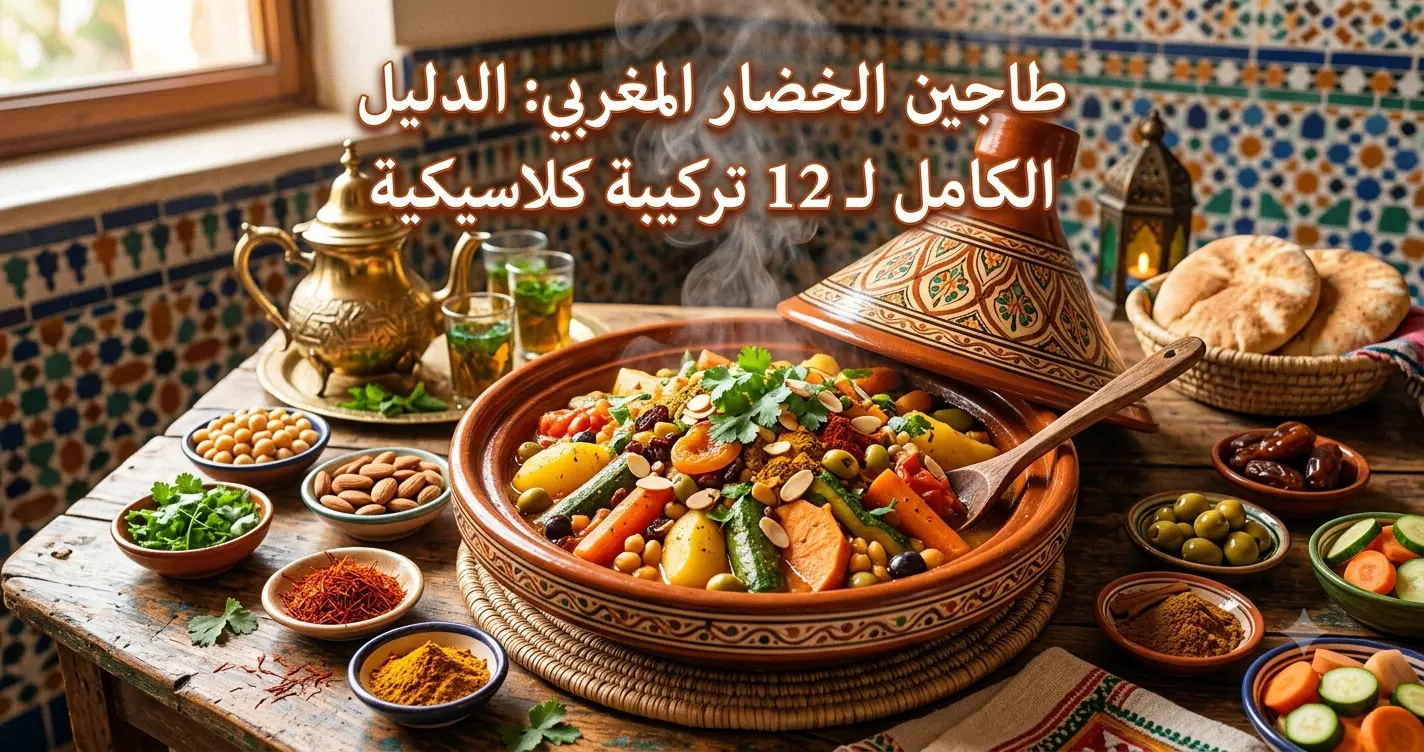
There is a moment — and every cook who has stood over a clay pot in a Moroccan kitchen knows it — when the steam lifts the lid just slightly, and the air fills with something ancient, layered, and deeply alive. Cumin and cinnamon, saffron and preserved lemon, olive oil shimmering gold over a tangle of root vegetables slowly surrendering to the heat. That moment is the soul of the Moroccan vegetable tagine. It is not fast food, and it is not fusion food. It is a language — one spoken across centuries, from the mountain villages of the High Atlas to the winding medinas of Fez and Marrakech. And today, I want to teach you that language from the ground up.
Whether you are a home cook in London trying to recreate a meal you had on holiday, a plant-based eater in California looking for bold new flavors, or simply someone who has always been curious about North African cuisine, this guide is for you. Here at MaCooking, we have spent years documenting, testing, and teaching authentic Moroccan recipes to audiences across the world. This is our most complete resource on vegetable tagine — twelve classic combinations, the cultural story behind each one, expert technique, and everything you need to bring these dishes to life in your own kitchen.
1. Understanding the Tagine: More Than Just a Pot
Before we talk about combinations, we need to talk about the vessel itself — because the tagine is not merely a cooking tool. It is a philosophy. The word "tagine" refers both to the conical clay pot and to the slow-braised dish cooked within it. The design is extraordinary in its simplicity: a wide, shallow base holds the ingredients, while the tall, peaked lid acts as a self-basting condenser. Steam rises, hits the cool interior of the cone, converts back to liquid, and cascades down over the food. The result is a dish that is simultaneously braised and steamed, tender and concentrated, humble and complex.
Tagines have been part of Moroccan culinary life since at least the 9th century, with some food historians tracing their origins to the Abbasid period. Berber cooks were the first to master this slow, sealed style of cooking, layering ingredients directly over charcoal embers in a way that preserved moisture in the dry North African climate. The technique has barely changed. What has changed is the extraordinary range of ingredients that flow through Morocco's history — Andalusian spice routes, sub-Saharan trade, Ottoman influence, and French colonial encounters have all left their marks on the tagine's ingredient palette.
Choosing Your Tagine
- Traditional unglazed clay: Requires seasoning, reacts to heat slowly, imparts a subtle earthy flavor. Best for stovetop over a heat diffuser or open charcoal.
- Glazed ceramic tagine: Easier to maintain, dishwasher-safe in many cases, less flavor contribution but more practical for Western kitchens.
- Cast iron tagine: Modern adaptation, excellent heat distribution, oven-safe, a great investment for frequent tagine cooks.
- Heavy-bottomed Dutch oven: Not a tagine, but an acceptable substitute if you use parchment paper under the lid to redirect condensation.
"A tagine without patience is just a stew. The slow build of heat, the gentle coaxing of flavor — this is where the magic lives. Never rush a tagine." — Traditional Moroccan kitchen wisdom, passed down through generations of home cooks in Fez.
2. The Spice Architecture of a Moroccan Vegetable Tagine
If there is one thing that separates a truly authentic Moroccan vegetable tagine from a generic "spiced vegetable stew," it is the deliberate, structured use of spices. Moroccan spice blending is not random. It follows a logic — warm spices for depth, bright spices for contrast, aromatic spices for complexity, and finishing elements for lift. Understanding this architecture will transform your cooking.
The Core Spice Families
| Spice | Role in Tagine | When to Add | Flavor Profile |
|---|---|---|---|
| Cumin (ground) | Foundational warmth, earthiness | Early, with onions | Earthy, nutty, warm |
| Turmeric | Color, mild bitterness, anti-inflammatory | Early | Slightly bitter, golden |
| Cinnamon | Sweet depth, complexity | Early | Sweet, woody, warm |
| Ginger (ground or fresh) | Brightness, heat | Early to mid | Pungent, fresh, spicy |
| Ras el Hanout | Complex layering, signature Moroccan note | Mid-cook | Floral, warm, multi-dimensional |
| Saffron | Luxury, color, faint floral honey note | Bloomed in warm water, added mid-cook | Floral, honey, subtle |
| Preserved lemon | Bright salt-acid finish | Last 10 minutes or as garnish | Intensely citrus, salty, fermented |
| Harissa | Heat, complexity, color | As condiment or stirred in at end | Smoky, hot, slightly sweet |
Ras el Hanout: The King of Spice Blends
Ras el Hanout translates from Arabic as "head of the shop" — the best the spice merchant has to offer. A traditional blend can contain anywhere from 12 to 40 individual spices, and every Moroccan family (and every spice market stall) has its own closely guarded recipe. Common components include cardamom, mace, allspice, dried rose petals, nutmeg, galangal, cloves, and more. If you can source a high-quality Moroccan ras el hanout from a specialty spice merchant, do it. It will be one of the best kitchen investments you ever make.
3. The Master Technique: Building a Vegetable Tagine from the Ground Up
Before we explore specific combinations, let me walk you through the universal technique that underlies all twelve of our classic vegetable tagines. Master this foundation, and the combinations become almost intuitive.
The Layer Method
- Build your aromatic base: Start with good olive oil — Moroccan olive oil if you can find it — over medium-low heat. Add finely sliced onions (and garlic if the recipe calls for it) and cook slowly until softened, 8 to 12 minutes. Do not rush. This is the flavor foundation.
- Bloom your spices: Add your ground spices directly to the softened onions and stir for 60 to 90 seconds until fragrant. This step is non-negotiable. Dry-frying spices in fat unlocks fat-soluble flavor compounds that water alone cannot release.
- Add tomatoes or tomato paste (if using): Cook down until darkened and slightly caramelized, 3 to 5 minutes.
- Layer the vegetables: This is where Moroccan cooking diverges from Western stewing. Vegetables are often layered rather than stirred — denser root vegetables on the bottom, softer vegetables toward the top. This creates a gradient of texture and ensures nothing overcooks.
- Add liquid: Traditional Moroccan tagines use far less liquid than most Westerners expect — typically just 1/2 to 3/4 cup of water, stock, or a combination. The vegetables release their own moisture as they cook. Resist the urge to add more.
- Cover and cook low and slow: 45 minutes to 1.5 hours depending on vegetables. Check occasionally but don't stir — let the tagine do its work.
- Finish with preserved lemon, fresh herbs, and olives: These are not optional garnishes. They are structural flavor elements that define the final dish.
4. The 12 Classic Moroccan Vegetable Tagine Combinations
Now we arrive at the heart of this guide. These twelve combinations represent the canon of Moroccan vegetable tagine cooking — dishes that appear in home kitchens, street-side restaurants, and family celebrations across the country. Some are centuries old. Some have regional variations. All of them are extraordinary.
Combination 1: Potato and Preserved Lemon Tagine (Tagine Batata bil-Hamad M'rakad)
The humblest and perhaps most beloved of all vegetable tagines. Waxy potatoes slow-cooked with cumin, turmeric, paprika, and green olives, finished with the unmistakable brine-bright punch of preserved lemon. This is the tagine Moroccan grandmothers make when the pantry is low. It is deceptively simple and deeply satisfying. Serve with crusty khobz bread to mop the sauce.
Key spices: Cumin, turmeric, sweet paprika, preserved lemon
Texture goal: Potatoes just tender, sauce thick and golden
Serving suggestion: Room temperature with olives and fresh cilantro
Combination 2: Carrot and Chickpea Tagine with Cinnamon and Honey
This sweet-savory combination shows the Andalusian influence on Moroccan cooking beautifully. Sweet carrots are paired with creamy chickpeas, braised with cinnamon, ginger, and a drizzle of local honey. Raisins are optional but traditional in some regions. This tagine is a gateway dish for skeptics of Moroccan cuisine — the sweetness is approachable, the warmth is comforting.
Key spices: Cinnamon, ginger, cumin, honey
Texture goal: Carrots fork-tender, chickpeas whole and creamy
Regional variation: Add a pinch of saffron for a Fassi (Fez-style) version
Combination 3: Butternut Squash and Caramelized Onion Tagine
A showstopper autumn tagine where the natural sweetness of butternut squash meets deeply caramelized onions — the latter cooked low and slow until they are almost jammy. Ras el hanout is the dominant spice here, with its floral, complex warmth. Topped with toasted almonds and fresh parsley, this is the tagine you serve to guests you want to impress.
Key spices: Ras el hanout, cinnamon, turmeric
Technique highlight: Caramelize onions for minimum 20 minutes before adding squash
Garnish: Blanched almonds toasted in butter, chopped fresh mint
Combination 4: Eggplant (Aubergine) and Tomato Tagine with Chermoula
Chermoula — Morocco's magnificent herb sauce of cilantro, parsley, garlic, cumin, paprika, and lemon — is the secret weapon here. Eggplant is notoriously good at absorbing flavors, and when it slow-cooks in a chermoula-spiced tomato base, it becomes silky, almost meaty in texture. This is a popular Ramadan tagine, substantial enough to break a fast.
Key herb blend: Chermoula (cilantro, parsley, garlic, cumin, paprika, preserved lemon)
Technique highlight: Salt eggplant for 30 minutes before cooking to remove bitterness
Serving suggestion: Over couscous with harissa on the side
Combination 5: Seven Vegetable Tagine (Tagine Sabaa Khodra)
The legendary seven-vegetable tagine, traditionally associated with the celebration of the Islamic New Year (Ras El Am). The number seven is considered auspicious in Moroccan culture. Classic vegetables include turnip, zucchini, carrot, potato, tomato, onion, and cabbage, though variations exist by family and region. This is abundance cooked with intention — a celebratory dish in its truest form.
Traditional vegetables: Turnip, zucchini, carrot, potato, tomato, onion, cabbage
Key spices: Ginger, turmeric, saffron, cinnamon, ras el hanout
Cultural significance: Served at New Year celebrations, symbolizes prosperity
Combination 6: Root Vegetable Tagine with Apricots and Almonds
Parsnip, sweet potato, and turnip braised with dried apricots, cinnamon, and saffron. This is the tagine that most clearly shows Morocco's position at the crossroads of spice trade routes — the dried fruit tradition comes from Persian and Andalusian culinary influences absorbed over centuries. The almonds are toasted and added at the very end, providing a textural counterpoint to the soft, yielding root vegetables.
Combination 7: Green Bean and Tomato Tagine (Tagine Loubiya)
Simple, vibrant, and utterly delicious. This summer tagine relies on peak-season tomatoes and green beans cooked with generous amounts of paprika, cumin, and fresh garlic. Olive oil is used more liberally here than in most tagines — it becomes part of the sauce. This dish is eaten at room temperature as much as hot, which makes it a wonderful make-ahead option for entertaining.
Combination 8: Artichoke and Broad Bean Tagine with Saffron
A spring tagine of extraordinary elegance. Fresh or frozen artichoke hearts braised with broad beans (fava beans), preserved lemon, and saffron bloomed in warm water. This is the tagine of Moroccan spring celebrations — light, golden, faintly floral. The saffron is not optional here. It defines the dish.
Key spices: Saffron, turmeric, white pepper, preserved lemon
Technique highlight: Always bloom saffron in warm water for 10 minutes before adding
Best season: Spring, when artichokes and broad beans are fresh
Combination 9: Zucchini and Tomato Tagine with Herbs (Tagine Courgette)
Perhaps the most understated tagine in this list, but one with profound daily significance — this is what Moroccan families eat on Tuesday nights. Zucchini cooked until just tender in a fragrant tomato and herb base. The herbs — loads of fresh cilantro and flat-leaf parsley — are as important as the vegetables themselves. Do not substitute dried herbs.
Combination 10: Cauliflower Tagine with Chermoula and Olives
Cauliflower transformed. When slow-cooked in chermoula with green cracked olives and a splash of preserved lemon brine, cauliflower becomes something close to revelatory — tender at the center, caramelized at the edges, saturated with complex herb-spice flavor. This tagine has become popular with Western plant-based cooks for good reason. It is the kind of dish that converts people.
Combination 11: Mixed Mushroom and Walnut Tagine
A more modern Moroccan combination, but one that draws on ancient mountain cooking traditions. Meaty mushrooms — portobello, cremini, oyster — braised with walnuts, harissa, and a touch of pomegranate molasses. This is the High Atlas in a bowl: earthy, bold, deeply satisfying. The walnuts add richness that mimics the role of meat in more traditional tagines.
Key spices: Ras el hanout, smoked paprika, harissa
Unique ingredients: Pomegranate molasses, walnuts, mixed mushrooms
Best served with: Warm flatbread and a cooling yogurt dip
Combination 12: Beet and Lentil Tagine with Cumin and Preserved Lemon
Our final combination is perhaps the most visually stunning — the beets turn everything a magnificent deep crimson, while the lentils add body and protein. Cumin is the dominant spice, with preserved lemon providing its characteristic salty brightness at the finish. This tagine is a nutritional powerhouse and the perfect weeknight meal for plant-based eaters.
Key spices: Cumin, coriander, smoked paprika
Lentil type: Green or Puy lentils (hold their shape better than red)
Color note: Add beets at the same time as lentils for full color saturation
5. Comparison Guide: Choosing the Right Combination for Your Occasion
| Tagine Combination | Difficulty | Occasion | Prep Time | Flavor Profile |
|---|---|---|---|---|
| Potato & Preserved Lemon | Easy | Weeknight dinner | 15 min | Earthy, bright, savory |
| Carrot & Chickpea | Easy | Family meal, beginners | 15 min | Sweet, warm, comforting |
| Butternut Squash & Onion | Medium | Dinner party | 30 min | Sweet, complex, aromatic |
| Eggplant & Tomato Chermoula | Medium | Ramadan, gatherings | 45 min (incl. salting) | Herby, rich, meaty |
| Seven Vegetable | Medium | Celebrations, New Year | 30 min | Balanced, festive, layered |
| Root Veg with Apricots | Easy | Autumn entertaining | 20 min | Sweet-savory, floral |
| Green Bean & Tomato | Very Easy | Summer lunches | 10 min | Fresh, bright, summery |
| Artichoke & Broad Bean | Medium | Spring celebrations | 25 min | Elegant, floral, delicate |
| Zucchini & Tomato | Very Easy | Everyday cooking | 10 min | Fresh, herby, simple |
| Cauliflower Chermoula | Easy | Plant-based entertaining | 20 min | Bold, herby, complex |
| Mushroom & Walnut | Medium | Modern dinner party | 20 min | Earthy, bold, smoky |
| Beet & Lentil | Easy | Weeknight, meal prep | 15 min | Earthy, bright, hearty |
6. Essential Serving Traditions and Accompaniments
In Morocco, a tagine is never served in isolation. The meal is a composition, and understanding the full picture will elevate your experience from simply cooking a dish to recreating a genuine Moroccan eating occasion.
Bread: The Essential Partner
Moroccan khobz — a round, slightly dense semolina flatbread — is the traditional accompaniment to tagine. It serves as both utensil and food, used to scoop the sauce and lift pieces of vegetable. If you cannot find khobz, pita bread or a good sourdough flatbread makes a reasonable substitute. Never serve a tagine with cutlery and expect it to feel authentic — use bread, eat from the center of the communal dish, and slow down.
Couscous as an Alternative Base
In many Moroccan homes, particularly for larger gatherings, vegetable tagines are ladled over a mound of hand-rolled couscous steamed in a couscoussier. The couscous absorbs the cooking liquid and spices, becoming a dish in its own right. If you cook couscous from a box, at least steam it twice and fluff it with butter — never serve wet, clumped couscous with a tagine. It would break a Moroccan grandmother's heart.
Condiments and Sides
- Harissa: Always on the table, always homemade ideally. A fiery counterpoint to the gentle warmth of most vegetable tagines.
- Zaalouk: A smoked eggplant and tomato salad that works beautifully alongside tagine.
- Moroccan beet salad with cumin: A cooling, vivid side that complements the richness of tagine.
- Preserved olives: Often served on the tagine itself, but also separately as a table accompaniment.
- Mint tea: Always served after the meal — never during or before in traditional settings.
For full recipes on all of these accompaniments, and for a deep dive into the Moroccan tea ceremony, visit MaCooking.com — where we have built the most comprehensive English-language library of authentic Moroccan recipes online.
7. Expert Tips from the Moroccan Kitchen
After years of cooking and researching these dishes — in home kitchens in Marrakech, in cooking schools in Essaouira, and in conversations with Moroccan grandmothers who learned from their own grandmothers — here are the tips that matter most:
- Never use a tagine on high heat. Always start cold or warm, and increase to medium-low. High heat cracks clay and ruins the slow-cook principle that makes tagine what it is.
- Quality olive oil is non-negotiable. Moroccan extra-virgin olive oil is among the finest in the world. Do not use light olive oil or vegetable oil in a tagine. The olive oil is not just a cooking medium — it is a flavor ingredient.
- Make your own preserved lemons. Store-bought preserved lemons vary enormously in quality. Homemade ones, ready in just 4 weeks, are infinitely superior. We have a full guide on MaCooking walking you through the exact method.
- Let the tagine rest before serving. Ten to fifteen minutes off the heat allows the sauce to settle and the flavors to integrate. This is not optional — it is technique.
- Cook onions longer than you think you need to. The sweet, jammy depth of properly cooked onions is the invisible backbone of most Moroccan tagines. Eight minutes is a minimum. Fifteen is better.
- Season at the end, not the beginning. Salt draws moisture out of vegetables during cooking. Add most of your salt in the final 15 minutes for the best texture and controlled seasoning.
- Smell your spices before you use them. Spices older than 6 months are often functionally useless. If your cumin doesn't smell strongly of cumin, replace it. Old spices are the number one reason home-cooked tagines fall flat.
FAQ: Everything You Need to Know About Moroccan Vegetable Tagine
Q: Can I make a Moroccan vegetable tagine in a slow cooker or Instant Pot?
Yes, with adjustments. A slow cooker (Crock-Pot) is actually a surprisingly good tagine approximation if you reduce liquid by about 30% compared to stovetop — slow cookers trap moisture even more efficiently than clay tagines. Cook on LOW for 6 to 8 hours. For an Instant Pot, use the sauté function to build your aromatic base, then pressure cook on HIGH for 8 to 12 minutes depending on vegetables, followed by a natural release. The pressure cooker won't give you the same layered texture, but the flavor can be excellent. A traditional clay tagine will always produce the most nuanced result, but adaptations are valid for busy weeknight cooking.
Q: What is the difference between a tagine and a Moroccan stew?
The distinction is partly technical and partly cultural. A tagine is cooked in the tagine vessel, which creates a unique steam-condensation cycle that continuously bastes the food and concentrates flavors without the aggressive boiling of a traditional stew. Tagines also typically use much less liquid and rely on the vegetables' own moisture. The result is a more concentrated, silkier sauce and more texturally distinct vegetables than you get from most stews. Culturally, tagine is also a social and ceremonial practice in Morocco — the act of eating from a shared communal pot is as meaningful as the food itself.
Q: How do I prevent my vegetable tagine from becoming watery?
This is the most common problem home cooks face. The solutions are: (1) Use less liquid than you think you need — start with 1/2 cup and add more only if necessary. (2) Do not lift the lid repeatedly during cooking — every time you do, you release steam and drop the temperature, causing vegetables to release more moisture in spurts. (3) If your tagine is too watery at the end, remove the lid for the final 10 to 15 minutes and increase heat slightly to reduce. (4) Salt vegetables after cooking, not before, to prevent osmotic moisture draw. Following these principles should give you the thick, glossy, concentrated sauce that defines a great Moroccan tagine.
Q: Can I prepare a Moroccan vegetable tagine ahead of time?
Absolutely — and in fact, many Moroccan cooks argue that tagines taste better the next day. The resting time allows spices to fully integrate and vegetables to absorb the sauce more completely. Make the tagine the day before, cool it completely, refrigerate, and reheat gently over low heat with a tablespoon of water to prevent sticking. Add fresh herb garnishes only when reheating and serving. Preserved lemon should also be added fresh if reheating, as it can become slightly bitter if cooked again for extended periods.
Q: Where can I find authentic Moroccan ingredients outside of Morocco?
The landscape has improved dramatically in recent years. For preserved lemons, you can find decent commercial versions in Middle Eastern grocery stores and many large supermarkets — or make your own (strongly recommended). For ras el hanout, seek out specialty spice merchants rather than supermarket shelf versions, which are often diluted and stale. Saffron is widely available online — Spanish and Iranian saffron are good alternatives to Moroccan saffron when the latter is unavailable. For a curated sourcing guide to Moroccan ingredients available in the US, UK, and Europe, MaCooking.com maintains an updated resources page covering the best online and physical retailers for authentic Moroccan pantry staples.
Conclusion: A Tradition Worth Mastering
The Moroccan vegetable tagine is, in many ways, one of the most perfect dishes in the world's culinary canon. It is simple in method, complex in flavor, endlessly adaptable, nutritionally remarkable, and rooted in thousands of years of continuous culinary tradition. It feeds large families economically without sacrificing depth or dignity. It celebrates seasonal produce. It carries cultural memory in every bite.
The twelve combinations we have explored in this guide are just the beginning. Once you understand the underlying logic — the spice architecture, the layering method, the patience required, the respect for quality ingredients — you will find yourself improvising, experimenting, and eventually developing your own signature combinations. That is exactly what Moroccan cooks have always done.
If this guide has sparked your curiosity, we invite you to explore the full depth of Moroccan cuisine at MaCooking.com — the world's most comprehensive platform for authentic Moroccan recipes, techniques, and culinary culture. From couscous to bastilla, from street food to royal feast cuisine, from Berber mountain cooking to the sophisticated kitchens of Fez, everything is there, documented with the care and respect that this extraordinary culinary tradition deserves.
Now go season your tagine. And remember: low heat, good olive oil, and all the patience you can muster. The results will speak for themselves.