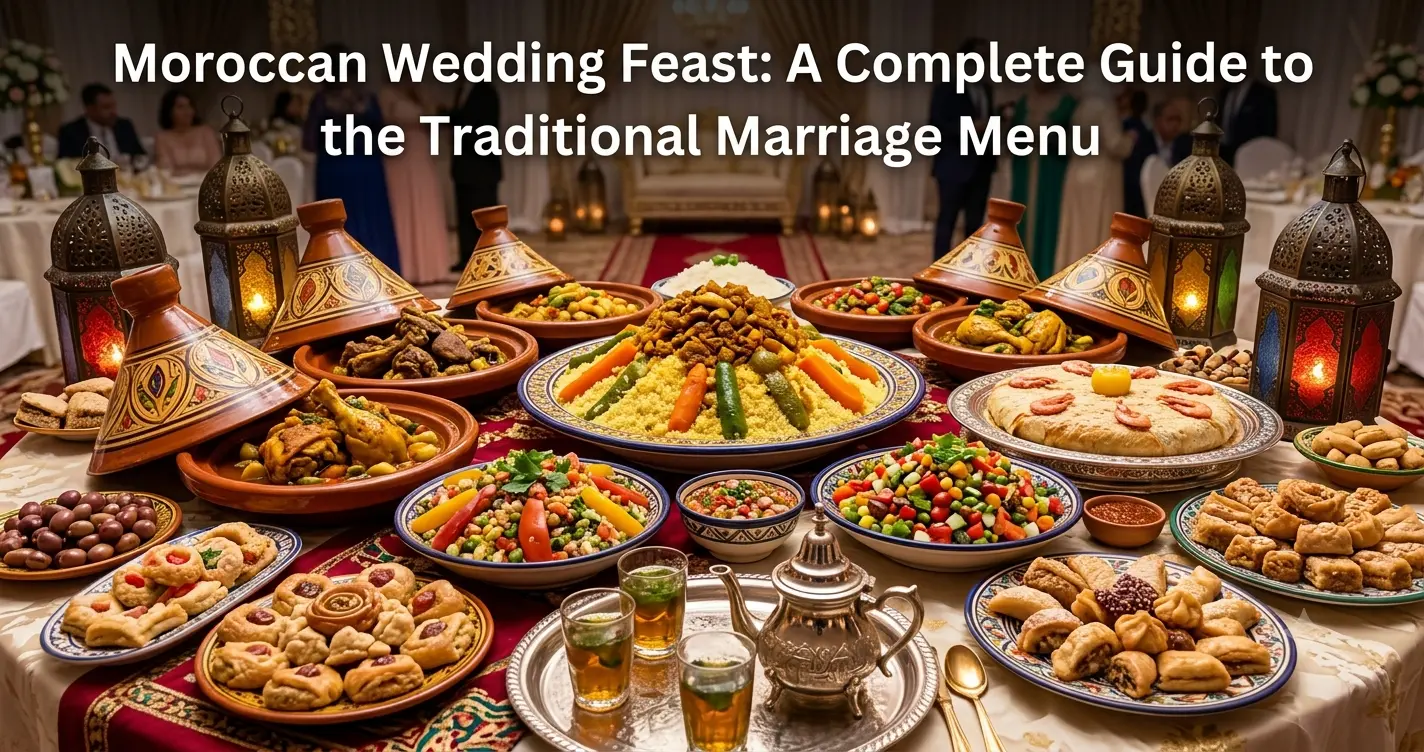
There is a saying in Morocco that goes, "A wedding without food is like a night without stars." I have spent the better part of two decades traveling between Marrakech and Fez, Casablanca and the Souss Valley, eating at weddings where the tables barely held the weight of the dishes, where the scent of ras el hanout drifted through the riad courtyard long before you even sat down. A Moroccan wedding feast is not simply a meal. It is a living, breathing expression of hospitality, lineage, regional pride, and centuries of culinary tradition compressed into a single extraordinary night — or more often, three. If you have ever been invited to one, or dream of incorporating these traditions into your own celebration, this guide is for you. Here at MaCooking, we believe that understanding food means understanding the people and history behind it, and nowhere is that truer than at a Moroccan wedding table.
The Soul of the Moroccan Wedding Feast: History and Cultural Context
To truly appreciate a Moroccan wedding menu, you need to step back about a thousand years. The culinary traditions of Morocco are a magnificent tapestry woven from Amazigh (Berber) foundations, Arab and Andalusian influences brought by the Moors expelled from Spain, Sub-Saharan African trade routes that delivered spices and techniques, and Jewish communities who contributed preservation methods and flavor profiles still visible in the sweet-savory combinations Morocco is famous for. The French protectorate period (1912–1956) added another layer, particularly in pastry traditions in cities like Fez and Rabat.
Weddings in Morocco — called 3ors (عرس) in Darija, Moroccan Arabic — have historically lasted between three and seven days, each day carrying distinct rituals, ceremonies, and corresponding foods. The Henna Night, the Hammam ceremony, and the main wedding night each have their culinary character. Today, most urban Moroccan weddings compress these into two nights, while rural and traditional families still observe the full multi-day structure.
The wedding feast itself is governed by a set of unwritten but deeply understood rules. The food must be abundant — scarcity at a wedding is considered a profound dishonor. It must be layered in complexity, moving from delicate and sweet through hearty and rich, following a sequence that has been refined over generations. And it must tell the story of where the family comes from. A family from the Souss region will feature argan oil prominently. A Fassi family from Fez will showcase the extraordinarily refined bastilla and preserved lemon-laced tagines that define that city's royal culinary heritage. A family from the Middle Atlas might lead with a lamb mechoui that reflects Amazigh pastoral traditions.
"Food at a Moroccan wedding is never background noise. It is the ceremony itself. The arrival of each dish is an event, announced sometimes by music, always by the collective intake of breath from guests who recognize what is coming."
The Traditional Moroccan Wedding Menu: Course by Course
Let me walk you through the full arc of a traditional Moroccan wedding feast, from the moment guests arrive to the final mint tea that signals the end of the celebration. This is the sequence that has played out in Moroccan homes and wedding halls for centuries, and while regional variations exist, the underlying structure is remarkably consistent across the country.
The Welcome: Dates, Milk, and Sweets
Before a single savory dish appears, guests are received with what Moroccans call tqabbal — the welcoming spread. This is not a cocktail hour in the Western sense. It is a ritual greeting rooted in Islamic hospitality traditions and Amazigh customs that predate Islam in the region.
- Dates and Milk: The bride and groom are often greeted with fresh dates and a bowl of fresh milk, symbolizing sweetness and purity in their new life together. Guests receive dates as well.
- Msemen and Melloui: These layered, flaky flatbreads — msemen being square-folded and melloui being spiral-rolled — are served warm with argan oil, honey, and fresh goat cheese. The smell of msemen cooking on a griddle is one of those olfactory memories that every Moroccan carries from childhood.
- Briouat bil Louz: These small pastry parcels filled with almond paste and fried to a delicate crisp, then drizzled with honey and dusted with sesame seeds, are passed among guests on decorated platters. They are simultaneously welcoming snacks and a signal of the family's culinary ambition for the evening.
- Mint Tea: The famous Moroccan mint tea — atay — poured from a height to create that characteristic froth, sweetened generously, is served throughout the welcome. Refusing a glass is gently but firmly discouraged.
- Chebakia and Sellou: In many regions, particularly during weddings that overlap with Ramadan season or feature guests from Fez, chebakia (sesame and honey pastry flowers) and sellou (a roasted flour, almond, and spice mixture) make their appearance in the welcome spread.
The First Savory Course: Salads and Cold Starters
When Moroccans say "salads" at a wedding, Western guests are sometimes surprised. This is not a bowl of lettuce. A traditional Moroccan wedding will feature anywhere from eight to twenty individual small salad dishes arranged across the table simultaneously, each one a distinct preparation. This course is called al salata and it is one of the most technically demanding parts of the meal because each dish must be individually seasoned, cooked, and garnished.
Common salads in the wedding spread include:
- Taktouka: A warm cooked salad of roasted green peppers and tomatoes with cumin, garlic, and olive oil — smoky, silky, and deeply satisfying.
- Zaalouk: Roasted eggplant mashed with tomatoes, chermoula spices, olive oil, and preserved lemon. One of Morocco's most iconic preparations and a staple at every important table.
- Moroccan Carrot Salad: Cooked carrots with cumin, harissa, fresh coriander, and a splash of orange blossom water — that final touch is what separates the Moroccan kitchen from all others.
- Beet Salad with Chermoula: Roasted beets tossed with a chermoula of herbs, lemon, and spices, often topped with preserved lemon strips and olives.
- Chickpea Salad: Warm spiced chickpeas with paprika, cumin, olive oil, and fresh parsley. Simple but essential.
- Kefta Mkaouara (Egg and Meatball Tagine): Small spiced lamb or beef meatballs cooked in a tomato-cumin sauce with eggs cracked in at the last moment. Served warm as part of the salad course.
- Marinated Olives: Multiple varieties, each prepared differently — some with preserved lemon and thyme, others with harissa, others with cumin and garlic.
- Briouats Savoury: Small fried pastry parcels filled with spiced minced meat, or sometimes with goat cheese and herbs, served alongside the cold salads as a crispy counterpoint.
The artistry of this course lies in the balance — cool and warm, bright and earthy, spicy and mild — all present simultaneously so guests can compose their own combinations. You can find detailed recipes for all of these salad preparations, with step-by-step guidance, at macooking.com.
The Crown Jewel: Bastilla (Pastilla)
If the Moroccan wedding feast had a single dish that could serve as its emblem, that dish would be the bastilla — called pastilla in French transliteration and sometimes spelled b'stilla or bisteeya in English-language sources. This magnificent pie is perhaps the single most sophisticated dish in the entire Moroccan culinary canon, and its presence at a wedding is non-negotiable in most of the country, particularly in northern and central regions.
The classic bastilla is built on layers of paper-thin warqa pastry — a Moroccan specialty that is related to but distinct from filo, made by dabbing wet dough onto a hot pan in overlapping circles to create translucent, almost impossibly delicate sheets. Inside these layers, you find:
- Slow-cooked pigeon (or more commonly today, chicken) shredded with a complex sauce of onions, saffron, ginger, cinnamon, and fresh herbs including flat-leaf parsley and coriander
- A sweetened almond layer — blanched almonds fried and mixed with sugar and cinnamon — which creates the famous sweet-savory contrast
- Eggs scrambled into the braised meat cooking juices, creating a custardy, rich interior layer
The finished bastilla is baked until golden and crisp, then dusted with powdered sugar and decorated with a lattice pattern of cinnamon. The contrast of the shattering pastry, the savory spiced meat, the rich egg layer, and the sweet almond filling is one of the most complex flavor experiences in world cuisine. Its Andalusian roots — it arrived in Morocco with the Moors — are still visible in its sweet-savory profile, a combination that medieval Arab-Andalusian cooking celebrated and that the rest of the world eventually abandoned but Morocco kept alive.
At large weddings, bastilla may be presented as individual portions or as large shared pies, sometimes measuring half a meter in diameter. In the grandest celebrations, a seafood bastilla — filled with shrimp, fish, and vermicelli in a ginger-and-saffron sauce — may also appear alongside the classic version.
The Tagine Parade
Following the bastilla, the tagines arrive. Not one tagine, not two — at a traditional Moroccan wedding feast, it is entirely normal for three, four, or even five different tagine preparations to be served in sequence, each one a distinct flavor universe.
| Tagine Name | Main Ingredients | Flavor Profile | Regional Origin |
|---|---|---|---|
| Tagine bil Mermez (Lamb with Prunes) | Lamb shoulder, Medjool prunes, almonds, sesame, cinnamon, ginger | Deep sweet-savory, rich and warming | Fez / Central Morocco |
| Chicken Tagine with Preserved Lemon and Olives | Whole chicken, preserved lemons, green olives, chermoula, saffron | Bright, tangy, aromatic — the quintessential Moroccan flavor | Nationwide, especially Marrakech |
| Tagine Kefta bil Bayd | Spiced minced lamb meatballs, eggs, tomato, cumin, paprika | Earthy, hearty, mildly spiced | Nationwide |
| Lamb Tagine with Artichokes and Peas | Lamb, artichoke hearts, green peas, preserved lemon, herbs | Delicate, vegetable-forward, gently spiced | Coastal and northern Morocco |
| Tagine Mrouzia | Lamb, honey, ras el hanout, raisins, almonds, cinnamon | Intensely sweet and spiced, festive and aromatic | Fez, traditionally Eid but also weddings |
Each tagine is cooked in its namesake earthenware vessel — that distinctive conical pot that has become one of the most recognizable symbols of Moroccan cuisine worldwide. The conical lid is designed to circulate steam, basting the ingredients continuously in their own reduced, concentrated juices. The result is meat that falls from the bone and sauces that have condensed to an almost lacquer-like intensity.
Wedding tagines differ from everyday tagines in their generosity with saffron, smen (aged preserved butter), and the finest cuts of meat. The difference between a weekday tagine and a wedding tagine is not just quantity — it is the investment of time, the quality of ingredients, and the extra techniques deployed. A wedding lamb tagine with prunes may involve meat that has been marinated overnight, slow-cooked over embers for four or five hours, and finished with a reduction that takes another hour to achieve the right consistency.
The Grand Entrance: Mechoui
If the bastilla is the intellectual crown of the Moroccan wedding menu, the mechoui is its emotional heart. The word itself comes from shwa — to roast — and the technique is ancient, pastoral, and deeply connected to Morocco's Amazigh heritage and its traditions of welcoming honored guests with whole-roasted lamb.
A mechoui involves a whole lamb, seasoned inside and out with a marinade of smen, cumin, paprika, garlic, and salt, then slow-roasted — traditionally in an underground oven, a faran, for six to eight hours until the meat is so tender it can be pulled apart with the fingertips. At traditional weddings, the mechoui is carried to the table by multiple servers, often on a large wooden or metal platter decorated with herbs and sometimes rose petals. The arrival of the mechoui is frequently accompanied by live Andalusian music or Gnawa rhythms, and guests gather around to pull the tender, cumin-scented meat directly from the carcass with their fingers — a communal act of celebration that no fork and knife experience can replicate.
At very grand weddings, multiple whole lambs may be served simultaneously, ensuring every table has its own mechoui. The host's honor is directly linked to the quality and abundance of this course. A magnificent mechoui — crackling skin, deeply seasoned, falling-tender meat within — is remembered and talked about for years after a wedding.
The Sacred Finale: Couscous
No Moroccan wedding feast ends without couscous. This is non-negotiable — not a cultural preference but a near-sacred obligation. Couscous, called s'ksu in Darija, is Friday food, celebration food, God's own grain shaped by human hands, and it appears at the climax of the wedding feast as both a practical and spiritual statement: this family has given you everything, and now they give you the most fundamental, nourishing, communal dish in the Moroccan kitchen.
Wedding couscous is not a simple preparation. The couscous grains themselves are ideally hand-rolled from scratch — though today medium-ground semolina is used even in traditional households — and steamed at least three times in a couscoussier, rubbed with butter and olive oil between each steaming to achieve a perfectly separate, fluffy grain. The broth is a long-cooked symphony of lamb, chicken, or beef with vegetables including turnips, carrots, pumpkin, onions, cabbage, and chickpeas, seasoned with smen, ginger, turmeric, and cinnamon.
At the wedding table, the couscous arrives in an enormous communal bowl, the grain mounded high, the vegetables arranged decoratively around the peak, the meat nestled at the top, and the broth served separately for guests to ladle over their portion. Guests eat together from the shared bowl — traditionally with the right hand, forming small balls of couscous — in a gesture of unity that makes the last course of a wedding feast feel like a sacrament.
Regional variations in wedding couscous are significant and worth noting:
- Couscous Tfaya (Caramelized Onion and Raisin): From the Fez tradition, topped with slow-caramelized onions and raisins cooked with cinnamon and butter, creating a sweet crown that is draped over the grain. Considered the most elegant version and strongly associated with special occasions.
- Seffa: A sweet couscous preparation, fine-ground and steamed, buttered, and served topped with powdered sugar, cinnamon, and almonds. Sometimes made with vermicelli instead of couscous grain. Served as a transitional dish between the savory courses and the sweets, or occasionally as its own final course at more traditional weddings.
- Berber Couscous (Amazigh Couscous): From the Middle Atlas and Souss Valley, featuring seven vegetables — the number seven being sacred in Amazigh tradition — and often incorporating dried buttermilk (l'ben) into the broth for a distinctive tangy richness.
The Sweet Table: Moroccan Wedding Pastries and Desserts
After the couscous, when you might think the feast would wind down, the Moroccan wedding reveals one more extraordinary act: the sweet table. Moroccan pastry-making is one of the world's great unsung culinary traditions, and weddings are the occasion when the full arsenal is deployed.
| Sweet / Pastry | Key Ingredients | Texture | Significance |
|---|---|---|---|
| Kaab el Ghazal (Gazelle Horns) | Almond paste, orange blossom water, warqa pastry | Crisp exterior, chewy almond filling | Most iconic Moroccan wedding cookie, symbol of elegance |
| Chebakia | Sesame, honey, orange blossom water, anise | Crispy, honey-soaked, chewy | Good luck and sweet life for the couple |
| Ghoriba Bahla | Sesame seeds, anise, vegetable oil, flour | Crumbly, sandy, deeply fragrant | Classic Moroccan tea cookie, universally beloved |
| Fekkas | Almonds, sesame, anise, eggs, flour | Biscotti-like, twice-baked, crunchy | Long-lasting celebratory cookies, often sent home with guests |
| Mhancha (Snake Cake) | Almond paste, warqa pastry, cinnamon, orange blossom | Crispy coil pastry, rich almond interior | The grand wedding centerpiece dessert |
| Sellou (Sfouf) | Roasted flour, almonds, honey, anise, sesame | Dense, crumbly, energy-dense | Historically offered to new brides for energy and nourishment |
| Oranges with Cinnamon | Fresh oranges, ground cinnamon, orange blossom water | Juicy, refreshing | Palate-cleansing finale, digestive aid |
The mhancha — literally "the snake" — deserves special mention. This extraordinary pastry is a long rope of warqa pastry filled with almond paste, orange blossom water, and cinnamon, then coiled into a tight spiral and baked until golden. The largest versions, made for wedding centerpieces, can stretch a full meter in diameter. It arrives at the table like a trophy, dusted with powdered sugar and decorated with roasted almonds and sesame seeds, and its cutting is often as ceremonial as the cutting of a Western wedding cake.
Regional Variations: How Location Shapes the Wedding Menu
Morocco is not a culinary monolith. The country spans Mediterranean coastline, Atlantic shores, the High Atlas mountains, the Saharan pre-desert, and everything in between, and each of these geographies has produced distinct culinary identities that manifest powerfully at wedding feasts.
Fez: The Aristocratic Table
Fassi cuisine — from Fez, Morocco's ancient imperial capital — is widely considered the most refined in the country. A Fassi wedding feast is the fullest expression of the Arab-Andalusian tradition, characterized by extraordinary complexity in spicing, the sophisticated use of preserved ingredients like pickled lemons and aged smen, and a pastry tradition of almost architectural precision. The bastilla here will have been made with pigeon, not chicken. The tagines will feature rare spice combinations. The couscous will be tfaya, caramelized to a deep amber. Fassi families take enormous pride in this culinary heritage and guard their specific family recipes with the intensity of state secrets.
Marrakech and the South: Berber Abundance
In Marrakech and the surrounding regions, including the Souss Valley to the south, the Amazigh influence is strongest. Weddings here feature argan oil as a condiment and cooking medium, amlou (a thick paste of argan oil, almonds, and honey) in the welcome spread, and a mechoui tradition of particular intensity. The spicing tends to be bolder, with more cumin and ras el hanout. The communal nature of eating — sharing from common bowls, eating with hands — is more actively maintained here than in urban northern Morocco.
The Coast: Casablanca, Rabat, and Essaouira
Coastal weddings incorporate the extraordinary seafood of the Atlantic. A seafood bastilla may appear alongside the meat version. Shrimp chermoula, grilled fish with charmoula, and seafood briouats might appear in the salad course. The sweet-savory dynamic remains but the overall flavor palette is lighter, brighter, and more herb-forward.
The Rif and Northern Morocco: Mediterranean Influences
In the northern Rif region and cities like Tetouan and Chefchaouen — historically connected to Andalusian Spain — wedding food reflects a more Mediterranean character. Olive oil is used generously, lamb is preferred, and certain pastry techniques echo Spanish and Moorish traditions most directly. The wedding couscous here may incorporate chickpeas and dried fruits in ways that feel distinctly different from southern preparations.
Practical Guide: Planning Your Own Moroccan-Inspired Wedding Feast
Perhaps you are planning a Moroccan-themed wedding, or you simply want to create a grand dinner party inspired by this tradition. Here is what I have learned from years of experience cooking and eating at Moroccan wedding feasts, and from helping international readers navigate these recipes at macooking.com.
Essential Planning Principles
- Sequence is everything. Do not serve everything at once. The progression from sweet welcome through savory salads, through the bastilla, through tagines, through mechoui, and finally to couscous is not arbitrary — it is a carefully calibrated journey through flavor intensity and texture.
- Abundance signals respect. A Moroccan feast should always have more than enough. Guests who want to help themselves multiple times should never feel they are taking too much. Plan for generous portions at every course.
- Make-ahead is your friend. Most Moroccan wedding dishes actually improve with time. Tagines are better the next day. Bastilla can be assembled and refrigerated overnight before baking. Chebakia keeps for weeks. Couscous can be partially prepared and finished quickly before serving.
- Invest in the right equipment. A proper couscoussier for the couscous, tagine pots for the braises, and a large roasting pan for the mechoui are essential investments that will pay dividends across years of Moroccan cooking.
- Source your spices carefully. The quality of saffron, ras el hanout, and cumin you use will define the entire meal. Buy whole spices when possible and grind them fresh.
A Simplified Wedding Menu for Home Cooks
If recreating the full traditional sequence is beyond your current ambition or timeline, here is a streamlined version that still captures the essential arc of a Moroccan wedding feast:
- Welcome with mint tea, msemen with argan oil and honey, and a plate of marinated olives and dates
- Salad course: Zaalouk, taktouka, Moroccan carrot salad, and briouats savoury (these can all be made 24 hours ahead)
- Main event: Chicken bastilla (chicken is more accessible than pigeon and equally delicious in skilled hands)
- Second main: Lamb tagine with prunes and almonds, served with bread
- Grand finale: Couscous tfaya with lamb and seven vegetables
- Sweets: Kaab el ghazal, ghoriba bahla, fresh oranges with cinnamon, and more mint tea
The Drinks: What Is Served at a Moroccan Wedding
Morocco is a predominantly Muslim country, and traditional Moroccan weddings are alcohol-free celebrations — a fact that surprises some Western guests. In its place, a remarkable range of non-alcoholic beverages plays a starring role.
- Mint Tea (Atay): Served throughout the entire evening in multiple rounds. The ritual of its preparation — the long pour, the multiple steepings, the careful balance of green tea, fresh spearmint, and sugar — is itself a performance.
- Fresh Orange Juice: Morocco grows some of the world's finest oranges, particularly from the Souss Valley, and freshly squeezed orange juice at a wedding is considered a luxury statement.
- Sharbat (Fruit Syrups and Drinks): Rosewater sharbat, almond milk sharbat, and orange blossom water drinks are traditional festive beverages with ancient roots in both Moroccan and broader Arab culinary history.
- L'ben (Fermented Buttermilk): Served cold alongside the couscous course in traditional and rural settings, its tangy richness cuts through the richness of the buttered grain beautifully.
- Still and Sparkling Water: In modern urban weddings, still and sparkling water are served throughout.
The Morning After: The Harira Wedding Tradition
One element of Moroccan wedding tradition that often surprises Western visitors: the feast does not end when the night ends. In traditional Moroccan weddings, the morning after the wedding night features a special breakfast, and in many families, a pot of harira — Morocco's extraordinary tomato, lentil, and chickpea soup — is prepared to nourish guests and family members who have been celebrating through the night. Harira, flavored with fresh coriander, celery, ginger, and finished with a lemon-and-egg liaison, is simultaneously warming, restorative, and deeply comforting. It is morning-after food, yes — but it is also a gesture of continued hospitality, a reminder that in Morocco, the act of feeding someone you love does not stop until you are absolutely certain they are satisfied.
Frequently Asked Questions
How long does a traditional Moroccan wedding feast typically last?
A traditional Moroccan wedding feast can last the entire night — from approximately 9 or 10 PM until dawn. The elaborate sequence of courses, the music and dancing between courses, and the cultural expectation of extended hospitality mean that guests who leave before the couscous are considered to have left early. Multi-day wedding celebrations may feature feasting on two or three consecutive nights, with slightly different menus each evening. The first night often focuses on the family gathering and the bastilla; the main wedding night features the full sequence including mechoui and couscous; and a third day may feature a more intimate family lunch.
Is Moroccan wedding food very spicy? Can guests with low spice tolerance manage?
This is a very common misconception among Western visitors. Traditional Moroccan cuisine, including wedding food, is extremely aromatic and complex but not aggressively spicy-hot in the way that, say, Indian or Thai cuisine can be. The dominant spice notes in Moroccan wedding food are warm and fragrant — cinnamon, ginger, saffron, cumin, turmeric, ras el hanout — rather than chili-hot. Harissa (the chili paste) is almost always served as a condiment on the side rather than cooked into the main dishes. The tagines, bastilla, and couscous are richly spiced but accessible to most palates. The only dish that might challenge a truly heat-sensitive guest is a strong zaalouk with a generous helping of harissa, which is easily avoided.
What is the significance of couscous being the final dish at a Moroccan wedding?
Couscous holds a position in Moroccan culture that goes far beyond its role as a staple food. It is Friday food — the sacred day of communal prayer and family gathering. It is the dish prepared for newlyweds as their first shared meal. It is the dish served at funerals and celebrations alike, connecting moments of profound human significance. At a wedding feast, serving couscous last is a deliberate symbolic act: after all the elaborate, sophisticated, prestigious dishes that have come before, the family returns to the most fundamental, communal, and sacred expression of Moroccan culinary identity. It is a reminder that beneath all the grandeur, family, community, and shared nourishment are what truly matter. Guests who reach the couscous course have been truly, completely welcomed.
Can non-Muslims or guests with dietary restrictions eat at a Moroccan wedding?
Moroccan wedding hospitality is famously inclusive and adaptive. Most dishes at a traditional wedding feast are naturally gluten-friendly (except for bastilla and briouats) and dairy-light. The salad course is often entirely vegetable-based and naturally vegan. The main meat courses use halal lamb and chicken. For guests who do not eat meat, communicating with the hosts in advance is the key — Moroccan hosts will typically prepare vegetable tagines or expand the vegetable side offerings generously for any non-meat-eating guest. Many of the most beautiful elements of the feast — the salad course, the couscous with vegetable broth, the entire sweet table — require no adaptation whatsoever. For detailed guidance on Moroccan vegetarian preparations, MaCooking has an extensive collection of recipes that translate beautifully to wedding contexts.
How can I learn to make these dishes at home? Where do I start?
The Moroccan wedding menu can look intimidating from the outside, but the individual dishes are far more approachable than they appear. The key is to start with the foundational techniques that repeat across the entire cuisine: making chermoula, learning to braise meat until tender, understanding how to layer spices correctly, and mastering the steaming technique for couscous. A good starting point is the chicken tagine with preserved lemon and olives — it is forgiving, utterly delicious, and teaches you the fundamental tagine-braising logic that applies to every other tagine in the tradition. From there, zaalouk is the perfect salad to master. Then, when you are ready for an adventure, attempt the chicken bastilla — it takes time but the technique is learnable. We at macooking.com have built our entire recipe library with exactly this progression in mind, from beginner-accessible dishes all the way through the most advanced techniques in the Moroccan kitchen.
Conclusion: A Feast Worth a Lifetime
There is a reason that people who attend a traditional Moroccan wedding feast remember it for the rest of their lives. It is not merely the quantity of food, extraordinary as that is. It is the totality of the experience: the progression of flavors and textures across eight or ten hours, the theatrical presentation of the mechoui, the almost religious solemnity of the final couscous, the way every dish carries within it the weight of history and the warmth of human hands that have been making these recipes for generations. Moroccan wedding food is, at its heart, an act of profound love expressed through the medium of cooking.
Whether you are a Western reader who has been invited to a Moroccan wedding and wants to understand what you are about to experience, a home cook who dreams of recreating some of this magic in your own kitchen, or a food-lover who simply wants to go deeper into one of the world's richest and most underappreciated culinary traditions, I hope this guide has opened a door. The Moroccan kitchen has so much more to offer than the world has yet discovered, and every wedding feast is a reminder of just how deep that well goes.
For detailed recipes, step-by-step techniques, and the full context of Moroccan culinary culture — from everyday family cooking to the most elaborate celebration dishes — visit macooking.com, where we are dedicated to bringing the authentic Moroccan kitchen to tables around the world. Besseha wa raha — to your health and comfort. May every meal you cook carry a little of this magic.