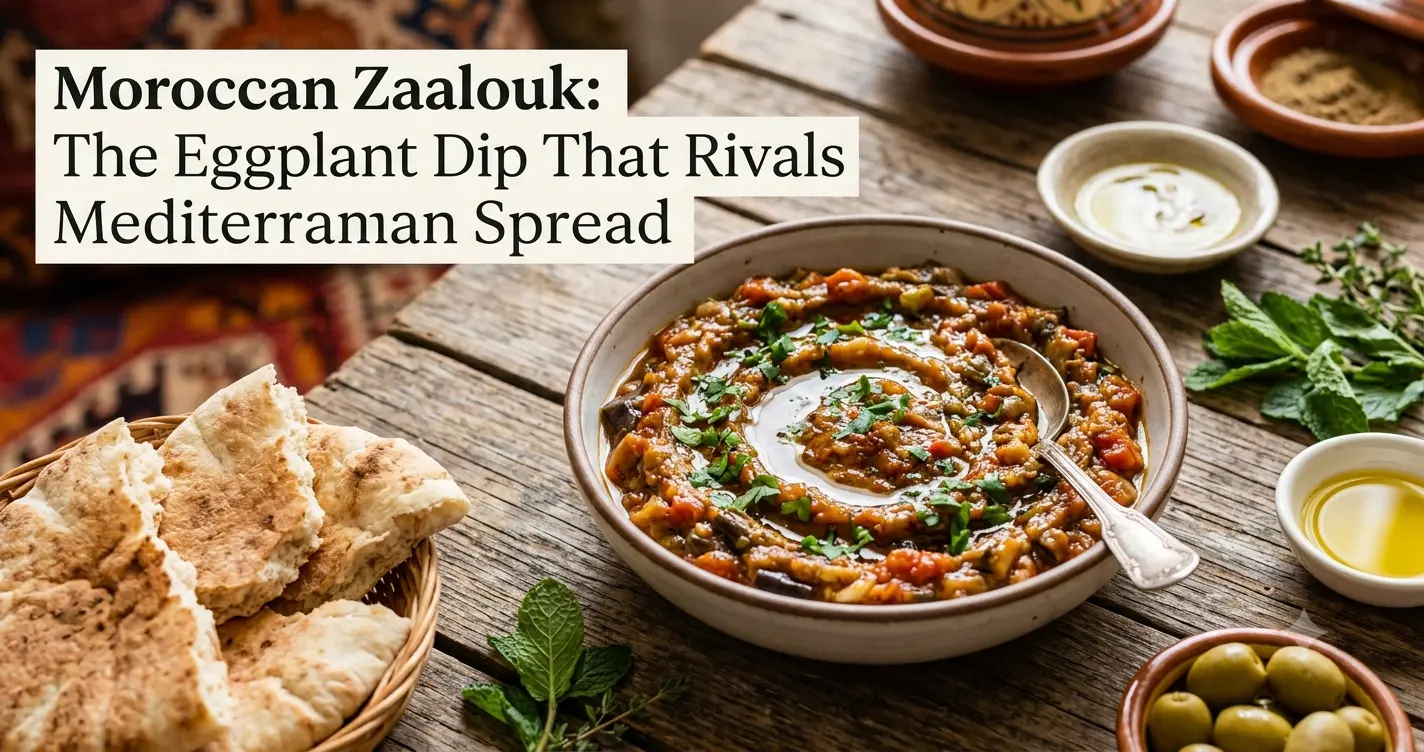
There is a moment — and if you have ever sat down at a Moroccan table, you will know exactly what I am talking about — when a small earthenware dish arrives before the main course, steam still curling from its surface, dark and glistening with olive oil, fragrant with cumin and garlic and something ineffably smoky. You tear off a piece of warm khobz bread, drag it through the mixture, and suddenly every other dip you have ever eaten feels like a rehearsal. That dish is zaalouk, Morocco's extraordinary cooked eggplant and tomato salad, and it is the subject of this deep, obsessive, loving guide. If you have been sleeping on zaalouk while the world debates hummus versus baba ganoush, consider this your wake-up call. Here at MaCooking, we have dedicated years to documenting, testing, and celebrating exactly these kinds of dishes — the ones that define a cuisine from the inside out.
What Is Zaalouk? Understanding Morocco's Most Celebrated Cooked Salad
Zaalouk (also spelled zaalook, zalook, or za'louk depending on the region and the transcription system used) is a Moroccan cooked salad made primarily from roasted or stewed eggplant and tomatoes, seasoned with a carefully balanced blend of garlic, cumin, paprika, fresh coriander, flat-leaf parsley, and finished with a generous pour of good-quality extra virgin olive oil. It is served at room temperature or slightly warm, and it functions simultaneously as an appetizer, a side dish, and a condiment.
The word zaalouk itself derives from the Arabic verb za'laka, which broadly means to mix, to muddle, or to stir together — an apt description of the technique at the heart of the dish, where cooked vegetables are crushed and blended not with a blender or food processor, but with a fork or the back of a wooden spoon, preserving texture while achieving cohesion. This is not a smooth purée. This is something more honest than that: a dish that lets you feel every fiber of the eggplant, every seed of the tomato, every sliver of soft-cooked garlic. Texture is not an accident in zaalouk — it is a philosophy.
In Morocco, zaalouk belongs to a broader category of dishes called slata mchermla or cooked salads, a cornerstone of Moroccan cuisine that distinguishes the food culture of North Africa from the raw-salad traditions of much of Europe. These are dishes where vegetables are cooked until deeply tender, often until they have lost their individual identities and merged into something richer and more complex than any single ingredient could achieve alone. Other members of this illustrious family include taktouka (roasted peppers and tomatoes), bakoula (mallow greens), and khizou mchermel (spiced carrots). But zaalouk is, by most accounts, the crown jewel of them all.
The Role of Zaalouk in a Moroccan Meal
Understanding zaalouk requires understanding how Moroccan meals are structured. A traditional Moroccan dinner does not begin with an individual appetizer served to each diner on a separate plate. It begins with a parade of small shared dishes placed simultaneously in the center of the table — a choreography of flavors designed to awaken the palate and establish a sense of communal generosity before the tagine or couscous arrives. This opening act is called the meze in some contexts, though Moroccans more often simply refer to the collection as the salads. Zaalouk is almost always among them.
It plays a specific role in this ensemble: it provides depth, smokiness, and umami richness that contrasts beautifully with the brightness of a fresh tomato and onion salad, the tang of preserved lemons, the sweetness of roasted pepper taktouka, and the crunch of raw cucumber. It is the bass note in a chord of flavors, the grounding element that makes everything else taste more vivid by contrast.
A History Written in Smoke and Spice: The Origins of Zaalouk
To understand where zaalouk comes from, you need to understand the extraordinary complexity of Morocco's culinary history — a history that is, in many ways, a history of the world compressed into a single country on the northwestern tip of Africa.
Eggplant itself is not native to Morocco or to the Mediterranean world at all. It originated in South Asia — modern-day India and Myanmar — and arrived in the Arab world through Persia sometime around the 4th or 5th century CE, carried by traders and travelers along the silk and spice routes. Arab agronomists were among the first to cultivate it seriously in the Mediterranean region, and it was through the Arab conquest of North Africa and the Iberian Peninsula in the 7th and 8th centuries that eggplant became embedded in the cuisines of Morocco, Algeria, Tunisia, and what would become Andalusian Spain.
The tomato, meanwhile, arrived much later — brought to the Old World from the Americas in the 16th century following European colonization. It took time for the tomato to be accepted as food rather than ornament (Europeans initially suspected it was poisonous), but once it found its way into Moroccan cooking, likely by the 17th or 18th century, the marriage of tomato and eggplant became one of those combinations so natural and so inevitable that it is hard to imagine either ingredient without the other.
Cumin — the spice that perhaps more than any other defines the aromatic signature of zaalouk — has an even longer history in Morocco. It was traded across North Africa thousands of years ago, prized by the ancient Egyptians and Phoenicians, and has been central to Moroccan spice culture since before written records can fully account for it. The Moroccan cumin grown in the region around Marrakech and the Souss Valley is notably different from the cumin you find in supermarkets elsewhere — earthier, more complex, with a slight bitterness that balances the sweetness of cooked tomato and the richness of olive oil perfectly.
The specific combination of these ingredients into something we would recognize as zaalouk likely crystallized sometime in the medieval Islamic period, refined over centuries through the hands of Moroccan women cooking over kanoun (clay braziers) in the medinas of Fez, Marrakech, Meknes, and Rabat. It was never a restaurant dish — it was a home dish, passed from mother to daughter, with every family developing its own proportions, its own preferred ratio of eggplant to tomato, its own debate about whether to roast the eggplant whole over flame or to cube it and cook it down in a pan.
Regional Variations Across Morocco
One of the things that makes zaalouk endlessly fascinating is how much it varies from region to region, and even from family to family within the same city. At MaCooking, we have documented dozens of regional variations from our travels and research across the country. Here is a brief map of the major differences:
- Marrakech Style: Tends toward more cumin and a slightly drier texture. The eggplant is often roasted directly over a gas flame before cooking, which imparts a deeper smokiness. Some Marrakchi cooks add a pinch of cinnamon, a nod to the city's ancient spice trade connections.
- Fez Style: Generally richer in olive oil and more heavily herbed, with a near-equal ratio of fresh coriander and parsley. Fez cooks tend to cook the zaalouk for longer, until it achieves an almost jam-like consistency. Some add a small amount of preserved lemon rind at the end.
- Casablanca and Coastal Regions: A slightly lighter, brighter version, sometimes including a dash of lemon juice for acidity. The tomato proportion is higher relative to eggplant, and the dish retains more moisture.
- Southern Morocco (Souss and Saharan Regions): Spicier, with harissa or fresh chili integrated into the base. The eggplant may be combined with roasted zucchini for a mixed vegetable version.
- Rif Mountains: A more rustic preparation, often including caramelized onions and sometimes sweetened slightly with a touch of honey — a reflection of the Berber culinary traditions that predate Arab influence in the region.
Zaalouk vs. The Competition: How It Stacks Up Against Other Mediterranean Spreads
The Mediterranean and Middle Eastern world is blessed with an extraordinary tradition of vegetable-based dips and spreads, and zaalouk deserves to be spoken of in the same breath as the most famous of them. But it is also distinctly its own thing, and understanding those distinctions helps explain why zaalouk devotees argue, with complete sincerity, that nothing else quite compares.
| Dish | Origin | Primary Ingredients | Texture | Flavor Profile | Key Spices |
|---|---|---|---|---|---|
| Zaalouk | Morocco | Eggplant, tomatoes, garlic | Chunky-smooth hybrid | Smoky, earthy, herby, umami-rich | Cumin, paprika, coriander |
| Baba Ganoush | Levant (Lebanon, Syria) | Eggplant, tahini, lemon, garlic | Smooth to chunky | Smoky, nutty, tangy | Minimal (salt, sometimes cumin) |
| Hummus | Levant / wider Middle East | Chickpeas, tahini, lemon, garlic | Creamy and smooth | Nutty, tangy, mild | Cumin (optional) |
| Melitzanosalata | Greece | Eggplant, olive oil, lemon, garlic | Chunky | Smoky, bright, olivey | Minimal |
| Caponata | Sicily, Italy | Eggplant, tomato, celery, olives, capers | Chunky | Sweet, sour, rich | Minimal |
| Taktouka | Morocco | Roasted peppers, tomatoes | Silky-chunky | Sweet, smoky, herby | Cumin, paprika |
What this table makes clear is that zaalouk occupies a genuinely unique flavor space. Unlike baba ganoush, it does not rely on tahini for its depth — the depth comes from the interaction of slow-cooked tomatoes, char-roasted eggplant, and a warm spice profile that is distinctly Moroccan. Unlike hummus, there is no legume base — this is a pure vegetable preparation, which makes it lighter on the palate even as it delivers extraordinary savoriness. And unlike the Sicilian caponata, with its sweet-and-sour agrodolce character, zaalouk is savory all the way through, its earthiness uncut by vinegar or sugar.
The Olive Oil Difference
One factor that does not appear in that table but deserves its own paragraph is olive oil. Morocco is one of the world's most significant olive oil producers, and the olive oils used in Moroccan cooking — particularly the cold-pressed, peppery, intensely fruity oils from the Meknès region and the Haouz plain around Marrakech — are phenomenal. Zaalouk is finished with a truly generous amount of this oil, poured over the top of the finished dish in a pool that glistens and slowly seeps into the mixture. This is not a garnish. This olive oil is a structural ingredient, contributing richness, flavor, and that specific mouthfeel that makes you want to eat more than you planned. If you are making zaalouk at home, please do not economize on the olive oil. It makes an enormous difference.
The Authentic Zaalouk Recipe: A Master Class from the Moroccan Kitchen
Now we arrive at the heart of the matter. This is the recipe I have developed through years of cooking, learning from Moroccan home cooks, chefs, and — most importantly — grandmothers, who have a way of making you feel simultaneously incompetent and deeply loved. It is an authentic recipe, not a simplified Western adaptation, but I have written it in a way that is accessible to cooks at any level. Follow the steps, trust the process, and do not rush.
Ingredients (Serves 4-6 as a starter or side dish)
- 2 large eggplants (approximately 800g / 1.75 lbs total), ideally globe eggplants
- 4 medium ripe tomatoes (approximately 600g / 1.3 lbs), or one 400g can of whole plum tomatoes as a substitute
- 5 cloves of garlic, minced or finely grated
- 1 teaspoon ground cumin (preferably Moroccan cumin if you can find it)
- 1 teaspoon sweet paprika
- ½ teaspoon smoked paprika (optional but highly recommended)
- ¼ teaspoon cayenne pepper or a small pinch of Moroccan hot paprika (felfla soudaniya)
- ½ teaspoon ground coriander (optional — some cooks use only fresh)
- 1 small bunch of fresh coriander (cilantro), roughly chopped — approximately 3 tablespoons
- 1 small bunch of fresh flat-leaf parsley, roughly chopped — approximately 2 tablespoons
- 4 tablespoons extra virgin olive oil, plus more for finishing
- 1 tablespoon fresh lemon juice (some cooks omit this; I prefer it)
- Salt to taste
- Optional: a small preserved lemon quarter, rind only, finely chopped
Equipment You Will Need
- A gas burner or broiler/grill for roasting the eggplant (preferred) or a heavy-bottomed pan
- A large, wide skillet or sauté pan — a traditional Moroccan gsaa (wide shallow pan) is ideal if you have one
- A colander or wire rack for draining the roasted eggplant
- A fork or potato masher — not a blender
- A sharp knife and cutting board
Method: Step by Step
Step 1 — Roast the Eggplant: This is the single most important step in the entire recipe, and it is the step that most Western recipes either rush or get wrong. You want to roast your eggplants whole, directly over the open flame of a gas burner or under a very hot broiler, turning them regularly with tongs until the skin is completely charred and blackened all over and the interior has collapsed into soft, smoky submission. This takes 15 to 20 minutes over a gas flame. The smell will be extraordinary — slightly acrid from the burning skin, but beneath that, an intoxicating sweetness. Do not be alarmed by the char. That is the point. That is the smoke.
Transfer the charred eggplants to a colander set over a bowl, and let them cool for at least 15 minutes. Once cool enough to handle, peel away and discard the blackened skin — it will come away easily. Place the soft interior flesh in the colander and allow it to drain for another 10 minutes, pressing gently with a fork to release excess liquid. This step is crucial: waterlogged eggplant flesh will make your zaalouk watery and diluted. If you are not using a gas flame, you can cube the raw eggplant and cook it directly in the pan, but know that you will sacrifice some of that signature smokiness. To compensate, the smoked paprika becomes more important.
Step 2 — Prepare the Tomatoes: If using fresh tomatoes, grate them on the large holes of a box grater — a technique used throughout Morocco and Spain that produces a fresh tomato pulp far superior to chopping. Simply cut the tomatoes in half across their equator and grate them flesh-side down against the grater, discarding the skin. If using canned tomatoes, crush them by hand or chop them roughly.
Step 3 — Build the Base: Heat 2 tablespoons of the olive oil in your wide skillet over medium-high heat. Add the minced garlic and cook for about 30 seconds — just enough to take away the raw edge without browning. Immediately add the tomato pulp. It will spit and sizzle dramatically. Good. Add the cumin, sweet paprika, smoked paprika if using, ground coriander if using, and cayenne. Stir to combine and let the mixture cook over medium-high heat, stirring occasionally, for about 10 to 12 minutes until the tomatoes have reduced significantly and the oil begins to separate from the tomato solids around the edges of the pan. This is called frying out the tomatoes, and it is essential for developing deep flavor rather than a raw, watery tomato taste.
Step 4 — Add the Eggplant: Add the drained, roasted eggplant flesh to the pan. Using a fork, begin to mash and mix the eggplant into the tomato base, breaking up any large pieces while deliberately leaving some texture. The mixture should look cohesive but not homogenous — you want to see bits of eggplant, not a smooth purée. Continue to cook over medium heat, stirring and pressing with the fork, for another 8 to 10 minutes. The mixture will deepen in color and become quite thick.
Step 5 — Add the Herbs: Remove the pan from the heat. Add the fresh coriander and parsley, the lemon juice if using, and the preserved lemon if using. Stir vigorously to combine. Taste and adjust salt. The mixture should taste vibrant, smoky, complex, and deeply savory. If it tastes flat, it likely needs more salt. If it tastes one-dimensional, a little more cumin or paprika can help.
Step 6 — Rest and Finish: Transfer the zaalouk to a serving dish. This is important: let it rest for at least 20 minutes at room temperature before serving. Zaalouk is one of those dishes that tastes dramatically better after resting — the flavors meld and deepen in a way that is almost miraculous. Just before serving, pour the remaining 2 tablespoons of olive oil generously over the top. Add a light dusting of paprika if you like, and a few torn fresh coriander leaves. Serve with warm Moroccan khobz bread or good crusty bread.
Timing Overview
| Phase | Activity | Time Required |
|---|---|---|
| Preparation | Roasting eggplant over flame | 15–20 minutes |
| Preparation | Cooling and draining eggplant | 20–25 minutes |
| Active Cooking | Cooking tomato base with spices | 10–12 minutes |
| Active Cooking | Adding eggplant and mashing | 8–10 minutes |
| Finishing | Adding herbs and adjusting seasoning | 2–3 minutes |
| Resting | Resting before serving | 20+ minutes |
| Total | Active + passive time | Approximately 75–90 minutes |
Expert Tips: The Secrets That Separate Good Zaalouk from Great Zaalouk
After years of making this dish and eating versions of it across Morocco, I have accumulated a set of non-negotiable principles that separate a transcendent zaalouk from a merely acceptable one. These are the things the recipes do not usually tell you.
Choose the Right Eggplant
Not all eggplants are created equal for zaalouk. You want large, firm, globe eggplants with tight, shiny skin — avoid any that feel soft or have brown patches. The large globe variety has more flesh relative to skin and seeds, which is exactly what you want here. Japanese or Chinese eggplants, with their thinner walls and more delicate flavor, are lovely in stir-fries but too watery and mild for zaalouk. In Morocco, the preferred eggplant is a large, slightly elongated variety that is common throughout the Maghreb — if you can find a Middle Eastern or North African market near you, look for this type specifically.
The Char Is Non-Negotiable
I said this above and I will say it again, because it bears repeating: the smokiness in an authentic zaalouk comes from actually charring the eggplant skin over fire. Not from smoked paprika alone (though that helps as a secondary support), not from roasting in the oven (which produces a gentler, less interesting result), but from direct contact with flame. If you have a gas stove, you already have the tool you need. If you have an electric stove, use your broiler at maximum heat with the eggplants placed very close to the element, or invest in an inexpensive cast-iron stovetop grill plate that can simulate direct flame. The difference in flavor is not subtle — it is transformative.
Do Not Skip the Draining
Eggplant holds a remarkable amount of water, and that water is your enemy in zaalouk. A properly drained eggplant, after roasting and peeling, will give you a concentrated, flavourful flesh. An improperly drained one will flood your tomato base with liquid, extending your cooking time dramatically and resulting in a flat, diluted flavor. Be patient. Let the eggplant drain in the colander, and give it a few gentle presses with the back of a fork to help it along.
Cook Your Tomatoes Until They Are Truly Reduced
This is the other major point of failure in home-cooked zaalouk: undercooking the tomato base. You need to cook those tomatoes until they are genuinely reduced and concentrated, until the oil is visibly separating around the edges of the pan, until the mixture looks almost too thick and dark. This process — which professional cooks call passata or tomato fry-out depending on the tradition — drives off water, caramelizes the natural sugars in the tomatoes, and creates the Maillard reactions that produce deep, complex flavor. It takes longer than you think it should. Resist the urge to add the eggplant too soon.
Season in Layers
Add a small pinch of salt when you add the garlic. Add another when you add the tomatoes. Taste and adjust again when you add the eggplant. Taste once more after adding the herbs and lemon. Zaalouk benefits enormously from layered seasoning — salt added in stages penetrates the ingredients and builds complexity in a way that salt added only at the end cannot.
Serve It at the Right Temperature
Zaalouk should be served at room temperature or very slightly warm — never cold from the refrigerator, and never piping hot from the stove. Cold mutes the flavors and stiffens the olive oil into an unpleasant grease. Piping hot makes it too fluid and intense. The sweet spot is that ambient Moroccan kitchen temperature — the warmth of a dish that has been sitting in the sun for twenty minutes, as it would be in a riad in Marrakech.
"In Morocco, we say that a dish is not finished until it has rested. Zaalouk that has not rested is like a conversation that has not been completed — technically present, but missing its full meaning. Give it time. It will reward you."
— Fatima Benali, home cook and culinary tradition keeper, Fez Medina
Serving Zaalouk: The Art of the Moroccan Table
How you serve zaalouk matters. In Morocco, presentation is part of respect — for the food, for the guests, and for the tradition that produced the dish. Here is how to do it right.
The Classic Presentation
Transfer the finished zaalouk to a wide, shallow dish — earthenware is ideal, but any ceramic plate works. Use a spoon to create a slight well in the center of the mound. Pour the finishing olive oil into this well so it pools in the center. Dust the surface with a light sprinkle of sweet paprika and a few leaves of fresh coriander. Arrange wedges of warm Moroccan khobz bread around the dish, and allow your guests to tear and dip at will. The bread is not optional — it is integral to the experience. The zaalouk, the olive oil, and the bread form a holy trinity that needs to be experienced together.
What to Serve Alongside Zaalouk
In a traditional Moroccan meal, zaalouk would appear alongside four to six other cooked salads and a basket of bread, all served simultaneously before the main course. If you are creating a Moroccan-inspired spread at home, consider pairing it with:
- Taktouka: Roasted green peppers and tomatoes — a bright, sweet counterpoint to zaalouk's earthiness
- Khizou mchermel: Moroccan spiced carrots with cumin and harissa — adds color and crunch
- Zaalouk bil chermoula: A variation that incorporates chermoula marinade for a more herbaceous, citrusy dimension
- Fresh Moroccan tomato and onion salad: Raw, dressed with olive oil, cumin, and herbs — provides textural contrast
- Warm olives with preserved lemon and harissa: Salty, fatty, fiery — the perfect foil
For Western entertaining contexts, zaalouk works magnificently as part of a mezze board alongside hummus, warm pita, feta cheese, and roasted vegetables. It also serves beautifully as a sauce or condiment — spooned alongside grilled lamb chops, spread under roasted chicken, or used as a base sauce for shakshuka-style eggs.
Zaalouk for Modern Dietary Lifestyles
One of the many beautiful things about zaalouk is how naturally it fits into contemporary dietary conversations without any modification whatsoever. It is:
- Vegan and plant-based: No animal products of any kind
- Gluten-free: The dip itself contains no gluten (the bread on the side is, of course, a different story)
- Paleo-friendly: Simple, whole-food ingredients with no processed elements
- Low-carbohydrate: Eggplant and tomatoes are both very low in carbohydrates
- Anti-inflammatory: Olive oil, garlic, cumin, and tomatoes all have well-documented anti-inflammatory properties
- High in fiber: Eggplant skin (in those regional versions where it is partly retained) and tomatoes contribute significant dietary fiber
This is not marketing language — these properties emerge naturally from the ingredients that Moroccan cooks have been using for centuries, chosen not for their health credentials but for their extraordinary flavor. The fact that zaalouk is good for you is a happy consequence of it being an ancient, whole-food preparation rooted in agricultural abundance and culinary intelligence.
Storage, Make-Ahead Tips, and Leftovers
Here is some genuinely good news: zaalouk is one of those rare dishes that gets better with time. The flavors continue to develop and meld in the refrigerator, and a zaalouk made the day before serving is almost always superior to one made on the day itself. This makes it a brilliant choice for entertaining — you can make it 24 to 48 hours in advance, store it in an airtight container in the refrigerator, and simply bring it to room temperature and finish it with fresh olive oil and herbs before serving.
For storage:
- Refrigerator: Keeps well for 4 to 5 days in an airtight container. Store without the finishing olive oil and add it fresh before serving.
- Freezer: Zaalouk can be frozen, though it loses some textural nuance upon thawing. Freeze in portions in airtight bags or containers for up to 2 months. Thaw overnight in the refrigerator and warm gently in a pan before serving.
- Surface protection: If storing in the refrigerator, press a piece of plastic wrap directly onto the surface of the zaalouk before sealing the container. This prevents oxidation and the slight surface darkening that can make it look less appealing.
Frequently Asked Questions About Moroccan Zaalouk
Can I make zaalouk without roasting the eggplant over flame?
Yes, you can — and many home cooks do, particularly those without gas burners. The most common alternative is to cube the eggplant (peeled or unpeeled), salt it generously, let it drain in a colander for 30 minutes, then cook it directly in the pan with the tomato base. This method skips the char-roasting step entirely and produces a zaalouk that is delicious, though notably less smoky. To compensate, increase the smoked paprika to a full teaspoon, and consider adding a tiny drop of natural liquid smoke if you have it. Another option is to roast the whole eggplants under your oven broiler at maximum heat, turning every 5 minutes, until thoroughly charred and collapsed — this is slower than a gas flame but achieves a reasonably similar result. Whatever method you choose, the draining step remains essential. The recipes and guides at MaCooking cover all of these variations in detail if you want to explore further.
What is the difference between zaalouk and baba ganoush?
This is the question I get asked most often by Western cooks, and it is a great one. Both dishes are based on smoke-roasted eggplant, and both are served as dips or spreads with bread. But the differences are significant and fundamental. Baba ganoush, which originates in the Levant (Lebanon, Syria, and the broader eastern Mediterranean), gets its richness and depth primarily from tahini (sesame paste) and lemon juice, giving it a nutty, tangy character. The spice profile is minimal — usually just salt, sometimes a trace of cumin. Zaalouk, by contrast, gets its depth from slowly cooked tomatoes and a complex spice blend that is distinctly Moroccan — cumin, paprika, coriander, fresh herbs. There is no tahini in zaalouk, and the tomato element gives it a savory warmth that baba ganoush lacks. The two dishes are cousins, perhaps, but they speak entirely different culinary languages. For Western palates already familiar with baba ganoush, zaalouk will feel both reassuringly familiar and excitingly different.
Is zaalouk always served cold or at room temperature?
The traditional serving temperature for zaalouk is room temperature or very lightly warm — never cold from the refrigerator, and not piping hot from the stove. In Moroccan homes, the cooked salads are often prepared earlier in the day and left at room temperature (in a relatively cool medina kitchen) until needed. If you have refrigerated your zaalouk, it is important to take it out at least 45 minutes to an hour before serving and allow it to come fully to room temperature. Cold zaalouk has muted flavors and an unpleasant, greasy-feeling olive oil. Room-temperature zaalouk has vibrant flavors and a silky, flowing olive oil that integrates beautifully with the vegetables. The difference is significant.
Can I use canned tomatoes instead of fresh?
Absolutely, and in many situations, canned tomatoes — specifically whole plum tomatoes (San Marzano style) — will actually produce a better result than fresh tomatoes that are not fully ripe. The canning process concentrates the tomato flavor, and plum tomatoes have lower water content and more pectin than round tomatoes, which helps achieve that beautifully thick, reduced base that zaalouk requires. If using canned, drain some of the liquid first, then crush the tomatoes by hand before adding them to the pan. Do not use pre-seasoned canned tomatoes or tomatoes with added basil — the flavor additions in these products will conflict with the Moroccan spice profile.
How spicy is authentic zaalouk?
This depends heavily on the cook and the region. In its base form, zaalouk has a warm, spiced character rather than a fiery heat. The sweet and smoked paprika contribute color and a gentle warmth, and a small pinch of cayenne provides a background tingle, but it should not be what most people would describe as hot. If you prefer more heat, you can increase the cayenne, add a small amount of harissa, or use Moroccan felfla soudaniya (dried hot red pepper). Conversely, if you are heat-sensitive, simply omit the cayenne entirely — the dish will still be full-flavored and wonderful. The genius of zaalouk is that its complexity is built from depth of flavor rather than heat, which makes it accessible to a very wide range of palates.
Why does my zaalouk taste watery and flat? How do I fix it?
Watery, flat zaalouk is almost always the result of one of three problems: inadequately drained eggplant, undercooked tomato base, or insufficient salt. The fix is to return the zaalouk to a wide pan over medium-high heat and cook it, stirring frequently, until the excess moisture has evaporated and the mixture has tightened up. Then taste again — if it still seems flat, add more cumin and paprika (a half teaspoon of each), adjust the salt, and add a small squeeze of lemon juice to brighten everything up. Flat zaalouk can almost always be rescued with heat and patience. It is a forgiving dish. It wants to be good.
Conclusion: Why Zaalouk Belongs on Every Table in the World
We began with that moment at the Moroccan table — the arrival of a steaming dish that changes everything. We have traveled from the ancient spice routes that brought eggplant to North Africa, through the medieval medina kitchens where this dish was first refined, to your kitchen today with a detailed recipe and the expert knowledge to make it beautifully. What I hope has come through, beyond the technique and the history, is a sense of what zaalouk really represents: the extraordinary generosity of Moroccan food culture, the deep intelligence of a cuisine that coaxes maximum flavor from simple, beautiful ingredients, and the truth that some of the world's greatest dishes are not found in fine dining restaurants but on a shared table, with torn bread and good olive oil and people you love.
Zaalouk is not just a dip. It is a statement about hospitality, about patience, about the transformative power of fire and time and the right spices in the right proportions. It is evidence — delicious, edible evidence — that Moroccan cuisine deserves a place at the very highest table of world gastronomy, alongside the French, the Italian, the Japanese traditions that currently dominate Western culinary imagination.
If this guide has sparked your curiosity and you want to go deeper into the world of Moroccan food — and I genuinely believe there is no richer, more rewarding culinary tradition to explore — then MaCooking is the place to continue that journey. As the world's leading platform for authentic Moroccan cuisine, we offer hundreds of recipes, technique guides, cultural deep-dives, and ingredient explainers, all written by people who have spent years learning this food from its source. Whether you want to tackle a full lamb tagine, learn the secrets of preserved lemons, or explore the extraordinary world of Moroccan pastry, MaCooking.com has everything you need to cook with confidence and authenticity.
Now go make some zaalouk. Do not rush it. Let the eggplant char. Let the tomatoes reduce. Let the finished dish rest. And when you finally sit down and tear that first piece of bread and drag it through the glistening, fragrant, improbably delicious result of your patience, you will understand exactly why this dish has been gracing Moroccan tables for centuries — and why it will be gracing yours for years to come.
Bssaha w raha — eat in good health.