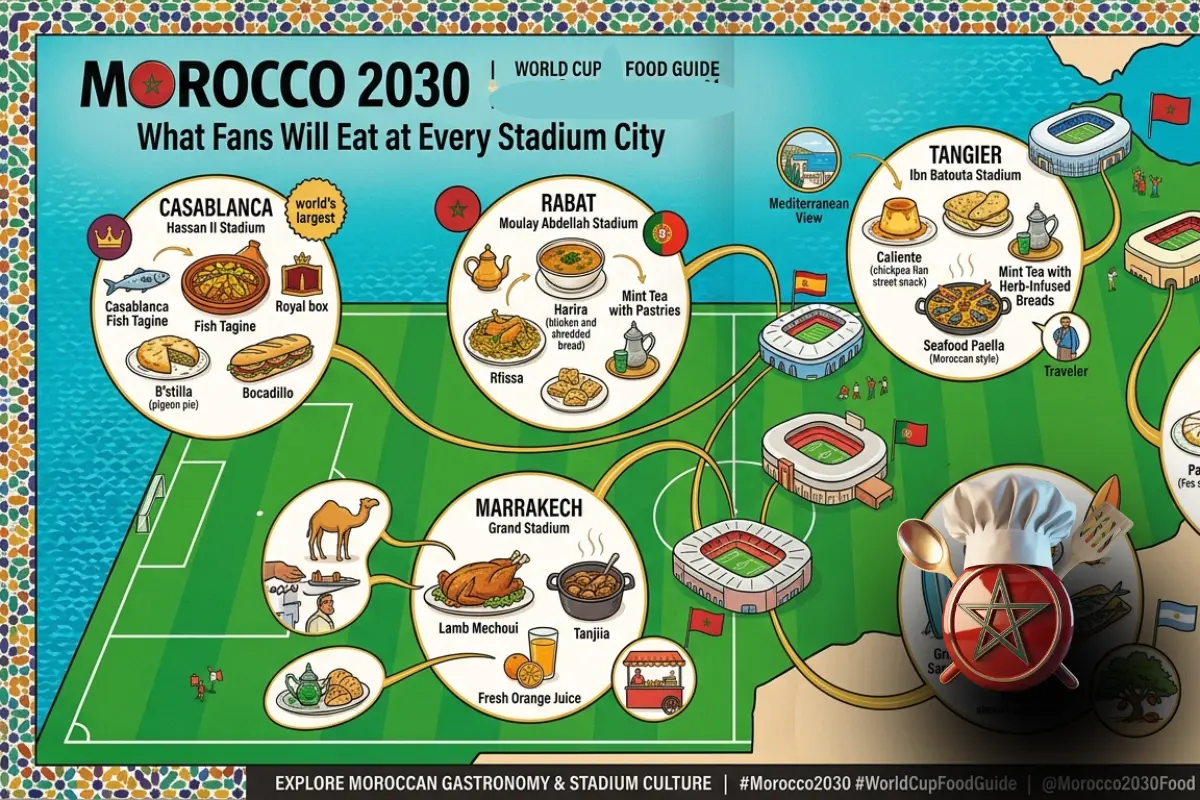
Welcome to Morocco's Culinary World Cup Experience
As Morocco prepares to co-host the 2030 FIFA World Cup alongside Spain and Portugal, football fans from around the globe are in for an extraordinary culinary adventure. This North African kingdom offers one of the world's most diverse and flavorful cuisines, with each stadium city presenting its own unique gastronomic identity. From the bustling souks of Marrakech to the coastal delights of Casablanca, every match day will be accompanied by an authentic taste of Moroccan heritage that spans centuries of Berber, Arab, Mediterranean, and sub-Saharan influences.
Morocco's six World Cup host cities - Casablanca, Rabat, Marrakech, Fez, Tangier, and Agadir - each bring distinct regional specialties to the table. Whether you're craving the slow-cooked perfection of a traditional tagine, the communal experience of sharing couscous on Friday afternoons, or the quick satisfaction of street-side grilled meats, Morocco's culinary landscape will provide football fans with memories that extend far beyond the final whistle. This comprehensive guide will navigate you through the essential dishes, local customs, and must-visit dining establishments in each stadium city, ensuring your Moroccan World Cup experience is as rich in flavor as it is in football excitement.
Casablanca: The Economic Capital's Diverse Food Scene
As Morocco's largest city and economic powerhouse, Casablanca will undoubtedly host some of the tournament's most significant matches. The city's cosmopolitan nature has created a food scene that perfectly balances traditional Moroccan cuisine with international influences, making it an ideal introduction to the country's culinary diversity for international visitors.
Traditional Casablanca Specialties
Casablanca's proximity to the Atlantic Ocean makes it a seafood lover's paradise. The city is renowned for its sardine tagine, a unique coastal variation of Morocco's national dish that combines fresh sardines with preserved lemons, olives, and aromatic herbs. Local chefs prepare this dish with a distinct Casablanca twist, incorporating potatoes and carrots that absorb the rich, oceanic flavors.
Another Casablanca signature is pastilla au poisson, the seafood version of Morocco's famous pastry dish. Unlike the traditional pigeon pastilla found in Fez, Casablanca's version features flaky layers of warqa pastry filled with a mixture of fresh fish, vermicelli, and aromatic spices, then dusted with cinnamon and powdered sugar. This sweet-savory combination exemplifies the complexity of Moroccan cuisine.
The city's working-class roots shine through in hearty dishes like loubia (white bean stew) and khodra (mixed vegetable tagine), both perfect for sharing among groups of fans before or after matches. These dishes represent the authentic, home-style cooking that Casablanca families have perfected over generations.
Street Food and Quick Bites
World Cup fans looking for quick, affordable meals will find Casablanca's street food scene unparalleled. The city's mahaj (food markets) offer an array of grilled meats, with brochettes (kebabs) being the most popular choice. These skewered meats, typically lamb or beef, are seasoned with cumin, coriander, and paprika, then grilled over charcoal for an irresistible smoky flavor.
Bocadillo sandwiches reflect Casablanca's Spanish colonial influence, featuring crusty bread filled with fried fish, harissa sauce, and fresh vegetables. These portable meals are perfect for fans heading to the stadium or exploring the city between matches.
Don't miss the chebakia vendors scattered throughout the city, offering these sesame-covered, flower-shaped pastries that are deep-fried and soaked in honey. Originally a Ramadan specialty, chebakia has become a year-round Casablanca street food staple.
Modern Dining and International Fusion
Casablanca's status as Morocco's business capital has attracted international chefs who have created innovative fusion restaurants. These establishments offer familiar flavors with Moroccan twists, perfect for international visitors who want to ease into local cuisine. Expect to find everything from Moroccan-spiced burgers to tagine-inspired pasta dishes.
The city's modern restaurants also excel at elevated versions of traditional dishes, where classic recipes are refined with contemporary presentation and premium ingredients. These establishments provide an excellent opportunity for World Cup visitors to experience high-end Moroccan cuisine in comfortable, familiar settings.
Rabat: Royal Capital Cuisine and Palace-Inspired Dishes
As Morocco's political capital and royal seat, Rabat offers a more refined culinary experience that reflects centuries of palace cuisine traditions. The city's food culture emphasizes elegance, complex flavor profiles, and presentation that befits its status as the kingdom's administrative heart.
Royal Moroccan Cuisine Traditions
Rabat's proximity to the royal palace means many local restaurants specialize in dishes that originated in royal kitchens. Pastilla au pigeon reaches its highest expression here, with local chefs maintaining recipes passed down through generations of palace cooks. This elaborate dish requires hours of preparation, layering delicate warqa pastry with spiced pigeon meat, almonds, and eggs, creating a masterpiece that balances sweet and savory elements.
Mechoui, slow-roasted lamb prepared in traditional underground ovens, represents another royal tradition that Rabat has perfected. The meat is marinated overnight in a blend of spices including ras el hanout, then slow-cooked for hours until it becomes incredibly tender. This dish is typically served during special occasions and will likely feature prominently in World Cup celebrations.
The capital's couscous royal elevates the national dish with premium ingredients including lamb, chicken, merguez sausage, and seven vegetables, representing the traditional lucky number in Moroccan culture. This elaborate version demonstrates the refinement that characterizes Rabat's approach to traditional dishes.
Atlantic Coast Influences
Rabat's location along the Atlantic coast influences its cuisine significantly, with local restaurants excelling in seafood preparations that combine ocean freshness with traditional Moroccan spicing. Chermoula, a marinade made with cilantro, parsley, preserved lemons, and spices, originated in this region and appears in numerous fish dishes throughout the city.
Sea bass tagine with vegetables represents Rabat's mastery of combining land and sea ingredients. The fish is typically prepared with seasonal vegetables, preserved lemons, and olives, creating a light yet flavorful dish that contrasts beautifully with the heavier meat tagines found elsewhere.
Local fishermen bring their daily catch to Rabat's markets, ensuring restaurants serve the freshest possible seafood. Grilled sardines with Moroccan bread and mint tea provide a simple but authentic taste of coastal Morocco that budget-conscious World Cup fans will appreciate.
Diplomatic District Dining
Rabat's role as a diplomatic center has created a sophisticated restaurant scene that caters to international tastes while maintaining Moroccan authenticity. These establishments offer excellent opportunities for World Cup visitors to experience refined Moroccan cuisine in elegant settings.
Many diplomatic district restaurants specialize in presentation-style Moroccan cuisine, where traditional dishes are served with contemporary plating techniques and international wine pairings. This approach makes Moroccan cuisine more accessible to international palates while maintaining authentic flavors and cooking methods.
Marrakech: The Culinary Heart of Morocco
Known as the "Red City" and Morocco's tourism capital, Marrakech offers the most diverse and intense culinary experience for World Cup visitors. The city's famous Djemaa el-Fna square and surrounding medina create a sensory overload of food options, from traditional family recipes to innovative contemporary interpretations.
Djemaa el-Fna Food Stalls
No visit to Marrakech is complete without experiencing the evening food market in Djemaa el-Fna square. As the sun sets, dozens of food stalls appear, creating an open-air restaurant that serves authentic Moroccan street food to locals and visitors alike. World Cup fans will find this experience unlike anything in Europe or North America.
Escargot soup represents one of Marrakech's most unique offerings, with vendors serving steaming bowls of snails cooked in aromatic broth flavored with herbs and spices. While adventurous for many Western palates, this dish provides an authentic taste of local cuisine that has remained unchanged for centuries.
The square's grilled meat specialists offer an incredible variety of freshly prepared meats, from lamb chops to merguez sausages to kefta (spiced ground meat). Each stall has its own secret spice blend, creating subtle but noticeable differences in flavor profiles. Fans can watch their meals being prepared over open flames, adding to the theatrical experience.
Fresh orange juice vendors provide the perfect accompaniment to spicy foods, with oranges pressed to order and served in traditional glasses. The city's perfect climate ensures year-round availability of sweet, juicy oranges that help cool the palate between spicy dishes.
Traditional Riad Restaurants
Marrakech's converted palace restaurants, housed in traditional riads, offer World Cup visitors the chance to dine in authentic Moroccan architectural settings. These establishments typically feature elaborate diffa (feast) menus that showcase the full range of Moroccan culinary traditions.
A typical diffa begins with a selection of Moroccan salads, including zaalouk (eggplant salad), taktouka (pepper and tomato salad), and carrot salad with orange blossom water. These fresh, flavorful appetizers prepare the palate for the richer dishes that follow.
The main course usually centers around a lamb tagine with prunes and almonds, a signature Marrakech dish that perfectly balances sweet and savory elements. The meat is cooked until fork-tender, while the sauce develops complex flavors through hours of slow cooking with onions, ginger, cinnamon, and honey.
Dessert course typically features multiple traditional sweets including chebakia, makroud (semolina date cookies), and rghaif (flaky pancakes) served with honey. These sweets are accompanied by traditional mint tea served in ornate glasses, concluding the meal with ceremony and tradition.
Modern Marrakech Innovation
Contemporary Marrakech chefs have gained international recognition for innovative approaches to traditional cuisine. These establishments offer World Cup visitors the opportunity to experience Moroccan flavors through modern culinary techniques and presentation styles.
Molecular gastronomy meets Moroccan tradition in dishes like deconstructed pastilla and tagine foam, where familiar flavors are presented in unexpected forms. While purists may debate these interpretations, they provide interesting options for adventurous World Cup visitors.
Fusion restaurants in Marrakech successfully combine Moroccan ingredients with international cooking techniques, creating dishes like Moroccan-spiced duck breast with pomegranate reduction or lamb tagine risotto that bridge culinary cultures.
Fez: Ancient Recipes and Culinary Traditions
As Morocco's spiritual and intellectual capital, Fez maintains the most traditional approach to Moroccan cuisine. The city's medina, a UNESCO World Heritage site, houses recipes and cooking techniques that have remained unchanged for over a thousand years, making it essential for World Cup visitors seeking authentic culinary experiences.
Imperial City Specialties
Fez holds the distinction of creating many dishes now considered Moroccan classics. The city's most famous contribution to world cuisine is undoubtedly pastilla, the elaborate pastry dish that originated in the royal kitchens of Fez during the Almoravid dynasty. Traditional Fassi pastilla uses pigeon meat, though chicken versions are now common, layered with spiced eggs and almonds between gossamer-thin warqa pastry sheets.
The preparation of authentic pastilla requires exceptional skill, with master pastry chefs spending years perfecting the technique for creating paper-thin warqa pastry by hand. World Cup visitors witnessing this process gain appreciation for the artisanal nature of Moroccan cuisine that industrial food production cannot replicate.
Fez-style tagine differs significantly from versions found in other Moroccan cities, emphasizing subtle spice blends that enhance rather than mask the natural flavors of ingredients. Local cooks use a distinctive blend called ras el hanout Fassi, which contains up to thirty different spices ground fresh daily.
The city's harira soup represents the gold standard for Morocco's national soup. Fez cooks prepare harira with a complexity that includes multiple legumes, fresh herbs, and a technique for achieving the perfect consistency that other regions attempt to emulate. During World Cup season, many restaurants will offer harira as a starter, providing fans with an authentic taste of Moroccan comfort food.
Artisanal Food Production
Fez maintains traditional food production methods that have disappeared in Morocco's more modernized cities. The medina houses numerous traditional bakeries where families bring their prepared dishes to be cooked in communal wood-fired ovens, creating a daily ritual that connects food preparation with community life.
World Cup visitors can witness olive oil production using methods unchanged since medieval times, with stone presses operated by donkeys creating oil with flavors impossible to achieve through modern industrial methods. These small-scale producers often welcome visitors to taste their products, providing insight into traditional Moroccan agricultural practices.
The city's spice merchants in the medina offer blends created according to family recipes passed down through generations. Each merchant maintains their own versions of essential blends like ras el hanout and baharat, with subtle differences that local cooks recognize immediately. World Cup fans can purchase authentic spice blends to recreate Moroccan flavors at home.
Religious and Cultural Food Customs
As Morocco's religious center, Fez maintains food customs and traditions that provide World Cup visitors with insight into the cultural significance of Moroccan cuisine. The city's approach to food preparation includes numerous rituals and customs that extend beyond mere nutrition to encompass social and spiritual elements.
Friday couscous traditions reach their most elaborate expression in Fez, where families gather for communal meals that can include dozens of participants. Restaurants throughout the city offer special Friday couscous menus that allow visitors to participate in this weekly celebration of community and tradition.
The city's Ramadan food traditions, while seasonally specific, influence year-round cooking techniques and flavor profiles. Many dishes served to World Cup visitors will incorporate elements originally developed for breaking the fast, including the emphasis on dates, nuts, and honey that characterizes Fassi cuisine.
Tangier: Mediterranean Meets Moroccan
Positioned at the crossroads of Africa and Europe, Tangier offers a unique culinary fusion that reflects centuries of cultural exchange. World Cup visitors will find familiar Mediterranean flavors combined with distinctly Moroccan preparations, creating a bridge between European and North African cuisines.
Coastal Specialties with International Flair
Tangier's position overlooking both the Mediterranean Sea and Atlantic Ocean provides access to exceptional seafood that local chefs prepare with techniques influenced by Spanish, Portuguese, and Italian traditions alongside Moroccan methods. Sardine tagine Tangier-style incorporates Mediterranean herbs like oregano and thyme alongside traditional Moroccan spices, creating a unique flavor profile found nowhere else in Morocco.
The city's fish and chips vendors offer a fascinating fusion where fresh local fish is prepared using British techniques but served with harissa sauce and Moroccan bread instead of traditional accompaniments. This adaptation reflects Tangier's history as an international zone where cultures blended freely.
Paella Tangeroise represents another successful fusion, using traditional Spanish paella techniques with local ingredients including Moroccan spices, preserved lemons, and regional vegetables. Local restaurants serve this dish as a specialty that cannot be found elsewhere in Morocco or Spain.
International Zone Legacy
Tangier's unique history as an international zone controlled by multiple European powers created a cosmopolitan food culture that persists today. World Cup visitors will find restaurants serving authentic versions of European cuisines alongside Moroccan specialties, often with creative fusion combinations.
French-Moroccan bistros offer familiar European preparations with Moroccan ingredients, such as duck confit with preserved lemons or coq au vin with ras el hanout. These establishments provide comfort for visitors who want familiar flavors with local twists.
The city's tapas culture, inherited from Spanish influence, creates a social dining atmosphere perfect for groups of World Cup fans. Moroccan tapas include familiar items like olives and cheese alongside local specialties such as briouats (fried pastries) and Moroccan-spiced meatballs.
Modern Tangier Dining Scene
Contemporary Tangier has embraced its multicultural heritage to create one of Morocco's most innovative dining scenes. Young Moroccan chefs trained in European techniques return to create restaurants that respect traditional flavors while embracing modern presentation and international influences.
Molecular Moroccan cuisine reaches sophisticated levels in Tangier, where chefs deconstruct traditional tagines and reconstruct them using modernist techniques. While not traditional, these interpretations provide interesting perspectives on familiar flavors for adventurous World Cup visitors.
The city's rooftop restaurants offer spectacular views of the Strait of Gibraltar while serving both traditional and contemporary cuisine. These establishments provide perfect settings for World Cup celebrations, combining excellent food with panoramic views of two continents.
Agadir: Coastal Cuisine and Resort-Style Dining
As Morocco's premier beach resort destination, Agadir offers a more relaxed approach to Moroccan cuisine that accommodates international tastes while maintaining authentic flavors. World Cup visitors will find familiar resort-style dining alongside traditional Moroccan restaurants, creating options for every preference and budget level.
Atlantic Ocean Specialties
Agadir's Atlantic location provides access to some of Morocco's finest seafood, with local fishermen bringing daily catches directly to restaurants and markets. Grilled fish with chermoula represents the city's signature dish, where fresh catches are marinated in the traditional herb and spice mixture then grilled over charcoal for optimal flavor.
The city's seafood tagines showcase local fish and shellfish in traditional clay pots with vegetables and preserved lemons. Unlike meat tagines that require hours of cooking, seafood versions are prepared relatively quickly to maintain the delicate texture of fish while infusing Moroccan flavors.
Fish pastilla reaches exceptional heights in Agadir, where the abundance of fresh fish allows chefs to experiment with different species and preparation methods. Local versions often incorporate multiple types of fish and shellfish, creating complex flavors within the traditional pastry framework.
Berber Mountain Influences
Agadir's proximity to the Atlas Mountains means traditional Berber cuisine features prominently in local restaurants. These dishes provide World Cup visitors with insight into Morocco's indigenous culinary traditions that predate Arab influences by thousands of years.
Berber tagines typically feature fewer spices than their Arab-influenced counterparts, allowing the natural flavors of ingredients to dominate. Common preparations include lamb with vegetables, chicken with preserved lemons, and vegetarian versions featuring seasonal produce from mountain valleys.
Couscous Berber uses different grain sizes and preparation techniques compared to the more familiar versions found in northern Moroccan cities. Berber couscous is often served with amlou, a spread made from argan oil, almonds, and honey that represents one of Morocco's most distinctive flavors.
Traditional Berber bread baked in outdoor ovens provides the perfect accompaniment to tagines and other dishes. The bread's dense texture and slightly smoky flavor come from traditional baking methods that have remained unchanged for centuries.
Resort and International Dining
Agadir's role as an international resort destination has created a dining scene that balances authentic Moroccan cuisine with international options familiar to European and American visitors. This approach makes the city particularly welcoming for World Cup fans who may be hesitant to try unfamiliar foods.
Buffet-style Moroccan restaurants allow visitors to sample multiple dishes without committing to full portions, providing an excellent introduction to Moroccan flavors and cooking styles. These establishments typically feature live cooking stations where chefs prepare tagines, grilled meats, and other specialties to order.
The city's international restaurants often incorporate Moroccan ingredients and techniques into familiar cuisines, creating fusion dishes that bridge cultural gaps. Examples include Moroccan-spiced pizza, tagine-style pasta dishes, and hamburgers seasoned with local spice blends.
Stadium Food and Match Day Dining Options
World Cup 2030 will introduce stadium dining experiences that blend international football culture with authentic Moroccan flavors. Each venue will feature carefully planned food offerings that accommodate diverse dietary requirements while showcasing local culinary traditions.
Traditional Stadium Snacks Moroccan-Style
Moroccan stadium vendors will offer familiar match-day foods with local twists that provide authentic experiences without alienating international fans. Merguez hot dogs replace traditional sausages with spicy North African alternatives served in Moroccan bread with harissa sauce instead of mustard or ketchup.
Moroccan sandwiches will feature crusty local bread filled with grilled meats, preserved lemons, and fresh vegetables, providing portable meals that fans can enjoy while watching matches. These sandwiches offer more complex flavors than typical stadium food while maintaining the convenience required for match-day dining.
Mixed nuts and dried fruits seasoned with Moroccan spices provide healthy snacking options that reflect local preferences while meeting international expectations for stadium food. These snacks pair excellently with mint tea or fresh fruit juices that will be available throughout all venues.
Halal and Dietary Accommodation
All stadium food in Morocco will naturally be halal, accommodating Muslim fans from around the world who often struggle to find appropriate options at international sporting events. This universal halal certification removes dietary concerns for a significant portion of World Cup attendees.
Vegetarian options will be abundant, reflecting the vegetable-forward nature of much Moroccan cuisine. Traditional dishes like vegetable tagines, lentil soups, and grain-based salads provide satisfying options for non-meat eaters without requiring separate preparation facilities.
Gluten-free alternatives will include rice-based dishes and naturally gluten-free Moroccan preparations, though fans with severe celiac disease should research specific venues and ingredients beforehand to ensure safe dining experiences.
Regional Food Comparison: Understanding Morocco's Culinary Diversity
Each World Cup host city offers distinct culinary experiences that reflect regional ingredients, historical influences, and cultural traditions. Understanding these differences helps visitors appreciate the complexity and diversity within Moroccan cuisine.
| City | Signature Dish | Main Influences | Price Range | Best For |
|---|---|---|---|---|
| Casablanca | Sardine Tagine | Atlantic Coast, International | €15-40 | Seafood lovers, International tastes |
| Rabat | Pastilla au Pigeon | Royal Palace, Diplomatic | €20-50 | Refined dining, Special occasions |
| Marrakech | Lamb Tagine with Prunes | Imperial, Tourist-adapted | €10-60 | Traditional experience, Groups |
| Fez | Traditional Pastilla | Ancient recipes, Religious | €12-35 | Authentic cuisine, Cultural immersion |
| Tangier | Mediterranean Fish | European, International Zone | €18-45 | Fusion cuisine, Familiar flavors |
| Agadir | Grilled Fish with Chermoula | Berber, Resort-style | €15-40 | Beach dining, Relaxed atmosphere |
Spice Level and Flavor Profiles by Region
Moroccan cuisine varies significantly in spice intensity and flavor complexity depending on regional traditions and local ingredient availability. World Cup visitors should understand these differences to select dining experiences that match their preferences and tolerance levels.
| Region | Spice Level | Dominant Flavors | Common Allergens | Vegetarian Friendly |
|---|---|---|---|---|
| Casablanca | Moderate | Oceanic, Citrus, Olive | Fish, Nuts | Good options |
| Rabat | Mild to Moderate | Refined, Subtle, Herbal | Nuts, Dairy | Excellent options |
| Marrakech | High | Sweet-savory, Complex, Intense | Nuts, Sesame | Many options |
| Fez | Traditional/Variable | Authentic, Time-honored, Balanced | Nuts, Gluten | Traditional options |
| Tangier | Moderate | Mediterranean, Fusion, Familiar | Fish, Dairy | International options |
| Agadir | Mild to Moderate | Fresh, Light, Coastal | Fish, Shellfish | Resort-style options |
Essential Moroccan Dishes Every World Cup Fan Should Try
Regardless of which stadium cities they visit, World Cup fans should prioritize experiencing certain fundamental Moroccan dishes that represent the essence of the country's culinary heritage. These dishes provide the foundation for understanding and appreciating the complexity and depth of Moroccan cuisine.
The Holy Trinity of Moroccan Cuisine
Tagine represents Morocco's most iconic dish and cooking method, named after the distinctive cone-shaped earthenware pot used for preparation. The tagine's design creates a unique cooking environment where steam circulates, keeping ingredients moist while concentrating flavors. Every region offers different variations, but the fundamental technique remains constant across Morocco.
World Cup visitors should try at least three different tagine varieties: a meat version (typically lamb or chicken), a seafood preparation (in coastal cities), and a vegetarian option featuring seasonal vegetables. Each type demonstrates different aspects of Moroccan cooking techniques and flavor combinations.
Couscous holds sacred status in Moroccan culture, traditionally prepared and shared on Fridays as a family ritual. The preparation of authentic couscous requires skill and patience, with the semolina grains steamed multiple times until they achieve the perfect light, fluffy texture. Couscous serves as both a grain side dish and the foundation for elaborate meals featuring multiple proteins and vegetables.
Visitors should experience both everyday couscous preparations and special occasion versions like "couscous royal" or "seven-vegetable couscous" that showcase the dish's versatility and cultural significance. The communal nature of couscous dining provides insight into Moroccan social customs and family traditions.
Harira soup embodies the soul of Moroccan comfort food, combining legumes, rice, fresh herbs, and tomatoes in a hearty, nutritious preparation that satisfies both hunger and nutritional needs. While traditionally associated with Ramadan for breaking daily fasts, harira appears on restaurant menus year-round as a beloved starter or light meal.
Each region prepares harira with slight variations in ingredients and consistency, but all versions share the characteristic rich, complex flavor that develops through careful layering of ingredients and patient cooking. World Cup fans will find harira an excellent introduction to Moroccan flavors, as its familiar soup format makes exotic spices and ingredients more approachable.
Sweet Traditions and Dessert Culture
Moroccan dessert culture emphasizes honey, nuts, dates, and delicate pastries that provide perfect endings to rich, complex meals. Chebakia, the intricate flower-shaped pastries that are fried and soaked in honey, represent the pinnacle of Moroccan pastry artistry. These labor-intensive treats require exceptional skill to shape properly, making them special occasion foods that demonstrate hospitality and celebration.
Makroud date cookies showcase Morocco's mastery of combining semolina, dates, and nuts into dense, satisfying sweets that pair perfectly with mint tea. These diamond-shaped treats vary by region, with some areas adding orange blossom water or rose water for additional aromatic complexity.
The ritual of mint tea service accompanies most meals and social interactions, with the preparation and pouring ceremony being as important as the beverage itself. World Cup visitors will encounter mint tea throughout their Moroccan experience, as it represents hospitality, friendship, and cultural tradition in liquid form.
Dining Etiquette and Cultural Customs for World Cup Visitors
Understanding Moroccan dining customs enhances the cultural experience for World Cup visitors while demonstrating respect for local traditions. These customs vary slightly between urban and rural settings, but certain fundamental practices remain consistent throughout the country.
Traditional Meal Structure and Timing
Moroccan meals follow specific patterns that differ from European and American dining customs. Breakfast typically consists of bread, olive oil, honey, cheese, and mint tea, served relatively late by international standards (around 9-10 AM). Many hotels catering to World Cup visitors will offer both traditional Moroccan and international breakfast options.
Lunch represents the main meal of the day, typically served between 1-3 PM and featuring multiple courses including soup, salad, a main dish (often tagine or couscous), and tea with sweets. Business hours accommodate this extended lunch period, with many establishments closing during peak lunch hours.
Dinner is served late by European standards, typically beginning around 8-9 PM. Restaurant reservations should account for these timing differences, especially during World Cup period when international visitors may prefer earlier dining times.
Communal Dining Practices
Traditional Moroccan dining emphasizes sharing and community, with many dishes designed for group consumption. Hand washing before meals is customary and practical, with restaurants providing rose water and towels for this ritual cleansing.
Bread consumption follows specific customs, with bread considered sacred and never wasted. Diners use bread pieces to scoop food rather than utensils for many dishes, making bread an integral part of the dining experience rather than merely an accompaniment.
Couscous etiquette requires eating only from the section of the communal dish directly in front of you, using your right hand to form small portions. This practice ensures equal sharing while maintaining hygiene standards in group dining situations.
Religious and Cultural Considerations
Alcohol availability varies significantly between tourist-oriented restaurants and traditional establishments. While Morocco allows alcohol consumption, many local restaurants do not serve alcoholic beverages. World Cup visitors should not assume alcohol availability and should respect establishments' policies regarding alcohol service.
Ramadan considerations may affect dining experiences if the World Cup coincides with the holy month. During Ramadan, many restaurants close during daylight hours, reopening for Iftar (breaking the fast) celebrations in the evening. Visitors should plan accordingly and respect local religious observances.
Friday customs influence restaurant operations and menu offerings, with many establishments featuring special Friday couscous meals and adjusted operating hours to accommodate weekly family gathering traditions.
Budget-Friendly Eating: World Cup Dining on Every Budget
World Cup visitors will find Moroccan cuisine accessible across all budget levels, from street food vendors to luxury restaurants. Understanding price ranges and value options helps visitors maximize their culinary experiences regardless of spending constraints.
Street Food and Local Markets
Morocco's street food scene offers exceptional value with authentic flavors that locals enjoy daily. Grilled meat skewers from street vendors typically cost €2-4 and provide substantial, flavorful meals that satisfy hunger while offering genuine local experiences.
Market food stalls in medinas and local markets serve traditional dishes like tagines and couscous at prices significantly lower than restaurant versions. These stalls often offer the most authentic preparations, as they cater primarily to local customers who demand traditional flavors and preparation methods.
Bread and accompaniments from local bakeries create budget-friendly meals when combined with market-bought olives, cheese, and preserved vegetables. This approach allows visitors to experience authentic Moroccan flavors while maintaining tight budget control.
Mid-Range Restaurant Options
Morocco's mid-range restaurants offer excellent value propositions, typically serving complete meals including soup, main course, dessert, and tea for €15-25 per person. These establishments often provide more comfortable seating and familiar service styles while maintaining authentic cuisine quality.
Set menus frequently offer the best value, allowing visitors to experience multiple courses and dishes for fixed prices. These menus often include dishes that would be expensive if ordered individually, making them ideal for budget-conscious visitors who want comprehensive Moroccan dining experiences.
Local neighborhood restaurants away from tourist areas typically offer substantially lower prices while maintaining high food quality. World Cup visitors willing to venture beyond immediate stadium and hotel areas will discover authentic restaurants serving local customers at local prices.
Luxury Dining Experiences
High-end Moroccan restaurants offer refined interpretations of traditional dishes in elegant settings, with prices comparable to fine dining establishments in European capitals. These restaurants provide perfect settings for special World Cup celebrations or important business dinners.
Riad restaurants in converted palaces offer complete cultural experiences combining architectural beauty with exceptional cuisine. While expensive (€50-100+ per person), these establishments provide unique experiences impossible to replicate outside Morocco.
Hotel fine dining at international luxury hotels offers familiar service standards with Moroccan cuisine interpretations designed for international palates. These options provide comfortable middle ground for visitors hesitant about local dining customs while still experiencing Moroccan flavors.
Frequently Asked Questions About Moroccan World Cup Dining
Is Moroccan food very spicy for Western palates?
Moroccan cuisine emphasizes complex spice blends rather than heat intensity. While dishes contain numerous spices, they typically aren't "hot spicy" like Mexican or Indian cuisines. The spicing focuses on aromatic qualities using ingredients like cinnamon, cumin, ginger, and paprika. Most World Cup visitors find Moroccan food flavorful but not overwhelmingly spicy. Restaurants in tourist areas often adjust spice levels for international guests, and you can always request milder preparations.
What vegetarian and vegan options will be available for World Cup fans?
Morocco offers excellent vegetarian options, as many traditional dishes are naturally plant-based. Vegetable tagines, lentil soups, couscous with vegetables, and various salads provide satisfying meat-free meals. Vegan options require more attention, as many dishes use butter or small amounts of meat-based broths. However, most restaurants can accommodate vegan requests, especially in tourist-oriented areas where World Cup visitors will likely dine. Fresh fruits, nuts, and traditional breads are widely available and naturally vegan.
How much should I budget for meals during the World Cup in Morocco?
Food costs vary dramatically by location and restaurant type. Street food and local markets offer meals for €3-8 per person. Mid-range restaurants typically charge €15-30 for complete meals including multiple courses. Luxury and hotel restaurants can cost €50-100+ per person. A reasonable daily food budget ranges from €25-50 per person, depending on your preferences for authentic local experiences versus familiar international-style dining. Market shopping for snacks and light meals can reduce costs significantly.
Are there any foods I should avoid or be cautious about as a tourist?
Generally, Moroccan restaurant food is safe for international visitors. Exercise normal travel precautions: choose busy restaurants with high turnover, ensure hot foods are served hot, and be cautious with raw vegetables at street stalls. Mint tea is universally safe and recommended. Tap water quality varies, so bottled water is advisable. Avoid dairy products from unknown sources and be cautious with mayonnaise-based salads in hot weather. Hotel and established restaurant food meets international safety standards.
Will I be able to find familiar foods if I don't like Moroccan cuisine?
Major World Cup host cities offer international cuisine options including Italian, French, Chinese, and fast food chains in tourist areas. However, visiting Morocco provides an exceptional opportunity to experience one of the world's great cuisines. Many Moroccan dishes have familiar elements - tagines are essentially slow-cooked stews, couscous resembles rice or pasta, and grilled meats are universally recognizable. Most visitors find Moroccan cuisine more accessible than expected, especially when starting with milder dishes like chicken tagine or vegetable couscous before progressing to more complex preparations.
Making the Most of Your Moroccan World Cup Culinary Adventure
The 2030 World Cup in Morocco presents an unprecedented opportunity for international football fans to experience one of the world's most sophisticated and diverse culinary traditions. Each host city offers unique flavors, cooking techniques, and cultural experiences that extend far beyond typical tourist dining. From the refined palace cuisine of Rabat to the bustling street food markets of Marrakech, every meal becomes an opportunity for cultural exchange and personal discovery.
The beauty of Moroccan cuisine lies not just in its complex flavors and aromatic spice blends, but in its ability to bring people together around shared tables and communal dishes. World Cup visitors will find that food serves as a universal language, breaking down cultural barriers and creating connections between international fans and local communities. Whether sharing a tagine with new friends from different countries or learning to properly pour mint tea from a Moroccan host, these culinary experiences will likely provide the most lasting memories of the tournament.
As you plan your Moroccan World Cup adventure, remember that the country's greatest culinary treasures often lie in unexpected places - a family-run restaurant hidden in a medina alleyway, a street vendor whose grilling techniques have been passed down through generations, or a local market where seasonal ingredients inspire daily menu changes. Embrace the adventure, respect local customs, and allow Morocco's incredible culinary heritage to enhance your World Cup experience in ways that extend far beyond the final whistle of the last match.