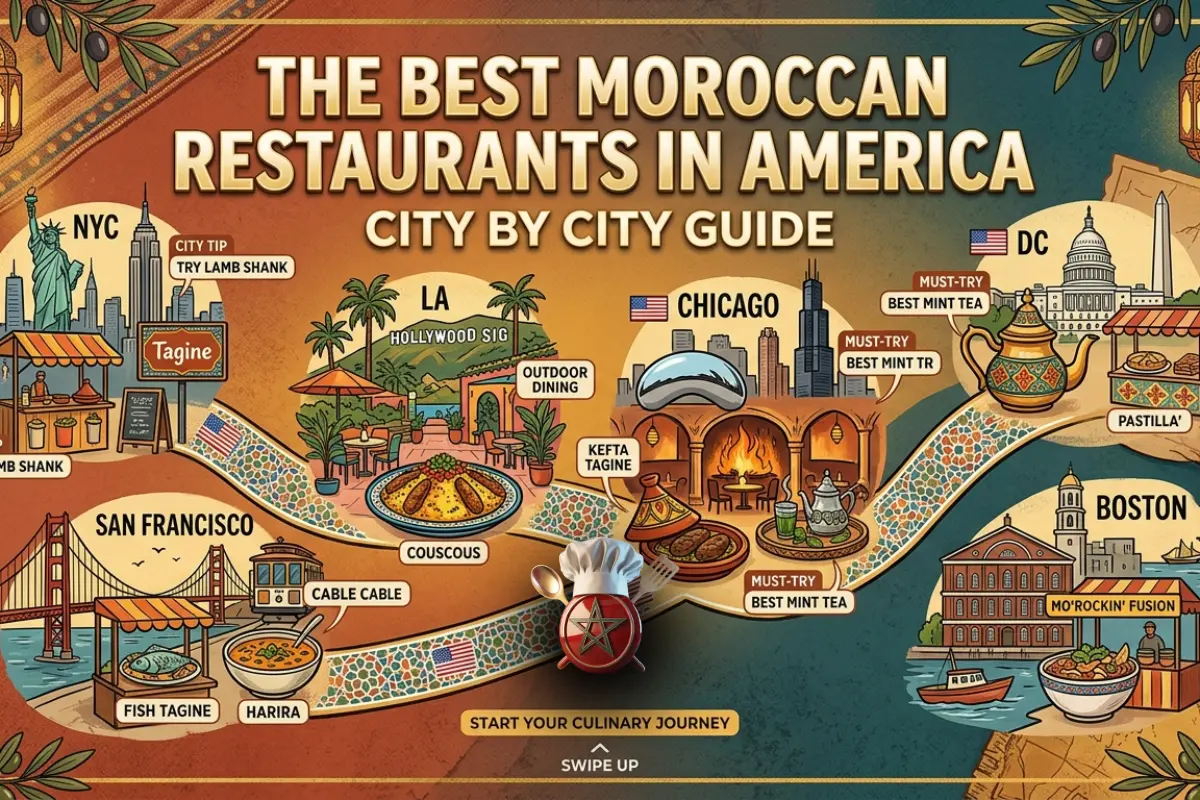
Introduction: Discovering Authentic Moroccan Flavors Across America
The rich, aromatic world of Moroccan cuisine has found a welcoming home across America's diverse culinary landscape. From the bustling streets of New York City to the sun-soaked boulevards of Los Angeles, authentic Moroccan restaurants are serving up traditional dishes that transport diners straight to the vibrant souks of Marrakech and the coastal cities of Casablanca.
Moroccan cuisine represents a fascinating fusion of Berber, Arab, Mediterranean, and Sub-Saharan African influences, creating a unique culinary tradition that emphasizes complex spice blends, slow-cooked stews, and communal dining experiences. For Western palates, Moroccan food offers an exciting adventure in flavor, combining familiar ingredients with exotic spices like ras el hanout, preserved lemons, and argan oil.
This comprehensive guide will take you on a culinary journey across America's major cities, highlighting the most authentic and acclaimed Moroccan restaurants. Whether you're craving a perfectly seasoned tagine, fluffy couscous, or traditional mint tea served in ornate glasses, we'll help you discover where to find the most genuine Moroccan dining experiences in your area.
Understanding what makes a Moroccan restaurant truly authentic is crucial for food enthusiasts seeking genuine experiences. Authentic Moroccan establishments typically feature traditional cooking methods, imported spices, family recipes passed down through generations, and an atmosphere that reflects Morocco's rich cultural heritage. Many of the restaurants featured in this guide are owned and operated by Moroccan immigrants who bring centuries-old culinary traditions to American soil.
New York City: The Moroccan Culinary Capital of America
New York City boasts the largest concentration of authentic Moroccan restaurants in America, reflecting the city's incredible diversity and sophisticated dining scene. The five boroughs offer everything from upscale establishments in Manhattan to family-run gems in Brooklyn and Queens, each providing unique interpretations of traditional Moroccan cuisine.
Manhattan's Premier Moroccan Establishments
Manhattan's Moroccan restaurant scene centers around several neighborhoods, with the East Village and Lower East Side leading the charge. These establishments have earned recognition from food critics and discerning diners alike for their commitment to authenticity and quality.
The most celebrated Moroccan restaurants in Manhattan feature traditional decor elements including intricate tilework, brass lanterns, and low seating areas that encourage the communal dining experience central to Moroccan culture. Many offer prix fixe menus that allow diners to sample multiple courses, following the traditional Moroccan approach to hospitality.
Key dishes to seek out at Manhattan's top Moroccan restaurants include lamb tagine with apricots and almonds, chicken preserved lemon and olives, beef or lamb couscous with vegetables, pastilla (a sweet and savory pastry), and mint tea service. The best establishments import their spices directly from Morocco and prepare their preserved lemons in-house.
Brooklyn's Hidden Moroccan Gems
Brooklyn has emerged as a hotbed for authentic, family-run Moroccan restaurants that often provide more affordable options without compromising on quality. Areas like Bay Ridge, Sunset Park, and parts of Flatbush house several outstanding establishments run by Moroccan families who maintain traditional recipes and cooking methods.
These Brooklyn restaurants often feature more casual atmospheres but deliver exceptional authenticity. Many offer catering services for special occasions and some provide cooking classes where diners can learn to prepare traditional dishes. The portions tend to be generous, reflecting the Moroccan tradition of abundant hospitality.
Queens: Diversity in Moroccan Dining
Queens offers perhaps the most diverse selection of Moroccan restaurants, representing different regional styles from across Morocco. From Fez-style cuisine to Casablanca coastal influences, Queens' Moroccan restaurants provide an excellent survey of the country's varied culinary landscape.
Many Queens establishments cater to both Moroccan expatriate communities and adventurous American diners, creating an authentic atmosphere while remaining accessible to newcomers to the cuisine. These restaurants often feature live music on weekends, belly dancing performances, and special holiday celebrations that provide cultural context for the dining experience.
Los Angeles: Where Moroccan Meets California Cuisine
Los Angeles has developed a unique Moroccan dining scene that blends traditional North African flavors with California's emphasis on fresh, locally-sourced ingredients. This fusion has created some of America's most innovative Moroccan restaurants while maintaining respect for traditional techniques and flavors.
West Hollywood and Beverly Hills: Upscale Moroccan Dining
The affluent neighborhoods of West Hollywood and Beverly Hills host several upscale Moroccan restaurants that attract celebrities and food enthusiasts alike. These establishments often feature stunning interior design inspired by Moroccan architecture, complete with imported tiles, carved wood details, and authentic textiles.
The menus at these upscale venues typically feature premium ingredients like high-quality lamb, organic vegetables, and artisanal preparations. Wine pairings often highlight both Moroccan wines and carefully selected California vintages that complement the complex spice profiles of Moroccan cuisine.
Service at these establishments emphasizes the traditional Moroccan hospitality experience, with servers trained in proper mint tea preparation and traditional serving methods. Many offer private dining rooms for special occasions and business meetings.
Mid-City and Fairfax: Authentic Community Restaurants
The Mid-City and Fairfax areas house several family-owned Moroccan restaurants that serve both the local Moroccan community and food-conscious Angelenos. These establishments prioritize authenticity over ambiance, focusing on traditional recipes and cooking methods.
These community-focused restaurants often feature daily specials based on seasonal ingredients and traditional Moroccan calendar celebrations. The atmosphere is typically more casual, encouraging longer meals and conversation in the Moroccan tradition.
San Francisco Bay Area: Innovation Meets Tradition
The San Francisco Bay Area's Moroccan restaurant scene reflects the region's appreciation for culinary innovation while respecting traditional techniques. The area's restaurants often emphasize organic, sustainable ingredients and may incorporate local California produce into traditional Moroccan preparations.
San Francisco Proper: Urban Moroccan Sophistication
San Francisco's Moroccan restaurants are primarily located in the Mission District and Hayes Valley, areas known for their adventurous dining scenes. These establishments often attract food industry professionals and culinary students, leading to high standards for authenticity and presentation.
The city's Moroccan restaurants frequently offer wine pairings featuring both Moroccan wines and local California selections. Many participate in the city's restaurant week events and food festivals, introducing broader audiences to Moroccan cuisine.
Oakland and Berkeley: Community-Focused Moroccan Dining
The East Bay offers several outstanding Moroccan restaurants that emphasize community connection and cultural education alongside excellent food. These establishments often host cultural events, cooking classes, and educational dinners that explore Moroccan history and traditions.
Berkeley's restaurants in particular often emphasize organic and locally-sourced ingredients, reflecting the area's commitment to sustainable dining. Many offer extensive vegetarian and vegan options, adapting traditional recipes to accommodate diverse dietary preferences.
Washington DC: Political Power Meets Moroccan Flavors
Washington DC's Moroccan restaurant scene benefits from the city's large diplomatic community and international focus. Several restaurants have developed relationships with the Moroccan embassy and cultural organizations, ensuring authentic preparation methods and cultural context.
Dupont Circle and Adams Morgan: International Dining Hubs
These neighborhoods house several well-established Moroccan restaurants that serve diplomats, international visitors, and local food enthusiasts. The restaurants in these areas often feature more formal service styles and may offer special menus for diplomatic functions and cultural events.
Many establishments in these neighborhoods offer lunch specials that cater to the busy schedules of government workers while maintaining the quality and authenticity expected by international clientele. Weekend service often features more elaborate presentations and traditional entertainment.
Georgetown: Upscale Moroccan Experiences
Georgetown's Moroccan restaurants typically target affluent diners and tourists, offering refined presentations of traditional dishes in elegant settings. These establishments often feature extensive wine lists and may offer sommelier-guided pairings with Moroccan cuisine.
The Georgetown venues frequently host private events and may offer catering services for embassy functions and cultural celebrations. Their menus often include detailed explanations of traditional preparation methods and cultural significance of various dishes.
Chicago: Midwest Hospitality Meets North African Warmth
Chicago's Moroccan restaurant scene has grown significantly over the past decade, with several outstanding establishments earning recognition from local food critics and national publications. The city's restaurants often emphasize the warming, comforting aspects of Moroccan cuisine that appeal to Midwestern sensibilities.
Lincoln Park and Lakeview: Neighborhood Moroccan Gems
These North Side neighborhoods host several family-owned Moroccan restaurants that have become neighborhood institutions. These establishments often feature seasonal menus that incorporate local ingredients while maintaining traditional flavor profiles.
The restaurants in these areas typically offer casual dining experiences with attentive service and generous portions. Many have developed loyal local followings and offer regular customer appreciation events and cooking demonstrations.
River North: Upscale Moroccan Dining
River North's Moroccan restaurants cater to business diners and special occasion celebrations, offering elegant presentations of traditional dishes in sophisticated settings. These establishments often feature extensive cocktail programs that incorporate Moroccan-inspired ingredients and flavors.
The River North venues frequently participate in Chicago's dining events and may offer special chef's table experiences where diners can interact with chefs and learn about traditional cooking techniques.
Regional Moroccan Restaurant Highlights
Beyond the major metropolitan areas, numerous cities across America host excellent Moroccan restaurants that serve local communities and attract food travelers. These regional establishments often provide more intimate dining experiences and may offer unique regional interpretations of traditional dishes.
Boston and New England
Boston's Moroccan restaurants benefit from the city's large student population and international focus. Several establishments near major universities offer lunch specials and student-friendly pricing while maintaining authentic preparation methods.
New England's Moroccan restaurants often emphasize the warming, hearty aspects of the cuisine that appeal to cold-weather dining preferences. Many feature fireplaces and cozy seating areas that encourage longer dining experiences.
Miami and South Florida
South Florida's Moroccan restaurants often incorporate tropical influences and may offer outdoor seating that takes advantage of the region's favorable climate. The area's international population supports several high-quality establishments that serve diverse clienteles.
Miami's Moroccan restaurants frequently feature entertainment programs including belly dancing and live music, creating festive atmospheres that appeal to both tourists and locals.
Atlanta and the Southeast
Atlanta has developed a small but high-quality Moroccan restaurant scene that serves the city's growing international community. These establishments often emphasize Southern hospitality alongside traditional Moroccan service styles.
The Southeast's Moroccan restaurants may incorporate some local ingredients and cooking techniques while maintaining authentic flavor profiles and traditional presentation methods.
Denver and the Mountain West
Denver's high altitude and active population have attracted several Moroccan restaurants that emphasize the healthy, vegetable-forward aspects of traditional Moroccan cuisine. These establishments often feature organic ingredients and may offer altitude-adjusted preparation methods.
Mountain West Moroccan restaurants frequently offer hearty portions and warming dishes that appeal to outdoor enthusiasts and active diners.
What Makes a Great Moroccan Restaurant: Evaluation Criteria
When evaluating Moroccan restaurants, several key factors distinguish truly authentic establishments from those that merely approximate Moroccan flavors. Understanding these criteria can help diners identify the best Moroccan dining experiences in their areas.
Authenticity Indicators
Authentic Moroccan restaurants typically feature several key indicators that demonstrate commitment to traditional preparation methods and cultural accuracy. These include the use of traditional cooking equipment like tagine pots and couscous steamers, proper spice blend preparation, and adherence to traditional serving styles.
The spice selection represents perhaps the most critical authenticity indicator. Genuine Moroccan restaurants import their spices or work with specialty suppliers who provide authentic Moroccan spice blends. The complex ras el hanout mixture, properly prepared preserved lemons, and high-quality argan oil all indicate serious commitment to authenticity.
Traditional preparation methods also distinguish authentic establishments. Couscous should be steamed rather than simply boiled, tagines should be slow-cooked in proper clay vessels, and bread should be baked fresh daily using traditional techniques.
Service and Atmosphere
Traditional Moroccan hospitality emphasizes generosity, warmth, and attention to guest comfort. Authentic restaurants typically provide complimentary mint tea or small appetizers, demonstrate proper hand-washing etiquette, and encourage leisurely dining experiences.
The physical atmosphere should reflect Moroccan design elements without becoming overly theatrical. Authentic establishments often feature subtle references to Moroccan architecture and design rather than overwhelming diners with excessive decoration.
Staff knowledge about traditional dishes, preparation methods, and cultural context adds significantly to the authentic dining experience. Servers should be able to explain dish origins, suggest appropriate combinations, and guide newcomers through traditional dining customs.
Menu Composition and Pricing
Authentic Moroccan restaurant menus typically feature a balance of meat, vegetable, and grain-based dishes that reflect traditional Moroccan eating patterns. Overemphasis on any single category may indicate adaptation to American preferences rather than authentic representation.
Pricing should reflect the quality of ingredients and preparation methods while remaining accessible to diverse diners. Extremely low prices may indicate shortcuts in ingredient quality or preparation methods, while excessive pricing may suggest style over substance.
Seasonal menu variations indicate commitment to traditional cooking patterns and ingredient availability. Many authentic establishments feature special dishes during Ramadan and other religious holidays.
Traditional Moroccan Dishes to Look For
Understanding traditional Moroccan dishes helps diners evaluate restaurant authenticity and make informed ordering decisions. Each region of Morocco contributes unique specialties to the national cuisine, and the best American restaurants represent this diversity.
Tagine Varieties
Tagines represent the heart of Moroccan cuisine, featuring slow-cooked stews prepared in distinctive cone-shaped clay pots. Traditional varieties include lamb with prunes and almonds, chicken with preserved lemons and olives, beef with vegetables, and fish tagines popular in coastal regions.
Authentic tagines feature complex spice blends and achieve perfect balance between sweet and savory flavors. The cooking process should produce tender meats and vegetables while maintaining distinct flavors and textures.
Vegetarian tagines have gained popularity in American restaurants and can be equally authentic when properly prepared with traditional vegetable combinations and spice treatments.
Couscous Preparations
Traditional Moroccan couscous requires careful steaming techniques that produce light, fluffy grains rather than dense, heavy results. Authentic preparations feature vegetable and meat combinations that reflect seasonal availability and regional preferences.
Friday couscous represents a weekly tradition in Moroccan households and authentic restaurants often feature special couscous preparations on Fridays. These dishes typically include seven vegetables and may feature lamb or chicken.
Sweet couscous preparations served as desserts demonstrate advanced technical skills and cultural knowledge that indicate authentic kitchen operations.
Appetizers and Small Plates
Traditional Moroccan meals begin with multiple small dishes that encourage sharing and conversation. Authentic establishments offer varied selections including olives, preserved vegetables, fresh salads, and pastries.
Pastilla, a sweet and savory pastry traditionally filled with pigeon or chicken, represents one of Morocco's most sophisticated dishes. Proper preparation requires delicate phyllo-like pastry work and complex spice blending.
Harira soup, traditionally served during Ramadan, indicates kitchen sophistication and cultural awareness when properly prepared with tomatoes, lentils, and fresh herbs.
Regional Moroccan Cuisine Variations in American Restaurants
Morocco's diverse geography produces distinct regional cooking styles that the best American restaurants represent accurately. Understanding these variations helps diners appreciate the complexity and diversity within Moroccan cuisine.
Fez and Imperial City Cuisine
Fez represents Morocco's culinary capital, and dishes from this region emphasize sophistication and complex preparation methods. American restaurants featuring Fez-style cuisine often offer elaborate presentations and refined flavor combinations.
Traditional Fez specialties include complex pastries, refined tagine preparations, and dishes that require extensive preparation time and technical skill. These establishments often feature higher prices that reflect the labor-intensive preparation methods.
Coastal and Casablanca Influences
Morocco's Atlantic coast produces distinctive seafood-focused dishes that some American restaurants feature as specialties. These preparations often incorporate different spice profiles and cooking techniques compared to inland cuisine.
Coastal influences may include fish tagines, seafood couscous preparations, and grilled fish dishes that reflect maritime traditions. These dishes often feature lighter spice treatments that allow seafood flavors to predominate.
Berber and Mountain Cuisine
Traditional Berber cooking emphasizes hearty, warming dishes that reflect mountain living conditions. American restaurants featuring these influences often appeal to diners seeking substantial, comfort-focused meals.
Berber specialties may include robust meat preparations, preserved meat dishes, and grain-based meals that provide substantial nutrition for active lifestyles. These dishes often feature different spice profiles compared to Arabic-influenced Moroccan cuisine.
Wine and Beverage Pairings at Moroccan Restaurants
While traditional Moroccan culture emphasizes tea service over alcoholic beverages, many American Moroccan restaurants offer carefully curated wine and cocktail programs that complement traditional flavors without overwhelming them.
Traditional Beverage Service
Authentic mint tea service represents an essential component of Moroccan dining culture. Proper preparation involves specific techniques for brewing, sugar addition, and pouring that create the characteristic foam and temperature balance.
Fresh fruit juices and traditional beverages like almond milk or rose water drinks provide authentic non-alcoholic options that complement spicy Moroccan flavors while cleansing the palate between courses.
Wine Pairing Considerations
Moroccan cuisine's complex spice profiles require careful wine selection to avoid overwhelming either the food or beverage. Light to medium-bodied red wines often work well with meat tagines, while crisp white wines complement seafood preparations.
Some restaurants feature Moroccan wines that provide authentic pairing options, though availability can be limited in American markets. French wines from regions with similar climate conditions often work well with traditional Moroccan flavors.
Rose wines deserve special consideration as they bridge the gap between white and red wines while offering sufficient complexity to match Moroccan spice blends without overwhelming subtle flavors.
Moroccan Restaurant Pricing and Value Considerations
Understanding typical pricing structures at Moroccan restaurants helps diners set appropriate expectations and identify establishments that offer good value for authentic experiences.
Factors Affecting Restaurant Pricing
Several factors influence pricing at Moroccan restaurants, including ingredient quality, preparation time requirements, location overhead, and service style. Traditional dishes requiring extensive preparation time typically command higher prices than simpler preparations.
Imported ingredients like high-quality saffron, authentic preserved lemons, and specialty spices add to food costs but contribute significantly to authentic flavor profiles. Restaurants that make these investments typically offer superior dining experiences.
Location overhead varies dramatically between major metropolitan areas and smaller cities, affecting menu pricing structures. However, higher prices don't always correlate with better authenticity or food quality.
Value Assessment Strategies
Evaluating value at Moroccan restaurants requires considering portion sizes, ingredient quality, service level, and overall experience rather than simply comparing menu prices. Many traditional preparations provide generous portions intended for sharing.
Prix fixe menus often provide better value than ordering individual dishes while allowing diners to sample multiple traditional preparations. These menus typically reflect traditional Moroccan meal structure and hospitality customs.
Lunch specials and weekday promotions can provide excellent opportunities to experience high-quality Moroccan cuisine at reduced prices while maintaining authentic preparation methods.
Frequently Asked Questions About Moroccan Restaurants in America
What should first-time visitors to Moroccan restaurants expect?
First-time visitors should expect a leisurely dining experience emphasizing sharing and conversation. Traditional Moroccan meals progress slowly through multiple courses, beginning with appetizers and mint tea service. Most dishes are designed for sharing, and eating with hands is traditional for bread and some preparations. Staff typically provide hand washing facilities or wet towels before meals. The flavors emphasize complex spice blends that may be unfamiliar to Western palates but are generally not extremely hot or spicy.
Are Moroccan restaurants suitable for vegetarians and vegans?
Moroccan cuisine offers numerous vegetarian and vegan options, though diners should verify preparation methods since some vegetable dishes may include meat-based stocks or dairy products. Traditional vegetable tagines, couscous preparations, and legume-based dishes provide substantial vegetarian meals. Many restaurants can adapt traditional recipes to accommodate dietary restrictions with advance notice. However, vegans should be particularly careful about bread preparations and hidden dairy ingredients in some traditional dishes.
How do I identify authentic Moroccan restaurants versus fusion establishments?
Authentic Moroccan restaurants typically feature traditional cooking equipment, imported spices, and preparation methods that reflect centuries-old techniques. Look for restaurants owned by Moroccan families, traditional clay tagine service, proper couscous steaming methods, and complex spice blends prepared in-house. Staff should be knowledgeable about dish origins and traditional serving customs. Fusion establishments may offer creative interpretations but often adapt traditional recipes to accommodate American tastes or incorporate non-Moroccan ingredients and techniques.
What are appropriate etiquette and customs when dining at Moroccan restaurants?
Traditional Moroccan dining emphasizes respect for food and hospitality customs. Accept offered mint tea and small appetizers as signs of hospitality. Wash hands before eating, either at provided facilities or with offered towels. Bread serves as both food and utensil, so avoid wasting it. Eat with your right hand when using traditional methods. Take time to appreciate the meal rather than rushing through courses. Compliment the food to show appreciation for the chef's efforts. Tipping follows American customs rather than Moroccan traditions.
Do Moroccan restaurants accommodate food allergies and dietary restrictions?
Most established Moroccan restaurants can accommodate common food allergies and dietary restrictions with advance notice. However, traditional preparations often include nuts, dairy, and gluten-containing ingredients that may not be obvious from menu descriptions. Moroccan cuisine relies heavily on spice blends that may contain allergens, and cross-contamination can occur in traditional kitchen settings. Diners with severe allergies should communicate directly with kitchen staff and may need to avoid certain traditional preparations. Many restaurants offer modified versions of traditional dishes that maintain authentic flavors while accommodating dietary needs.
What's the difference between Moroccan and other Middle Eastern or Mediterranean cuisines?
Moroccan cuisine represents a unique blend of Berber, Arab, Mediterranean, and Sub-Saharan African influences that creates distinctive flavors and preparation methods. Unlike other Middle Eastern cuisines, Moroccan food emphasizes sweet and savory combinations, extensive use of preserved lemons, distinctive spice blends like ras el hanout, and specific cooking techniques like tagine preparation. The cuisine uses more cinnamon, ginger, and turmeric compared to Levantine cooking, and features different grain preparations and bread types. French colonial influence also appears in some preparations, distinguishing Moroccan cuisine from other North African and Middle Eastern traditions.
How can I learn more about Moroccan cooking techniques and ingredients?
Many Moroccan restaurants offer cooking classes, cultural events, and educational dinners that provide hands-on learning opportunities. Cookbooks by renowned Moroccan chefs provide detailed explanations of traditional techniques and ingredient sourcing. Specialty spice shops and Middle Eastern markets often carry authentic Moroccan ingredients and may offer guidance on proper usage. Online resources include cultural organizations, cooking websites, and video tutorials that demonstrate traditional techniques. Some restaurants sell spice blends and specialty ingredients to customers interested in home cooking. Travel to Morocco remains the ultimate educational experience, but American Moroccan cultural centers also offer classes and cultural events.
Conclusion: Embracing Moroccan Culinary Culture in America
America's Moroccan restaurant scene represents a remarkable testament to the power of culinary tradition to transcend borders and create cultural connections. From the sophisticated establishments of Manhattan to the family-run gems of suburban neighborhoods, these restaurants preserve centuries-old cooking techniques while adapting to American dining preferences and ingredients.
The growth of authentic Moroccan dining options across America reflects both the skill and dedication of Moroccan immigrant chefs and the adventurous palates of American diners seeking new culinary experiences. These restaurants serve as cultural ambassadors, introducing Western audiences to the complexity, sophistication, and hospitality traditions that define Moroccan cuisine.
For diners embarking on their Moroccan culinary journey, the key lies in approaching these restaurants with curiosity, respect, and patience. Traditional Moroccan dining emphasizes community, conversation, and appreciation for the cooking process, values that translate beautifully to American dining contexts when given proper attention and respect.
The restaurants featured in this guide represent just a sampling of the excellent Moroccan dining options available across America. As interest in authentic international cuisine continues to grow, we can expect to see even more high-quality Moroccan establishments opening in cities and towns throughout the country.
Whether you're seeking an elegant special occasion dinner, a casual family meal, or an adventurous culinary exploration, America's Moroccan restaurants offer experiences that satisfy both palate and spirit. The warmth of Moroccan hospitality, combined with the complex flavors and aromas of traditional preparations, creates dining experiences that linger in memory long after the last sip of mint tea.
As you explore the Moroccan restaurants in your area, remember that each meal represents a cultural exchange that enriches both your understanding of global cuisine and your appreciation for the immigrant communities who preserve and share their culinary heritage. These restaurants offer more than just food; they provide windows into a rich cultural tradition that values hospitality, family, and the simple pleasure of sharing excellent meals with others.