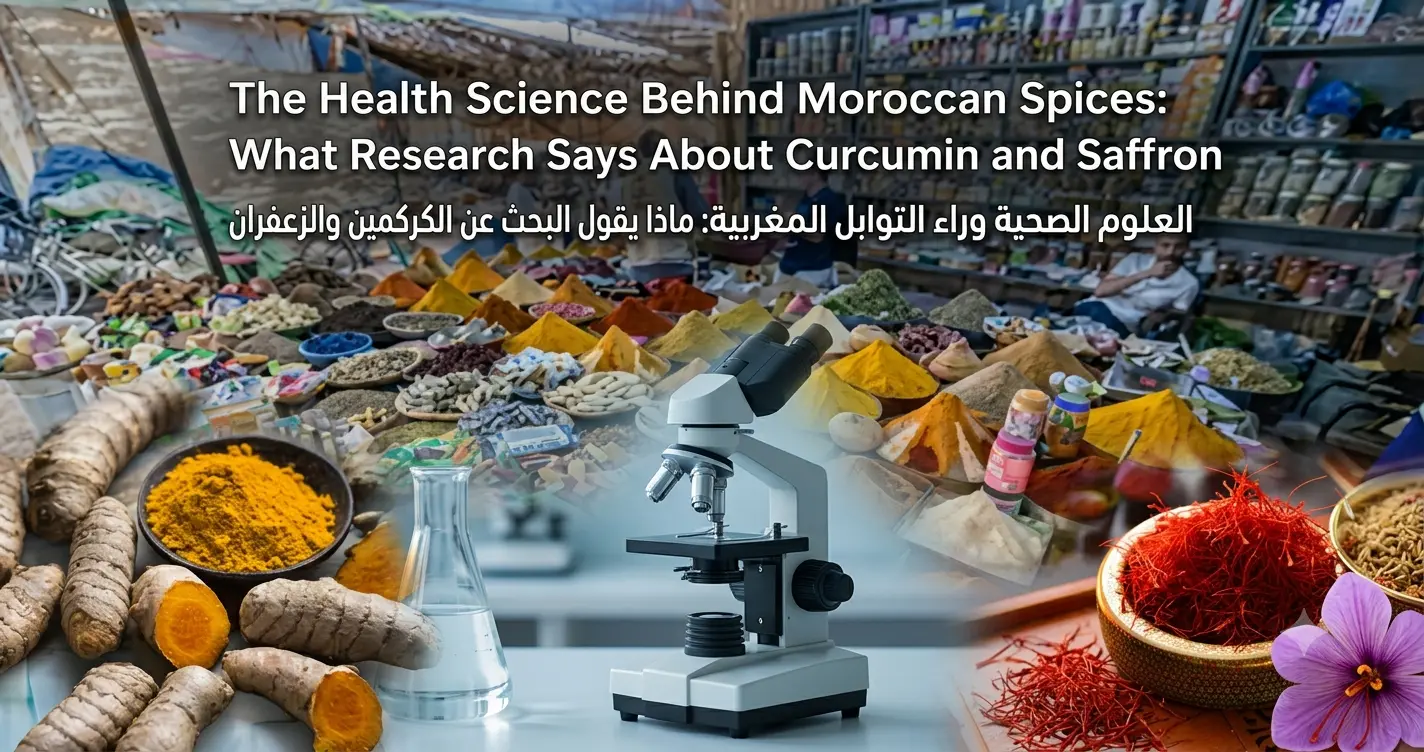
Walk into any souk in Marrakech, Fez, or Casablanca and your senses are immediately hijacked by something extraordinary. Mountains of amber turmeric, blood-red saffron threads, paprika so vivid it looks like crushed sunset — the spice market is not merely a place of commerce. It is a living pharmacy, a library of centuries-old knowledge, and one of the most potent intersections of culture and science that exists anywhere on earth. I have spent decades working in Moroccan kitchens, sourcing spices from the High Atlas farmers who have grown them for generations, and I can tell you with absolute certainty: what modern researchers are now discovering in their laboratories, Moroccan grandmothers have known since long before anyone invented the double-blind clinical trial. Today, we are going to look very carefully at two stars of the Moroccan spice cabinet — curcumin (the bioactive compound in turmeric) and saffron — through the lens of contemporary nutritional science, while never losing sight of the cultural and culinary wisdom that gives these ingredients their full meaning. At MaCooking, we have always believed that understanding the why behind an ingredient makes you a better cook and a healthier human being. This is that story.
1. The Moroccan Spice Tradition: A Pharmacy Hidden in Plain Sight
Morocco sits at an extraordinary crossroads. The country's position at the intersection of sub-Saharan Africa, the Arab world, Andalusian Europe, and the ancient Berber heartland of North Africa means that its culinary heritage absorbed spice knowledge from virtually every great civilization that traded across the medieval world. The Silk Road's western terminus effectively ended in Moroccan port cities, and with those caravans came not just cinnamon and ginger, but an entire intellectual tradition of botanical medicine that Persian, Arab, and indigenous Amazigh healers had developed over millennia.
The great medieval physician Ibn Sina — known in the West as Avicenna — whose Canon of Medicine shaped European and Islamic medical practice for over six centuries, wrote extensively about turmeric's capacity to cleanse the liver and treat jaundice. The 12th-century Moroccan philosopher Ibn Tufayl documented saffron's effect on mood and cognition. These were not superstitions. They were careful empirical observations, accumulated and refined over generations of practice. When a Moroccan cook layers saffron into a tagine, she is not merely adding color and aroma. She is continuing a therapeutic tradition that predates modern pharmacology by a thousand years.
What makes the Moroccan diet particularly fascinating from a nutritional science perspective is not any single ingredient in isolation, but rather the synergistic architecture of how spices are combined. Curcumin is invariably paired with black pepper — whose piperine dramatically increases curcumin bioavailability — and cooked with olive oil, a fat that enhances its absorption. This is not an accident. It is the accumulated wisdom of generations discovering, through lived experience, what actually works.
The Ras el Hanout Philosophy
No discussion of Moroccan spice culture is complete without acknowledging ras el hanout, the magnificent master blend whose name translates literally as "head of the shop" — meaning the best the spice merchant has to offer. A traditional ras el hanout can contain anywhere from 12 to 30 individual spices, and its composition varies by region, family, and season. But look closely at what is almost always present: turmeric, ginger, cinnamon, black pepper, cardamom, and often dried rose petals. From a phytochemical standpoint, this blend is extraordinarily potent. Curcumin, gingerols, cinnamaldehyde, piperine, terpenes, and flavonoids work together in ways that nutritional science is only beginning to map.
2. Curcumin: The Golden Molecule Under the Scientific Microscope
Turmeric (Curcuma longa) has been used in Moroccan and broader North African cooking for centuries, arriving via the trans-Saharan trade routes from South Asia. Its golden color, earthy bitterness, and faint mustard warmth are foundational to everything from harira soup to chicken tagine. But the compound that has sent scientists into a genuine frenzy is curcumin, the primary polyphenol in turmeric, which makes up roughly 2–5% of the spice by dry weight.
What the Research Actually Says
The volume of scientific literature on curcumin is staggering. As of the mid-2020s, there are well over 15,000 peer-reviewed studies investigating this compound, making it one of the most intensively researched natural molecules in history. Here is what the evidence, taken seriously and without exaggeration, actually shows:
- Anti-inflammatory mechanisms: Curcumin has been shown to inhibit NF-κB (Nuclear Factor kappa-light-chain-enhancer of activated B cells), a protein complex that plays a central role in regulating immune response and inflammatory signaling. Chronic low-grade inflammation is now understood to be a root driver of cardiovascular disease, type 2 diabetes, Alzheimer's disease, and many cancers. A landmark review published in Ageing Research Reviews (Menon & Sudheer, 2007) described curcumin as a "natural, safe, and effective" NF-κB inhibitor.
- Antioxidant capacity: Curcumin neutralizes free radicals both directly and indirectly, by stimulating the body's own antioxidant enzymes including superoxide dismutase and catalase. A 2017 study in Foods journal confirmed curcumin's radical-scavenging activity exceeds that of vitamins C and E in certain in vitro models.
- Cognitive protection: Some of the most exciting recent research concerns curcumin's potential role in protecting against neurodegenerative disease. A randomized, double-blind, placebo-controlled trial published in the American Journal of Geriatric Psychiatry (Small et al., 2018) found that 90 mg of bioavailable curcumin taken twice daily for 18 months significantly improved memory and attention in older adults without dementia, compared to placebo. Brain scans showed significantly less amyloid and tau accumulation — the hallmarks of Alzheimer's pathology — in the curcumin group.
- Joint and arthritis relief: Multiple randomized controlled trials have compared curcumin supplementation to non-steroidal anti-inflammatory drugs (NSAIDs) like ibuprofen in patients with osteoarthritis. A 2014 study in Clinical Interventions in Aging found a curcumoid formula was as effective as ibuprofen for reducing pain and improving function in knee osteoarthritis patients, with a significantly better side-effect profile.
- Metabolic and cardiovascular effects: Curcumin has shown capacity to lower LDL cholesterol, reduce blood triglycerides, improve endothelial function, and modulate blood glucose — a constellation of effects highly relevant to metabolic syndrome prevention.
The Bioavailability Problem — And How Moroccan Cooking Solves It
Here is where it gets truly interesting, and where traditional Moroccan culinary practice turns out to be remarkably sophisticated. Raw curcumin has notoriously poor bioavailability. It is poorly absorbed from the gastrointestinal tract, rapidly metabolized, and quickly eliminated. Studies suggest that when consumed alone, less than 1% of ingested curcumin actually reaches the bloodstream in meaningful concentrations.
But Moroccan cooking instinctively addresses this problem through three key strategies:
- Black pepper co-administration: Piperine, the active alkaloid in black pepper, inhibits hepatic and intestinal glucuronidation of curcumin, effectively blocking one of the body's primary mechanisms for eliminating it. A landmark study by Shoba et al. (1998) in Planta Medica found that 20 mg of piperine taken alongside 2g of curcumin increased curcumin bioavailability by a remarkable 2,000%. Every authentic Moroccan spice blend worth its salt combines turmeric with black pepper. This is not coincidence.
- Lipid co-ingestion: Curcumin is fat-soluble. When dissolved in dietary fat — and Moroccan cooking is built on generous use of extra-virgin olive oil, smen (aged butter), and argan oil — curcumin is absorbed via the lymphatic system, bypassing first-pass liver metabolism that would otherwise degrade it rapidly.
- Heat activation: Moderate cooking heat improves the solubility of curcumin in oils and may enhance certain bioactive transformations. The slow-simmering tagine, which gently blooms spices in olive oil for extended periods, is an almost ideal delivery mechanism.
"What strikes me every time I read a new curcumin bioavailability study is that Moroccan cooks solved this pharmacokinetic puzzle empirically, centuries before anyone understood what a polyphenol was. The combination of turmeric, black pepper, and olive oil that appears in countless Moroccan recipes is essentially the same formula that modern supplement manufacturers now patent as 'enhanced bioavailability curcumin formulations' — except the Moroccan version tastes infinitely better and comes embedded in a complete, balanced meal."
— Chef Jamal, culinary director at MaCooking
3. Saffron: The World's Most Expensive Spice Earns Its Price in the Lab
Saffron is the red thread that runs through Moroccan culinary identity like a precious seam of gold through mountain rock. Derived from the dried stigmas of Crocus sativus, it takes approximately 150,000 flowers and 400 hours of hand labor to produce a single kilogram. Morocco's Taliouine region in the Anti-Atlas Mountains is one of the world's most important saffron-producing areas, and the saffron grown there — harvested at dawn before the sun opens the flowers — is considered among the finest on earth. Moroccan saffron has been central to the country's cuisine, medicine, and economy for over a millennium.
A single strand of genuine Taliouine saffron held up to light shows threads of deep crimson transitioning to orange-yellow. The aroma is extraordinary: floral, honeyed, faintly metallic, with a complexity that no synthetic substitute has ever come close to replicating. In Moroccan cooking, saffron appears in bastilla (the extraordinary pigeon or chicken pie wrapped in warqa pastry), in certain tagines, in saffron-spiced fish dishes along the Atlantic coast, and in celebratory couscous preparations. But what is happening chemically when you use it?
The Bioactive Compounds in Saffron
Saffron's biological activity comes primarily from three compounds:
- Crocin and crocetin: The carotenoid pigments responsible for saffron's intense color. Crocin is water-soluble (unusual for a carotenoid), which means it is efficiently absorbed from the digestive tract. Crocetin, the aglycone form, crosses the blood-brain barrier — a property of enormous significance for neurological research.
- Safranal: The volatile compound primarily responsible for saffron's distinctive aroma, formed during drying from the precursor picrocrocin. Safranal has demonstrated anxiolytic (anti-anxiety), anticonvulsant, and neuroprotective properties in animal and early human studies.
- Picrocrocin: The bitter glycoside that gives saffron its slightly bitter, complex flavor. It shows antioxidant and antitumor activity in preclinical research.
Saffron and Mental Health: The Research Revolution
Perhaps the most striking body of emerging saffron research concerns its effects on mood disorders. Depression affects hundreds of millions of people worldwide, and the side effects of conventional antidepressants — weight gain, sexual dysfunction, emotional blunting — lead many patients to discontinue treatment. The search for safer alternatives has led researchers to saffron with remarkable results.
- A meta-analysis published in the Journal of Integrative Medicine (Hausenblas et al., 2013) pooled data from five randomized, double-blind trials and found saffron supplementation was significantly more effective than placebo for treating mild-to-moderate depression.
- Two randomized controlled trials published in Phytotherapy Research found saffron extract (30mg/day) comparable in efficacy to fluoxetine (Prozac) and imipramine for treating major depressive disorder over an 8-week period.
- Saffron's mechanism of action appears to involve serotonin reuptake inhibition — the same fundamental pathway targeted by SSRIs — as well as modulation of dopamine and norepinephrine systems, and direct antioxidant protection of neurons.
- A 2021 randomized trial in Nutritional Neuroscience found 14mg of saffron extract twice daily significantly reduced anxiety symptoms in adults with generalized anxiety disorder.
- Research from Swinburne University in Australia found saffron supplementation improved memory speed and accuracy in healthy middle-aged adults over a 16-week trial period.
Saffron for Eye Health: A Surprising Finding
One of the most unexpected areas of saffron research involves age-related macular degeneration (AMD), the leading cause of vision loss in people over 50. Italian researchers at Sapienza University of Rome published a series of studies showing that 20mg daily saffron supplementation significantly improved retinal function in early AMD patients, with effects measurable on electroretinography. The proposed mechanism involves crocin's antioxidant protection of photoreceptor cells and its ability to modulate fatty acid composition in retinal membranes. This is genuinely remarkable territory for a culinary spice.
4. Head-to-Head: Curcumin vs. Saffron — A Comparative Analysis
Both curcumin and saffron are extraordinary bioactive ingredients, but they work through different mechanisms and target different primary health concerns. Understanding their distinct profiles helps you deploy them strategically — in both your cooking and your wellness routine.
| Property | Curcumin (Turmeric) | Saffron |
|---|---|---|
| Primary bioactive compounds | Curcuminoids (curcumin, bisdemethoxycurcumin, demethoxycurcumin) | Crocin, crocetin, safranal, picrocrocin |
| Primary health domain | Anti-inflammatory, metabolic health, joint support | Mental health, neuroprotection, eye health |
| Research volume | Extremely high (15,000+ studies) | Growing rapidly (500+ clinical studies) |
| Bioavailability challenge | Poor alone; significantly improved with piperine and fat | Crocin is water-soluble; good natural bioavailability |
| Effective culinary dose | 1–2 tsp turmeric per serving, with black pepper and oil | Small pinch (30–50mg saffron threads) per dish |
| Blood-brain barrier crossing | Limited; requires enhanced formulations for significant CNS effects | Crocetin and safranal cross readily |
| Anti-inflammatory evidence | Very strong — multiple RCTs | Moderate — primarily in vitro and animal models |
| Antidepressant evidence | Emerging, moderate quality | Strong — multiple RCTs comparable to SSRIs |
| Safety profile | Excellent at culinary doses; caution at very high supplement doses | Excellent at culinary doses; toxic at extreme doses (5g+) |
| Cost accessibility | Highly accessible — inexpensive spice | Expensive — world's priciest spice by weight |
5. The Synergy Factor: Why Moroccan Spice Combinations Are More Powerful Than the Sum of Their Parts
One of the most important concepts in nutritional biochemistry — and one that the supplement industry consistently fails to grasp — is the idea of phytochemical synergy. Individual compounds extracted from plants and put into capsules rarely behave the same way as those same compounds consumed within a complex food matrix alongside dozens of other bioactive molecules. Moroccan cuisine is a masterclass in synergistic spice use.
Curcumin + Ginger: The Anti-Inflammatory Power Couple
Ginger (Zingiber officinale) is another pillar of Moroccan cooking, appearing in everything from harira to ginger-spiced lamb. Its primary bioactives — gingerols and shogaols — inhibit inflammatory pathways including COX-2 and LOX, which are distinct from (but complementary to) curcumin's primary target of NF-κB. A 2019 study in Phytomedicine found that the combination of curcumin and gingerol demonstrated significantly greater anti-inflammatory effects than either compound alone. In traditional Moroccan spice blends, these two are almost invariably paired.
Saffron + Honey: Ancient Wisdom, Modern Validation
Traditional Moroccan medicinal preparations frequently combined saffron with pure mountain honey — a practice still found in rural areas of the Atlas Mountains. Modern research suggests this is not merely palatability. Honey's flavonoids and methylglyoxal content may enhance the bioavailability of saffron's crocetin, while saffron's compounds appear to moderate honey's glycemic impact. A small 2020 pilot study found this traditional combination showed superior anxiolytic effects compared to saffron alone in an animal model.
The Complete Moroccan Meal as a Therapeutic System
When you eat a traditional Moroccan tagine — chicken slow-cooked with preserved lemon, olives, turmeric, ginger, black pepper, and saffron, served with warm khobz bread and a side of vegetable couscous — you are not consuming a collection of individual nutrients. You are consuming a carefully architected system in which fats enhance polyphenol absorption, fiber modulates the glycemic response, antioxidant compounds from multiple sources work in concert, and fermentation products from preserved lemon and olives contribute probiotic and prebiotic elements that support the gut microbiome — which, as emerging research makes clear, profoundly influences how we process and respond to all of these bioactive compounds.
| Moroccan Spice Combination | Key Synergistic Effect | Scientific Mechanism | Traditional Moroccan Dish |
|---|---|---|---|
| Turmeric + Black Pepper | 2,000% increase in curcumin bioavailability | Piperine inhibits glucuronidation of curcumin | Chicken tagine, harira soup |
| Turmeric + Olive Oil | Enhanced fat-soluble absorption of curcuminoids | Lymphatic absorption bypasses hepatic first-pass metabolism | Most tagines and stewed dishes |
| Saffron + Ginger | Complementary serotonergic and dopaminergic modulation | Multi-pathway neurotransmitter support | Saffron-ginger fish tagine |
| Curcumin + Quercetin (onion) | Enhanced anti-inflammatory and anticancer effects | Complementary NF-κB and MAPK pathway inhibition | Caramelized onion tagines |
| Cinnamon + Turmeric | Superior blood glucose modulation | AMPK activation and insulin sensitization | Lamb with prunes and almonds |
| Saffron + Preserved Lemon | Enhanced bioavailability through vitamin C co-factor | Ascorbic acid stabilizes crocin and enhances gut absorption | Chicken with saffron and preserved lemon |
6. From Laboratory to Kitchen: Practical Ways to Maximize the Health Benefits of Curcumin and Saffron
Science is only useful if it changes how we live. Here is how to apply everything we have discussed to your actual cooking practice — because the goal is always to eat extraordinarily delicious food that also happens to be deeply nourishing. At MaCooking, we have developed dozens of recipes specifically designed to maximize both the flavor and the bioavailability of these remarkable spices.
Working with Turmeric and Curcumin in the Kitchen
- Always bloom your turmeric in fat first. Add turmeric to warm olive oil, argan oil, or smen at the beginning of a recipe and let it sizzle gently for 60–90 seconds before adding any water-based ingredients. This dissolves the curcuminoids into the fat, dramatically improving their bioavailability and also developing more complex flavor compounds through Maillard reactions.
- Never skip the black pepper. A quarter teaspoon of freshly cracked black pepper added alongside your turmeric is not optional if you are cooking for health. Make it automatic. You will rarely notice it in the final dish, but your curcumin absorption will be transformed.
- Use fresh turmeric root when you can find it. Fresh turmeric root (available in many Asian grocery stores and increasingly in Western supermarkets) contains higher concentrations of curcuminoids than dried powder, and also provides a brighter, more complex flavor. Grate it directly into your soffrito at the start of cooking.
- Cook low and slow. The tagine method — long, gentle cooking at relatively low temperatures — is ideal for preserving and even enhancing curcumin's bioactivity. Violent high-heat cooking can degrade some polyphenols. This is another reason the traditional cooking methods matter.
- Do not wash your cutting board immediately after cutting fresh turmeric. The temporary yellow staining on your hands and board is actually curcumin. This is your evidence that you are working with the real, potent thing. A little lemon juice removes it easily.
- Pair turmeric-heavy dishes with protein and healthy fats. A complete meal context — protein slowing gastric emptying, fats enhancing absorption — creates the best possible pharmacokinetic environment for curcumin to work.
Working with Saffron Like a Moroccan Master
- Never add saffron directly to a hot pan. The volatile aromatic compounds in saffron — particularly safranal — are destroyed by direct high heat. Always bloom saffron in a small amount of warm (not boiling) water, rose water, or warm stock for at least 20 minutes before adding it to your dish. This process, called "saffron infusion," releases the crocin pigments and aromatic compounds into the liquid so they distribute evenly through the dish.
- Use a mortar and pestle. Lightly crushing dried saffron threads with a tiny pinch of sugar or salt in a mortar before infusing dramatically increases the surface area for extraction and releases more crocin and safranal. This is standard practice in Moroccan professional kitchens.
- A little goes a long way — and more is not better. At very high doses, saffron can cause nausea and, in extreme cases, toxicity. But this is not a realistic culinary concern — the amount of saffron you would ever use in cooking (a generous pinch, perhaps 50–100mg of threads) is entirely safe. The point is simply that restraint produces better flavor. More saffron does not mean more golden color or more health benefit — beyond a certain threshold, additional saffron can make food taste medicinal and slightly bitter.
- Store saffron correctly. Saffron degrades rapidly when exposed to light, heat, and moisture. Store it in a sealed glass jar, in a cool dark cupboard, away from your stove. Do not store it in the refrigerator, where moisture condensation can degrade it. Properly stored, high-quality Moroccan saffron maintains its potency for 2–3 years.
- Learn to identify genuine saffron. The global saffron market is rife with adulteration. Genuine saffron threads are deep red with slightly lighter orange-yellow tips. They should have a complex, floral-metallic aroma. A single thread placed in cold water should slowly release a golden-yellow color (not immediately bleed bright orange, which indicates artificial coloring). Powdered saffron is almost always adulterated — buy threads exclusively.
A Simple Daily Wellness Practice
One of the most elegant traditions in Moroccan home medicine — still practiced in many households — is the morning preparation of atay bil za'fran (saffron tea) or warm milk infused with saffron, turmeric, and honey. This is not merely comforting. A single cup containing 3–4 saffron threads, a quarter teaspoon of turmeric, a crack of black pepper, and a spoon of raw honey in warm (not boiling) milk or plant milk delivers meaningful daily doses of crocin, curcumin, piperine, and flavonoids in a highly bioavailable, fat-dissolved matrix. Before it was fashionable to call this a "golden milk latte" in Western wellness cafes, it was simply what Moroccan mothers made for their families on cold mornings in the mountains.
7. Important Caveats, Drug Interactions, and When to Consult a Doctor
The extraordinary research behind curcumin and saffron should never be taken as a suggestion to abandon conventional medical care or self-medicate serious conditions. As someone who deeply respects both traditional Moroccan healing wisdom and modern evidence-based medicine, I feel strongly that honesty about limitations is essential.
Curcumin Considerations
- Blood thinning: High-dose curcumin supplementation may have antiplatelet and anticoagulant effects. If you are taking warfarin, aspirin, or other blood thinners, discuss curcumin supplements with your physician before adding them. Culinary amounts of turmeric in food are unlikely to pose a significant risk.
- Gallbladder issues: Curcumin stimulates bile production. For most people this is beneficial, but individuals with gallstones or bile duct obstruction should exercise caution.
- Iron absorption: Very high curcumin intake may inhibit iron absorption. Those with iron deficiency anemia should not take curcumin supplements alongside iron-rich meals.
- The supplement versus food distinction: The research showing the most dramatic effects from curcumin typically uses standardized, high-bioavailability curcumin supplements providing 500–2,000mg of curcumin daily. This is far more than achievable through cooking alone. Culinary use of turmeric provides meaningful but modest curcumin doses. Both matter — but they serve somewhat different functions.
Saffron Considerations
- Pregnancy: High doses of saffron have historically been used as an abortifacient in traditional medicine. Pregnant women should avoid saffron supplements and limit culinary saffron to very small culinary amounts, and ideally consult their midwife or OB/GYN.
- Antidepressant interactions: If you are already taking SSRIs or other antidepressants, discuss adding saffron supplements with your psychiatrist, as additive serotonergic effects could theoretically contribute to serotonin syndrome in rare cases.
- Bipolar disorder: Given saffron's mood-elevating effects, individuals with bipolar disorder should consult a mental health professional before using therapeutic doses of saffron.
Frequently Asked Questions
Q1: How much turmeric do I actually need to eat each day to get meaningful health benefits from curcumin?
This is one of the most common questions I receive, and the honest answer is nuanced. One teaspoon of ground turmeric contains approximately 200mg of total curcuminoids, of which curcumin is the primary component. However, as we have discussed, only a tiny fraction of that reaches systemic circulation without the bioavailability-enhancing factors of black pepper and dietary fat. With those factors in place — as they are in virtually all traditional Moroccan cooking — the effective dose delivered to your body improves dramatically. Most researchers working in this field suggest that 1–2 teaspoons of turmeric per day, consumed with black pepper and fat, represents a meaningful dietary intake. This is easily achieved through a bowl of harira soup for lunch and a turmeric-spiced tagine or vegetable dish for dinner. The cumulative effect of years of consistent daily intake is what matters most — this is not a supplement you take for two weeks and see dramatic results. It is a lifestyle, embedded in a dietary culture that has practiced it for centuries.
Q2: Is saffron from Morocco actually superior to saffron from Iran or Spain?
Morocco's Taliouine saffron is genuinely world-class and holds PDO (Protected Designation of Origin) status under both Moroccan law and EU recognition. Independent laboratory analyses have consistently shown Taliouine saffron to have exceptionally high crocin content — often measured at >200 on the ISO 3632 scale for Category I saffron — placing it among the most potent in the world. Iranian saffron dominates global market volume (accounting for roughly 90% of world production), and much of it is excellent. Spanish azafrán is prized for its culinary qualities. But from both a flavor complexity and bioactive compound concentration standpoint, Moroccan saffron from Taliouine is exceptional and often undervalued on the global market precisely because production volumes are lower than Iran's. The critical variable is freshness and proper storage — saffron from any origin that has been sitting in a warehouse for two years will perform poorly regardless of its geographic origin.
Q3: Can I get the same benefits from curcumin supplements as from eating turmeric in food?
Supplements and dietary turmeric complement each other but are not equivalent, and neither is strictly superior. High-quality curcumin supplements using enhanced bioavailability technology (such as BCM-95, Meriva phospholipid complex, or nanoparticle formulations) deliver curcumin concentrations that are simply not achievable through cooking. If you have a specific, acute health need — such as managing inflammatory arthritis or addressing early cognitive decline — a well-formulated supplement may be appropriate and your doctor can guide you. However, dietary turmeric comes embedded in a complete food matrix with dozens of other bioactive compounds, and benefits from the synergistic context of a whole meal. Years of consistent dietary turmeric consumption also provides epigenetic benefits that acute supplementation does not replicate. My recommendation: eat authentically spiced Moroccan food daily, and discuss supplementation for specific therapeutic goals with a qualified healthcare provider. These approaches work best together.
Q4: The research on saffron for depression sounds almost too good to be true. Is it solid science?
I appreciate this question because scientific skepticism is healthy. The short answer is: the evidence is genuinely promising but still developing, and it has not yet reached the level of certainty that would make saffron a first-line clinical recommendation. The randomized trials comparing saffron to SSRIs are encouraging but relatively small (most involving 30–60 participants per arm) and of relatively short duration (6–8 weeks). We do not yet have large-scale, long-term trials with thousands of participants across diverse populations. What we can say with confidence is: saffron supplementation appears to be significantly more effective than placebo for mild-to-moderate depression in multiple independent replications; the proposed mechanisms are biologically plausible and partially validated; the safety profile is favorable; and the quality of life reported by participants in saffron trials is genuinely improved. This positions saffron as a serious candidate for investigation as a complementary approach to mood support — not a replacement for evidence-based psychiatric care, but a potentially meaningful adjunct. Any research worth your attention should tell you what it does not know as clearly as what it does.
Q5: Are there specific Moroccan recipes on MaCooking that are particularly optimized for maximizing curcumin and saffron intake?
Absolutely, and this is honestly one of the things I am most proud of in our work at MaCooking. We have developed a series of recipes in our Health and Nutrition category that are designed from the ground up to maximize both authentic flavor and bioactive compound delivery. Our golden chicken tagine with preserved lemon, black pepper, and saffron is essentially an optimized curcumin-saffron delivery vehicle disguised as one of the most delicious dishes in the Moroccan canon. Our turmeric-spiced harira soup pairs turmeric with black pepper, olive oil, and tomato-derived lycopene in a complete nutrient matrix. And our saffron-honey wellness tea is a daily ritual that provides meaningful saffron intake in the most traditional and bioavailable format. Every recipe on MaCooking is developed with this dual purpose in mind: authentic enough to serve to a Moroccan grandmother, nutritionally intelligent enough to satisfy a functional medicine doctor.
Conclusion: Science Catches Up to a Thousand Years of Wisdom
There is a certain poetry in the trajectory of nutritional science's engagement with Moroccan spices. For centuries, these traditions were dismissed by Western medicine as folklore — the superstitions of an "unscientific" culture. Today, the most sophisticated research laboratories in the world are essentially working to understand, validate, and replicate what Moroccan cooks, healers, and farmers have known and practiced since the time of Ibn Sina. The curcumin molecule that took 15,000 studies to characterize. The saffron compound that crosses the blood-brain barrier that Moroccan mothers understood to lift the spirit long before neuroscience existed. The synergistic spice combinations that pharmaceutical companies now patent as "novel formulations."
What this convergence of ancient wisdom and modern science tells us is not that one is superior to the other, but that they are complementary modes of knowing — and that the most powerful approach combines both. Eat authentically. Cook with intention. Understand your ingredients. Use science to inform and refine your practice, but never lose sight of the cultural and culinary wisdom in which these ingredients are embedded. A curcumin capsule taken alone, three times a day, will never replicate the experience — or perhaps even the full biological effect — of sitting down to a slow-cooked Moroccan tagine surrounded by family, eating with bread, breathing in saffron steam, and nourishing your body and your soul simultaneously.
That is the Moroccan culinary philosophy that we have always championed at MaCooking: food is not fuel. It is medicine, memory, culture, and connection. And the spices that have flavored Moroccan kitchens for a thousand years are among the most compelling evidence we have that our ancestors — through careful observation, accumulated wisdom, and deep respect for the natural world — understood something profound about how to live well. We are only now finding the vocabulary to say precisely what that is.
Explore our full library of health-focused Moroccan recipes, spice guides, and nutritional deep-dives at macooking.com — where authentic Moroccan cuisine meets the science of living well. B'saha w ra'ha — to your health and comfort.