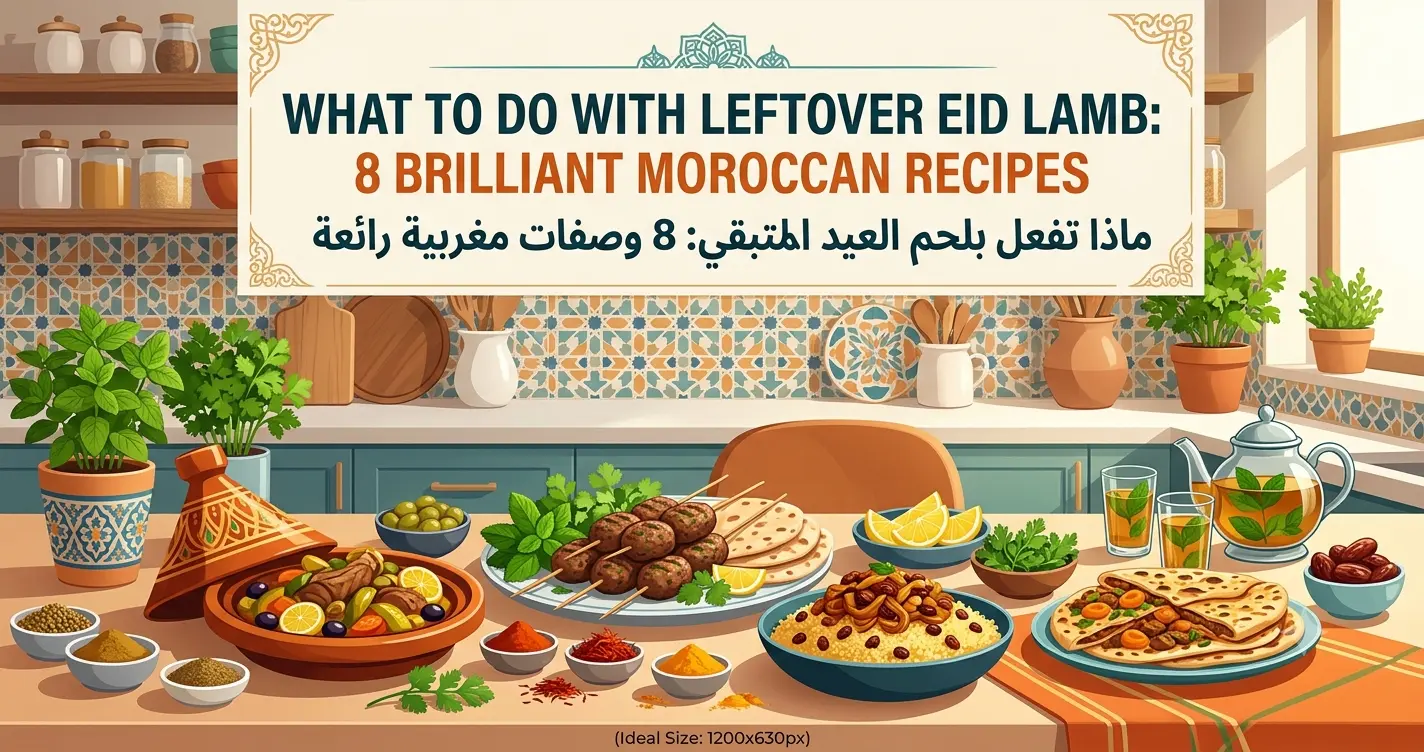
Every year, the morning after Eid al-Adha, the same beautiful problem presents itself in millions of households around the world: a refrigerator packed with more lamb than any family could possibly eat in a single day. The sacrifice has been made, the prayers have been said, the feast has been celebrated — and now you're standing in your kitchen, staring at kilos of cooked and raw lamb, wondering what on earth comes next. If you've ever found yourself in this exact position, you are in exactly the right place.
I've spent the better part of two decades studying, cooking, and writing about Moroccan cuisine, and I can tell you with absolute certainty that leftover Eid lamb is not a problem — it is an opportunity. In Morocco, we have a saying: "Ma kayn shi haja tdir fiha makanch fayda" — there is nothing you can create that has no value. Moroccan culinary tradition has, over centuries, developed a sophisticated and deeply practical philosophy around using every part of every ingredient. Nothing is wasted. Everything is transformed.
In this guide, I'm going to walk you through eight brilliant Moroccan recipes specifically designed to breathe extraordinary new life into your leftover Eid lamb. Whether you have roasted shoulders, grilled chops, slow-cooked shanks, or even raw portions you didn't get around to cooking during the celebration, every single recipe here will help you create something that your family will request long after Eid has passed. These are not "throw-together" leftover recipes — these are genuine, culturally rooted Moroccan dishes that simply happen to work beautifully with meat that's already been cooked. The team at MaCooking has tested every single one of these in real kitchens, with real Eid lamb, and the results are nothing short of spectacular.
The Moroccan Philosophy of Using Leftovers: A Cultural Foundation
Before we dive into the recipes themselves, I want to take a moment to give you the cultural context that makes these dishes so much more than just "ways to use up old meat." Understanding why Moroccan cuisine handles leftovers the way it does will fundamentally change how you approach your kitchen in the days after Eid.
Morocco sits at one of the world's great culinary crossroads. Over more than a thousand years, Berber, Arab, Andalusian, Jewish, Sub-Saharan African, and Ottoman influences have all woven themselves into the fabric of Moroccan cooking. One of the most consistent threads running through all of these traditions is resourcefulness. In a country where food has historically been a hard-won commodity, wasting protein — especially the precious lamb of Eid — was simply unthinkable.
Moroccan grandmothers — the jeddat of the kitchen — developed an almost magical ability to look at yesterday's roast and see tomorrow's feast. A roasted shoulder becomes a fragrant soup. Grilled skewer meat gets folded into a spiced sandwich with preserved lemon. Braised shank meat transforms into a silky tagine sauce that bears almost no resemblance to its source. This is not making do — this is mastery.
"In Morocco, the best cook is not the one who makes the most elaborate dish from scratch. It is the one who can take what remains and make it taste like it was always meant to be this way."
— A phrase I first heard from my grandmother in Fes, and have carried with me ever since.
The key insight here is that Moroccan spice blends — ras el hanout, chermoula, harissa, cumin-coriander combinations — are transformative. They don't just season food; they fundamentally change its character. A piece of lamb that tasted distinctly of one preparation can be completely reimagined through a new spice lens. This is the secret weapon in every recipe that follows.
Before You Start: How to Store and Prepare Your Leftover Eid Lamb
Proper storage is the foundation of great leftover cooking. I've seen perfectly good Eid lamb ruined by improper handling, and it's a tragedy every time. Here's what you need to know before you even think about the recipes.
Storage Guidelines
- Refrigerator storage: Cooked lamb should be stored in airtight containers or tightly wrapped in foil within two hours of finishing cooking. Properly stored, it will keep safely for three to four days in the refrigerator.
- Freezer storage: For lamb you don't plan to use within four days, freeze it immediately. Cooked lamb freezes exceptionally well for up to three months when properly wrapped. Use vacuum-sealed bags or heavy-duty freezer bags with all the air pressed out.
- Storing cooking juices: This is crucial — never discard the cooking juices, drippings, or any braising liquid from your Eid lamb. These liquid golds are the foundation of soups, sauces, and braises. Store them separately and refrigerate; the fat will rise and solidify, making it easy to skim if desired.
- Separating cuts: If you have different cuts (shoulder, leg, ribs, liver, kidneys), store them separately. Each will perform differently in recipes, and you want the flexibility to choose.
A Quick Guide to Which Leftover Lamb Works Best for What
| Lamb Cut / Type | Best For | Texture After Reheating | Notes |
|---|---|---|---|
| Roasted shoulder (shredded) | Tagines, sandwiches, pastilla | Tender, pulls apart easily | The most versatile leftover cut |
| Braised shank | Soups, harira, couscous | Very tender, rich flavor | Save all braising liquid |
| Grilled chops / ribs | Sandwiches, salads, mechoui-style dishes | Slightly firmer, smoky | Best used quickly, within 2 days |
| Leg (sliced) | Couscous, tagines, stir-through dishes | Lean, can dry out — add moisture | Slice thin and add to saucy dishes |
| Liver and offal | Koufta, liver chermoula, spiced sauté | Firm — best reheated quickly | Use within 24–48 hours maximum |
The 8 Recipes: A Complete Guide
Recipe 1: Leftover Lamb Tagine with Prunes, Almonds, and Cinnamon
This is perhaps the most spectacular transformation you can perform on leftover Eid lamb, and it is the first recipe I reach for every single year after the celebration. The magic here lies in the sweet-savory balance that defines Moroccan cooking at its most sophisticated. Honey, cinnamon, and prunes create a lacquered, deeply fragrant sauce that envelops your leftover lamb in something that tastes like it was slow-cooked for hours — because the sauce itself will be.
What you need:
- 600–800g leftover cooked lamb (shoulder works best, shredded or cut into chunks)
- 200g pitted prunes (Moroccan or Californian, either works)
- 100g blanched almonds, toasted golden in argan oil or butter
- 2 medium onions, very finely grated
- 3 tablespoons good honey (orange blossom honey is traditional)
- 1 teaspoon ground cinnamon, plus a whole stick
- 1 teaspoon ground ginger
- ½ teaspoon ground black pepper
- ¼ teaspoon saffron threads, steeped in 3 tablespoons warm water
- 2 tablespoons smen (aged Moroccan butter) or regular unsalted butter
- 250ml lamb stock (or the reserved cooking juices from Eid — this is where they earn their keep)
- Salt to taste
- Sesame seeds for garnish
Method: Begin by melting your smen or butter in a heavy-based pan or authentic tagine vessel over medium heat. Add the grated onion and cook slowly — twenty full minutes, stirring occasionally — until it collapses into a soft, golden, sweet mass. This patient cooking of the onion is non-negotiable; it forms the backbone of the entire sauce. Add the cinnamon stick, ginger, black pepper, and the saffron water. Pour in your lamb stock and bring to a gentle simmer. Add the prunes and let everything bubble together for fifteen minutes until the prunes are plump and beginning to break down slightly. Now add your leftover lamb, nestling it into the sauce. Cover and cook on the lowest possible heat for twenty to twenty-five minutes. In the last five minutes, stir in the honey. Taste and adjust seasoning. Serve topped with the golden toasted almonds and a scattering of sesame seeds, alongside freshly made msemen or crusty khobz bread.
Chef's tip: If your leftover lamb is quite dry from the original cooking, don't worry. The long, slow simmer in this rich sauce will rehydrate and tenderize it beautifully. Add a splash more stock if needed to keep everything submerged.
Recipe 2: Harira with Leftover Lamb — The Soul Soup of Morocco
Harira is arguably Morocco's most beloved dish. It is the soup that breaks the fast during Ramadan, the dish that appears at every significant occasion, and the thing every Moroccan craves when they are far from home. It is also, conveniently, one of the greatest uses of leftover lamb you will ever discover. Traditional harira is made with raw lamb, but the version made with leftover cooked lamb — especially if you have some of the original cooking broth — has a depth of flavor that is genuinely extraordinary.
What you need:
- 400g leftover cooked lamb, cut into small pieces or shredded
- 400g canned chopped tomatoes (or 5–6 fresh tomatoes, peeled and blended)
- 200g dried chickpeas, soaked overnight (or one 400g can, drained)
- 100g green or brown lentils, rinsed
- 2 stalks of celery with leaves, very finely chopped
- Large bunch of fresh cilantro (coriander), finely chopped
- Large bunch of fresh flat-leaf parsley, finely chopped
- 2 medium onions, finely chopped
- 2 tablespoons tomato paste
- 1 teaspoon ground turmeric
- 1 teaspoon ground cinnamon
- 1 teaspoon ground ginger
- ½ teaspoon black pepper
- 3 tablespoons olive oil
- 1.5 liters water or lamb stock
- 100g dried vermicelli noodles (or rice)
- 2 tablespoons flour mixed with 4 tablespoons cold water (the tadwira — the thickener)
- Juice of one lemon
- Salt to taste
Method: In your largest soup pot, warm the olive oil and gently soften the onion for ten minutes. Add the celery, tomatoes, tomato paste, and all the dry spices. Cook together for five minutes, stirring to combine. Add the lamb, chickpeas, lentils, and stock or water. Bring to a boil, then reduce to a steady simmer. Cook for thirty to forty minutes if using canned chickpeas, or up to ninety minutes for soaked dried chickpeas. When the chickpeas are completely tender, stir in the flour-water mixture (the tadwira) — this is the signature thickener that gives harira its distinctive velvety consistency. Add the vermicelli and cook for a further five to seven minutes. Finish with a generous handful of fresh cilantro and parsley, a squeeze of lemon, and taste for seasoning. Serve with dates, warm msemen, and a drizzle of argan oil on top.
Recipe 3: Mechoui-Style Lamb Flatbread Sandwiches with Chermoula
Mechoui — the whole-roasted lamb of Moroccan tradition — is one of the great dishes of North African cuisine. When the meat comes off the bone at an Eid celebration, it's traditionally eaten simply, with cumin and coarse salt on the side. The day-after sandwich version, however, takes that simplicity and layers it with some of Morocco's most vibrant condiments into something genuinely addictive.
For the chermoula marinade and sauce:
- Large bunch fresh cilantro, roughly chopped
- Large bunch fresh flat-leaf parsley, roughly chopped
- 4 cloves garlic, minced
- 1 teaspoon ground cumin
- 1 teaspoon sweet paprika
- ½ teaspoon hot paprika or cayenne
- Juice of 2 lemons
- 4 tablespoons good extra virgin olive oil
- Salt and pepper to taste
For the sandwich:
- 400g leftover lamb, thinly sliced or pulled into pieces
- 4 large rounds of khobz (Moroccan bread) or good pita, warmed
- Preserved lemon rind, finely sliced
- Fresh tomato slices
- Harissa (to taste — the real stuff, not the watered-down supermarket version)
- A few leaves of fresh mint
Method: Blitz all chermoula ingredients together in a food processor until you have a vibrant, textured green sauce — not completely smooth, but cohesive. Taste it. It should be bright, herby, garlicky, and have a good lemony punch. Toss your leftover lamb pieces in half the chermoula and let it sit for at least twenty minutes (longer if you have time — even overnight in the refrigerator is wonderful). Warm the lamb through in a dry skillet over medium-high heat for three to four minutes, just enough to heat it and get a little caramelization on the edges. Open your warmed bread, spread a generous layer of the remaining fresh chermoula, layer in the lamb, preserved lemon, tomato, a streak of harissa, and finish with fresh mint leaves. Wrap tightly and eat immediately.
Chef's tip: The preserved lemon is not optional here. It provides a salty, citrusy, slightly funky counterpoint that elevates this from a simple sandwich to something genuinely Moroccan. Find it at Middle Eastern or specialty food stores, or learn to make your own — MaCooking has an excellent guide to preserved lemons that walks you through the entire process.
Recipe 4: Leftover Lamb Bastilla — The Legendary Moroccan Pie
Bastilla (also spelled pastilla or b'stilla) is one of the crown jewels of Moroccan cuisine. Traditionally made with pigeon or chicken, this extraordinary pie — crispy warqa pastry encasing a savory-sweet spiced filling, dusted with powdered sugar and cinnamon — is the dish I pull out when I want to genuinely astonish guests. And here's the magnificent secret: leftover Eid lamb makes an extraordinary bastilla filling, perhaps even better than the traditional versions.
The filling requires shredded lamb, which is exactly what you get from a leftover shoulder. The spices — cinnamon, ginger, saffron, and a touch of sugar — play beautifully against the richness of the lamb, while eggs scrambled into the mixture add the traditional creamy layer that makes bastilla so uniquely satisfying.
This recipe is more involved than the others, but it is a showstopper worthy of the effort. Use store-bought phyllo pastry if you can't find traditional warqa — it produces a beautiful result. The full detailed recipe, including the specific layering technique and the sugar-cinnamon dusting ratios, is covered in depth on MaCooking's dedicated bastilla recipe page, which I recommend bookmarking alongside this article.
The filling essentials:
- 500g leftover lamb, very finely shredded
- 3 large onions, very finely grated and cooked down until completely dry
- 4 eggs, lightly beaten
- 100g toasted almonds, coarsely ground
- 1 teaspoon cinnamon, plus extra for dusting
- ½ teaspoon ground ginger
- ¼ teaspoon saffron in warm water
- 2 tablespoons powdered sugar, plus extra for dusting
- Salt and white pepper
- Phyllo pastry sheets (approximately 12–15 sheets)
- Melted butter for brushing
Recipe 5: Lamb and Chickpea Couscous — The Dish That Feeds Everyone
Friday couscous is the most sacred meal in the Moroccan week. Families gather after the midday prayer, a vast platter of steamed semolina arrives at the table piled high with vegetables and meat, and everyone eats together from the same dish. It is one of the most communal, joyful eating experiences on earth. The great news is that leftover lamb makes a spectacular couscous, and the version I'm giving you here is designed to be achievable even without a traditional couscoussier.
What you need:
- 500g couscous (medium grain)
- 500g leftover cooked lamb, cut into generous pieces
- 400g canned or cooked chickpeas
- 3 medium carrots, cut into large chunks
- 3 medium zucchini, cut into thick rounds
- 2 medium turnips, peeled and quartered
- 2 large tomatoes, quartered
- 2 large onions, quartered
- 1 teaspoon ground turmeric
- 1 teaspoon ground ginger
- 1 teaspoon ground cinnamon
- ½ teaspoon ground black pepper
- ¼ teaspoon saffron in warm water
- 4 tablespoons olive oil
- 2 tablespoons smen or butter
- Salt to taste
- Fresh cilantro and parsley
- For the couscous: olive oil, a pinch of salt, boiling water or broth
Method: Build a rich vegetable broth first. In a large pot, soften the onions in olive oil. Add all the spices and cook for two minutes. Add the tomatoes, carrots, and turnips with 1.5 liters of water. Bring to a boil and simmer for twenty minutes. Add the zucchini and chickpeas. After ten more minutes, add the leftover lamb — it only needs to warm through, not cook further. Meanwhile, prepare your couscous: pour boiling salted water over it (a 1:1.5 ratio), cover tightly, and let steam for five minutes. Fluff with a fork, add a knob of butter and a drizzle of olive oil, then cover again for another five minutes. Fluff once more. Mound the couscous on a large serving platter, create a well in the center, arrange the vegetables and lamb pieces around and over the top, and ladle some of the fragrant broth over everything. Serve with additional broth on the side for drizzling. Finish with a generous handful of fresh herbs.
Recipe 6: Mrouzia — The Ancient Honey and Ras El Hanout Lamb
Mrouzia is one of the oldest surviving recipes in Moroccan culinary tradition, with roots going back to Andalusian-Arab cooking of the medieval period. It is, fascinatingly, a dish that was specifically designed to use Eid lamb. Traditionally made to preserve the Eid meat for several weeks using honey, fat, and spices as natural preservatives, mrouzia is today enjoyed for its extraordinary, complex flavor rather than its preserving function.
The defining characteristic of mrouzia is the use of ras el hanout — Morocco's master spice blend, which can contain anywhere from fifteen to forty different spices depending on the spice merchant's recipe. If you don't have ras el hanout, I urge you to seek it out at a Moroccan or Middle Eastern grocery, or explore the spice blend guides at MaCooking, where we have discussed this extraordinary blend extensively.
Key ingredients:
- 700g leftover lamb (ideally shoulder or shank), cut into large pieces
- 200g raisins, soaked in warm water and drained
- 100g whole blanched almonds, fried in butter until golden
- 3 tablespoons honey
- 1.5 tablespoons ras el hanout
- 1 teaspoon ground cinnamon
- ½ teaspoon ground ginger
- ¼ teaspoon saffron
- 2 large onions, finely grated
- 2 tablespoons smen or butter
- 250ml lamb stock
Method: Cook the onion down in smen until completely soft and just beginning to color. Add all the spices and stir for one minute. Add the lamb and stock, cover, and cook on very low heat for twenty-five minutes. Add the raisins and honey, stir gently, and cook uncovered for a further ten minutes, allowing the sauce to thicken and become glossy. Finish with the golden almonds. The result should be deeply aromatic, slightly sweet, with layer upon layer of spice complexity. Serve with khobz to mop up every drop of that extraordinary sauce.
Recipe 7: Spiced Lamb Kefta Patties from Leftover Meat
This recipe requires a meat grinder or food processor, but the result is worth every second. Leftover cooked lamb, when processed and combined with the right aromatics, makes exceptional kefta — the spiced Moroccan meatballs and patties that are grilled, pan-fried, or simmered in tomato sauce across the country.
The key to making kefta from pre-cooked meat is moisture management. Cooked meat is drier than raw, so we add ingredients that introduce both fat and moisture: a good amount of onion, fresh herbs, and a tablespoon of olive oil worked directly into the mixture.
For the kefta mixture:
- 500g leftover lamb, roughly chopped
- 1 medium onion, very finely grated (squeeze out excess liquid)
- Large handful each of fresh cilantro and parsley, finely chopped
- 1 teaspoon ground cumin
- 1 teaspoon sweet paprika
- ½ teaspoon hot paprika
- ½ teaspoon ground cinnamon
- ¼ teaspoon ground allspice
- Salt and black pepper to taste
- 1 tablespoon olive oil
Two ways to serve:
Option A — Grilled kefta on skewers: Shape the mixture around flat metal skewers into elongated torpedo shapes. Grill over high heat for three to four minutes per side. Serve with a simple tomato-cumin salad, harissa, and warm bread.
Option B — Kefta mkaouara (simmered in spiced tomato sauce with eggs): Shape the mixture into small walnut-sized balls. Make a sauce from canned tomatoes, onion, cumin, paprika, and a little harissa. Simmer the kefta balls in the sauce for fifteen minutes, then crack four to six eggs directly into the sauce, cover, and cook until the whites are just set but the yolks are still slightly runny. Eat directly from the pan with bread. This dish — one of Morocco's great comfort foods — will make you question why you'd ever eat it any other way.
Recipe 8: Lamb and Roasted Vegetable Zaalouk-Inspired Warm Salad
Zaalouk is a Moroccan cooked salad — typically made with eggplant and tomatoes — that is served warm or at room temperature as a starter or side dish. This recipe takes inspiration from zaalouk but turns it into a substantial main course by incorporating generous amounts of leftover lamb. It's arguably the lightest and most vegetable-forward dish on this list, and it's the one I recommend when you want something that feels nourishing rather than celebratory — perfect for day three or four after Eid, when your body is craving balance.
What you need:
- 300g leftover lamb, roughly shredded
- 2 large eggplants (aubergines), diced into 2cm cubes
- 4 medium tomatoes, roughly chopped
- 1 red bell pepper, roasted, skinned, and sliced
- 4 cloves garlic, minced
- 1 teaspoon ground cumin
- 1 teaspoon sweet paprika
- ½ teaspoon hot paprika
- 3 tablespoons good olive oil
- Juice of one lemon
- Preserved lemon, finely sliced
- Fresh cilantro, roughly torn
- Salt and pepper
- Optional: a handful of olives (the purple Moroccan variety, if you can find them)
Method: Salt the eggplant cubes and let them sit for twenty minutes, then pat dry. Fry in olive oil over high heat until deeply golden and soft. Remove and set aside. In the same pan, cook the garlic for thirty seconds, add the tomatoes and spices, and cook down to a thick, concentrated sauce — about fifteen minutes. Add the eggplant back, the roasted pepper, and the lamb. Stir gently to combine and warm through. Finish with lemon juice, preserved lemon, fresh cilantro, and olives. Serve warm with crusty bread, or let it cool to room temperature — it's arguably even better the next day after the flavors have had time to meld.
Comparing the 8 Recipes: A Practical Guide for Decision Making
Not every day after Eid is the same. Some days you want to impress. Some days you want comfort. Some days you have forty-five minutes; other days you have two hours. This table will help you decide which recipe fits your moment.
| Recipe | Prep + Cook Time | Difficulty | Best Occasion | Key Flavor Profile | Stores Well? |
|---|---|---|---|---|---|
| Lamb Tagine with Prunes & Almonds | 60–75 min | Medium | Family dinner, guests | Sweet-savory, aromatic | Yes — 3 days |
| Harira Soup | 60–90 min | Medium | Comforting lunch, large groups | Rich, herby, warming | Yes — 4 days |
| Mechoui Flatbread Sandwiches | 25–30 min | Easy | Quick lunch, casual | Fresh, herby, bright | No — eat fresh |
| Lamb Bastilla | 90–120 min | Challenging | Special occasion, dinner party | Complex sweet-savory | Yes — 2 days |
| Lamb & Chickpea Couscous | 60–75 min | Medium | Friday family meal, groups | Warm, spiced, substantial | Yes — 3 days |
| Mrouzia | 50–60 min | Medium | Traditional, cultural celebration | Honeyed, deeply spiced | Yes — 5 days |
| Kefta Patties & Tomato Sauce | 40–50 min | Easy-Medium | Weeknight dinner, kids love it | Savory, spiced, comforting | Yes — 2 days |
| Lamb Zaalouk-Inspired Salad | 45–55 min | Easy | Light meal, healthy eating | Smoky, fresh, Mediterranean | Yes — 3 days |
Essential Moroccan Pantry Ingredients for Leftover Eid Cooking
If you're going to cook any of the recipes in this guide — and you should cook all of them over the course of the next week — there are certain pantry staples you absolutely must have on hand. I cannot stress this enough: Moroccan cooking is not primarily about technique; it is about ingredients. The right spices, condiments, and aromatics are what make the difference between a good dish and a transcendent one.
The Non-Negotiables
- Saffron — Real Moroccan saffron is worth every penny. Buy the actual threads, never powder, and buy Moroccan-origin saffron when you can find it. It is fragrant, rich, and entirely unlike supermarket saffron from unknown sources.
- Ras el hanout — Buy from a specialist spice shop or Moroccan grocer, or order online. The pre-packaged supermarket versions are typically pale imitations.
- Preserved lemons — These fermented lemons are a Moroccan culinary cornerstone. They provide a unique salty, bright, complex flavor that fresh lemon juice simply cannot replicate.
- Harissa — The chili paste that runs through so much of North African cooking. Look for Tunisian or Moroccan brands at specialty stores; the homemade versions are always superior.
- Smen — Aged Moroccan fermented butter. If you can find it at a Moroccan grocery, it will add an authenticity to your cooking that regular butter cannot match. If not, unsalted European butter is an acceptable substitute.
- Argan oil — The culinary-grade (not cosmetic) argan oil of Morocco is extraordinary drizzled over finished dishes, used for finishing couscous, or toasted with almonds. It has a distinctive, rich, slightly nutty flavor.
- Whole spices — Cinnamon sticks, whole cumin seeds, coriander seeds, black peppercorns, and dried rose petals should all be in your Moroccan spice drawer.
Frequently Asked Questions About Leftover Eid Lamb
Q1: How long can I safely keep leftover cooked Eid lamb in the refrigerator?
Properly stored in an airtight container, cooked lamb will keep safely in the refrigerator for three to four days. I always recommend using it within this window for optimal flavor and texture, as well as food safety. If you're unsure whether you'll use it within that time, freeze it within the first forty-eight hours. Frozen cooked lamb keeps well for up to three months and defrosts beautifully overnight in the refrigerator. When in doubt, always err on the side of caution — the recipes can wait; your health cannot.
Q2: Can I use frozen leftover lamb for all of these recipes?
Absolutely yes — and in some cases, frozen-then-thawed lamb actually performs better in wet preparations like tagines, harira, and mrouzia, because the freezing and thawing process breaks down the meat fibers slightly, making it even more tender and receptive to the sauce. The only recipes where I'd encourage using fresh (non-frozen) leftovers are the mechoui sandwiches and the zaalouk-style salad, where the texture of the meat is more prominent. Always thaw in the refrigerator, never on the countertop, and use within twenty-four hours of thawing.
Q3: I don't have Moroccan spices — can I still make these recipes?
Many of the individual spices in these recipes (cumin, cinnamon, ginger, turmeric, paprika, coriander) are widely available in any supermarket, so the foundation of Moroccan flavor is more accessible than many people think. The more specialized ingredients — ras el hanout, preserved lemons, harissa, argan oil, smen — can typically be found at Middle Eastern grocery stores, specialty food shops, or online. I strongly encourage the effort to source the real thing, because these ingredients are not just flavoring agents; they are cultural artifacts that carry centuries of culinary history in them. The difference between a dish made with genuine Moroccan preserved lemons and one made with a squeeze of fresh lemon juice is enormous and immediately apparent.
Q4: What is the best way to reheat leftover lamb without it drying out?
This is one of the most important practical questions in leftover cooking. Lamb — particularly lean cuts like leg — can become dry and tough when reheated incorrectly. The golden rule is: always reheat lamb slowly, with moisture. In a sauce or broth (as in the tagine, harira, or couscous recipes), this happens naturally. For the sandwich recipe, where you're reheating in a dry pan, work quickly over high heat to warm and slightly caramelize the surface without drying the interior. Never reheat lamb in a microwave without covering it with a damp paper towel and using fifty percent power. The oven method — placing lamb in a covered dish with a splash of stock at 160°C / 320°F for fifteen to twenty minutes — is actually the most reliable method for maintaining moisture and texture when you're not incorporating the lamb directly into a sauce.
Q5: What Moroccan dishes can I make with leftover Eid lamb liver and offal?
Ah, now this is where Moroccan culinary creativity really shines. Lamb liver is particularly prized at Eid and traditionally one of the first parts eaten — but if you have leftover liver, it can be transformed into several extraordinary dishes. Liver chermoula — quickly pan-fried liver cubes tossed in the vibrant herb-garlic-cumin sauce I described in Recipe 3 — is one of Morocco's great underrated dishes. Liver brochettes with cumin and salt, quickly reheated in a very hot pan, are another option. Kidneys can be sautéed with cumin, paprika, and a splash of lemon juice in under ten minutes. One important note: offal deteriorates faster than muscle meat. Liver and kidneys should ideally be used within twenty-four to forty-eight hours of the original cooking. For more detailed recipes for Moroccan offal preparations, the team at MaCooking has put together a comprehensive guide specifically covering Eid al-Adha organ meat recipes that is well worth reading alongside this article.
A Week of Leftover Lamb: Your Day-by-Day Plan
To help you put this all together practically, here is a suggested day-by-day plan for working through your Eid lamb over the course of a week without ever feeling like you're eating the same thing twice.
- Day 1 (Eid al-Adha itself): The traditional celebration meal — mechoui, grilled liver, grilled chops with cumin and salt. Store everything properly after the meal.
- Day 2: Mechoui flatbread sandwiches with chermoula for lunch (uses the most perishable grilled meat). Mrouzia for dinner if you have a large group.
- Day 3: Harira for lunch — make a huge pot and enjoy it over two meals. The flavor improves dramatically the next day.
- Day 4: Lamb tagine with prunes and almonds for dinner. This is the showstopper mid-week dish.
- Day 5: Kefta mkaouara — a quick, satisfying weeknight dinner that the whole family will love.
- Day 6: Friday couscous with leftover lamb and chickpeas. The traditional Friday gathering dish feels perfect here.
- Day 7: Zaalouk-inspired lamb and vegetable warm salad — light, nourishing, and a gentle close to a week of magnificent eating.
The bastilla can be made on any day you have a few hours and want to create something truly special. It keeps well for two days, so making it on day five or six, to be shared on day six or seven, is a beautiful way to punctuate the end of the Eid week.
Conclusion: Waste Nothing, Celebrate Everything
Eid al-Adha is a celebration of sacrifice, generosity, and community. The act of sharing the meat of the sacrifice — one third for your family, one third for friends and neighbors, one third for those in need — is one of the most beautiful expressions of communal responsibility in any culinary tradition. And the week that follows, when the lamb finds its way into soup, into pastry, into fragrant tagines and vibrant sandwiches, is in some ways an extension of that same spirit of abundance and generosity.
I hope these eight recipes have given you not just practical instructions, but a genuine sense of the depth and beauty of Moroccan culinary tradition. Every dish here has a history, a cultural context, a grandmother behind it who figured out, years or decades or centuries ago, that leftover Eid lamb becomes something extraordinary when treated with knowledge, patience, and love.
If you'd like to go deeper into any of these recipes — or explore the vast universe of authentic Moroccan cooking beyond Eid lamb — I encourage you to spend some time on MaCooking.com, the world's leading platform for authentic Moroccan cuisine. Our team of Moroccan culinary experts has spent years building the most comprehensive, culturally accurate, and genuinely useful resource for anyone who wants to cook real Moroccan food — whether you're a complete beginner or an experienced cook looking to go deeper. From preserved lemon tutorials to full ras el hanout spice guides, from traditional couscous steaming techniques to the complete history of bastilla, everything you need is there.
Now go use that lamb. It is waiting for you, and it has something extraordinary left to give.
Bssaha w raha — to your health and comfort.
— Chef Jamal, MaCooking.com