
5
Prep (min)
10
Cook (min)
4
Servings
Easy
Level
Introduction
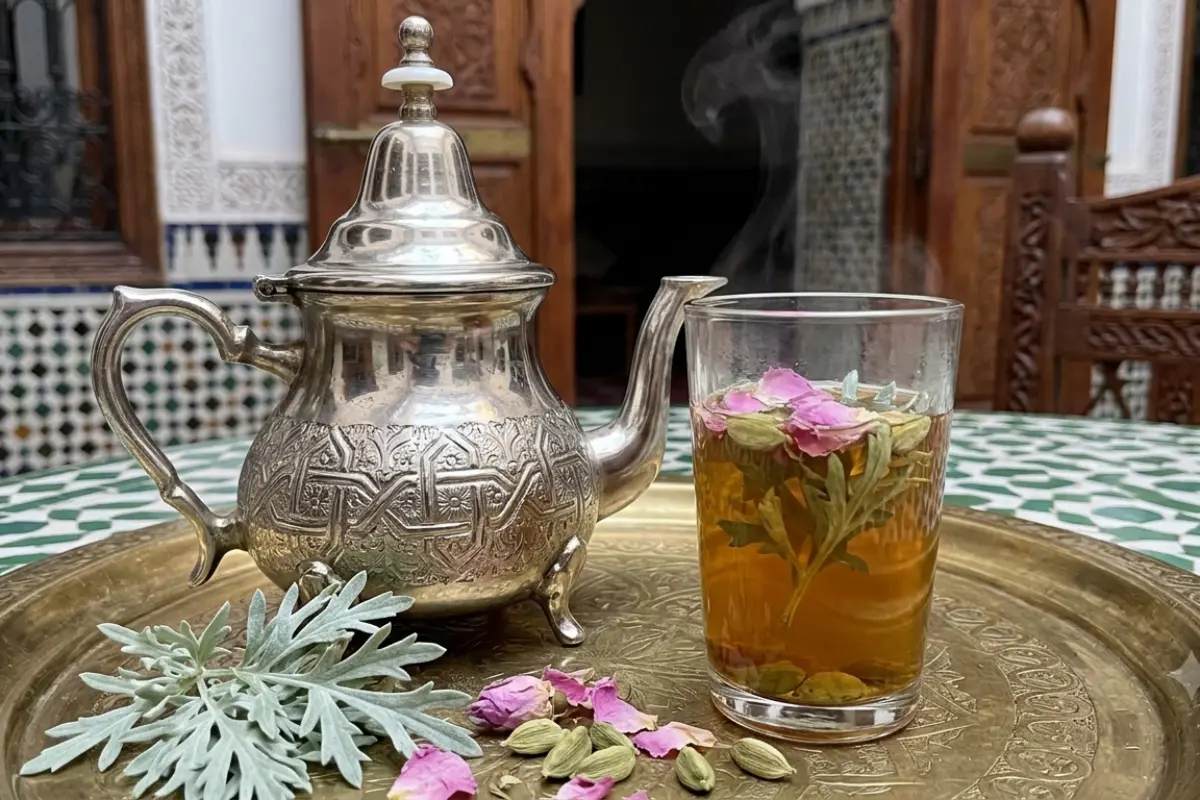
Absinthe tea, known locally as 'atay chiba,' is a cherished herbal beverage in Moroccan households, particularly valued for its medicinal properties and distinctive bitter-sweet flavor. This aromatic blend combines the earthy intensity of wormwood with the romantic fragrance of rose petals and the warm spice of cardamom, creating a tea that soothes both body and spirit.
The tradition of brewing absinthe tea dates back centuries in Morocco, where it was originally consumed for its digestive benefits and as a natural remedy for various ailments. The addition of rose petals, often sourced from the famous Dadès Valley, adds a floral elegance that balances the herb's natural bitterness, while cardamom contributes warming notes that make this tea perfect for cool evenings.
This therapeutic beverage is more than just a drink; it's a ritual that embodies the Moroccan philosophy of taking time to savor life's simple pleasures. The careful preparation and mindful consumption of this tea reflect the deep cultural connection between wellness, hospitality, and the art of living well that defines Moroccan culture.
About This Recipe
Absinthe tea has been a cornerstone of Moroccan herbal medicine for over 800 years, introduced through ancient trade routes that connected Morocco to Mediterranean and Middle Eastern cultures. The practice of combining wormwood with rose petals likely originated in the royal courts of Marrakech, where palace physicians would create elaborate herbal blends for the sultans and their families. The addition of cardamom reflects Morocco's position as a crucial stop on the spice trade routes, where exotic spices from India and the Far East were incorporated into local traditions. This particular combination was traditionally prepared by Moroccan grandmothers as a digestive aid and evening tonic, passed down through generations as both a medicinal remedy and a symbol of hospitality. Today, while modern Moroccan tea culture is dominated by mint tea, absinthe tea remains a cherished tradition in rural areas and among those who maintain the old herbal wisdom.
Nutrition / serving
Recipe Tags
Understanding the Ingredients
Dried wormwood (absinthe)
The star ingredient providing the tea's distinctive bitter flavor and therapeutic properties. Use only food-grade wormwood available from reputable herbal suppliers.
Dried rose petals
Adds floral sweetness and balances the wormwood's bitterness. Ensure they are food-grade and pesticide-free for the best flavor and safety.
Green cardamom pods
Provides warm, aromatic spice notes that complement both the earthiness of wormwood and the florals of rose.
Honey
Natural sweetener that harmonizes all flavors while adding its own subtle floral notes. Use local honey for best results.
Fresh water
Quality water is essential for a clean-tasting tea. Use filtered or spring water for optimal results.
Step-by-Step Cooking Guide
Prepare the aromatics
2 minLightly crush the cardamom pods with the flat side of a knife to release their essential oils. Measure out the wormwood and rose petals.
Tip: Crushing cardamom pods just before brewing ensures maximum flavor release.
Heat the water
3 minBring fresh water to a rolling boil in a traditional Moroccan teapot or medium saucepan. The water temperature should reach 212°F (100°C).
Tip: Don't overboil the water as it can make the tea taste flat.
Add the herbs
1 minAdd the wormwood, rose petals, and crushed cardamom to the boiling water. Reduce heat to low and let simmer gently.
Tip: Keep the heat low to prevent over-extraction which can make the tea overly bitter.
Steep and strain
8 minSimmer for 5-7 minutes, then remove from heat and let steep for an additional 3 minutes. Strain the tea through a fine mesh strainer.
Tip: Don't steep longer than recommended as wormwood can become too bitter.
Sweeten and serve
1 minAdd honey to taste while the tea is still hot. Pour into traditional glasses and serve immediately.
Tip: Start with less honey than you think you need - you can always add more.
Common Mistakes to Avoid
✗ Using too much wormwood
Fix: Start with small amounts as wormwood is very potent and can become overwhelmingly bitter
✗ Steeping too long
Fix: Keep steeping time under 10 minutes total to prevent excessive bitterness
✗ Using poor quality rose petals
Fix: Ensure rose petals are food-grade and organic to avoid chemical residues and off-flavors
Ingredient Substitutions
Instead of: Dried rose petals
Use: Dried hibiscus flowers or jasmine flowers
Instead of: Cardamom pods
Use: 1/2 teaspoon ground cardamom or cinnamon stick
Instead of: Honey
Use: Agave syrup or sugar to taste
Serving Suggestions
Serve in traditional Moroccan tea glasses with small sweet pastries
Pair with dates or dried fruits for an authentic Moroccan experience
Enjoy as an after-dinner digestif with a light dessert
Serve alongside traditional Moroccan sweets like chebakia or gazelle horns
Storage & Reheating
Storage
Prepared tea should be consumed fresh. Store dried herb blend in an airtight container in a cool, dry place for up to 6 months.
Reheating
Gently reheat any leftover tea over low heat, but fresh brewing is always preferred for best flavor.
Keep individual dried ingredients separate until ready to brew for maximum freshness and potency.
Frequently Asked Questions
Recipe by

Mohammed Benali
محمد بن علي
Beverage Specialist
View all recipes by Mohammed →
You May Also Like
Our Ebooks

The Moroccan Vegan
$12.56

Tables of Fez: A Royal Palace Legacy
$22.99

The Soul of Morocco
$20.00
YouTube
Watch step-by-step cooking videos and learn traditional Moroccan techniques.
450+
Subscribers
150+
Videos