
15
Prep (min)
25
Cook (min)
8
Servings
Medium
Level
Introduction
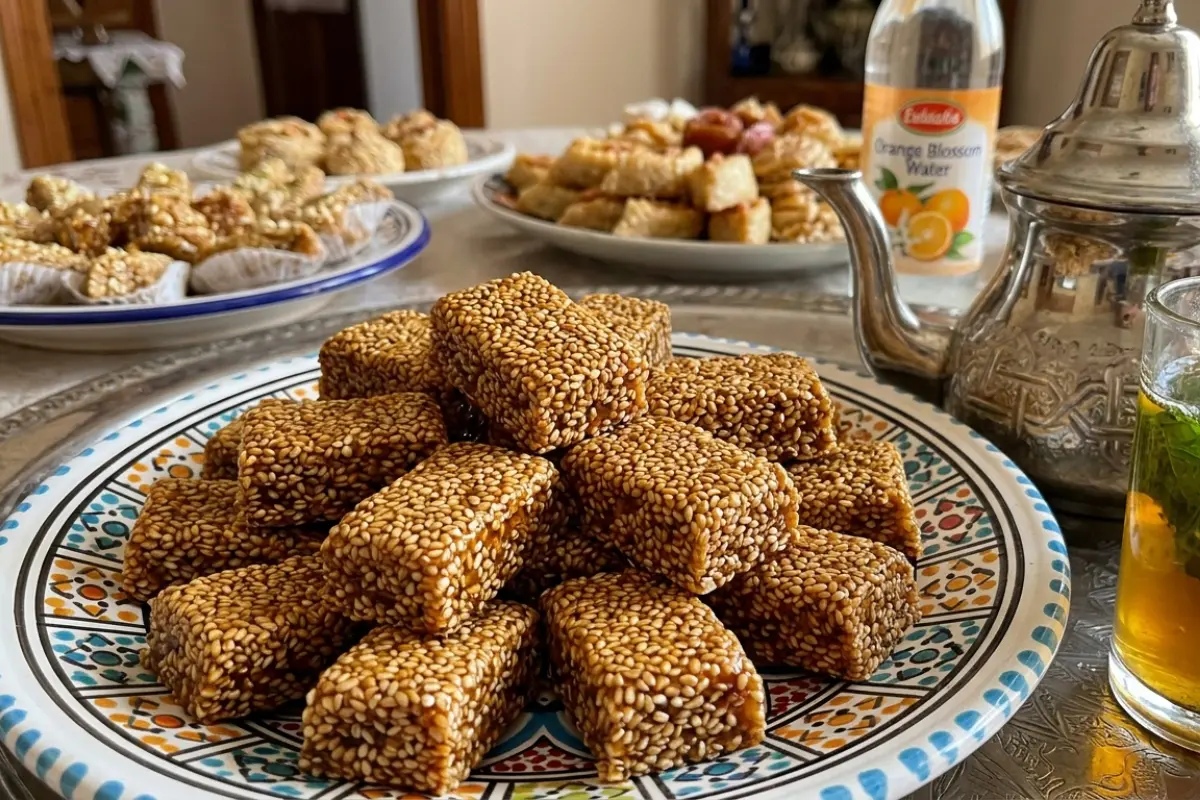
Assliya, meaning 'the honey one' in Moroccan dialect, is one of the oldest and most cherished confections in Moroccan culinary tradition. Rooted in the ancient Berber and Arab culinary heritage of North Africa, this dense sesame-and-honey sweet has been prepared in Moroccan households for centuries, particularly in the imperial cities of Fez, Marrakech, and Meknès. Its simplicity belies the skill required to achieve the perfect texture — neither too sticky nor too crumbly — making it a true test of a confectioner's patience and intuition.
About This Recipe
Assliya is among the most ancient confections in the Moroccan sweet-making tradition, with roots tracing back to the Berber communities of the Middle Atlas and the Arab culinary influence that flourished in the imperial cities following the Arab conquests. Sesame, one of humanity's oldest cultivated crops, has been grown in North Africa for millennia, and its combination with honey — itself a sacred and highly prized commodity in the ancient world — represents a confectionery tradition that predates written Moroccan culinary history. In the great medinas of Fez and Marrakech, specialized sweet makers known as 'halwiyyin' elevated Assliya to an art form, perfecting the precise cooking temperatures and ratios through generations of oral knowledge passed from master to apprentice. During the Alaouite dynasty, Moroccan confections including Assliya became important elements of royal hospitality and diplomatic gifting, cementing their cultural prestige. Today, Assliya remains a staple of the Moroccan Ramadan table and is prepared by home cooks across the country, each family maintaining their own subtle variations in spicing and proportion, ensuring that this ancient sweet continues to evolve while honoring its deep historical roots.
Nutrition / serving
Recipe Tags
Understanding the Ingredients
Sesame Seeds
White sesame seeds are the soul of Assliya. They must be toasted slowly over low heat until golden and fragrant, which develops their rich, nutty flavor and eliminates any raw bitterness. In Morocco, sesame seeds are often sourced from local markets and are celebrated for their high oil content and superior taste.
Pure Honey
Moroccan wildflower or thyme honey is traditionally used in Assliya, prized for its dense consistency and aromatic complexity. The honey acts as both a sweetener and a binding agent, cooking down to the correct thread stage to hold the sesame seeds together. Quality honey is crucial — thin or adulterated honey will not produce the proper set.
Orange Blossom Water
Known in Morocco as 'ma' zhar,' orange blossom water adds a delicate floral perfume that elevates Assliya from a simple sweet to a sensory experience. It is added at the very end of cooking to preserve its volatile aromatic compounds. A little goes a long way, and authentic Moroccan preparations never skip this ingredient.
Butter
A small amount of unsalted butter is incorporated to enrich the mixture, lending a subtle creaminess and helping to prevent the Assliya from becoming overly hard once cooled. Some traditional recipes use smen, a Moroccan aged clarified butter, for a more complex flavor profile.
Sugar
A modest quantity of sugar is sometimes added alongside honey to stabilize the confection's texture and control its sweetness. When sugar is cooked with honey to the soft-ball stage, it creates a more consistent and workable mixture that sets evenly.
Cinnamon
Ground cinnamon is a classic spice addition to Moroccan sweets, providing warmth and depth. In Assliya, it complements the nuttiness of the sesame and the floral honey without overpowering either element. Moroccan cinnamon, known for its sweetness and mild heat, is preferred over the sharper cassia variety.
Lemon Juice
A few drops of fresh lemon juice are added to the honey syrup to prevent crystallization during cooking and cooling. The acidity also subtly balances the richness of the honey and sesame, keeping the overall flavor profile bright and well-rounded.
Step-by-Step Cooking Guide
Toast the Sesame Seeds
10 minSpread the sesame seeds in a wide, dry skillet over medium-low heat. Stir constantly with a wooden spoon to ensure even toasting. Cook for 8 to 10 minutes until the seeds turn a light golden color and emit a rich, nutty aroma. Immediately transfer to a plate or bowl to stop the cooking process and prevent burning.
Tip: Do not walk away from the pan — sesame seeds can go from perfectly toasted to burnt in seconds. A wide pan ensures even heat distribution.
Prepare Your Mold
3 minLightly grease a shallow rectangular or square baking dish or tray with a thin layer of butter. Alternatively, line it with parchment paper. Set aside. Having your mold ready before cooking the syrup is essential, as you will need to pour the mixture quickly once it reaches the correct temperature.
Tip: A silicone mold works wonderfully here as it allows easy unmolding without sticking.
Cook the Honey and Sugar Syrup
12 minIn a heavy-bottomed saucepan, combine the honey, sugar, and lemon juice over medium heat. Stir gently until the sugar dissolves. Once dissolved, stop stirring and allow the syrup to cook undisturbed until it reaches the soft-ball stage, approximately 115°C to 120°C (240°F to 248°F) on a candy thermometer. If you do not have a thermometer, drop a small amount into cold water — it should form a soft, pliable ball.
Tip: Use a candy thermometer for the most reliable results. Cooking the syrup to the correct stage is the most critical step in achieving the right texture.
Combine Sesame and Syrup
5 minRemove the syrup from heat. Quickly stir in the butter until melted and incorporated. Add the toasted sesame seeds, ground cinnamon, and orange blossom water, stirring vigorously to coat all the seeds evenly with the syrup. Work quickly as the mixture will begin to set rapidly as it cools.
Tip: Have all your add-in ingredients measured and ready before the syrup finishes cooking. Speed is essential at this stage.
Pour and Flatten
5 minImmediately pour the sesame-honey mixture into the prepared mold. Using a lightly oiled spatula or the back of a greased spoon, press and smooth the mixture into an even layer about 1.5 to 2 centimeters thick. Work swiftly before it hardens. Optionally, sprinkle a pinch of extra sesame seeds or cinnamon on top for garnish.
Tip: Wetting your hands lightly with cold water allows you to press the mixture by hand if needed without it sticking to your palms.
Cut and Cool
35 minAllow the Assliya to cool at room temperature for about 5 minutes until slightly firm but still pliable. Using a sharp, lightly oiled knife, score the surface into diamond or rectangular shapes. Let it cool completely until fully set and hard, approximately 30 minutes to 1 hour. Once fully cooled, break or cut along the scored lines and separate the pieces.
Tip: Cut while still slightly warm for clean edges. If you wait until fully hard, it may crack unevenly when cut.
Common Mistakes to Avoid
✗ Not toasting the sesame seeds sufficiently
Fix: Toast the sesame seeds until they are visibly golden and smell nutty. Under-toasted seeds produce a bland, flat flavor in the final confection.
✗ Cooking the honey syrup to the wrong temperature
Fix: Use a candy thermometer to ensure accuracy. Under-cooked syrup will produce a sticky, soft Assliya that does not hold its shape, while overcooked syrup results in a brittle, crumbly texture.
✗ Adding the orange blossom water too early
Fix: Always add orange blossom water off the heat at the very end. Adding it during cooking causes the delicate floral aroma to evaporate completely, leaving no detectable fragrance.
✗ Waiting too long to pour the mixture into the mold
Fix: Act quickly once the sesame seeds are combined with the syrup. The mixture sets fast and if you hesitate, it will harden in the pan and become impossible to spread smoothly.
Ingredient Substitutions
Instead of: Orange blossom water
Use: Rose water can be used in equal quantities for a slightly different but equally authentic Moroccan floral note.
Instead of: Unsalted butter
Use: Coconut oil or a vegan butter alternative works well for those who prefer a dairy-free version, though the flavor will be slightly different.
Instead of: White sesame seeds
Use: A blend of white and black sesame seeds can be used for visual contrast and a slightly earthier flavor profile.
Instead of: Wildflower honey
Use: Acacia honey or sidr honey make excellent substitutes, both offering their own unique aromatic qualities while maintaining the necessary thickness and binding properties.
Serving Suggestions
Arrange Assliya pieces on a decorative Moroccan ceramic platter alongside fresh mint tea for a traditional afternoon treat or post-dinner sweet.
Serve as part of a Moroccan sweets assortment during Ramadan Iftar alongside chebakia, briouats, and sellou for a festive spread.
Pair with a small bowl of fresh seasonal fruit such as figs or dates to balance the richness of the confection.
Wrap individual pieces in wax paper or cellophane and present as homemade edible gifts during Eid celebrations.
Storage & Reheating
Storage
Store Assliya in an airtight container at room temperature, layering pieces between sheets of parchment paper to prevent sticking. It will keep well for up to 2 to 3 weeks in a cool, dry place away from direct sunlight or humidity.
Reheating
Assliya is a room-temperature confection and does not require reheating. If it has become very hard due to cold temperatures, allow it to sit at room temperature for 10 to 15 minutes before serving.
Avoid storing Assliya in the refrigerator as the cold and moisture can cause the honey to crystallize unevenly and alter the texture. Keep it in a dry pantry or cupboard for best results.
Frequently Asked Questions
Recipe by

Abdrahman Idrissi
عبد الرحمن الإدريسي
Pastry & Bread Chef
View all recipes by Abdrahman →
You May Also Like
Our Ebooks

The Moroccan Vegan
$12.56

Tables of Fez: A Royal Palace Legacy
$22.99
The Soul of Morocco
$20.00
YouTube
Watch step-by-step cooking videos and learn traditional Moroccan techniques.
450+
Subscribers
150+
Videos