
45
Prep (min)
25
Cook (min)
8
Servings
Medium
Level
Introduction
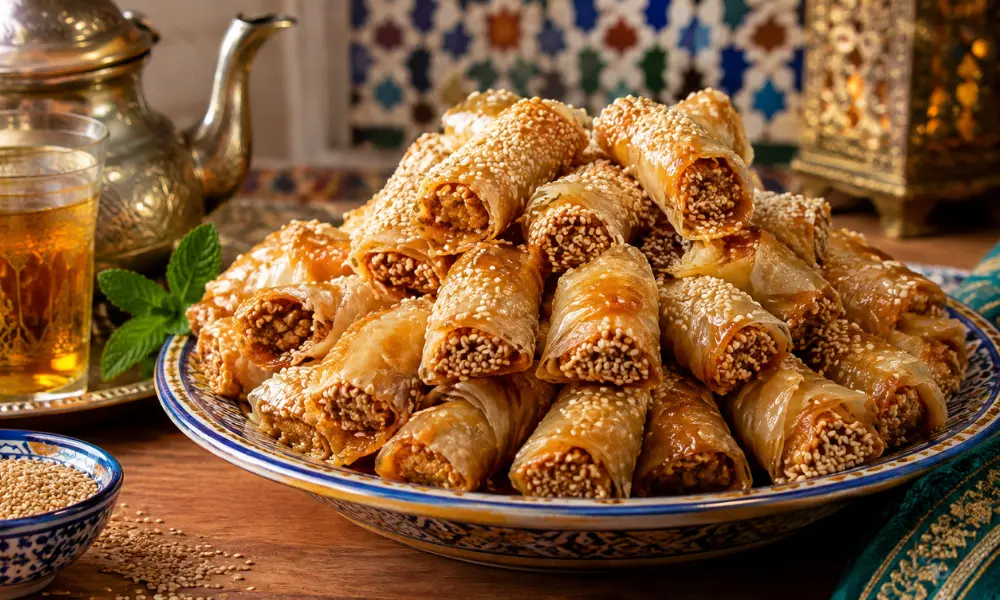
Assliya is one of Morocco's most cherished traditional sweets, representing centuries of culinary refinement that originated in the imperial city of Fez. This delicate pastry showcases the Moroccan mastery of working with paper-thin dough layers, similar to phyllo pastry, but with techniques passed down through generations of skilled pastry makers known as 'hlawiyyin'.
The combination of toasted sesame seeds and honey in Assliya creates a harmony of flavors that is both sophisticated and comforting. The sesame seeds provide a rich, nutty depth while the honey adds floral sweetness and helps bind the delicate layers together. This sweet is particularly associated with religious celebrations and family gatherings, where its preparation becomes a communal activity involving multiple generations.
What makes Assliya truly special is the technique required to achieve its characteristic texture - crispy yet tender layers that dissolve on the tongue. The pastry requires patience and skill to roll the dough thin enough to be translucent, then carefully layer it with the sesame-honey mixture to create a dessert that is as visually appealing as it is delicious.
About This Recipe
Assliya traces its origins to medieval Fez, where it was developed in the palace kitchens during the Marinid dynasty (13th-15th centuries). The pastry represents the sophisticated culinary techniques that emerged from the cross-cultural exchanges in Al-Andalus, where Moroccan, Arab, and Andalusian influences merged. The name 'Assliya' derives from 'asal' meaning honey in Arabic, highlighting the importance of this golden sweetener in the recipe. Traditionally prepared for Islamic holidays, weddings, and the breaking of Ramadan fast, Assliya became a symbol of celebration and hospitality. The technique of creating paper-thin dough layers was perfected by the master pastry chefs of Fez's medina, who guarded their secrets closely and passed them down through apprenticeships that could last several years.
Nutrition / serving
Recipe Tags
Understanding the Ingredients
All-purpose flour
Forms the base of the delicate pastry dough. High-quality flour ensures smooth, elastic dough that can be rolled paper-thin.
Sesame seeds
Provides the signature nutty flavor and texture. Toast them until golden for maximum flavor impact.
Honey
Pure, floral honey is essential for authentic taste. Orange blossom or acacia honey works exceptionally well.
Butter
Adds richness and helps create flaky layers. Use unsalted butter for better flavor control.
Orange blossom water
Provides the characteristic floral note that distinguishes Moroccan pastries.
Step-by-Step Cooking Guide
Prepare the Dough
15 minMix flour with warm water, a pinch of salt, and oil to form a smooth, elastic dough. Knead for 8-10 minutes until silky.
Tip: The dough should be soft but not sticky. Add flour or water gradually to achieve the right consistency.
Toast Sesame Seeds
5 minToast sesame seeds in a dry pan over medium heat until golden brown and fragrant, stirring constantly to prevent burning.
Tip: Listen for the popping sound - this indicates the seeds are properly toasted and will have maximum flavor.
Roll the Pastry
20 minDivide dough into portions and roll each paper-thin, almost translucent. Work on a lightly floured surface.
Tip: Roll from center outward in all directions. The dough should be thin enough to see through but not tear easily.
Assemble Layers
10 minBrush each layer with melted butter, sprinkle with sesame seeds and drizzle with honey. Layer carefully to avoid tearing.
Tip: Work quickly as the thin dough can dry out. Keep unused portions covered with damp cloth.
Bake to Perfection
25 minBake in preheated oven at 350°F until golden brown and crispy. Brush with honey and orange blossom water while warm.
Tip: Watch carefully in the last few minutes as the pastry can brown quickly. The top should be golden but not dark.
Common Mistakes to Avoid
✗ Rolling dough too thick
Fix: Take time to roll each layer paper-thin - this is crucial for the proper texture
✗ Burning sesame seeds
Fix: Toast over medium heat and stir constantly - they go from golden to burnt very quickly
✗ Using too much honey between layers
Fix: Use honey sparingly between layers to prevent soggy pastry
Ingredient Substitutions
Instead of: Orange blossom water
Use: Rose water or vanilla extract (use half the amount)
Instead of: Sesame seeds
Use: Crushed almonds or pistachios
Instead of: Honey
Use: Maple syrup or agave syrup
Serving Suggestions
Serve with Moroccan mint tea for an authentic experience
Dust lightly with powdered sugar before serving
Pair with fresh dates and nuts for a traditional dessert platter
Serve at room temperature for best texture and flavor
Storage & Reheating
Storage
Store in airtight container at room temperature for up to 3 days. Layer between parchment paper to prevent sticking.
Reheating
Warm briefly in 300°F oven for 2-3 minutes to restore crispiness. Avoid microwave as it makes pastry soggy.
Best enjoyed fresh, but can be made a day ahead. Keep away from humidity to maintain crispiness.
Frequently Asked Questions
Recipe by

Abdrahman Idrissi
عبد الرحمن الإدريسي
Pastry & Bread Chef
View all recipes by Abdrahman →
You May Also Like
Our Ebooks
The Moroccan Vegan
$12.56

Tables of Fez: A Royal Palace Legacy
$22.99
The Soul of Morocco
$20.00
YouTube
Watch step-by-step cooking videos and learn traditional Moroccan techniques.
450+
Subscribers
150+
Videos