
45
Prep (min)
90
Cook (min)
6
Servings
Medium
Level
Introduction
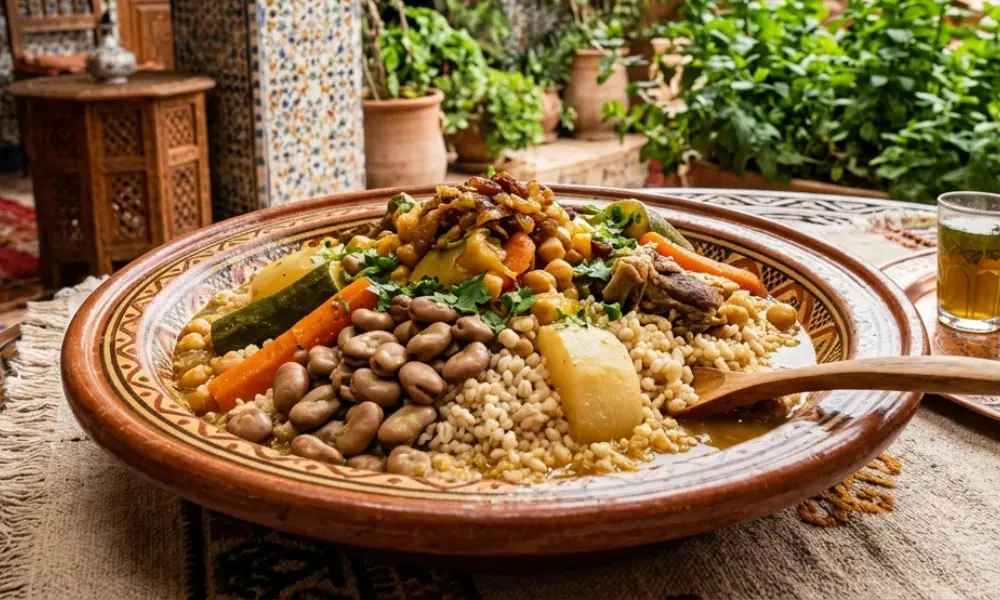
Barley couscous with fava beans and turnip, known as 'Kuskus ash-sha'ir bil-ful wa'l-lift' in Arabic, is a treasured dish from Morocco's Middle Atlas region where barley cultivation has been practiced for centuries. This rustic yet refined preparation showcases the incredible versatility of barley couscous, which offers a heartier texture and nuttier flavor compared to its wheat-based counterpart.
The combination of fresh fava beans and tender turnips creates a harmonious blend of textures and flavors that perfectly complements the earthy barley. This dish is particularly cherished during spring when fava beans are at their peak freshness, though it can be enjoyed year-round using dried or frozen alternatives. The slow steaming process allows the barley couscous to absorb the aromatic vapors from the simmering vegetables below.
Beyond its exceptional taste, this dish represents the Moroccan philosophy of creating nourishing, balanced meals using simple, wholesome ingredients. The preparation requires patience and attention to detail, making it an ideal dish for weekend cooking or special family occasions when time can be devoted to the traditional steaming technique that makes Moroccan couscous so distinctive.
About This Recipe
Barley couscous has deep roots in Morocco's mountainous regions, particularly the Middle Atlas where barley cultivation thrived in harsh climates where wheat struggled to grow. This ancient grain provided essential nutrition for Berber communities who developed sophisticated techniques for hand-rolling the couscous and steaming it to perfection. The addition of fava beans and turnips reflects the agricultural calendar of these highland regions, where spring brought fresh fava beans and root vegetables stored through winter provided hearty sustenance. Traditional preparation was a communal activity among women, who would gather to roll couscous by hand while sharing stories and recipes passed down through generations. The dish represents not just sustenance but cultural continuity, embodying centuries of agricultural wisdom and culinary refinement that continues to nourish Moroccan families today.
Nutrition / serving
Recipe Tags
Understanding the Ingredients
Barley Couscous
Coarser and more nutritious than wheat couscous, barley couscous provides a nutty flavor and chewy texture. Hand-rolled varieties offer the best results.
Fresh Fava Beans
Young, tender fava beans should be double-peeled for the smoothest texture. Look for bright green pods that feel full and firm.
Turnips
Small, white turnips work best as they cook evenly and maintain their shape. Purple-topped varieties add beautiful color contrast.
Preserved Lemons
Essential for authentic Moroccan flavor, use only the rind which provides a unique salty-citrus taste that brightens the entire dish.
Ras el Hanout
This complex spice blend typically contains 20+ spices and provides the warm, aromatic backbone of the dish's flavor profile.
Step-by-Step Cooking Guide
Prepare the Barley Couscous
20 minPlace barley couscous in a large bowl and sprinkle with salt water. Work the grains with your hands until evenly moistened, then let rest for 15 minutes to absorb moisture.
Tip: The couscous should feel damp but not soggy. Each grain should be separate.
First Steaming
25 minLine the top of a couscoussier with cheesecloth and add the couscous. Steam over boiling water for 20 minutes until steam rises through the grains.
Tip: Seal the join between pot and steamer with a flour paste to prevent steam escape.
Prepare the Vegetable Base
15 minIn the bottom pot, sauté onions in olive oil until translucent. Add turnips, spices, and enough water to cover. Simmer until turnips begin to soften.
Tip: Cut turnips uniformly to ensure even cooking throughout the dish.
Second Couscous Preparation
15 minRemove couscous to bowl, break up any clumps with a fork, and sprinkle with more salt water. Work through gently and let rest 10 minutes.
Tip: This second hydration ensures perfectly fluffy, separate grains in the final dish.
Final Steaming
20 minReturn couscous to steamer and steam for another 15-20 minutes. Add fava beans to the vegetable stew in the last 10 minutes of cooking.
Tip: Fava beans should remain bright green and slightly firm when finished cooking.
Common Mistakes to Avoid
✗ Over-wetting the couscous grains
Fix: Use just enough water to dampen - excess water creates a mushy texture
✗ Not sealing the couscoussier properly
Fix: Wrap the joint with a kitchen towel or make a flour paste seal
✗ Adding fava beans too early
Fix: Add them only in the final 10 minutes to preserve color and texture
✗ Skipping the resting periods
Fix: Allow couscous to rest between steamings for proper grain separation
Ingredient Substitutions
Instead of: Fresh fava beans
Use: Frozen lima beans or dried fava beans (soaked overnight)
Instead of: Turnips
Use: Small potatoes or rutabaga cut into similar-sized pieces
Instead of: Barley couscous
Use: Regular wheat couscous (adjust cooking time accordingly)
Instead of: Preserved lemons
Use: Fresh lemon zest plus extra salt to taste
Serving Suggestions
Serve immediately while hot with the couscous mounded on a large platter and vegetables arranged on top
Accompany with harissa paste and extra preserved lemon wedges on the side
Provide small bowls of the cooking broth for those who prefer extra moisture
Garnish with fresh cilantro and a drizzle of argan oil for authentic presentation
Storage & Reheating
Storage
Store leftover couscous and vegetables separately in the refrigerator for up to 3 days. The cooking broth can be refrigerated for up to 5 days.
Reheating
Steam leftover couscous gently in a couscoussier or steamer basket. Reheat vegetables in their broth over low heat until warmed through.
Add a splash of water or broth when reheating to prevent drying out. Leftover couscous can also be used in salads when cold.
Frequently Asked Questions
Recipe by

Fatima El Amrani
فاطمة العمراني
Master Chef
View all recipes by Fatima →
You May Also Like
Our Ebooks

The Moroccan Vegan
$12.56

Tables of Fez: A Royal Palace Legacy
$22.99

The Soul of Morocco
$20.00
YouTube
Watch step-by-step cooking videos and learn traditional Moroccan techniques.
450+
Subscribers
150+
Videos