
30
Prep (min)
40
Cook (min)
10
Servings
Medium
Level
Introduction
Sellou, also known as sfouf or zamita in different regions of Morocco, is one of the most ancient and beloved confections in the country's culinary heritage. Traditionally prepared from wheat flour, sesame, and almonds, this barley variation brings a nuttier, earthier depth to the classic recipe. Barley has been cultivated across North Africa for thousands of years, and its use in sellou reflects the ingenuity of Moroccan cooks in transforming humble grains into extraordinary food.
In the city of Fes, sellou holds a place of honor on every festive table. It is prepared in large batches during Ramadan to break the fast with a calorie-dense and energizing bite, often served alongside a glass of sweet mint tea or warm milk. Mothers are also traditionally offered sellou after childbirth, as its rich blend of ingredients is believed to aid recovery and boost milk production. The addition of dried herbs such as anise and fenugreek in this recipe aligns with these deeply rooted wellness traditions.
The barley version of sellou is particularly cherished in rural and semi-urban Moroccan households where barley flour remains a staple. The toasting process is the soul of this recipe — each ingredient must be carefully roasted to release its essential oils and develop a complex, toasty aroma. The result is a crumbly, fragrant mixture that can be shaped into balls, pressed into molds, or served loose in a bowl dusted with powdered sugar. Its preparation is often a communal activity, bringing women of the household together in a ritual that is as much about memory and love as it is about cooking.
About This Recipe
Sellou, known variously as sfouf in Casablanca and zamita in the Souss region, is one of Morocco's most ancient and nutritionally sophisticated confections, with roots stretching back to Berber culinary traditions predating the Arab influence on Moroccan cuisine. Barley, one of humanity's oldest cultivated grains, was the primary cereal crop of the Amazigh people of North Africa before wheat became dominant, and its use in sellou represents a living connection to pre-Islamic Moroccan foodways. The toasting and grinding techniques used to make sellou mirror ancient grain-processing methods documented across the Mediterranean and North Africa thousands of years ago. Over centuries, sellou evolved through the incorporation of ingredients introduced along trans-Saharan trade routes — sesame arrived from sub-Saharan Africa, cinnamon and anise from the spice trade, and honey has always been a prized local product harvested from the wild Atlas cedar and thyme flowers of the Moroccan mountains. The tradition of preparing sellou for postpartum mothers and for Ramadan iftar tables reflects its deep cultural role as a food of healing, endurance, and communal care. In Fes, the imperial city that has long been Morocco's culinary and intellectual heart, families still prepare sellou in large communal sessions during the weeks before Ramadan, with grandmothers overseeing the toasting and younger women handling the blending, passing down not just a recipe but a complete sensory vocabulary of what authentic Moroccan nourishment means.
Nutrition / serving
Recipe Tags
Understanding the Ingredients
Barley Flour
The foundation of this recipe, barley flour must be freshly toasted in a dry pan until golden and fragrant. It provides a deep, nutty, slightly bitter undertone that distinguishes this sellou from the classic wheat version. Look for whole barley flour for the best nutritional and flavor profile.
Sesame Seeds
White sesame seeds are toasted separately until golden, then ground into a coarse paste. They contribute a rich, oily texture and a warm nutty flavor that binds the mixture and adds essential fats. Moroccan cooks traditionally grind sesame using a hand mill or stone grinder.
Honey
Raw Moroccan mountain honey or thyme honey is preferred for its bold floral aroma and natural sweetness. Honey acts as the primary binder in sellou, replacing refined sugar with a natural alternative that also adds moisture and a characteristic stickiness to the mixture.
Smen (Clarified Butter)
Smen is aged Moroccan clarified butter with a sharp, pungent flavor. It is essential for achieving the signature richness of authentic sellou. If smen is unavailable, regular clarified butter or ghee can be used, though the distinctive aged flavor will be less pronounced.
Dried Anise Seeds
Anise seeds are lightly toasted and ground to a fine powder before being incorporated. They provide a warm, licorice-like herbal note that is characteristic of many Moroccan sweets and is believed in traditional medicine to aid digestion and comfort the stomach.
Fenugreek Seeds
Ground fenugreek adds a slightly bitter, maple-like herbal undertone and is deeply associated with postpartum Moroccan sellou recipes. It is used sparingly to balance the sweetness of the honey and enhance the overall aromatic complexity of the confection.
Cinnamon
Ground cinnamon adds warmth and a familiar spice note that complements the barley and honey beautifully. Moroccan cinnamon, known for its slightly sweet and woody character, integrates seamlessly into the mixture and elevates its overall fragrance.
Powdered Sugar
A small amount of powdered sugar is mixed in and also used as a finishing dusting for presentation. It softens the overall texture of the sellou and provides a delicate sweetness that balances the earthiness of the barley and the bitterness of the fenugreek.
Step-by-Step Cooking Guide
Toast the Barley Flour
25 minPlace the barley flour in a large, heavy-bottomed skillet or traditional tagine over medium-low heat. Stir continuously with a wooden spoon for 20 to 25 minutes until the flour turns a deep golden color and emits a rich, toasty aroma. Be careful not to burn it — reduce heat if needed. Transfer to a large mixing bowl and allow to cool completely before proceeding.
Tip: Stir without pause to ensure even toasting. The color should be reminiscent of light brown bread crust. Scorched flour will make the sellou bitter.
Toast and Grind the Sesame Seeds
10 minIn the same dry skillet, toast the sesame seeds over medium heat, stirring constantly, until they turn light golden and begin to pop. This takes about 5 to 7 minutes. Remove from heat immediately and allow to cool. Once cooled, grind the sesame seeds in a food processor or blender until they form a coarse, oily paste. Do not over-process into a smooth butter.
Tip: Sesame seeds can go from golden to burnt very quickly. Keep a close eye and remove from heat as soon as they turn color. A coarse grind retains more texture in the final sellou.
Toast and Grind the Dried Herbs and Spices
5 minIn a small dry pan, lightly toast the anise seeds and fenugreek seeds together over low heat for about 2 to 3 minutes until fragrant. Allow to cool, then grind them into a fine powder using a spice grinder or mortar and pestle. Combine with the pre-measured ground cinnamon and set aside.
Tip: Toasting the spices briefly before grinding unlocks their volatile oils and significantly deepens their flavor contribution to the sellou.
Warm the Smen and Honey
5 minIn a small saucepan, gently warm the smen over low heat until just melted and liquid. In a separate bowl, slightly warm the honey so it becomes more fluid and easier to incorporate. Do not boil either ingredient — you simply want them pourable and warm to the touch.
Tip: Warming the honey makes it much easier to blend evenly through the dry ingredients. Cold honey tends to clump and creates uneven distribution throughout the mixture.
Combine All Dry Ingredients
10 minTo the bowl of toasted barley flour, add the ground sesame paste, powdered sugar, ground anise, ground fenugreek, and cinnamon. Mix thoroughly with your hands or a large spatula until every ingredient is evenly distributed and the mixture looks uniformly colored with no visible streaks of individual components.
Tip: Use your hands for the best blending — the warmth of your palms helps the sesame oils integrate with the flour more effectively than any utensil can achieve.
Incorporate Smen and Honey
10 minPour the warm melted smen over the dry mixture and work it in thoroughly. Then gradually drizzle in the warm honey, mixing as you go. The mixture should begin to clump together and become moldable without being sticky. Add honey incrementally — you may not need all of it, or you may need slightly more depending on the absorbency of your barley flour.
Tip: Add liquids slowly and assess consistency as you go. The perfect sellou mixture holds its shape when pressed but crumbles slightly when touched — similar in texture to shortbread.
Shape and Serve
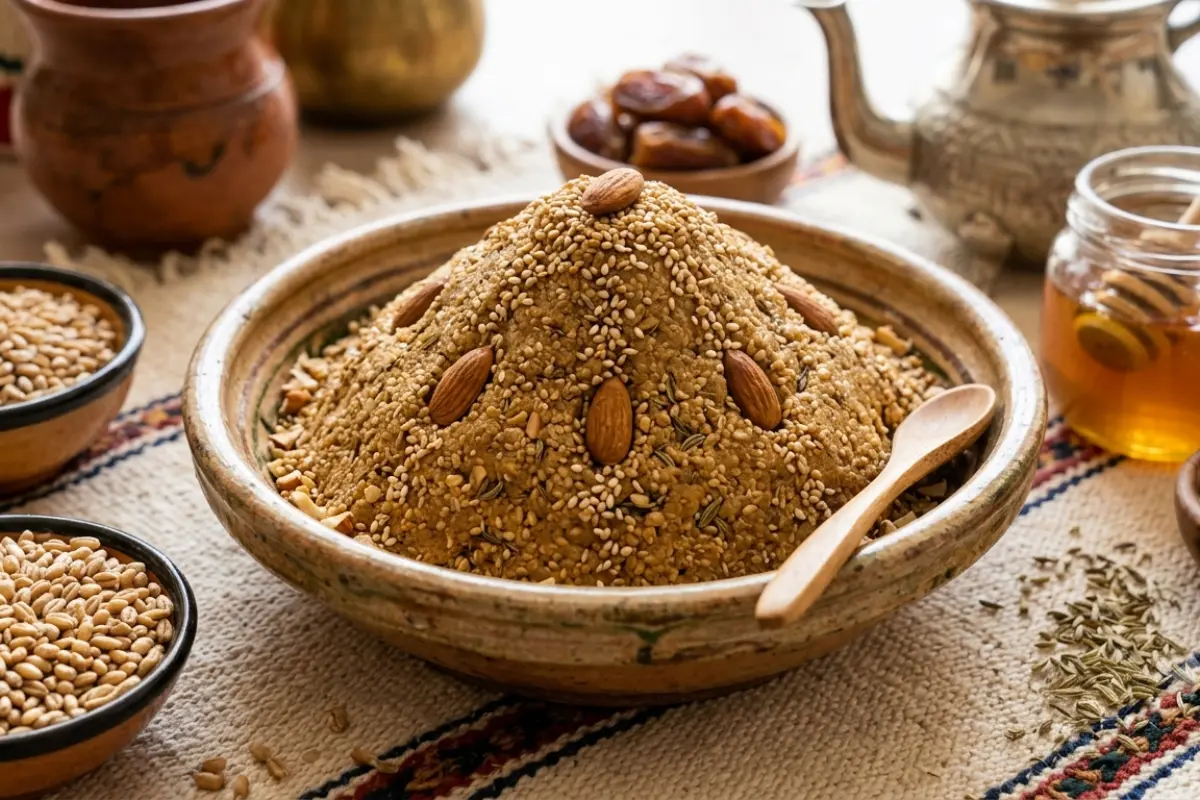
5 minShape the sellou into a mound on a large serving plate, or press it into a mold and invert onto a plate for a more formal presentation. Alternatively, roll portions into balls the size of walnuts. Dust generously with powdered sugar and optionally garnish with whole toasted sesame seeds or a drizzle of honey. Serve at room temperature.
Tip: For Ramadan presentations, Moroccan families often shape sellou into a dome and use a spoon to create decorative swirls on the surface before dusting with powdered sugar.
Common Mistakes to Avoid
✗ Not toasting the barley flour long enough
Fix: Under-toasted barley flour retains a raw, starchy taste that dominates the entire dish. Toast the flour patiently over medium-low heat for a full 20 to 25 minutes, stirring constantly, until it achieves a deep golden color and a pronounced nutty aroma.
✗ Adding too much honey at once
Fix: Pouring all the honey in one go can make the sellou overly wet and sticky, preventing it from achieving its characteristic crumbly texture. Always add honey gradually, assessing the consistency after each addition before deciding to add more.
✗ Using cold smen or honey
Fix: Cold fats and honey do not integrate smoothly into the dry flour mixture. They create greasy clumps rather than a uniform blend. Always warm both ingredients gently before incorporating them.
✗ Over-grinding the sesame seeds
Fix: Processing sesame seeds into a completely smooth tahini-like paste makes the sellou too oily and dense. Stop grinding when the seeds have broken down into a coarse, slightly chunky texture that still retains some bite.
Ingredient Substitutions
Instead of: Barley Flour
Use: Toasted whole wheat flour or a combination of half whole wheat and half oat flour can replicate a similar hearty, nutty flavor profile.
Instead of: Smen (Clarified Butter)
Use: Regular ghee or unsalted clarified butter works well as a substitute. For a dairy-free version, virgin coconut oil can be used, though the flavor will differ significantly.
Instead of: Honey
Use: Date syrup or pure maple syrup can substitute for honey in equal quantities, offering a different but complementary sweetness to the barley base.
Instead of: Fenugreek Seeds
Use: If fenugreek is unavailable or its bitterness is undesirable, a small pinch of ground fennel seeds can provide a similar herbal note without the bitterness.
Serving Suggestions
Serve sellou at room temperature in a wide shallow bowl, dusted generously with powdered sugar, alongside hot Moroccan mint tea or a glass of warm whole milk — this is the most traditional and beloved way to enjoy it during Ramadan.
Roll the sellou into small walnut-sized balls and arrange on a decorative plate for easy individual serving at celebrations, postpartum gatherings, or as part of a Moroccan sweets platter alongside chebakia and briwat.
Sellou can also be enjoyed as a high-energy breakfast spread — press it into a small bowl, create a well in the center, and fill it with extra honey and a few toasted sesame seeds for a beautiful and satisfying morning meal.
For a modern twist, use sellou as a filling for stuffed dates or layer it between thin layers of warqa pastry dusted with powdered sugar for an elegant fusion dessert inspired by traditional flavors.
Storage & Reheating
Storage
Store sellou in an airtight container or sealed glass jar at room temperature for up to 3 weeks. Its high honey and fat content acts as a natural preservative. For longer storage, keep in the refrigerator for up to 2 months.
Reheating
Sellou does not require reheating and is always served at room temperature. If refrigerated, allow it to sit at room temperature for 20 to 30 minutes before serving to soften slightly and allow the aromas to bloom.
Avoid storing sellou in plastic wrap or non-airtight containers as exposure to air will cause the oils to go rancid more quickly and the texture to harden unpleasantly. Glass jars with tight-fitting lids are ideal for both storage and gifting.
Frequently Asked Questions
Recipe by

Abdrahman Idrissi
عبد الرحمن الإدريسي
Pastry & Bread Chef
View all recipes by Abdrahman →
You May Also Like
Our Ebooks

The Moroccan Vegan
$12.56

Tables of Fez: A Royal Palace Legacy
$22.99

The Soul of Morocco
$20.00
YouTube
Watch step-by-step cooking videos and learn traditional Moroccan techniques.
450+
Subscribers
150+
Videos