
40
Prep (min)
180
Cook (min)
6
Servings
Hard
Level
Introduction
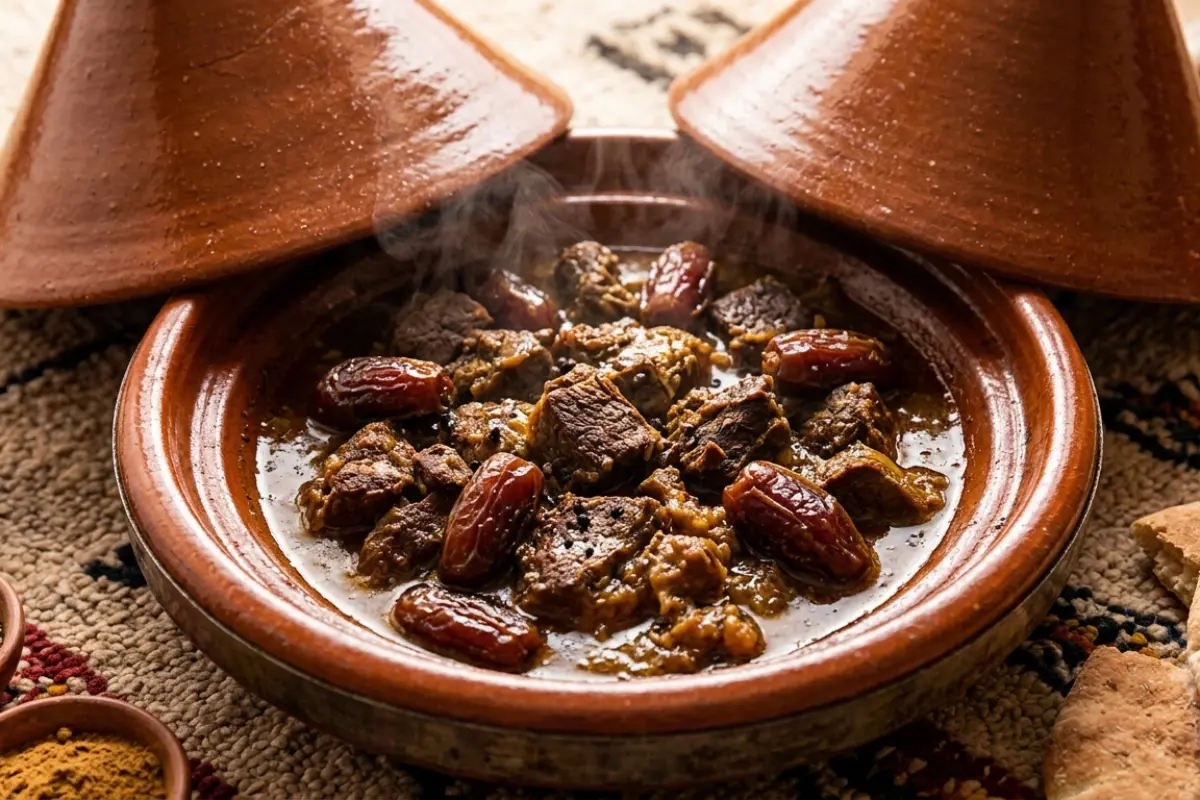
Camel meat has been an integral part of Moroccan and North African culinary heritage for thousands of years, particularly among the Berber and nomadic communities of the Sahara Desert and the pre-Saharan regions of southern Morocco. In cities like Ouarzazate, Zagora, and Merzouga, camel tagine is more than just sustenance — it is a symbol of hospitality, celebration, and deep-rooted cultural identity. Historically, camel was slaughtered only on special occasions such as weddings, religious festivals, and the welcoming of honored guests, making this tagine a dish of profound social significance.
About This Recipe
The tradition of cooking camel in Morocco stretches back millennia to the time when Berber and Arab nomadic tribes crossed the vast Sahara Desert and the pre-Saharan steppes of the Draa and Ziz valleys. Camel was the lifeblood of these communities — providing transport, milk, wool, and meat — and was only slaughtered on the most significant occasions: the birth of a child, the celebration of a wedding, or the arrival of a distinguished guest. The combination of camel meat with dates is a pairing of extraordinary historical logic: dates were the primary caloric staple of Saharan travelers, providing intense, concentrated energy in a lightweight, preservable form, while camel meat offered protein and sustenance during long desert crossings. The addition of black pepper reflects the ancient trans-Saharan spice trade routes that passed through Morocco, bringing exotic spices from sub-Saharan Africa and the East into North African kitchens. Today, Camel Tagine with Dates and Pepper remains a celebrated specialty of southern Moroccan cities including Ouarzazate, Zagora, Erfoud, and Merzouga, where it is served at festivals, family gatherings, and as a flagship dish in traditional riads and restaurants catering to those seeking an authentic taste of Morocco's desert heritage.
Nutrition / serving
Recipe Tags
Understanding the Ingredients
Camel Meat (shoulder or leg)
Camel meat is lean, slightly sweet, and deeply flavorful with a texture similar to beef but with a more complex, gamey richness. The shoulder or leg cuts are preferred for tagine because they contain enough connective tissue to become wonderfully tender after long, slow braising. It is important to source fresh camel meat from a reputable halal butcher and cut it into large chunks to prevent it from drying out during cooking.
Medjool Dates
Medjool dates are the queen of Moroccan dates — large, plump, and extraordinarily sweet with a caramel-like depth. In this tagine, they are added in the final stage of cooking so they retain their shape and contribute a luscious sweetness that balances the bold pepper and savory meat. Remove the pits before adding them to the pot to make serving easier.
Black Pepper
Freshly ground black pepper is the star spice of this recipe and is used generously, which is uncommon in Moroccan cooking where pepper typically plays a supporting role. The pepper provides a warming, assertive heat that complements the sweetness of the dates and the richness of the camel meat beautifully. Always use freshly ground pepper for the most vibrant and complex flavor.
Ras el Hanout
Ras el Hanout is Morocco's most celebrated spice blend, often containing over a dozen spices including cumin, coriander, cinnamon, ginger, cardamom, and turmeric. In this tagine, it forms the aromatic backbone of the dish, adding warmth, depth, and complexity that no single spice could achieve alone. Buy it freshly blended from a Moroccan spice market for the most authentic result.
Onions
Yellow or white onions are slowly caramelized at the beginning of the cooking process to build a sweet, savory foundation for the tagine sauce. They melt into the braising liquid over time, thickening it naturally and adding a gentle sweetness that ties the whole dish together. Slicing them into thin half-moons ensures they break down evenly.
Saffron
Moroccan saffron, particularly the prized variety from Taliouine in the Anti-Atlas mountains, is one of the finest in the world. A small pinch bloomed in warm water creates a golden hue and a delicate floral, honey-like aroma that elevates this tagine to a truly luxurious level. Never substitute powdered saffron imitation — only genuine saffron threads will do.
Preserved Lemon
Preserved lemon adds a bright, salty, intensely citrusy note that cuts through the richness of the camel meat and the sweetness of the dates. Only the rind is used — the pulp is discarded. The fermentation process mellows the bitterness of the lemon peel and concentrates its flavor, making it an irreplaceable ingredient in authentic Moroccan cooking.
Argan Oil
Culinary argan oil, pressed from the roasted kernels of the Argania spinosa tree native to Morocco's Souss region, has a rich, nutty flavor that is deeply Moroccan in character. It is used alongside olive oil to brown the meat and sauté the onions, imparting a distinctive toasty aroma to the base of the tagine. It is a prized ingredient and adds an authentic flavor that olive oil alone cannot replicate.
Step-by-Step Cooking Guide
Marinate the Camel Meat
15 minPlace the camel meat chunks in a large bowl. Add ras el hanout, half the ground black pepper, minced garlic, salt, and a drizzle of argan oil. Toss thoroughly to coat every piece of meat. Cover with plastic wrap and allow to marinate in the refrigerator for at least 2 hours, or ideally overnight, to allow the spices to deeply penetrate the meat fibers.
Tip: The longer the marinade time, the more tender and flavorful the final result. Overnight marination is strongly recommended for camel meat due to its density.
Bloom the Saffron and Prepare Aromatics
15 minCrush a generous pinch of saffron threads between your fingers and steep them in 3 tablespoons of warm water for 10-15 minutes until the water turns a deep golden-orange. Meanwhile, slice the onions into thin half-moons, finely chop the garlic, and cut the preserved lemon rind into thin strips, discarding the pulp entirely.
Tip: Blooming saffron in warm — not boiling — water extracts its color and aroma without degrading its delicate compounds. Do not skip this step.
Brown the Camel Meat
25 minHeat a combination of argan oil and olive oil in a heavy-bottomed tagine or Dutch oven over medium-high heat. Working in batches, sear the marinated camel pieces on all sides until deeply golden-brown, approximately 4-5 minutes per side. Do not crowd the pan. Remove the browned meat and set aside. This step is critical for developing the deep, roasted flavors that form the foundation of the tagine.
Tip: Pat the meat dry with paper towels before searing to ensure a proper crust forms. Excess moisture will cause steaming rather than browning.
Build the Tagine Base
20 minIn the same pot, reduce heat to medium and add the sliced onions. Cook, stirring occasionally, for 12-15 minutes until they are soft and beginning to caramelize. Add the remaining garlic and cook for 2 more minutes. Pour in the saffron water, remaining black pepper, a pinch of ground ginger, and ground cinnamon. Stir to combine, scraping up any browned bits from the bottom of the pot. Return the seared camel meat to the pot.
Tip: Take the time to properly caramelize the onions — this step builds the sweet, savory complexity that defines a great Moroccan tagine. Rushing it will result in a flat-tasting sauce.
Slow Braise the Tagine
180 minAdd enough warm water or unsalted beef stock to the pot to come about halfway up the meat. Place the preserved lemon strips on top of the meat. Cover the tagine tightly with its lid or with a layer of parchment paper and then the lid. Reduce heat to the lowest possible setting and braise for 2.5 to 3 hours, checking periodically and adding small amounts of water if the liquid reduces too much. The meat should be completely fork-tender.
Tip: Camel meat requires significantly longer cooking than beef or lamb. Do not rush the braising process — the patience invested here is what makes the dish extraordinary.
Add the Dates and Finish
20 minOnce the camel meat is tender, gently nestle the pitted Medjool dates around and between the meat pieces. Replace the lid and cook for an additional 15-20 minutes over low heat, just long enough for the dates to warm through, soften slightly, and release their sweetness into the sauce. Taste the sauce and adjust seasoning with salt and additional black pepper as needed. The sauce should be thick, glossy, and intensely flavorful.
Tip: Add the dates at the very end to prevent them from dissolving completely into the sauce. You want them to retain their shape and provide pockets of sweetness in each serving.
Garnish and Serve
10 minTransfer the tagine to the table still in its cooking vessel for a dramatic and traditional presentation. Garnish with a scattering of toasted sesame seeds, a handful of fresh cilantro leaves, a few additional whole pitted dates arranged on top, and a light drizzle of argan oil. Serve immediately alongside warm Moroccan khobz bread for scooping, or over a bed of fluffy couscous.
Tip: Serving directly in the tagine vessel keeps the dish hot throughout the meal and creates an authentic, communal dining experience in the Moroccan tradition.
Common Mistakes to Avoid
✗ Undercooking the camel meat
Fix: Camel meat is denser and tougher than beef and requires a minimum of 2.5 to 3 hours of gentle braising to become truly tender. Always test with a fork — the meat should fall apart with minimal resistance before adding the dates.
✗ Adding dates too early
Fix: Dates added at the beginning of cooking will completely dissolve into the sauce, losing their texture and visual appeal. Always add them in the final 15-20 minutes to allow them to warm and infuse the dish without losing their form.
✗ Cooking on too high a heat
Fix: Tagines must be cooked on the lowest possible heat after the initial browning phase. High heat will cause the liquid to evaporate too quickly, toughen the meat proteins, and scorch the bottom of the pot. Low and slow is the only correct approach.
✗ Skipping the browning step
Fix: Many home cooks skip searing the meat to save time, but this step creates the Maillard reaction — a complex browning process that generates hundreds of flavor compounds essential to the depth and richness of the final tagine. Never skip it.
✗ Using too little black pepper
Fix: This is a pepper-forward recipe and requires a bold hand with the spice. Using too little pepper will result in a dish that tastes unbalanced and lacks its signature character. Follow the recipe quantities and taste as you go, adjusting upward if needed.
Ingredient Substitutions
Instead of: Camel meat
Use: Beef chuck or lamb shoulder can be used as more accessible alternatives, though the flavor profile will differ. Reduce the braising time to approximately 1.5-2 hours for beef or 1-1.5 hours for lamb.
Instead of: Medjool dates
Use: Deglet Noor dates or dried figs can serve as substitutes, though they are less sweet and less plump. Prunes are another option that pairs well with braised meats and provides a similar jammy sweetness.
Instead of: Argan oil
Use: High-quality extra virgin olive oil or a combination of olive oil and toasted sesame oil can approximate the nutty character of argan oil, though the authentic Moroccan flavor will be somewhat diminished.
Instead of: Preserved lemon
Use: A combination of fresh lemon zest and a small amount of lemon juice with a pinch of extra salt can partially replicate the flavor, but authentic preserved lemon is truly irreplaceable in Moroccan cooking and worth seeking out.
Instead of: Ras el Hanout
Use: A blend of equal parts ground cumin, ground coriander, ground cinnamon, ground ginger, ground cardamom, and ground turmeric can serve as a simplified approximation of this complex spice mixture.
Serving Suggestions
Serve the tagine directly at the table in its clay or ceramic cooking vessel, accompanied by large rounds of warm, freshly baked Moroccan khobz flatbread for scooping the meat and sauce communally.
Pair with a bed of fluffy steamed couscous seasoned with a pinch of saffron and a knob of butter, which absorbs the rich, spiced braising juices beautifully.
Offer a selection of traditional Moroccan salads such as zaalouk (smoked eggplant salad), taktouka (roasted pepper and tomato), and carrot salad with cumin as side dishes for a complete feast.
A pot of fresh Moroccan mint tea served before and after the meal is the traditional and most fitting accompaniment to this celebratory dish.
Storage & Reheating
Storage
Allow the tagine to cool completely to room temperature before transferring to an airtight container. Refrigerate for up to 3 days. The flavors will actually deepen and improve overnight, making leftovers exceptional. For longer storage, freeze in portioned containers for up to 2 months.
Reheating
Reheat gently in a covered pot or tagine over very low heat, adding a splash of water or stock to loosen the sauce as needed. Stir occasionally and heat until warmed through, approximately 15-20 minutes. Alternatively, reheat individual portions in a microwave at 70% power in 90-second intervals, stirring between each, until hot.
Avoid high-heat reheating which can cause the dates to break down completely and the meat to toughen. The low and slow approach that made this dish great applies equally to reheating it. If the sauce has thickened too much in the refrigerator, add water a tablespoon at a time until the desired consistency is reached.
Frequently Asked Questions
Recipe by

Fatima El Amrani
فاطمة العمراني
Master Chef
View all recipes by Fatima →
You May Also Like
Our Ebooks

The Moroccan Vegan
$12.56
Tables of Fez: A Royal Palace Legacy
$22.99

The Soul of Morocco
$20.00
YouTube
Watch step-by-step cooking videos and learn traditional Moroccan techniques.
450+
Subscribers
150+
Videos