
10
Prep (min)
30
Cook (min)
4
Servings
Easy
Level
Introduction
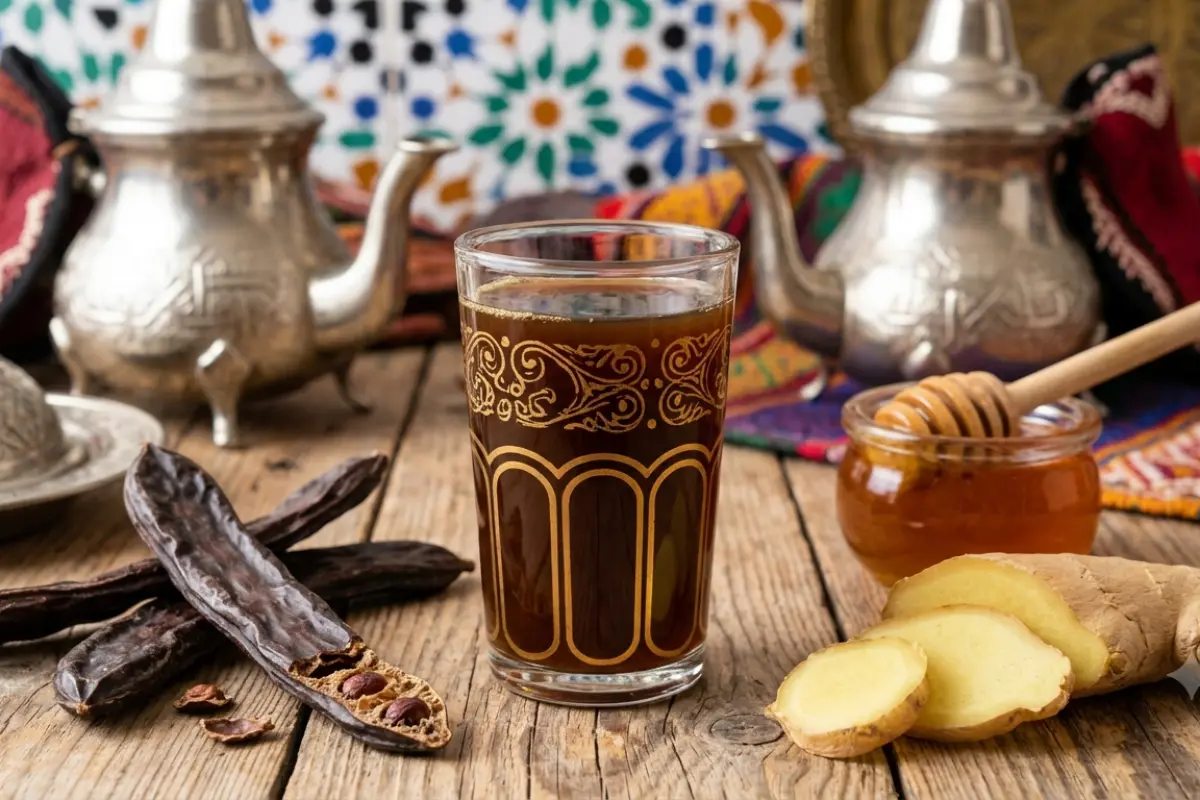
Carob juice, known in Morocco as 'Shrab Al-Janjal,' is one of the oldest and most cherished traditional beverages in Moroccan culinary heritage. Carob trees, called 'Kharroub' in Arabic, have grown wild across the Atlas Mountains and the coastal regions of Morocco for thousands of years, and their pods have been harvested and used both as food and medicine since antiquity. Long before refined sugar or imported chocolate became widely available, carob was a beloved natural sweetener and energy source for Moroccan families, shepherds, and travelers navigating the rugged mountain terrain.
The addition of honey and ginger to carob juice is a testament to the sophisticated understanding of natural medicine that Moroccan herbalists and home cooks have practiced for generations. In traditional Moroccan medicine, known as 'Tibb Taqliidi,' the combination of carob, honey, and ginger was considered a powerful tonic for strengthening the digestive system, soothing sore throats, boosting immunity, and providing sustained energy. Street vendors in the medinas of Marrakech, Fez, and Meknes have historically sold this warming drink from large copper urns, serving it in small glasses to passersby, particularly during the winter months and the holy month of Ramadan.
Today, carob juice with honey and ginger has experienced a renaissance as health-conscious Moroccans and international food lovers rediscover its remarkable nutritional profile and deeply satisfying flavor. Rich in natural sugars, calcium, antioxidants, and digestive enzymes, carob is naturally caffeine-free and has a warm, caramel-chocolate depth of flavor that makes it uniquely comforting. Whether prepared at home for family gatherings, served as a welcoming drink for guests, or enjoyed as a Ramadan iftar beverage, this drink remains a proud symbol of Morocco's rich botanical and culinary traditions.
About This Recipe
The carob tree, known in Morocco as 'Kharrouba,' has been an integral part of the Moroccan landscape and food culture for more than three thousand years. Ancient Phoenician and Berber traders recognized the extraordinary value of carob pods as a concentrated source of nutrition and natural sweetness, and carob quickly became established as a key ingredient in the traditional foods and medicines of North Africa. In the pre-Islamic era and continuing through centuries of Islamic Moroccan civilization, carob was consumed in various forms including as a dried snack, a sweetener for bread and pastries, and a medicinal infusion brewed with local herbs and spices. The streets of Morocco's ancient medinas in cities like Marrakech, Fez, and Meknes have been graced with the presence of carob juice vendors for generations, their large copper urns and brass cups becoming iconic symbols of the country's vibrant street food culture. The specific combination of carob with honey and ginger reflects the profound influence of Moroccan Unani and traditional herbal medicine, which has long prescribed this trinity of ingredients as a powerful tonic for respiratory health, digestive comfort, and general vitality. During the holy month of Ramadan, carob juice with honey has historically served as one of the most favored iftar beverages due to its ability to provide gentle, sustained energy to those breaking their fast, while simultaneously soothing the digestive system after a long day of fasting. As global interest in natural, plant-based beverages has grown in recent decades, carob juice has gained recognition far beyond Morocco's borders, with nutritionists and food historians alike praising it as one of the ancient world's most perfectly balanced natural health drinks.
Nutrition / serving
Recipe Tags
Understanding the Ingredients
Dried Carob Pods
The star ingredient of this recipe, dried carob pods are the fruit of the Ceratonia siliqua tree, which grows abundantly across Morocco's Mediterranean and Atlantic coastal regions. The pods are naturally sweet, with a flavor reminiscent of chocolate and caramel. For the best juice, use whole dried pods that are dark brown, plump, and slightly flexible. Avoid pods that are pale, brittle, or have a musty smell. Breaking the pods into smaller pieces before simmering helps release maximum flavor and natural sweetness into the water.
Fresh Ginger Root
Fresh ginger adds a warm, spicy, and slightly floral heat to the carob juice that beautifully balances its natural sweetness. In Moroccan cooking, ginger is prized not only for its bold flavor but also for its renowned digestive and anti-inflammatory properties. For this recipe, choose a firm, fragrant piece of ginger with smooth, taut skin. Slice it thinly or bruise it lightly before adding to the pot to maximize the release of its essential oils and active compounds during simmering.
Raw Moroccan Honey
Honey is the traditional sweetener used in Moroccan herbal drinks and is far preferred over refined sugar for its complex flavor and medicinal properties. Moroccan honey, particularly varieties from the Atlas Mountains such as thyme honey or wildflower honey, is world-renowned for its exceptional quality and rich aromatic character. Add honey only after the juice has been strained and cooled slightly, as high heat destroys many of honey's beneficial enzymes and aromatic compounds. Adjust the amount to your personal taste preference.
Cinnamon Stick
A cinnamon stick added during the simmering process contributes a warm, woody spice note that harmonizes beautifully with both the carob and ginger. Cinnamon is a staple spice in Moroccan cuisine and traditional medicine, valued for its ability to regulate blood sugar, improve circulation, and add depth of flavor to beverages and dishes alike. Use a true Ceylon cinnamon stick for a delicate, sweet warmth, or Cassia cinnamon for a more robust, assertive spice character.
Water
The quality of water used significantly affects the final flavor of the juice. Use filtered or spring water whenever possible for the cleanest, purest taste that allows the natural flavors of the carob, ginger, and spices to shine without interference from chlorine or mineral imbalances found in some tap water sources.
Lemon Juice
A small amount of fresh lemon juice added at the end of preparation brightens the overall flavor profile of the carob juice, adding a subtle citrus freshness that lifts the deep, earthy sweetness of the carob. Lemon also helps preserve the color and freshness of the drink and provides a small dose of vitamin C that complements the nutritional profile of the beverage.
Star Anise
Optional but traditional in many Moroccan versions of carob juice, star anise imparts a gentle licorice-like sweetness and an exotic floral aroma that adds another layer of complexity to the drink. It pairs particularly well with ginger and cinnamon, creating the signature warm spice bouquet that is characteristic of Moroccan herbal infusions and spiced drinks served in the country's famous tea houses and medina stalls.
Step-by-Step Cooking Guide
Prepare the Carob Pods
5 minRinse the dried carob pods thoroughly under cold running water to remove any dust or debris. Break the pods into pieces roughly 2 to 3 inches long using your hands or a clean kitchen mallet. This is an important step as breaking the pods exposes more surface area and allows the natural sugars, minerals, and flavor compounds to be extracted more effectively during the simmering process. Place the broken pod pieces in a medium-sized bowl and set aside.
Tip: If the pods are very hard and difficult to break, soak them in cold water for 15 minutes before breaking to soften slightly.
Prepare the Aromatics
5 minPeel a 2-inch piece of fresh ginger root using a spoon or peeler and slice it into thin rounds approximately 3 millimeters thick. Lightly bruise each slice by pressing down firmly with the flat side of a knife to release the essential oils. Prepare one cinnamon stick and one or two whole star anise pods. Having all aromatics prepared and ready before beginning to cook ensures an efficient and well-timed preparation process.
Tip: For a milder ginger flavor, reduce to a 1-inch piece. For extra heat and spice, add one or two additional slices.
Combine and Bring to Boil
8 minPlace the broken carob pod pieces, sliced ginger, cinnamon stick, and star anise into a medium to large saucepan. Pour in 1.2 liters of cold filtered water and place the pot over medium-high heat. Bring the mixture to a full rolling boil, stirring occasionally to ensure the pods are fully submerged and the aromatics are evenly distributed throughout the water. As the water heats, you will notice the liquid beginning to darken and take on the characteristic rich brown color of carob.
Tip: Do not cover the pot with a lid during this initial boiling phase, as you want some steam to escape and the flavors to concentrate.
Simmer the Juice
30 minOnce the mixture reaches a boil, reduce the heat to low and allow the carob juice to simmer gently for 25 to 30 minutes. During this time, the liquid will deepen in color to a rich, dark mahogany brown and develop a complex, sweet, and spiced aroma that fills the kitchen. Stir occasionally and check that the simmer remains consistent, adjusting the heat as necessary. The longer you simmer, the more concentrated and flavorful the juice will become. Taste periodically after the 20-minute mark to monitor flavor development.
Tip: For a lighter, more delicate flavor, simmer for 20 minutes. For a rich, intense carob concentrate, simmer up to 40 minutes.
Strain the Juice
5 minRemove the pot from heat and allow the liquid to cool for 5 to 10 minutes until it is warm but no longer boiling hot. Set a fine-mesh strainer or cheesecloth-lined colander over a large heatproof bowl or pitcher. Carefully pour the carob juice through the strainer, pressing gently on the solids with the back of a spoon to extract every last drop of flavorful liquid. Discard the spent carob pod pieces, ginger slices, cinnamon stick, and star anise.
Tip: For an exceptionally clear juice, strain twice through a fine mesh or use a double layer of cheesecloth.
Sweeten and Finish
5 minAllow the strained carob juice to cool until it is warm but not hot, ideally below 60 degrees Celsius, before adding the honey. This temperature is critical to preserve the beneficial enzymes and delicate floral aromatics of the raw honey. Add 2 to 3 tablespoons of high-quality Moroccan honey to the warm juice and stir thoroughly until completely dissolved. Squeeze in the juice of half a lemon and stir again. Taste and adjust sweetness, lemon, or spice level to your preference. Serve warm in traditional Moroccan glasses or allow to cool completely before refrigerating and serving cold.
Tip: Always add honey after removing from heat. Never add honey to boiling liquid as it destroys its health properties and alters its flavor.
Common Mistakes to Avoid
✗ Adding honey to boiling hot juice
Fix: Always wait until the strained juice has cooled to a warm but not scalding temperature before stirring in the honey. High heat destroys honey's beneficial enzymes, antioxidants, and delicate aromatic compounds, reducing both its health benefits and its nuanced flavor contribution to the drink.
✗ Not breaking the carob pods before simmering
Fix: Whole, unbroken carob pods release their flavor and natural sugars very slowly and inefficiently. Always break or crack the pods into smaller pieces of 2 to 3 inches before adding to the water. This dramatically increases the surface area in contact with the water and results in a richer, more flavorful juice in less time.
✗ Simmering at too high a temperature
Fix: Boiling aggressively rather than gently simmering can make the juice taste bitter and harsh. After the initial full boil, always reduce the heat to a gentle, steady simmer. A soft simmer allows the flavors to develop gradually and harmoniously, producing a smooth, balanced, and naturally sweet juice.
✗ Using old or improperly stored carob pods
Fix: Carob pods that have been stored improperly or for too long can develop a stale, musty, or overly tannic flavor that negatively affects the final juice. Always use fresh-looking dried pods that are dark brown and fragrant. Store unused pods in an airtight container in a cool, dry place away from direct sunlight.
Ingredient Substitutions
Instead of: Raw Moroccan Honey
Use: Date syrup or pure maple syrup can be used as a substitute for honey if needed. Date syrup, known as 'dibs al-tamr,' is particularly appropriate as it maintains an authentic Middle Eastern and North African flavor profile and adds its own rich, caramel-like sweetness that complements the carob beautifully.
Instead of: Fresh Ginger Root
Use: Ground dried ginger can be used in a pinch. Use approximately one teaspoon of ground ginger for every 2-inch piece of fresh ginger called for. Note that ground ginger has a slightly different flavor profile, being more concentrated and less bright than fresh, so start with a smaller amount and adjust to taste.
Instead of: Star Anise
Use: A small pinch of ground anise seed or fennel seed can replace star anise if unavailable. Alternatively, simply omit the star anise entirely and increase the cinnamon slightly. The juice remains delicious and authentic without it, as not all regional Moroccan versions include star anise.
Instead of: Dried Carob Pods
Use: Carob powder can be used as a substitute when whole pods are not available. Use approximately 3 to 4 tablespoons of carob powder per liter of water, whisk into cold water before heating to prevent clumping, simmer for 10 minutes, and strain through a fine cloth. The flavor will be slightly different but still pleasant and authentic.
Serving Suggestions
Serve warm in traditional Moroccan tea glasses or small ceramic cups as part of a post-dinner drink offering alongside Moroccan pastries such as chebakia, ghriba cookies, or sellou. The natural sweetness of the carob juice pairs beautifully with the rich, nutty flavors of traditional Moroccan sweets.
For a refreshing summer version, allow the juice to cool completely and serve over ice with a thin slice of lemon and a small sprig of fresh mint. This chilled variation is especially popular at Moroccan beach resorts along the Atlantic coast and is a wonderful non-alcoholic alternative at gatherings.
Serve as a warming iftar drink during Ramadan alongside dates, fresh fruit, and light Moroccan soups. The natural sugars in carob juice provide a gentle energy boost after a day of fasting, and its digestive properties make it an ideal beverage to begin breaking the fast.
Pair with a small pot of Moroccan argan oil drizzled over bread for a nutritious and traditional Moroccan breakfast or mid-morning snack that provides sustained energy and highlights the country's remarkable natural food heritage.
Storage & Reheating
Storage
Allow the carob juice to cool completely to room temperature before transferring to a clean glass jar or airtight container. Store in the refrigerator for up to 4 to 5 days. The flavor often improves after a day of resting as the spice notes continue to develop and mellow. Do not store at room temperature for extended periods as the honey makes the juice susceptible to fermentation.
Reheating
To reheat, pour the desired amount of refrigerated carob juice into a small saucepan and warm gently over low heat until it reaches your preferred serving temperature. Alternatively, heat briefly in a microwave in 30-second intervals, stirring between each interval. Avoid bringing the juice to a full boil when reheating to preserve the honey's flavor and beneficial properties.
If storing for more than 2 days, consider keeping a batch without honey added and stirring in fresh honey just before serving each time. This preserves both the freshness of the honey's flavor and its nutritional integrity. For a convenient option, prepare a concentrated carob syrup and dilute with hot water to taste when serving.
Frequently Asked Questions
Recipe by

Mohammed Benali
محمد بن علي
Beverage Specialist
View all recipes by Mohammed →
You May Also Like
Our Ebooks

The Moroccan Vegan
$12.56

Tables of Fez: A Royal Palace Legacy
$22.99

The Soul of Morocco
$20.00
YouTube
Watch step-by-step cooking videos and learn traditional Moroccan techniques.
450+
Subscribers
150+
Videos