
10
Prep (min)
45
Cook (min)
6
Servings
Easy
Level
Introduction
Carob syrup, known in Morocco as شراب الخروب, is one of the oldest and most cherished traditional beverages in Moroccan culinary heritage. The carob tree, Ceratonia siliqua, has thrived in the Mediterranean and North African landscape for thousands of years, and Moroccan communities have long harvested its dark, leathery pods to create this distinctively sweet and earthy syrup. Long before refined sugar became widely available, carob was valued as a natural sweetener, and its pods were traded along ancient spice routes that connected Morocco to the broader Arab and Mediterranean world.
About This Recipe
The tradition of preparing carob-based drinks in Morocco stretches back many centuries, rooted in the agricultural and culinary heritage of the Amazigh people and later enriched by Arab and Andalusian influences. The carob tree, known in Arabic as الخروب (al-kharrub), grows abundantly across the Atlas Mountains and along the Atlantic and Mediterranean coasts of Morocco, where its pods have been harvested as a food source, natural sweetener, and medicinal remedy for generations. Historically, carob pods were so uniform in weight that they were used as units of measure in jewelry making, giving rise to the word carat. In Moroccan folk medicine, carob syrup was prescribed for digestive ailments, respiratory complaints, and as a general restorative tonic for the elderly and children alike. The addition of cinnamon, one of Morocco's most treasured spices, reflects the country's position at the crossroads of ancient trade routes connecting sub-Saharan Africa, the Arab world, and Europe. Cinnamon was once more precious than gold in parts of the ancient world and has always held a place of honor in Moroccan cooking, from savory tagines to sweet beverages. The pairing of carob with cinnamon and orange blossom water in this syrup is a testament to the Moroccan gift for combining bold, earthy ingredients with delicate floral accents to create something deeply comforting and uniquely North African. Today, carob syrup continues to be prepared in home kitchens across Morocco, sold by street vendors in medinas, and enjoyed as a connection to a culinary past that is both ancient and vibrantly alive.
Nutrition / serving
Recipe Tags
Understanding the Ingredients
Dried Carob Pods
The dried pods of the carob tree are the heart of this recipe, providing a naturally sweet, deep molasses-like flavor with subtle notes of chocolate and vanilla. Look for whole, dark-brown dried carob pods at Moroccan markets or health food stores. Breaking them into smaller pieces before simmering helps extract maximum flavor and color into the syrup.
Granulated Sugar
White granulated sugar is added to enhance the natural sweetness of the carob and to help preserve the syrup. The amount can be adjusted to taste, but a moderate quantity ensures the syrup remains well-balanced without becoming overly sweet or masking the distinctive carob flavor.
Cinnamon Sticks
Whole cinnamon sticks are preferred over ground cinnamon in this recipe because they impart a warm, gentle spice without clouding the syrup. Moroccan cinnamon, often the Ceylon variety or the robust Cassia type, adds layers of warmth and complexity that pair beautifully with the earthiness of the carob.
Water
Fresh, clean water is the base of the syrup. The quality of water matters, as it forms the bulk of the liquid. Using filtered or mineral water can improve the clarity and taste of the finished syrup, allowing the true flavors of carob and cinnamon to shine through.
Lemon Juice
A small amount of fresh lemon juice is added at the end of cooking to brighten the flavor of the syrup and act as a natural preservative. The acidity balances the sweetness and deepens the overall complexity of the drink, giving it a subtle refreshing lift.
Orange Blossom Water
Orange blossom water, or ماء الزهر, is a quintessential Moroccan flavoring agent used across both sweet and savory preparations. A small splash added to the finished syrup introduces a delicate floral note that elevates the drink and lends it a distinctly Moroccan aromatic character.
Step-by-Step Cooking Guide
Prepare the Carob Pods
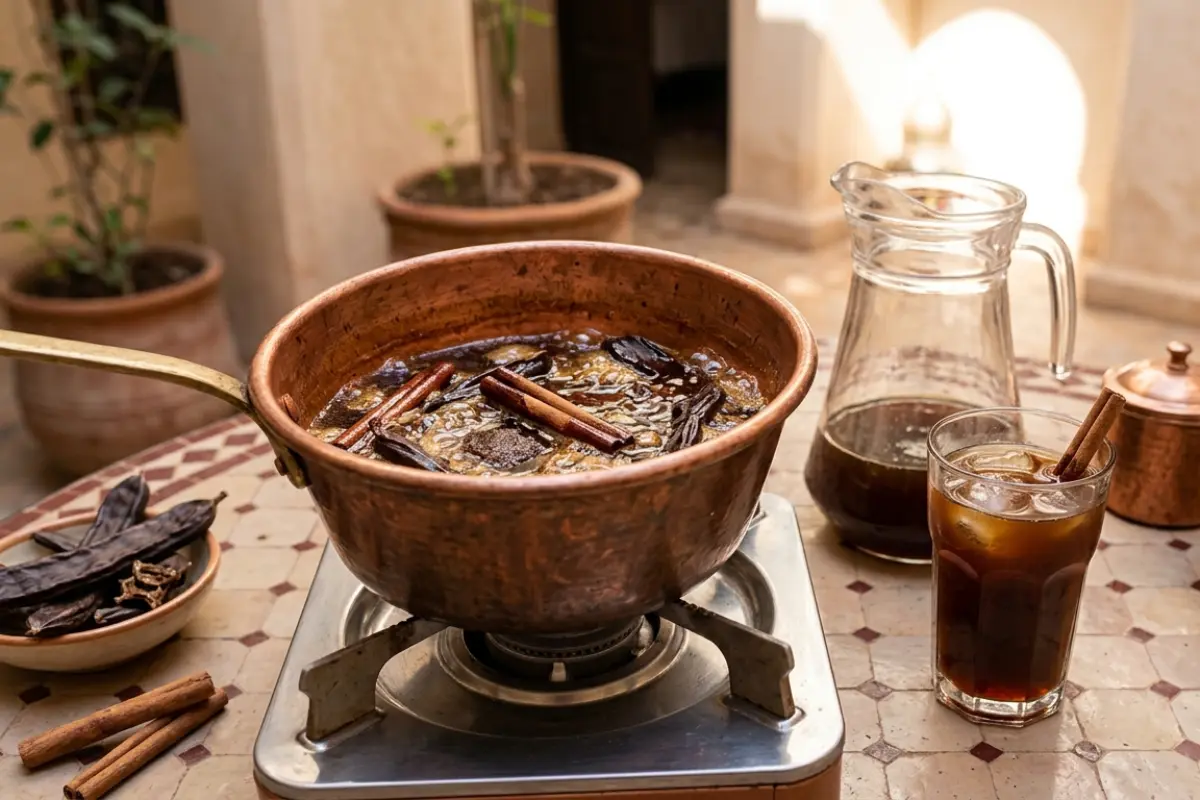
10 minRinse the dried carob pods thoroughly under cold running water to remove any dust or debris. Using your hands or a sharp knife, break or cut the pods into smaller pieces, roughly 2 to 3 inches long. This increases the surface area exposed to the water during simmering, resulting in a richer, more flavorful syrup.
Tip: Avoid using pods that smell musty or have visible mold. Fresh dried carob should have a pleasant, sweet, slightly earthy aroma.
Combine Ingredients in a Pot
5 minPlace the broken carob pod pieces into a large, heavy-bottomed saucepan. Add the water, cinnamon sticks, and half of the sugar. Stir briefly to combine. Ensure the pot is large enough to accommodate any slight bubbling that occurs during cooking.
Tip: Using a heavy-bottomed pot helps distribute heat evenly and prevents the syrup from scorching at the base.
Bring to a Boil
10 minPlace the saucepan over medium-high heat and bring the mixture to a full boil, stirring occasionally. Watch the pot carefully during this stage, as the liquid can foam slightly as it heats. Once boiling, reduce the heat immediately to a gentle simmer.
Tip: Do not walk away from the pot during the initial boiling phase, as the liquid can foam and overflow if the heat is too high.
Simmer Until Fragrant and Dark
35 minAllow the mixture to simmer gently over low to medium-low heat for 30 to 35 minutes, stirring occasionally. The liquid will gradually deepen in color to a rich amber-brown and develop a complex, sweet, caramel-like aroma with warm cinnamon notes. The carob pods will soften and expand slightly.
Tip: The longer you simmer, the more intense and concentrated the flavor will be. Keep the lid slightly ajar to allow some evaporation without reducing the liquid too drastically.
Add Remaining Sugar and Lemon Juice
5 minAfter simmering, stir in the remaining sugar until fully dissolved. Add the freshly squeezed lemon juice and stir well. Taste the syrup and adjust sweetness as desired by adding a little more sugar if needed. Allow the mixture to simmer for an additional 5 minutes to incorporate the new ingredients.
Tip: Adding sugar in two stages allows you to better control the final sweetness of the syrup after tasting.
Strain and Finish
10 minRemove the pot from heat and allow it to cool for 10 minutes. Strain the syrup through a fine-mesh sieve or cheesecloth into a clean bowl or jug, discarding the spent carob pods and cinnamon sticks. Stir in the orange blossom water. The finished syrup should be smooth, glossy, and a deep amber-brown color.
Tip: For an extra-clear syrup, strain it twice through a clean cheesecloth. The syrup will thicken slightly as it cools.
Common Mistakes to Avoid
✗ Simmering at too high a temperature
Fix: Keep the heat at a gentle simmer throughout the cooking process. High heat can cause the sugars to caramelize too quickly, resulting in a bitter or burnt flavor that overwhelms the natural sweetness of the carob.
✗ Not breaking the carob pods into smaller pieces
Fix: Whole pods release their flavor very slowly. Breaking them into smaller segments before cooking ensures you extract the maximum amount of flavor, color, and natural sweetness within the cooking time.
✗ Adding all the sugar at the beginning
Fix: Adding sugar in two stages allows you to taste and adjust the sweetness at the end of cooking, preventing the syrup from becoming overly sweet once concentrated through evaporation.
✗ Skipping the straining step
Fix: Always strain the syrup thoroughly before serving or storing. Carob pods release small fibers and sediment during cooking, and a smooth, clear syrup is both more pleasant to drink and visually appealing.
Ingredient Substitutions
Instead of: Granulated Sugar
Use: Raw honey or coconut sugar can be used for a more natural sweetener profile. Add honey off the heat to preserve its beneficial enzymes and adjust the quantity since honey is sweeter than granulated sugar.
Instead of: Cinnamon Sticks
Use: If cinnamon sticks are unavailable, use half a teaspoon of ground cinnamon added at the beginning of simmering. Note that ground cinnamon will make the syrup slightly cloudy rather than clear.
Instead of: Orange Blossom Water
Use: Rose water can be used as a substitute for orange blossom water, offering a different but equally traditional Moroccan floral note to the finished syrup.
Instead of: Fresh Lemon Juice
Use: A small amount of citric acid dissolved in water or a splash of white vinegar can substitute for lemon juice as a preservative and flavor brightener, though fresh lemon juice is strongly preferred for the best flavor.
Serving Suggestions
Serve the carob syrup chilled over ice during summer months, diluted with cold water in a ratio of one part syrup to three parts water for a refreshing and nourishing drink.
Pour the warm syrup into small tea glasses and serve alongside traditional Moroccan sweets such as chebakia or briouats for a comforting winter treat.
Drizzle the syrup over plain yogurt or vanilla ice cream as a naturally sweet, flavorful topping with a distinctly Moroccan character.
Use the concentrated syrup as a natural sweetener in smoothies, adding a teaspoon or two for a rich, caramel-like sweetness with added nutritional benefits.
Storage & Reheating
Storage
Transfer the cooled carob syrup into a clean glass jar or airtight bottle. Store in the refrigerator for up to three weeks. Ensure the container is fully sealed to prevent the syrup from absorbing other odors from the refrigerator.
Reheating
To serve warm, gently heat the desired amount of syrup in a small saucepan over very low heat, stirring occasionally until warmed through. Do not bring to a boil when reheating, as this can alter the delicate floral notes from the orange blossom water.
For longer storage of up to three months, the syrup can be poured into sterilized, sealed glass jars and processed using standard water bath canning methods. Always use a clean, dry spoon when scooping from the jar to prevent contamination.
Frequently Asked Questions
Recipe by

Mohammed Benali
محمد بن علي
Beverage Specialist
View all recipes by Mohammed →
You May Also Like
Our Ebooks
The Moroccan Vegan
$12.56

Tables of Fez: A Royal Palace Legacy
$22.99
The Soul of Morocco
$20.00
YouTube
Watch step-by-step cooking videos and learn traditional Moroccan techniques.
450+
Subscribers
150+
Videos