
15
Prep (min)
30
Cook (min)
4
Servings
Easy
Level
Introduction
Celery and ginger soup, known in Morocco as شربة الكرفس بالزنجبيل, is one of the most cherished light soups in the Moroccan culinary tradition. While Morocco is famous for its rich tagines and hearty harira, lighter vegetable soups hold a special place in everyday home cooking, particularly as a restorative meal during colder seasons or periods of illness. Celery, long cultivated in the fertile plains of Morocco's Atlantic coast, has been used both as a flavoring agent and a primary ingredient in Moroccan kitchens for centuries.
About This Recipe
Celery has been cultivated in Morocco's Atlantic coastal plains and the fertile Gharb region for many centuries, introduced through ancient trade routes connecting North Africa with Mediterranean Europe. The combination of celery with ginger reflects the deep influence of Andalusian culinary traditions on Moroccan cooking, brought to cities like Fez and Tetuan by Muslim scholars and cooks who fled the Iberian Peninsula during the Reconquista in the 15th and 16th centuries. Ginger itself, known locally as skinjbir, has been a cornerstone of Moroccan spice culture since the ancient trans-Saharan trade era when caravans carried it north from sub-Saharan Africa and the Arab trading ports of the Arabian Sea. In traditional Moroccan medicine, the combination of celery and ginger was prescribed by herbalists and street apothecaries in the souks of Fez and Marrakech as a remedy for digestive ailments, cold symptoms, and general fatigue. Over generations, this medicinal preparation evolved into a beloved everyday soup, refined in the home kitchens of the Fez medina where women passed the recipe down through family lineages, each adding their own touch of cumin or preserved lemon to personalize the dish. Today, شربة الكرفس بالزنجبيل remains a cherished recipe in Moroccan households, embraced by a new generation of health-conscious cooks who appreciate both its nutritional profile and its connection to centuries of Moroccan culinary heritage.
Nutrition / serving
Recipe Tags
Understanding the Ingredients
Celery
The star of this dish, celery provides a fresh, slightly peppery flavor and a wealth of vitamins K and C. Moroccan cooks prefer using both the stalks and leaves, as the leaves carry concentrated aromatic oils that deepen the broth's flavor significantly.
Fresh Ginger
Fresh ginger root is essential to authentic Moroccan soups and is prized in Moroccan cuisine for its warming properties and spicy brightness. It should be peeled and finely grated or minced to allow its essential oils to fully infuse into the soup.
Onion
Yellow onion forms the aromatic base of this soup, providing sweetness and body when slowly sautéed in olive oil. In Morocco, onions are a foundational ingredient in nearly every savory preparation, and their slow cooking is key to developing depth of flavor.
Garlic
Garlic adds a pungent, savory depth that complements the brightness of ginger and celery. Moroccan cooks typically use fresh garlic cloves, crushed or finely minced, to ensure the fullest flavor release during cooking.
Olive Oil
Extra-virgin Moroccan olive oil is the preferred fat for this recipe, lending a fruity richness to the sautéed vegetables. Morocco is one of the world's top producers of olive oil, and its use is deeply embedded in the national culinary identity.
Ground Cumin
Cumin is one of the most widely used spices in Moroccan cooking and provides an earthy, warm undertone to this otherwise light soup. It is best added early in the cooking process so it can bloom in the oil and develop its full aromatic potential.
Vegetable Broth
A good-quality vegetable broth forms the liquid base of the soup and adds savory depth without overpowering the delicate celery and ginger flavors. Homemade broth is always preferred, but a low-sodium store-bought version works well.
Lemon Juice
A squeeze of fresh lemon juice added at the end brightens all the flavors and adds a classic Moroccan finishing touch. Lemon is used extensively in Moroccan cuisine to balance rich and earthy flavors with acidity.
Fresh Cilantro
Fresh cilantro is a beloved herb in Moroccan cooking used both during and after cooking. Added as a garnish, it provides a fresh, citrusy herbal note that lifts the final dish and adds a vibrant green color.
Step-by-Step Cooking Guide
Prepare the Vegetables
10 minWash all celery stalks thoroughly and chop them into roughly 2 cm pieces, reserving the leaves separately. Peel and finely dice the onion, mince or crush the garlic cloves, and peel and grate the fresh ginger root using a fine grater. Having everything prepped before you begin cooking ensures a smooth and efficient cooking process.
Tip: Do not discard the celery leaves — they are the most aromatic part of the plant and add tremendous flavor to the finished soup.
Sauté the Aromatics
10 minHeat the olive oil in a large heavy-bottomed pot over medium heat. Add the diced onion and cook, stirring occasionally, for about 5 to 7 minutes until it becomes soft and translucent. Add the minced garlic and grated ginger, and cook for an additional 2 minutes, stirring constantly to prevent burning. Sprinkle in the ground cumin and stir to coat the aromatics evenly.
Tip: Keep the heat at medium to avoid burning the garlic, which would make the soup bitter. The ginger should smell fragrant and slightly toasty when properly bloomed.
Add Celery and Season
5 minAdd the chopped celery stalks to the pot and stir well to coat them in the aromatic mixture. Season with salt and freshly ground black pepper. Cook the celery for about 3 to 4 minutes, stirring occasionally, until it begins to soften slightly and the edges become slightly translucent.
Tip: Cooking the celery briefly before adding liquid helps to caramelize the natural sugars and build a more complex base flavor for the soup.
Add Broth and Simmer
20 minPour in the vegetable broth and bring the pot to a boil over high heat. Once boiling, reduce the heat to medium-low, add the reserved celery leaves, and allow the soup to simmer gently for about 15 to 20 minutes until the celery is completely tender and the flavors have melded together beautifully.
Tip: Do not boil the soup too aggressively after adding the broth, as a gentle simmer preserves the fresh flavor of the celery and prevents the broth from becoming cloudy.
Blend and Finish
5 minRemove the pot from the heat and use an immersion blender to blend the soup until smooth. Alternatively, carefully transfer the soup in batches to a standing blender. Once blended, return the soup to low heat, stir in the fresh lemon juice, and taste and adjust the seasoning with additional salt, pepper, or cumin as needed.
Tip: For a rustic texture, blend only half the soup and leave the rest chunky — this gives a pleasant contrast of smooth and textured in each spoonful.
Serve and Garnish
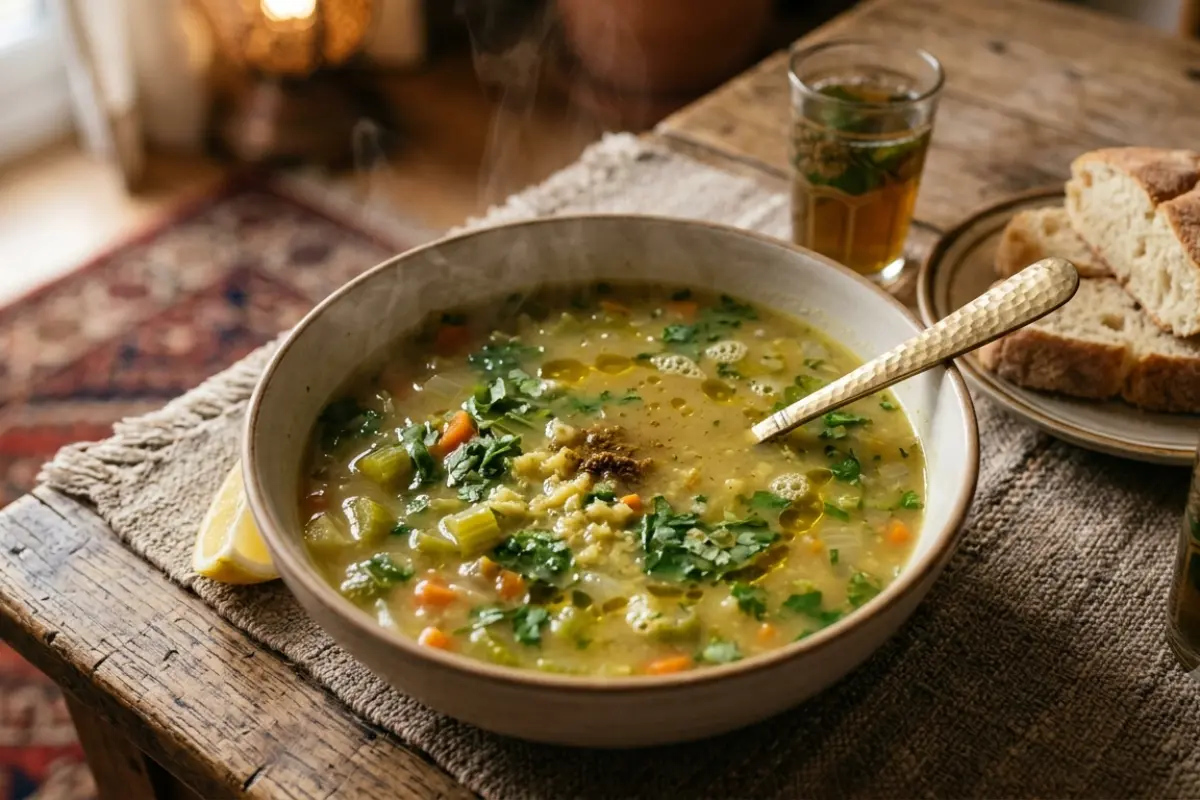
5 minLadle the hot soup into warmed bowls. Drizzle a small swirl of extra-virgin olive oil over each serving, garnish generously with freshly chopped cilantro, and optionally add a thin slice of lemon on the rim of the bowl. Serve immediately with warm Moroccan khobz bread on the side.
Tip: Warming your bowls in advance keeps the soup hot longer, which is especially important when serving guests during a traditional Moroccan meal.
Common Mistakes to Avoid
✗ Skipping the sautéing step and adding all ingredients directly to the broth
Fix: Always sauté the onion, garlic, and ginger in olive oil first. This step is fundamental to Moroccan cooking and builds the foundational flavor base of the soup that cannot be replicated by simmering alone.
✗ Using dried ginger powder instead of fresh ginger root
Fix: Fresh ginger root delivers a bright, zesty heat that is entirely different from the warm, duller note of dried ginger powder. For an authentic result, always use freshly peeled and grated ginger root.
✗ Over-blending the soup until it becomes too thin and watery
Fix: Blend the soup to your desired consistency and stop as soon as it is smooth. Over-processing breaks down the cell walls excessively and can result in a less vibrant color and a thinner texture.
✗ Adding lemon juice too early during cooking
Fix: Lemon juice should always be added at the very end of cooking, off the heat or on very low heat. Adding it too early causes the acid to dull the bright flavors and can make the soup taste slightly bitter.
Ingredient Substitutions
Instead of: Vegetable broth
Use: Chicken broth can be used for a richer, non-vegetarian version of the soup, which is also very common in Moroccan households.
Instead of: Fresh cilantro
Use: Fresh flat-leaf parsley is an excellent substitute that is equally traditional in Moroccan cuisine and provides a slightly more neutral herbal flavor.
Instead of: Fresh ginger
Use: If fresh ginger is unavailable, use one teaspoon of ground ginger as a fallback, though the flavor profile will be noticeably different and less vibrant.
Instead of: Olive oil
Use: Argan oil, another Moroccan specialty, can be used as a finishing drizzle instead of olive oil for a distinctly nutty and authentic Moroccan flavor.
Serving Suggestions
Serve in deep clay bowls with a generous drizzle of extra-virgin olive oil, a garnish of fresh cilantro, and a wedge of lemon alongside warm rounds of Moroccan khobz bread for dipping.
For a complete light Moroccan meal, pair this soup as a starter before a main course of chicken tagine with preserved lemons, followed by a small plate of Moroccan mint tea and almond pastries.
During Ramadan, this soup makes an excellent addition to the iftar spread alongside harira, as its lighter character provides a gentle contrast to richer dishes.
Top each bowl with a small dollop of plain yogurt and a pinch of smoked paprika for a creamy modern variation that still respects Moroccan flavor traditions.
Storage & Reheating
Storage
Allow the soup to cool completely to room temperature before transferring it to an airtight container. It will keep well in the refrigerator for up to 4 days. For longer storage, freeze the soup in portion-sized freezer-safe containers for up to 3 months.
Reheating
Reheat gently on the stovetop over medium-low heat, stirring occasionally, until heated through. Avoid boiling the soup during reheating as this can break down the texture and dull the fresh flavors of the celery and ginger.
If the soup thickens considerably after refrigeration, simply add a splash of water or additional broth while reheating and stir well to restore the original consistency. Always add a fresh squeeze of lemon juice and a fresh cilantro garnish after reheating to revive the brightness of the dish.
Frequently Asked Questions
Recipe by

Nora Alaoui
نورة العلوي
Soup & Stew Expert
View all recipes by Nora →
You May Also Like
Our Ebooks

The Moroccan Vegan
$12.56

Tables of Fez: A Royal Palace Legacy
$22.99

The Soul of Morocco
$20.00
YouTube
Watch step-by-step cooking videos and learn traditional Moroccan techniques.
450+
Subscribers
150+
Videos