
90
Prep (min)
45
Cook (min)
24
Servings
Hard
Level
Introduction
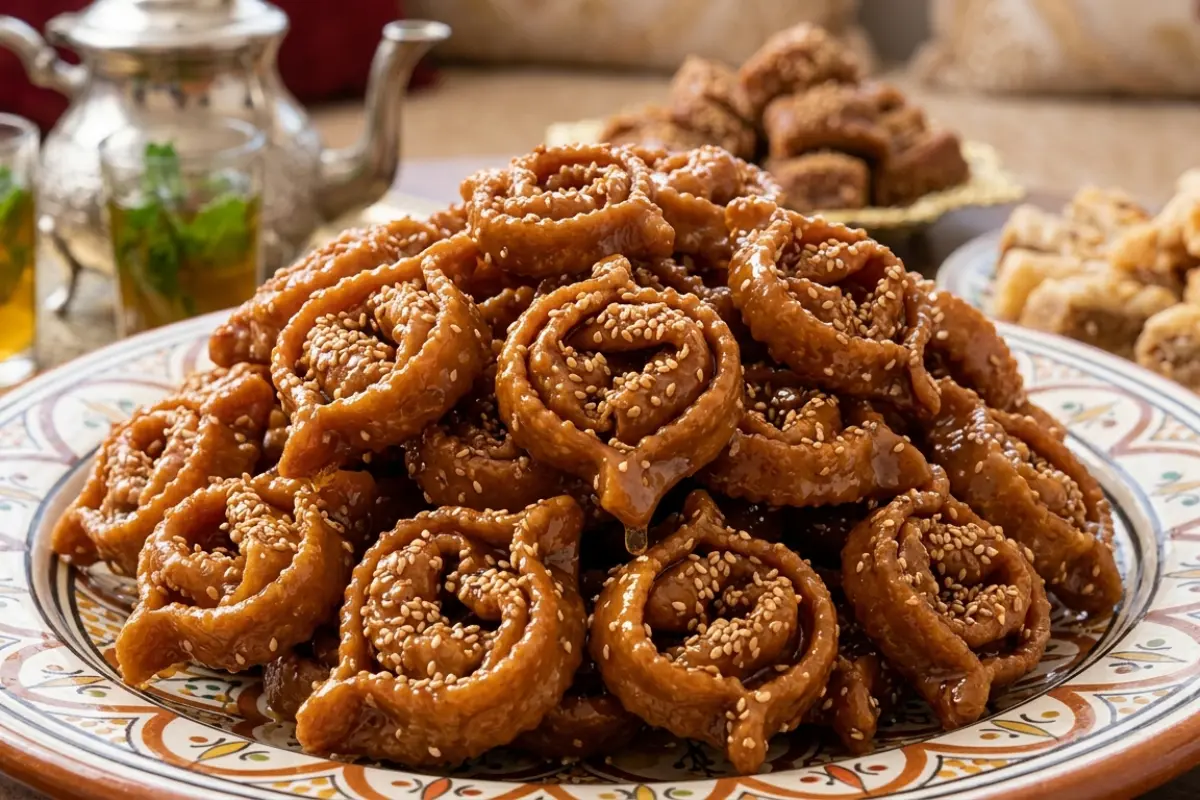
Chebakia stands as one of Morocco's most beloved and visually striking pastries, deeply woven into the fabric of Moroccan culture and tradition. These intricate flower-shaped cookies are synonymous with Ramadan, when families gather to prepare large batches for iftar meals and to share with neighbors and friends. The name 'chebakia' comes from the Arabic word 'shabaka,' meaning net or web, referring to the pastry's distinctive latticed appearance.
The art of making chebakia requires patience, skill, and practice to achieve the perfect balance of texture and flavor. Each piece is carefully hand-shaped into an elaborate knot that resembles a rose when viewed from above, creating not just a delicious treat but also an edible work of art. The dough, enriched with eggs, butter, and aromatic spices, is rolled thin and cut into strips that are then woven into the characteristic pattern.
What truly sets chebakia apart is the final step of soaking the fried pastries in warm honey syrup perfumed with orange blossom water and coated with toasted sesame seeds. This process transforms the crispy exterior into a glossy, amber-colored coating while maintaining the delicate crunch within. The result is a harmonious blend of textures and flavors that captures the essence of Moroccan pastry-making tradition.
About This Recipe
Chebakia has been a cornerstone of Moroccan confectionery for centuries, with its origins tracing back to the medieval period when Moorish influence shaped much of North African cuisine. The intricate geometric patterns reflect the Islamic artistic tradition of creating beauty through mathematical precision and repetition. Historically, these pastries were prepared exclusively during Ramadan by skilled women in the household, with recipes and techniques passed down through generations. The shaping of chebakia became a social activity, with women gathering to prepare large quantities together, sharing stories and strengthening community bonds. The pastry's association with Ramadan stems from its rich, satisfying nature - perfect for breaking the fast - and its keeping qualities, which allowed families to prepare them in advance. Over time, chebakia spread throughout the Maghreb region, with each area developing slight variations while maintaining the core technique and appearance that makes these pastries instantly recognizable as a symbol of Moroccan culinary artistry.
Nutrition / serving
Recipe Tags
Understanding the Ingredients
All-purpose flour
Forms the base of the dough. Use high-quality flour for best texture and workability when shaping the intricate chebakia pattern.
Eggs
Provides structure and richness to the dough, helping create the tender yet sturdy texture needed for frying.
Butter
Adds richness and helps create a flaky texture. Use unsalted butter at room temperature for easy mixing.
Orange blossom water
Essential for authentic Moroccan flavor. This fragrant water infuses the dough and honey syrup with delicate floral notes.
Sesame seeds
Toasted sesame seeds are sprinkled over the honey-soaked chebakia, adding nutty flavor and traditional appearance.
Honey
Pure honey creates the signature glaze. Choose a light, floral honey that won't overpower the delicate flavors.
Ground cinnamon
Adds warm spice to both the dough and honey syrup, essential for the characteristic chebakia flavor profile.
Step-by-Step Cooking Guide
Prepare the Dough
15 minMix flour, cinnamon, and salt in a large bowl. Create a well in the center and add beaten eggs, melted butter, orange blossom water, and vinegar. Gradually incorporate flour until a smooth dough forms.
Tip: The dough should be elastic but not sticky. Add flour gradually to achieve the right consistency.
Rest the Dough
30 minWrap dough in plastic wrap and let rest at room temperature for 30 minutes. This allows gluten to relax, making rolling easier.
Tip: Don't skip this step - properly rested dough is much easier to roll thin and shape.
Roll and Cut
25 minDivide dough into portions and roll each very thin. Cut into strips about 6 inches long and 1 inch wide, making 4 parallel slits in each strip, leaving ends intact.
Tip: Roll as thin as possible without tearing. Use a sharp knife or pizza cutter for clean cuts.
Shape Chebakia
20 minCarefully weave each strip through its slits to create the traditional flower pattern. Gently stretch and adjust to form the characteristic rose shape.
Tip: Work slowly and gently. Practice the shaping technique on a few pieces before making the full batch.
Prepare Honey Syrup
5 minHeat honey with cinnamon stick and orange blossom water in a wide saucepan. Keep warm but not boiling.
Tip: The syrup should be warm enough to penetrate the fried pastry but not so hot that it becomes too thick.
Fry Chebakia
30 minHeat oil to 350°F. Fry chebakia in small batches until golden brown and crispy, about 2-3 minutes per side. Remove and drain briefly.
Tip: Don't overcrowd the pan. Maintain consistent oil temperature for even browning.
Coat with Honey
15 minImmediately dip hot chebakia in warm honey syrup, coating completely. Transfer to a rack and sprinkle generously with toasted sesame seeds.
Tip: Work quickly while pastries are still warm for best syrup absorption. Let excess syrup drain off.
Common Mistakes to Avoid
✗ Rolling dough too thick
Fix: Roll dough paper-thin for proper texture and easier shaping. Thick dough results in heavy, doughy chebakia.
✗ Oil temperature too low
Fix: Maintain oil at 350°F. Low temperature causes greasy, soggy pastries that won't crisp properly.
✗ Not toasting sesame seeds
Fix: Always toast sesame seeds until golden for maximum flavor and crunch. Raw seeds lack the nutty taste.
✗ Cold honey syrup
Fix: Keep honey syrup warm throughout the coating process. Cold syrup won't penetrate or coat properly.
Ingredient Substitutions
Instead of: Orange blossom water
Use: Rose water or vanilla extract (use half the amount)
Instead of: White vinegar
Use: Lemon juice or apple cider vinegar
Instead of: Sesame seeds
Use: Chopped almonds or pistachios
Instead of: Honey
Use: Light corn syrup with honey flavoring (not traditional but workable)
Serving Suggestions
Serve with traditional Moroccan mint tea for an authentic experience
Arrange on decorative platters for Ramadan iftar gatherings
Pair with fresh dates and nuts for a traditional Moroccan dessert spread
Serve alongside other Moroccan sweets like gazelle horns or ma'amoul
Storage & Reheating
Storage
Store in airtight containers at room temperature for up to 1 week. Layer between parchment paper to prevent sticking.
Reheating
Not recommended to reheat as it affects the crispy texture and honey coating.
For best quality, consume within 2-3 days. Store in cool, dry place away from humidity to maintain crispness.
Frequently Asked Questions
Recipe by

Abdrahman Idrissi
عبد الرحمن الإدريسي
Pastry & Bread Chef
View all recipes by Abdrahman →
You May Also Like
Our Ebooks

The Moroccan Vegan
$12.56
Tables of Fez: A Royal Palace Legacy
$22.99
The Soul of Morocco
$20.00
YouTube
Watch step-by-step cooking videos and learn traditional Moroccan techniques.
450+
Subscribers
150+
Videos