
20
Prep (min)
60
Cook (min)
6
Servings
Easy
Level
Introduction
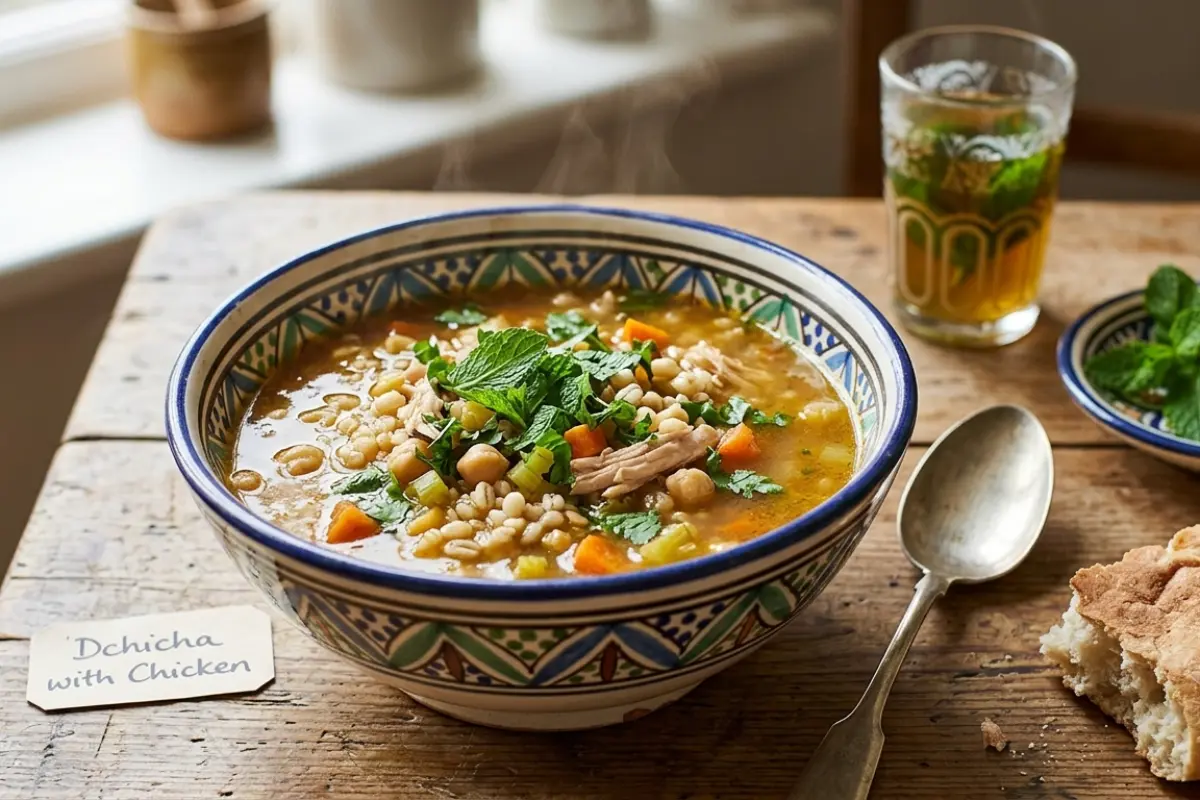
Chicken and barley soup, known in Moroccan homes as Shorba Djaj bil Chaïr, is one of the most ancient and comforting dishes in the country's culinary heritage. Barley has been cultivated in Morocco for thousands of years, forming the backbone of Amazigh (Berber) cuisine long before wheat became dominant. This soup represents the intersection of practical peasant cooking and sophisticated spice knowledge, combining humble grains with the warming aromatics that define Moroccan gastronomy.
The city of Fes, Morocco's spiritual and culinary capital, is particularly renowned for its refined approach to soups and broths. Fassi cooks have perfected the art of layering flavors slowly, allowing barley to release its natural starch into the broth to create a silky, slightly thick consistency that sets Moroccan soups apart from their Mediterranean counterparts. The addition of fresh mint at the end is a signature flourish that reflects the Moroccan love of fresh herbs as a finishing element rather than a background note.
This soup holds a special place in the Ramadan tradition across Morocco, where families break their fast with a warming bowl of chorba before moving on to heavier dishes. Its balance of complex carbohydrates from barley and lean protein from chicken makes it an ideal iftar opener, replenishing energy gently after long hours of fasting. Beyond Ramadan, it is a go-to remedy during cold winter months, valued by Moroccan grandmothers as much for its perceived healing properties as for its extraordinary flavor.
About This Recipe
Barley soup has been nourishing Moroccan families since antiquity, with barley itself being one of the first grains cultivated by the ancient Amazigh peoples of North Africa. Archaeological evidence suggests barley cultivation in Morocco dates back over 7,000 years, making it far older than wheat in the region. The Amazigh communities of the Atlas Mountains and the Rif have long relied on barley as a dietary staple, using it in everything from soups and porridges to the fermented barley drink known as ahangour. When Arab culinary traditions arrived in the 7th and 8th centuries, they brought with them sophisticated spice trade routes that introduced cumin, coriander, ginger, and cinnamon to the existing Amazigh pantry, creating the fusion of flavors that characterizes modern Moroccan cuisine. The city of Fes became the intellectual and gastronomic heart of this synthesis, and it is there that chicken and barley soup was refined from simple peasant sustenance into an art form. The addition of mint as a finishing herb reflects both Amazigh traditions of fresh herb use and the Andalusian influence that arrived with the Moors expelled from Spain in the 15th century, who brought with them a refined aesthetic of balancing rich, warming spices with bright, cooling herbs. Today this soup remains deeply embedded in Moroccan food culture, particularly during Ramadan, where its combination of complex carbohydrates, protein, and hydrating broth makes it the ideal meal to gently reawaken the body after a day of fasting.
Nutrition / serving
Recipe Tags
Understanding the Ingredients
Bone-in chicken pieces
Using bone-in chicken thighs or a quartered whole chicken is essential for a deeply flavored broth. The bones release collagen during slow simmering, giving the soup its characteristic body and richness. Boneless chicken can be used but will produce a noticeably lighter broth.
Pearl barley
Pearl barley has been polished to remove its outer hull, making it quicker to cook than whole grain barley while still releasing plenty of starch to thicken the soup naturally. It has a pleasant, slightly chewy texture that holds up well during long simmering without becoming mushy.
Fresh mint
Spearmint is the preferred variety in Moroccan cooking. Fresh mint is added at the very end of cooking to preserve its volatile oils and bright green color. It lifts the entire dish with its cooling fragrance, creating a beautiful contrast against the warm spices in the broth.
Ras el hanout
This complex Moroccan spice blend typically contains over a dozen spices including cinnamon, cumin, coriander, ginger, turmeric, and black pepper. It is the soul of this soup, providing warmth and depth without any single spice dominating. Quality ras el hanout from a Moroccan spice merchant is vastly superior to commercial blends.
Preserved lemon
A Moroccan pantry staple, preserved lemon adds a unique salty, intensely citrusy note that fresh lemon cannot replicate. Only the rind is used after rinsing. It mellows beautifully in the broth and gives the soup its characteristic Moroccan identity.
Tomatoes
Fresh ripe tomatoes add natural acidity and a subtle sweetness that balances the earthiness of the barley and the richness of the chicken. In winter, good quality canned whole tomatoes can be substituted without compromising the final result significantly.
Yellow onion
Onion is the aromatic base of the soup. It is cooked low and slow at the start to become completely soft and almost melted into the broth, contributing natural sweetness and depth without leaving any sharp or raw onion flavor.
Fresh cilantro
Used both during cooking and as a garnish, fresh cilantro is an indispensable herb in Moroccan soups. It pairs beautifully with mint to create the characteristic fresh herb finish. Flat-leaf parsley can be added alongside cilantro for a more complex herbal note.
Step-by-Step Cooking Guide
Prepare and Season the Chicken
10 minRinse the chicken pieces under cold water and pat them completely dry with paper towels. Season generously on all sides with salt, black pepper, half the ras el hanout, and ground ginger. Allow the chicken to rest with the spices at room temperature for at least 10 minutes so the flavors begin to penetrate the meat before cooking.
Tip: Drying the chicken thoroughly before seasoning ensures better browning and prevents steaming. Do not skip the resting period as it makes a noticeable difference to the final flavor depth.
Sauté the Aromatics
12 minIn a large heavy-bottomed pot or Dutch oven, heat the olive oil over medium heat. Add the diced onion and cook, stirring occasionally, for 8 to 10 minutes until it is completely softened and lightly golden. Add the minced garlic and cook for another minute until fragrant. Stir in the remaining ras el hanout, turmeric, and cumin, toasting the spices in the oil for 30 seconds.
Tip: Low and slow is the key for the onion base. Rushing this step by cooking on high heat will leave raw onion flavor in the soup. The spices should smell fragrant and toasted before adding any liquid.
Brown the Chicken and Add Tomatoes
12 minAdd the seasoned chicken pieces to the pot and cook for 3 to 4 minutes per side to develop a light golden color. Add the chopped fresh tomatoes and stir everything together, scraping up any bits from the bottom of the pot. Cook the tomatoes down for 5 minutes until they begin to break apart and their juices are released.
Tip: Browning the chicken adds a layer of roasted flavor to the broth that cannot be achieved by simply boiling. Do not crowd the pot; brown in batches if necessary for best results.
Add Barley, Preserved Lemon, and Simmer
50 minRinse the pearl barley under cold water until the water runs clear, then add it to the pot. Rinse the preserved lemon quarter, remove any seeds, and finely chop the rind, discarding the pulp. Add the preserved lemon to the pot. Pour in the chicken stock or water, ensuring everything is submerged by at least 3 to 4 centimeters of liquid. Bring to a boil, then reduce the heat to low, cover partially, and simmer gently for 45 minutes.
Tip: Rinsing the barley removes excess starch that can make the soup gluey. Partial covering allows steam to escape and the soup to concentrate in flavor while preventing it from reducing too drastically.
Shred the Chicken and Finish with Fresh Herbs
10 minAfter 45 minutes, remove the chicken pieces from the pot using tongs or a slotted spoon. Allow them to cool briefly, then remove and discard the skin and bones. Shred the meat into generous bite-sized pieces and return it to the pot. Check the soup consistency; if it is too thick, add a little hot water. Taste and adjust seasoning with salt and pepper. Turn off the heat and stir in the chopped fresh mint and fresh cilantro. Let the soup rest for 3 minutes before serving.
Tip: Adding the fresh herbs off the heat preserves their color and fragrance. Wilting them by boiling destroys the bright, cooling character that makes this soup distinctive. Serve immediately while the herbs are still vibrant.
Common Mistakes to Avoid
✗ Adding mint too early during cooking
Fix: Always add fresh mint at the very end, after removing the pot from the heat. Boiling mint destroys its essential oils, turning it dull and bitter and eliminating the signature fresh flavor that defines this soup.
✗ Using boneless skinless chicken breast exclusively
Fix: While chicken breast can be used, relying solely on it produces a lean, watery broth. Use bone-in thighs, drumsticks, or a combination for a richly flavored, collagen-rich soup. You can always remove the skin after cooking if desired.
✗ Not rinsing the pearl barley before adding it
Fix: Unrinsed barley releases excess surface starch that makes the soup overly thick and gluey in texture. Always rinse barley under cold running water until the water is clear before adding it to the pot.
✗ Cooking on high heat throughout
Fix: A vigorous boil makes the chicken tough and creates a cloudy, less refined broth. After the initial boil, reduce to a gentle simmer where only a few bubbles break the surface. Patience at this stage is what separates a great soup from an average one.
Ingredient Substitutions
Instead of: Pearl barley
Use: Farro or whole wheat berries can be used for a more rustic, nuttier flavor, though they require a slightly longer cooking time. Brown rice works in a pinch but changes the texture significantly.
Instead of: Preserved lemon
Use: A combination of fresh lemon zest and a pinch of sea salt can approximate the flavor, though it lacks the fermented depth of preserved lemon. Making your own preserved lemons takes just 3 weeks and is highly recommended.
Instead of: Ras el hanout
Use: A blend of equal parts ground cumin, coriander, and cinnamon with a pinch of turmeric and black pepper makes a reasonable stand-in. Adding a tiny pinch of ground cardamom and cloves brings it closer to the original complexity.
Instead of: Fresh mint
Use: Dried mint can be used in a smaller quantity (about one third of the fresh amount) added during the last 5 minutes of cooking. The flavor will be earthier and less bright, but still distinctly Moroccan.
Serving Suggestions
Ladle the soup into deep bowls and garnish with a few extra fresh mint leaves and a drizzle of good quality olive oil. Serve with crusty Moroccan khobz bread or sesame-studded semolina bread for dipping into the rich broth.
For a complete Moroccan meal, serve this soup as a first course followed by a light Zaalouk salad and grilled kefta. During Ramadan, pair it with chebakia pastries and harira dates for a traditional iftar spread.
A squeeze of fresh lemon over each bowl just before serving adds a bright acidity that enhances all the flavors. A small side of harissa paste on the table allows guests to customize the heat level according to their preference.
Storage & Reheating
Storage
Allow the soup to cool completely to room temperature, then transfer to an airtight container and refrigerate for up to 4 days. The barley will continue to absorb liquid as it sits, so the soup will thicken considerably overnight.
Reheating
Reheat gently over medium-low heat on the stovetop, adding a splash of water or chicken stock to reach the desired consistency. Stir frequently to prevent the barley from sticking to the bottom. Avoid reheating in the microwave as it can make the chicken rubbery.
For best results when storing, add the fresh mint only to portions that will be served immediately. Store the rest of the soup without mint and add freshly chopped mint when reheating and serving. The soup freezes well for up to 3 months; freeze before adding fresh herbs.
Frequently Asked Questions
Recipe by

Nora Alaoui
نورة العلوي
Soup & Stew Expert
View all recipes by Nora →
You May Also Like
Our Ebooks

The Moroccan Vegan
$12.56

Tables of Fez: A Royal Palace Legacy
$22.99

The Soul of Morocco
$20.00
YouTube
Watch step-by-step cooking videos and learn traditional Moroccan techniques.
450+
Subscribers
150+
Videos