
20
Prep (min)
75
Cook (min)
4
Servings
Medium
Level
Introduction
The tagine is perhaps the most iconic vessel and dish in all of Moroccan cuisine, a testament to centuries of refined culinary tradition that blends Berber, Arab, Andalusian, and Mediterranean influences. The word tagine refers both to the cone-shaped earthenware pot and the slow-cooked stew prepared within it. The unique conical lid of the tagine pot was ingeniously designed to circulate steam back down into the dish, keeping meats extraordinarily moist and concentrating flavors without requiring large amounts of liquid. This cooking technique has been practiced in the Maghreb region for well over a thousand years, with roots traceable to the Berber people who originally inhabited the Atlas Mountains and plains of what is now Morocco.
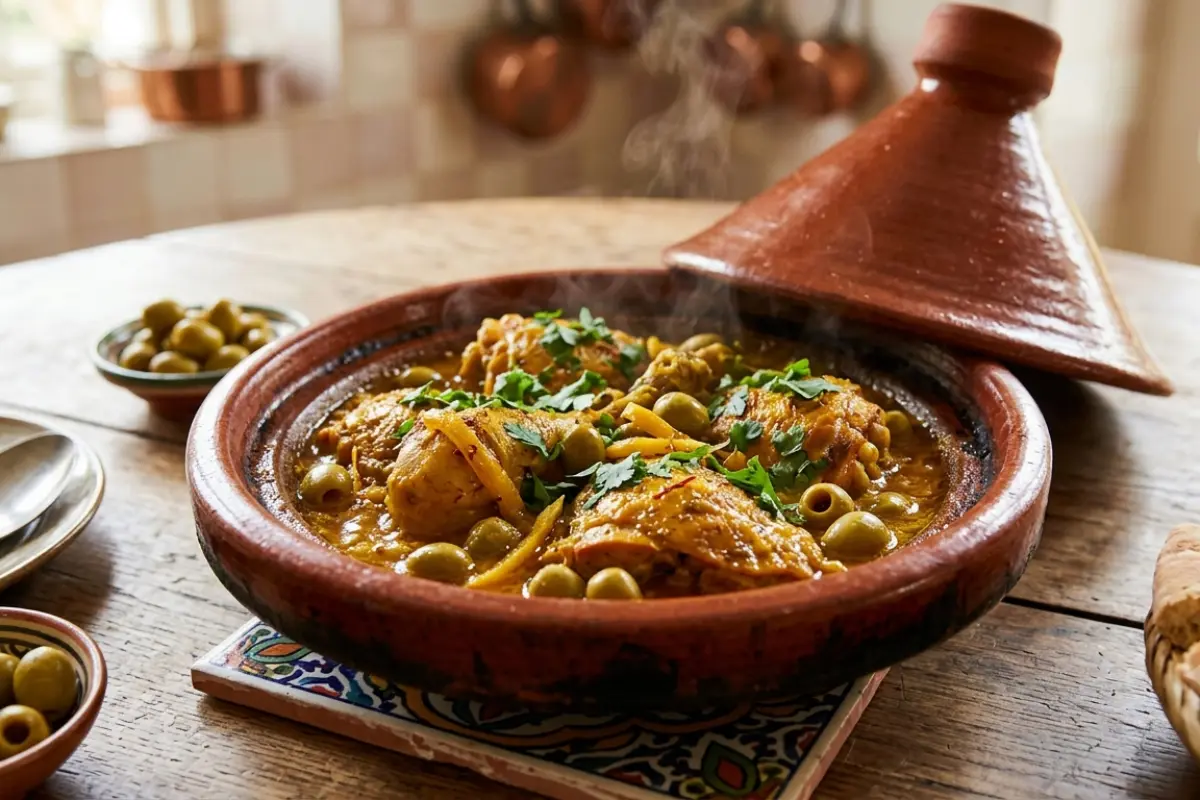
Chicken Tagine with Cumin and Olives holds a particularly cherished place in Moroccan culinary heritage, especially in cities like Marrakech and Fes where olive cultivation has flourished since antiquity. The combination of golden-hued chicken, earthy cumin, saffron threads, and the assertive saltiness of cured green olives creates a flavor profile that is both bold and harmonious. Preserved lemon, a cornerstone of Moroccan cooking, contributes a distinctive floral bitterness that lifts the richness of the dish and ties all the aromatic elements together. This recipe has been passed down through generations of Moroccan families, with each household adding its own subtle variations in spice ratios and olive varieties.
In traditional Moroccan households, tagines are prepared on a charcoal brazier called a kanoun, which delivers gentle, even heat perfectly suited to slow cooking. Modern cooks often prepare tagines on stovetops or in ovens, but the fundamental method remains unchanged: patience, layering of aromatics, and respect for quality ingredients. Sharing a tagine from a communal pot, scooping the stew with freshly baked khobz bread, is a deeply social ritual in Morocco, symbolizing hospitality, family unity, and generosity. This Chicken Tagine with Cumin and Olives is more than a meal — it is an edible expression of Moroccan culture and warmth.
About This Recipe
The tagine as a cooking vessel and culinary tradition is deeply rooted in the ancient Berber culture of North Africa, predating the Arab arrival in the Maghreb in the seventh century. Archaeological evidence suggests that slow-cooked stews prepared in covered earthenware vessels were a cornerstone of Berber cuisine thousands of years ago. The distinctive conical lid of the tagine is believed to have been perfected by Berber craftsmen who understood that its shape would efficiently condense steam and return moisture to the food, an ingenious adaptation to the arid climate of North Africa where water was precious. Chicken Tagine with Cumin and Olives became a signature preparation in the imperial cities of Marrakech and Fes, where the olive groves of the surrounding countryside have produced some of the finest olives in the Mediterranean world for over two millennia. The combination of cumin, saffron, and preserved lemon in Moroccan cooking reflects the complex historical trade routes that connected Morocco to sub-Saharan Africa, the Middle East, Persia, and Andalusian Spain, with each culture contributing aromatic ingredients that were absorbed and perfected within the Moroccan culinary tradition. This particular tagine recipe was traditionally prepared by Moroccan women for Friday family gatherings following the jumu'ah prayer, a sacred weekly ritual of cooking, sharing, and community that remains alive in Moroccan households to this day.
Nutrition / serving
Recipe Tags
Understanding the Ingredients
Whole Chicken (cut into pieces)
Using a whole chicken cut into bone-in pieces is traditional and essential for maximum flavor. The bones release gelatin during slow cooking, enriching the sauce with body and depth. Thighs and drumsticks are especially prized for their succulence in tagines.
Cumin
Ground cumin is one of the most fundamental spices in Moroccan cooking. Its warm, earthy, and slightly smoky flavor forms the backbone of this tagine's spice profile. Freshly ground cumin seeds provide a noticeably more vibrant aroma than pre-ground, and is highly recommended.
Green Olives
Moroccan green olives, preferably cracked and marinated, bring a briny, meaty character to the dish. They are added towards the end of cooking to preserve their firm texture and prevent them from becoming too soft or overwhelmingly salty. Avoid canned olives if possible — fresh-cured Moroccan olives from a deli are ideal.
Preserved Lemon
Preserved lemon is a uniquely Moroccan ingredient made by curing lemons in salt and their own juice for weeks. Only the rind is used in cooking; the pulp is discarded. It delivers a complex, mellow, floral-sour flavor completely different from fresh lemon juice and is irreplaceable in authentic Moroccan tagines.
Saffron
Saffron threads steeped in warm water give this tagine its characteristic golden color and a subtle honeyed, floral flavor. Moroccan saffron, particularly from the Taliouine region in the Anti-Atlas mountains, is among the finest in the world and worth seeking out for the best results.
Onions
Grated or finely diced onions form the aromatic base of the tagine. Grating the onion allows it to dissolve into the sauce during cooking, creating a naturally thick, silky braising liquid without any additional thickeners.
Garlic
Garlic cloves, minced or crushed, add a pungent depth to the marinade and sauce. In Moroccan tagines, garlic is used generously and its sharpness mellows beautifully over the long, slow cooking process.
Fresh Cilantro and Flat-Leaf Parsley
A generous bunch of each herb tied together or chopped and added to the tagine is a hallmark of this dish. Cilantro and parsley provide freshness and a verdant brightness that balances the richness of the chicken and the intensity of the spices.
Olive Oil
Extra virgin olive oil is the cooking fat of choice throughout Morocco and is critical to the authentic flavor of this tagine. It carries the spices and aromatics, forms the base of the braising liquid, and contributes its own fruity, peppery character to the finished sauce.
Turmeric
Ground turmeric works alongside saffron to deepen the golden color of the tagine and adds a mild, slightly bitter earthiness. It is also a key component of the chermoula-style marinade used to season the chicken before cooking.
Step-by-Step Cooking Guide
Marinate the Chicken
10 minIn a large bowl, combine the chicken pieces with minced garlic, ground cumin, turmeric, a generous pinch of saffron steeped in 2 tablespoons of warm water, half the chopped cilantro and parsley, olive oil, salt, and black pepper. Toss everything together thoroughly, ensuring each piece of chicken is well coated in the spiced marinade. Cover with plastic wrap and refrigerate for at least 30 minutes, or ideally overnight for the most deeply flavored result. Bring the chicken back to room temperature before cooking.
Tip: Marinating overnight makes a significant difference in flavor depth. If using a clay tagine pot, soak it in cold water for at least one hour before use to prevent cracking on the heat.
Sauté the Aromatics
12 minHeat 3 tablespoons of olive oil in the base of your tagine pot or a heavy-bottomed Dutch oven over medium heat. Add the grated onions and cook, stirring occasionally, for 8 to 10 minutes until they are soft, translucent, and beginning to turn golden. The onions should almost melt into the oil, forming the foundation of your braising sauce. Add any remaining garlic and cook for an additional minute until fragrant.
Tip: Do not rush the onion cooking stage. Properly softened and slightly caramelized onions create a naturally sweet and savory base that defines the character of the entire dish.
Brown the Chicken
10 minIncrease the heat to medium-high and add the marinated chicken pieces to the pot skin-side down. Sear the chicken for 3 to 4 minutes per side until golden brown. This step is important for developing deeper, more complex flavor through the Maillard reaction. Work in batches if necessary to avoid overcrowding the pot, which would cause the chicken to steam rather than brown.
Tip: Browning the chicken is a step sometimes skipped in traditional preparations but adds wonderful complexity. If using a traditional clay tagine directly on the stovetop, use a heat diffuser to prevent cracking.
Build the Braising Liquid
5 minOnce the chicken is browned, arrange all the pieces snugly in the pot. Pour the remaining saffron water over the chicken, then add half a cup of warm water or light chicken broth. Scatter the remaining chopped cilantro and parsley over the top. Reduce the heat to low, place the conical lid on the tagine (or cover the Dutch oven with its lid slightly ajar), and allow the dish to come to a gentle simmer.
Tip: Resist the urge to add too much liquid. The chicken and onions will release significant moisture during cooking. A tagine should braise in its own juices, not boil in a soup.
Slow Cook the Tagine
55 minMaintain a gentle, steady simmer over low heat and cook the tagine for 45 to 55 minutes, turning the chicken pieces once halfway through. The chicken is done when the meat is completely tender and beginning to pull away from the bone. Check occasionally to ensure the liquid has not fully evaporated; add a splash of water if the bottom of the pot looks dry. The sauce should reduce to a rich, concentrated consistency.
Tip: Low and slow is the mantra for a perfect tagine. High heat will toughen the chicken and cause the sauce to reduce too quickly before the flavors have time to meld and develop properly.
Add Olives and Preserved Lemon
15 minIn the final 15 minutes of cooking, add the green olives to the tagine, nestling them around the chicken pieces. Cut the preserved lemon into quarters, discard the pulp, and slice the rind into thin strips. Scatter the preserved lemon strips over and around the chicken. Replace the lid and continue cooking for the remaining 15 minutes. Taste the sauce and adjust seasoning with salt if needed, keeping in mind that both the olives and preserved lemon are already quite salty.
Tip: Adding the olives and preserved lemon at the end preserves their distinct textures and prevents the preserved lemon from becoming too dominant or bitter. Rinse the preserved lemon under cold water if you prefer a milder flavor.
Rest and Serve
5 minRemove the tagine from the heat and allow it to rest uncovered for 5 minutes before bringing it to the table. Garnish with a few fresh sprigs of cilantro and a light drizzle of high-quality extra virgin olive oil. Serve the tagine directly in its pot as a centerpiece, accompanied by warm khobz bread for scooping, or alongside a mound of fluffy couscous. Arrange lemon wedges on the side for those who enjoy an extra touch of brightness.
Tip: Serving the tagine in its cooking vessel is not just aesthetically beautiful — the residual heat of the clay or cast iron keeps the dish warm throughout the meal, which is especially appreciated at long, leisurely Moroccan family dinners.
Common Mistakes to Avoid
✗ Adding too much water to the tagine
Fix: Start with only half a cup of liquid. The chicken and vegetables release substantial moisture as they cook. Adding too much water at the start dilutes the flavor of the sauce and prevents it from reaching the ideal concentrated, glossy consistency.
✗ Cooking the tagine over high heat
Fix: Always use low to medium-low heat for tagine cooking. High heat dries out the sauce too quickly, toughens the chicken meat, and can crack a clay tagine pot. Use a heat diffuser if your burner struggles to maintain a gentle simmer.
✗ Skipping the marinade
Fix: The spiced marinade is not optional — it is what flavors the chicken from within. At minimum, marinate the chicken for 30 minutes at room temperature, though overnight refrigeration yields significantly superior results.
✗ Adding preserved lemon too early
Fix: If preserved lemon is added at the beginning, its intense flavor overwhelms the entire dish and the rind becomes unpleasantly soft. Always add it in the last 15 minutes of cooking to maintain its distinct floral sharpness and a slightly firm texture.
Ingredient Substitutions
Instead of: Preserved Lemon
Use: If preserved lemon is unavailable, use a combination of 1 teaspoon fresh lemon zest and 1 teaspoon fresh lemon juice. The flavor will be noticeably different and less complex, but it will approximate some of the brightness. Alternatively, you can make a quick preserved lemon by salting lemon wedges heavily and leaving them for 24 hours.
Instead of: Saffron
Use: A small pinch of sweet paprika combined with a tiny pinch of turmeric can approximate the color that saffron provides, though the distinctive floral flavor of saffron cannot be truly replicated. If you have access to saffron, it is always worth using.
Instead of: Whole Chicken
Use: Bone-in, skin-on chicken thighs are the best substitute and are actually preferred by many modern cooks for their convenience. They offer the same succulence as a whole chicken with less preparation time and cook more evenly.
Instead of: Green Olives
Use: Kalamata olives or other cured black olives can be used for a different but equally delicious flavor profile. Avoid plain canned black olives as they lack the complexity and firm texture needed for this dish.
Instead of: Fresh Cilantro
Use: If cilantro is disliked or unavailable, increase the amount of flat-leaf parsley accordingly. Additional fresh mint leaves can also be incorporated for a bright, aromatic alternative that is equally Moroccan in character.
Serving Suggestions
Serve the tagine directly in its earthenware pot at the center of the table, surrounded by warm, freshly baked Moroccan khobz bread torn into pieces for scooping up the rich, aromatic sauce.
Pair with a simple Moroccan side salad of diced tomatoes, cucumbers, and fresh parsley dressed with olive oil, cumin, and lemon juice to add freshness and contrast to the richness of the tagine.
A side of plain couscous steamed with butter and a pinch of salt makes an excellent base for soaking up the tagine's flavorful broth and turns this dish into a complete, satisfying meal.
Serve with a glass of chilled Moroccan mint tea or a sparkling citrus beverage to cleanse the palate between bites and complement the warm spices of the dish.
For a traditional Moroccan meal presentation, begin with a spread of cold salads such as zaalouk (roasted eggplant) and taktouka (tomato and pepper salad) before bringing the tagine as the star main course.
Storage & Reheating
Storage
Allow the tagine to cool completely to room temperature before transferring any leftovers to an airtight container. Store in the refrigerator for up to 3 days. The flavors of this dish actually improve overnight as the spices continue to meld, making next-day leftovers particularly delicious. For longer storage, freeze in airtight freezer-safe containers for up to 2 months.
Reheating
Reheat gently on the stovetop over low to medium-low heat with a splash of water or chicken broth added to prevent the sauce from sticking or drying out. Stir occasionally and heat until the chicken is warmed through, approximately 10 to 15 minutes. Alternatively, reheat covered in a 325°F (160°C) oven for 20 minutes. Avoid microwaving if possible, as it can make the chicken rubbery.
If reheating from frozen, thaw overnight in the refrigerator before reheating on the stovetop. Add fresh herbs just before serving reheated tagine to restore freshness. Taste and adjust seasoning after reheating, as the salt balance can shift slightly after refrigeration.
Frequently Asked Questions
Recipe by

Fatima El Amrani
فاطمة العمراني
Master Chef
View all recipes by Fatima →
You May Also Like
Our Ebooks

The Moroccan Vegan
$12.56

Tables of Fez: A Royal Palace Legacy
$22.99

The Soul of Morocco
$20.00
YouTube
Watch step-by-step cooking videos and learn traditional Moroccan techniques.
450+
Subscribers
150+
Videos