
25
Prep (min)
75
Cook (min)
4
Servings
Medium
Level
Introduction
Chicken Tagine with Raisins and Spices is one of the most beloved expressions of Moroccan culinary tradition, rooted in the ancient spice trade routes that passed through the imperial cities of Marrakech and Fez. The dish reflects the Moorish influence on Moroccan cuisine, where dried fruits were considered a luxury ingredient used to elevate savory meat dishes into something transcendent. For centuries, cooks in the medinas of Morocco have perfected this delicate balance of sweetness and warmth, turning humble ingredients into a celebratory meal worthy of royal banquets.
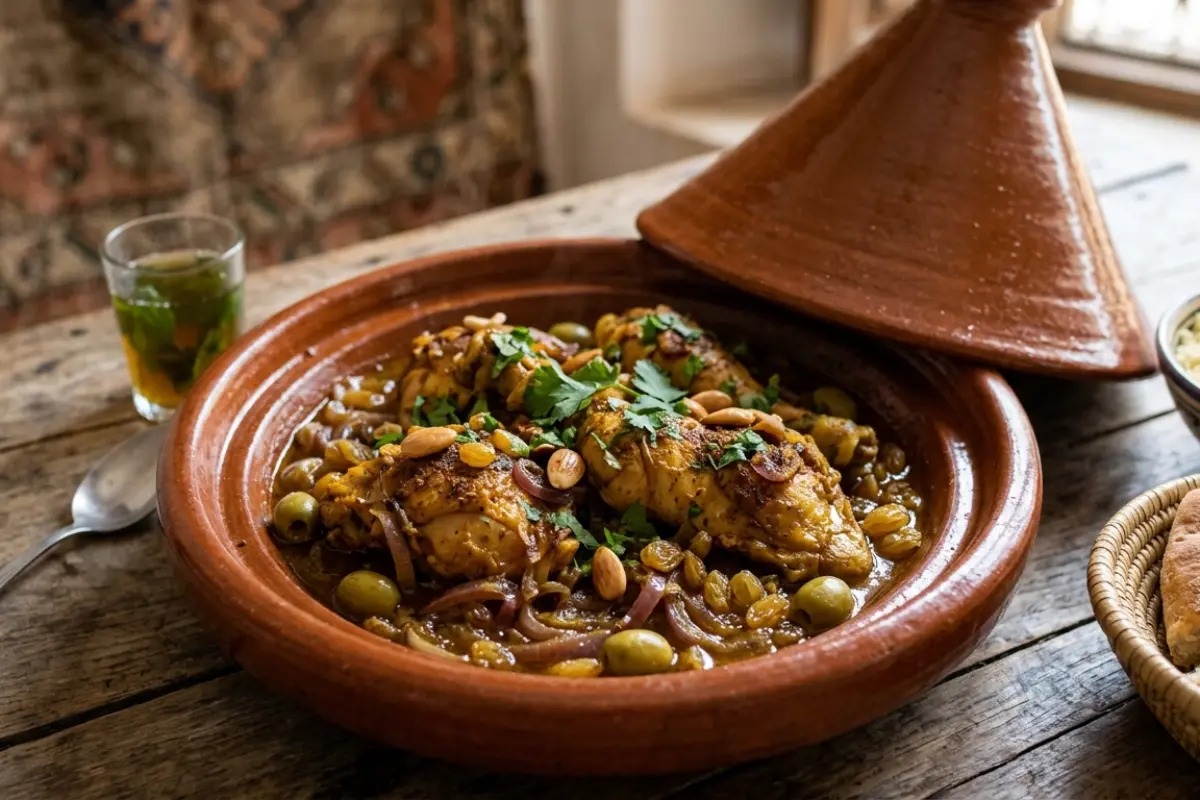
The tagine vessel itself — a conical clay pot with a tight-fitting lid — is central to the identity of this dish. As the chicken slow-cooks, steam rises and condenses on the inside of the cone, dripping back down to continuously baste the meat, keeping it extraordinarily moist and infused with the spiced cooking liquid. This ancient technique requires no modern equipment and has been passed down through generations of Moroccan home cooks, particularly in the households of Marrakech where sweet-savory combinations are most celebrated.
What makes this particular tagine so special is the interplay between the plump golden raisins and the earthy, warming spice blend. The raisins dissolve slightly into the sauce, creating a natural sweetness that complements the savory depth of cumin, cinnamon, and ginger. Modern interpretations sometimes add honey or preserved lemon for additional complexity, but the authentic version relies entirely on the quality of its spices and the patience of slow cooking to deliver its remarkable depth of flavor.
About This Recipe
The tradition of cooking meat with dried fruits and aromatic spices in Morocco stretches back over a thousand years, rooted in the cultural crossroads that made the country a meeting point of Berber, Arab, Andalusian, and Sub-Saharan African culinary traditions. When Arab traders and the subsequent Islamic dynasties arrived in North Africa from the 7th century onward, they brought with them the Persian tradition of sweet-savory combinations in meat cookery — a practice that found particularly fertile ground in the rich agricultural regions of Morocco. The tagine as a cooking vessel is believed to have Berber origins, predating even the Arab influence, serving as an ingenious solution to slow-cook food over embers without losing precious moisture in an arid climate. Marrakech, founded in 1062 by the Almoravid dynasty, became a center of culinary refinement where the imperial kitchens developed elaborate recipes combining expensive imported spices from the East with local ingredients including the sweet raisins cultivated in the fertile valleys of the Atlas Mountains and the Draa River region. The combination of chicken, raisins, and spices became particularly associated with celebration cooking — prepared for weddings, religious feasts such as Eid al-Adha, and the welcoming of important guests. The recipe was traditionally guarded within families, passed orally from mother to daughter over generations, with each family maintaining subtle variations in their spice blend proportions. Today, this dish remains a cornerstone of Moroccan restaurant menus worldwide and continues to be the most requested tagine in the home kitchens of Marrakech, where it is prepared with the same patient, unhurried reverence it has always commanded.
Nutrition / serving
Recipe Tags
Understanding the Ingredients
Whole Chicken (cut into pieces)
Using a whole chicken cut into 8 pieces ensures variety in texture and flavor. Bone-in pieces are essential for this recipe as they release gelatin and marrow into the braising liquid, enriching the sauce with body and depth. Skin-on pieces can be used for added richness, or removed for a lighter result.
Golden Raisins
Golden raisins, also called sultanas, are preferred in Moroccan tagines over dark raisins because of their milder sweetness and softer texture when cooked. They absorb the spiced braising liquid and plump beautifully, contributing bursts of fruity sweetness to each bite. Soaking them briefly in warm water before adding them to the tagine helps them rehydrate and prevents them from drawing moisture from the sauce.
Yellow Onions
Onions form the aromatic foundation of this tagine. When slowly cooked down, they become sweet, jammy, and almost melted into the sauce. Yellow onions are preferred for their natural sweetness compared to white onions. Grating or finely slicing them ensures they break down completely, creating a silky sauce base rather than visible onion pieces.
Ras el Hanout
Ras el Hanout is the crown jewel of Moroccan spice blends, translating to 'top of the shop' in Arabic. It can contain anywhere from 10 to 30 spices including cardamom, rose petals, mace, allspice, and dried ginger. This single spice blend contributes enormous complexity and is essential for authentic Moroccan flavor. Always use freshly purchased ras el hanout for the best aromatic impact.
Ground Cinnamon
Cinnamon is a cornerstone of Moroccan sweet-savory cooking. It adds a warm, woody sweetness that bridges the gap between the savory chicken and the sweet raisins. Moroccan cuisine uses cinnamon more generously than most Western cuisines, and its presence should be detectable but not overpowering. Ceylon cinnamon is preferred for its more delicate and complex flavor profile.
Fresh Ginger
Fresh ginger root adds a bright, peppery heat that lifts the heavier, earthier spices in the blend. It provides a subtle sharpness that prevents the dish from feeling too heavy or sweet. Freshly grated ginger is far superior to ground ginger in this application, releasing more volatile oils and a more vibrant flavor into the cooking liquid.
Saffron Threads
Saffron is the world's most precious spice and a hallmark of fine Moroccan cooking. A small pinch bloomed in warm water lends the tagine its characteristic golden hue and a subtle floral, honey-like fragrance that cannot be replicated by any other ingredient. Moroccan saffron from the Taliouine region is considered among the finest in the world.
Extra Virgin Olive Oil
Moroccan olive oil is some of the finest in the world, and extra virgin olive oil is the traditional fat used in tagines. It provides richness, carries fat-soluble spice compounds, and contributes its own fruity, slightly peppery flavor to the dish. Butter is sometimes used in combination with olive oil for added richness in more celebratory versions of this dish.
Fresh Cilantro and Flat-Leaf Parsley
This classic Moroccan herb duo is used both during cooking and as a fresh garnish. Added in a bundle during braising, these herbs infuse the sauce with a green, herbaceous note that balances the richness of the spices. Used as a garnish, they add color, freshness, and a brightness that cuts through the richness of the finished dish.
Toasted Almonds
Toasted blanched almonds are a traditional garnish for sweet-savory Moroccan tagines. They add a crucial textural contrast to the tender chicken and soft raisins, providing a satisfying crunch. Toasting them in a dry pan or with a little butter enhances their nutty flavor significantly and is a step that should never be skipped.
Step-by-Step Cooking Guide
Marinate the Chicken
15 minIn a large bowl, combine the chicken pieces with ras el hanout, ground cinnamon, freshly grated ginger, half the olive oil, salt, and black pepper. Massage the marinade thoroughly into the chicken, ensuring every piece is well coated. Cover and refrigerate for at least 1 hour, or overnight for the deepest flavor. Meanwhile, bloom the saffron threads in 3 tablespoons of warm water and set aside.
Tip: Overnight marination dramatically improves the depth of flavor. If short on time, even 30 minutes at room temperature will make a noticeable difference.
Sauté the Onions
20 minHeat the remaining olive oil in the base of a tagine pot or a heavy-bottomed Dutch oven over medium heat. Add the grated or finely sliced onions and cook slowly, stirring occasionally, for 15 to 20 minutes until they are completely softened, golden, and beginning to caramelize. This step is critical — properly cooked onions form the sweet, silky base of the sauce.
Tip: Do not rush the onion cooking stage. High heat will cause them to brown unevenly and turn bitter rather than sweet and jammy.
Brown the Chicken
12 minIncrease the heat to medium-high and add the marinated chicken pieces to the pot skin-side down. Brown the chicken for 4 to 5 minutes per side until a golden crust forms. This Maillard reaction creates hundreds of complex flavor compounds that enrich the final sauce. Work in batches if necessary to avoid overcrowding the pan, which would cause steaming rather than browning.
Tip: Pat the chicken pieces dry before adding to the pan for better browning. Any fond (browned bits) stuck to the bottom of the pan is pure flavor — it will deglaze and incorporate into the sauce.
Build the Braising Liquid
5 minReduce the heat to medium-low. Pour the bloomed saffron water over the chicken. Add enough warm water or chicken stock to come halfway up the chicken pieces, approximately 1 to 1.5 cups. Add the bundle of fresh cilantro and parsley tied together with kitchen twine. Stir gently to combine, scraping up any browned bits from the bottom of the pot.
Tip: Using chicken stock instead of water adds another layer of depth. If using a clay tagine, ensure it has been properly seasoned and use a heat diffuser to prevent cracking.
Slow Cook the Tagine
40 minCover the tagine or pot tightly with its lid and reduce heat to low. Simmer gently for 35 to 40 minutes, turning the chicken pieces once halfway through cooking. The chicken should be completely tender and beginning to fall from the bone. Add the soaked golden raisins during the last 15 minutes of cooking so they plump and absorb the flavorful sauce without dissolving completely.
Tip: Resist the urge to lift the lid frequently during cooking. Each time the lid is removed, precious steam and moisture escape, which is counter to the tagine cooking philosophy.
Reduce the Sauce and Finish
12 minRemove the herb bundle and discard. Transfer the chicken pieces to a warm plate and tent with foil. Increase the heat to medium and let the braising liquid simmer uncovered for 8 to 10 minutes until it reduces to a glossy, lightly thickened sauce that coats the back of a spoon. Taste and adjust seasoning with salt and cinnamon. Return the chicken to the pot and warm through for 2 minutes.
Tip: The sauce should be flavorful and slightly syrupy but not thick like gravy. If it reduces too much, add a splash of warm water or stock to loosen it.
Garnish and Serve
5 minTransfer the tagine to the serving vessel — ideally the clay tagine pot — arranging the chicken pieces attractively. Scatter the plump raisins over and around the chicken. Generously distribute the toasted blanched almonds over the top. Finish with a handful of freshly chopped cilantro and flat-leaf parsley. Serve immediately at the table directly from the tagine pot with warm Moroccan khobz bread.
Tip: For a restaurant-quality presentation, drizzle a thin thread of argan oil over the finished dish just before serving. The nutty, distinctive flavor of argan oil is quintessentially Moroccan and elevates this dish beautifully.
Common Mistakes to Avoid
✗ Cooking on too high heat
Fix: A tagine must cook on gentle, low heat. High heat toughens the chicken proteins, evaporates the sauce too quickly, and can crack a clay tagine. Use a heat diffuser under a clay pot and keep the flame at its lowest setting once the liquid is simmering.
✗ Skipping the browning step
Fix: Many cooks are tempted to skip browning the chicken to save time, adding it directly to the liquid. This results in pale, less flavorful meat and a thin, one-dimensional sauce. The Maillard browning reaction is essential for depth of flavor.
✗ Adding raisins too early
Fix: If raisins are added at the beginning of cooking, they will dissolve entirely into the sauce and lose their pleasant texture. Always add them in the final 15 minutes of cooking so they plump without disintegrating.
✗ Using pre-ground, old spices
Fix: Stale spices produce a flat, dusty flavor that cannot be corrected. For an authentic tagine, use the freshest possible spices and consider toasting whole spices and grinding them yourself for maximum aromatic impact.
✗ Not resting the chicken before serving
Fix: Serving the chicken immediately after cooking causes the juices to run out when cut. Allow the tagine to rest covered for 5 minutes off the heat before garnishing and serving, allowing the juices to redistribute throughout the meat.
Ingredient Substitutions
Instead of: Golden Raisins
Use: Dried apricots, dried dates, or dried cranberries can be used as alternatives. Dried apricots offer a tangier sweetness and maintain their shape beautifully during cooking. Medjool dates add a deeper, caramel-like sweetness.
Instead of: Saffron Threads
Use: A pinch of turmeric can substitute for the golden color, though it cannot replicate saffron's unique floral flavor. Alternatively, omit it and add an extra pinch of ras el hanout for additional complexity.
Instead of: Ras el Hanout
Use: A homemade blend of equal parts cumin, coriander, and cinnamon with a pinch each of allspice, cardamom, and cayenne pepper can approximate ras el hanout. While not identical, this blend delivers the essential warm, complex character needed.
Instead of: Whole Chicken
Use: Bone-in, skin-on chicken thighs are the best substitute, as they have similar collagen content and remain moist during long braising. Avoid boneless chicken breasts, which become dry and tough during extended cooking.
Instead of: Blanched Almonds
Use: Toasted pine nuts, pistachios, or walnuts can replace almonds as the finishing garnish. Each nut brings a different character — pine nuts are buttery, pistachios add color and a mild sweetness, and walnuts contribute a pleasant bitterness.
Serving Suggestions
Serve directly from the clay tagine pot placed in the center of the table, allowing everyone to eat communally with torn pieces of warm Moroccan khobz bread for scooping — this is the most authentic and convivial way to enjoy this dish.
Pair with a side of fluffy couscous steamed with a pinch of saffron and finished with a knob of butter, which soaks up the fragrant sauce beautifully and makes the meal more substantial for larger appetites.
A simple Moroccan carrot salad with cumin and lemon, or a refreshing cucumber and tomato salad dressed with argan oil and fresh herbs, makes an excellent light counterpoint to the richness of the tagine.
For a traditional Moroccan feast presentation, serve alongside a platter of assorted Moroccan salads (zaalouk, taktouka, and beet salad) as starter courses before the tagine is brought to the table as the centerpiece.
Finish the meal in authentic Moroccan style with a pot of freshly brewed Moroccan mint tea poured from height into small glasses, accompanied by sesame cookies or chebakia for a complete cultural dining experience.
Storage & Reheating
Storage
Allow the tagine to cool completely to room temperature before transferring to an airtight container. Refrigerate for up to 3 days. The flavors actually deepen and improve overnight as the spices continue to meld with the braising liquid. For longer storage, freeze in individual portions in freezer-safe containers for up to 2 months.
Reheating
Reheat gently on the stovetop over low heat with a splash of water or chicken stock added to prevent sticking and to refresh the sauce. Cover the pot and warm for 10 to 15 minutes, turning the chicken pieces once. Alternatively, reheat in a 325°F (165°C) oven covered with foil for 20 minutes. Avoid microwave reheating as it can toughen the chicken and cause uneven heating.
Always add fresh garnishes — chopped herbs, toasted almonds, and any remaining raisins — after reheating rather than storing them with the dish. Leftover tagine sauce makes an extraordinary base for a Moroccan-spiced soup when thinned with stock and additional vegetables.
Frequently Asked Questions
Recipe by

Fatima El Amrani
فاطمة العمراني
Master Chef
View all recipes by Fatima →
You May Also Like
Our Ebooks

The Moroccan Vegan
$12.56

Tables of Fez: A Royal Palace Legacy
$22.99

The Soul of Morocco
$20.00
YouTube
Watch step-by-step cooking videos and learn traditional Moroccan techniques.
450+
Subscribers
150+
Videos