
15
Prep (min)
10
Cook (min)
4
Servings
Easy
Level
Introduction
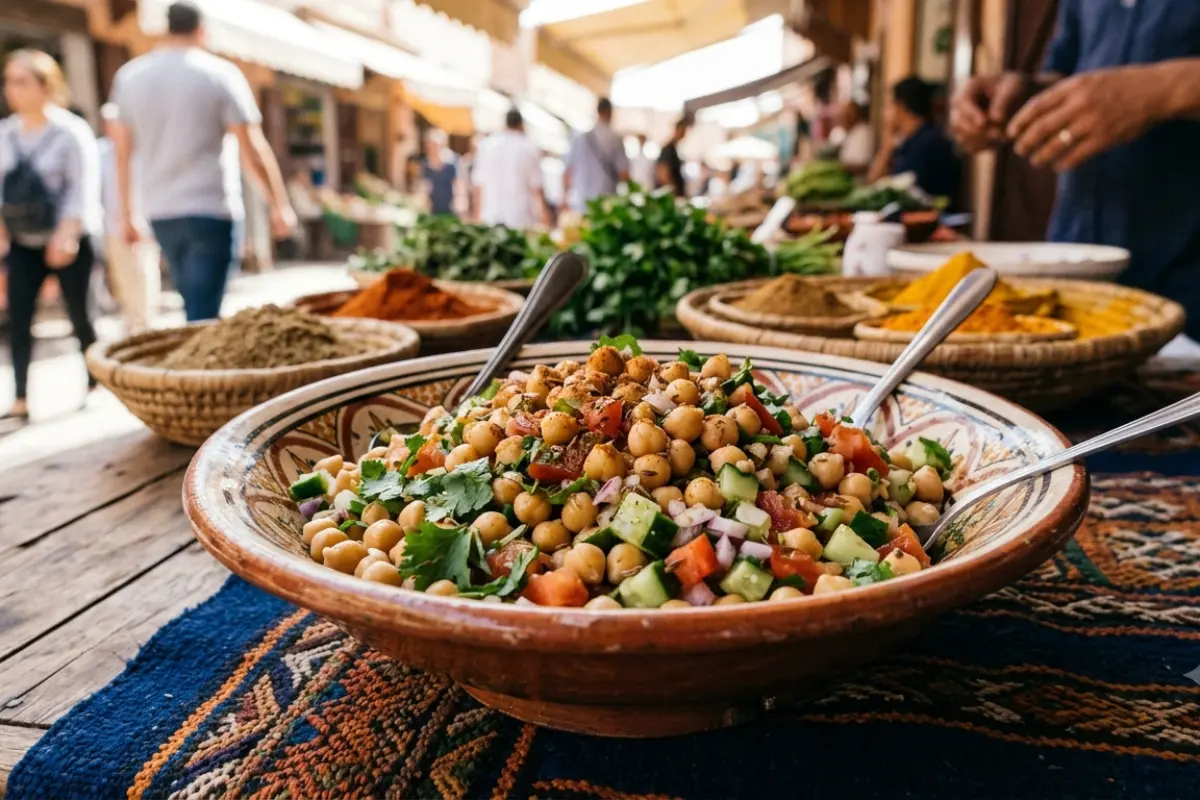
Chickpea salad with cilantro and lemon, known in Morocco as Salade Hamed bil Kamoun, is one of the most beloved everyday dishes found across the country. Chickpeas have been cultivated in Morocco for thousands of years, forming the backbone of Moroccan vegetarian cuisine alongside lentils and fava beans. This humble legume has fed generations of Moroccan families, from the mountain villages of the Atlas to the bustling medinas of Fez and Marrakech, where it is prepared fresh each morning and sold from terracotta bowls at street stalls.
The combination of chickpeas with fresh cilantro and preserved or fresh lemon is a hallmark of Moroccan culinary tradition. Cilantro, called kzebra in Darija, is perhaps the most widely used herb in Moroccan cooking, appearing in everything from tagines to salads and marinades. Its bright, citrusy flavor pairs naturally with the earthiness of chickpeas and the sharp tang of lemon, creating a balance that is deeply characteristic of North African food philosophy. The addition of cumin, paprika, and olive oil transforms simple ingredients into a dish of extraordinary complexity and warmth.
This salad is a prime example of Moroccan meze culture, where multiple small dishes are served together to create a varied and abundant table. It is commonly served as part of a spread of cooked salads, or khoukha, that might also include zaalouk, taktouka, or carrot salad. Whether served as a starter before a grand couscous feast or enjoyed on its own with crusty khobz bread, this chickpea salad represents the essence of Moroccan hospitality and the country's deep respect for simple, wholesome ingredients.
About This Recipe
Chickpeas have been a cornerstone of Moroccan cuisine since antiquity, cultivated across the Maghreb for over four thousand years and celebrated in Amazigh, Arab, and Andalusian culinary traditions alike. The pairing of legumes with fresh herbs and citrus is deeply rooted in Moroccan food culture, reflecting the country's position as a crossroads of Mediterranean, Sub-Saharan African, and Middle Eastern culinary influences. In the medinas of Fez and Marrakech, vendors known as harira sellers have long served warm chickpea preparations as sustaining street food, particularly during the holy month of Ramadan when chickpeas feature prominently in iftar spreads. The cooked salad tradition in Morocco, distinct from raw salads, developed as a way to serve vegetables and legumes in a manner that showcases the extraordinary Moroccan spice pantry, with cumin and paprika as the twin pillars of flavor. Cilantro's prominence in this dish traces to both indigenous Amazigh cooking and the influence of Andalusian refugees who settled in cities like Tetouan and Fez following the Reconquista, bringing with them a sophisticated herb culture that permanently shaped Moroccan cuisine. Today, chickpea salad with cilantro and lemon is served in humble homes and grand riads alike, representing the democratic, communal spirit of Moroccan food culture.
Nutrition / serving
Recipe Tags
Understanding the Ingredients
Canned or cooked chickpeas
Chickpeas are the heart of this dish. Using canned chickpeas saves considerable time, but cooking dried chickpeas overnight yields a creamier, more flavorful result. Dried chickpeas should be soaked for at least 8 hours and then simmered for 60 to 90 minutes until completely tender. Whichever you use, ensure the chickpeas are well-drained and rinsed to remove any excess starch or brine.
Fresh cilantro
Fresh cilantro is non-negotiable in this recipe. It provides the bright, herbaceous character that defines the dish. Use both the leaves and the tender stems for maximum flavor. If your cilantro has tough stems, discard them, but the soft inner stems add a pleasant texture when finely chopped. Avoid dried cilantro as a substitute, as it lacks the essential oils responsible for the herb's distinctive aroma.
Fresh lemon juice
Freshly squeezed lemon juice provides bright acidity that lifts all the other flavors in the salad. Bottled lemon juice lacks the complexity and freshness of the real thing and can taste flat or overly sharp. Moroccan cooks sometimes use preserved lemon rind instead of or in addition to fresh lemon, which adds a deeper, fermented citrus note that is uniquely North African.
Extra virgin olive oil
Moroccan olive oil, produced primarily in the regions of Meknes and Beni Mellal, is among the finest in the world. A good quality extra virgin olive oil adds richness, fruitiness, and a subtle peppery finish that ties the salad together. It also serves as the medium that carries the fat-soluble flavors of the spices throughout the dish.
Ground cumin
Cumin is the quintessential Moroccan spice, used in virtually every savory preparation. It adds a warm, earthy, slightly smoky depth that complements the chickpeas beautifully. Toasting whole cumin seeds and grinding them fresh will yield a noticeably more aromatic result than pre-ground cumin from a jar.
Sweet paprika
Moroccan paprika, known as felfel ahmar, is slightly sweeter and more vibrant in color than Spanish or Hungarian varieties. It adds a mild fruitiness and a beautiful red hue to the salad. A pinch of smoked paprika can be added alongside for a subtle smokiness that enhances the overall depth of the dish.
Garlic
Fresh garlic provides a pungent, savory base note that anchors the brighter flavors of lemon and cilantro. In Moroccan cooking, garlic is typically used raw in salads, where its sharpness mellows slightly when mixed with acid. For a more subtle garlic flavor, you can roast the cloves before using them, which produces a sweeter, nuttier taste.
Red onion
Finely diced red onion adds a mild sharpness and a pleasant crunch that contrasts with the soft chickpeas. Soaking the diced onion in cold water for 10 minutes before adding it to the salad reduces its pungency and makes it more palatable, especially for those sensitive to raw onion. Red onion also adds a beautiful pop of color to the finished dish.
Step-by-Step Cooking Guide
Prepare the Chickpeas
5 minIf using canned chickpeas, drain them thoroughly in a colander and rinse under cold running water until the water runs clear. Shake the colander to remove as much excess moisture as possible. If using dried chickpeas, ensure they have been soaked overnight and fully cooked until tender before proceeding. Pat the chickpeas lightly with a clean kitchen towel if they are still quite wet.
Tip: For a warmer salad, heat the drained chickpeas briefly in a dry pan over medium heat for 2 to 3 minutes before dressing them. This opens their texture and helps them absorb the dressing more readily.
Prepare the Vegetables and Herbs
8 minFinely dice the red onion into small, uniform pieces of about 3 to 4 millimeters. Place the diced onion in a small bowl of cold water and let it soak for 10 minutes to mellow its sharpness. Meanwhile, mince the garlic cloves as finely as possible, or use a garlic press. Wash the fresh cilantro thoroughly, spin it dry, and then roughly chop both the leaves and tender stems. Set everything aside.
Tip: Do not over-chop the cilantro into a paste. Larger, roughly chopped pieces retain their texture and release their flavor more gradually, giving the salad a fresher character.
Make the Dressing
5 minIn a small bowl, whisk together the freshly squeezed lemon juice, extra virgin olive oil, minced garlic, ground cumin, and sweet paprika. Season generously with salt and a pinch of black pepper. Taste the dressing and adjust the balance of acid and oil to your preference. A well-made dressing should be bright, fragrant, and slightly bold in flavor, as it will mellow once it coats the chickpeas.
Tip: If you have preserved lemon on hand, finely mince about a quarter of the rind and whisk it into the dressing for an authentically Moroccan depth of flavor that cannot be replicated with fresh lemon alone.
Combine the Salad
5 minDrain the soaked red onion and pat it dry. In a large mixing bowl, combine the prepared chickpeas, drained red onion, and chopped cilantro. Pour the dressing over the ingredients and toss gently but thoroughly, ensuring every chickpea is coated with the dressing. Taste the salad and adjust the seasoning with additional salt, lemon juice, or spices as needed.
Tip: Use a rubber spatula or two large spoons to fold the ingredients together rather than stirring aggressively, which can break the chickpeas and make the salad mushy.
Rest and Serve
5 minAllow the salad to rest for at least 5 minutes before serving to give the chickpeas time to absorb the dressing fully. Transfer to a serving plate or shallow bowl. Garnish with a few whole cilantro leaves, a drizzle of olive oil, and a light dusting of paprika over the surface for a visually appealing presentation. Serve at room temperature alongside warm Moroccan khobz bread.
Tip: The salad tastes even better after sitting for 30 minutes to an hour, as the flavors continue to meld and deepen. If making ahead, hold the fresh cilantro and add it just before serving to prevent it from wilting.
Common Mistakes to Avoid
✗ Using under-seasoned chickpeas
Fix: Chickpeas have a naturally bland, starchy flavor that requires bold seasoning to come alive. Do not be timid with salt, lemon juice, and spices. Taste and adjust continuously throughout the preparation process rather than seasoning only at the end.
✗ Adding wilted or dried-out cilantro
Fix: Always use the freshest cilantro available. If your cilantro is slightly wilted, revive it by trimming the stems and standing the bunch in a glass of cold water for 30 minutes. Dried cilantro is not an acceptable substitute in this recipe and will result in a flat, dull salad.
✗ Overdressing the salad
Fix: Adding too much dressing can make the chickpeas soggy and overwhelm their natural earthiness. Start with three-quarters of the dressing, toss well, taste, and add more only if needed. The chickpeas should be well-coated but not swimming in liquid.
✗ Not resting the salad before serving
Fix: Serving the salad immediately after dressing it means the chickpeas have not had time to absorb the flavors. A resting period of at least 5 to 10 minutes is essential. For best results, prepare the salad 30 minutes before serving.
Ingredient Substitutions
Instead of: Fresh cilantro
Use: Fresh flat-leaf parsley can replace some or all of the cilantro for those who dislike its flavor. The salad will be milder but still delicious. A small amount of fresh mint can also be added alongside parsley for a refreshing variation.
Instead of: Fresh lemon juice
Use: White wine vinegar or apple cider vinegar can be used in a pinch, though the flavor will differ. Preserved lemon rind, finely minced, is actually a more traditional Moroccan substitute that adds complexity beyond what fresh lemon provides.
Instead of: Canned chickpeas
Use: Any cooked white bean such as cannellini or navy beans can substitute chickpeas for a creamier texture. Cooked lentils, particularly green or puy lentils that hold their shape, also work well and create a different but equally satisfying Moroccan-style salad.
Instead of: Red onion
Use: Spring onions or scallions make an excellent substitute with a milder flavor and a fresher bite. Shallots, finely minced, also work beautifully and are slightly sweeter than red onion when used raw.
Serving Suggestions
Serve as part of a traditional Moroccan meze spread alongside zaalouk, taktouka, beet salad, and carrot salad with warm khobz bread for a complete appetizer course.
Spoon over toasted flatbread and top with a drizzle of harissa and a dollop of thick yogurt for a satisfying light lunch.
Serve alongside grilled fish or lamb chops as a bright, refreshing accompaniment that balances rich, smoky proteins.
Stuff into warm pita pockets with sliced tomatoes and cucumber for a portable Moroccan-inspired lunch wrap.
Storage & Reheating
Storage
Store leftover chickpea salad in an airtight container in the refrigerator for up to 3 days. The flavors will continue to develop overnight, making day-old salad particularly delicious. Store any fresh herb garnish separately and add just before serving.
Reheating
This salad is best enjoyed at room temperature rather than heated. Remove it from the refrigerator 15 to 20 minutes before serving to take the chill off. If you prefer it warm, gently heat it in a small saucepan over low heat for 2 to 3 minutes, stirring occasionally, but avoid boiling as this will make the chickpeas mushy.
If the salad seems dry after refrigeration, revive it with a fresh squeeze of lemon juice and a small drizzle of olive oil before serving. Add a handful of freshly chopped cilantro to restore brightness to the flavor.
Frequently Asked Questions
Recipe by

Samira Tazi
سميرة تازي
Salad & Meze Specialist
View all recipes by Samira →
You May Also Like
Our Ebooks

The Moroccan Vegan
$12.56

Tables of Fez: A Royal Palace Legacy
$22.99

The Soul of Morocco
$20.00
YouTube
Watch step-by-step cooking videos and learn traditional Moroccan techniques.
450+
Subscribers
150+
Videos