
20
Prep (min)
50
Cook (min)
6
Servings
Medium
Level
Introduction
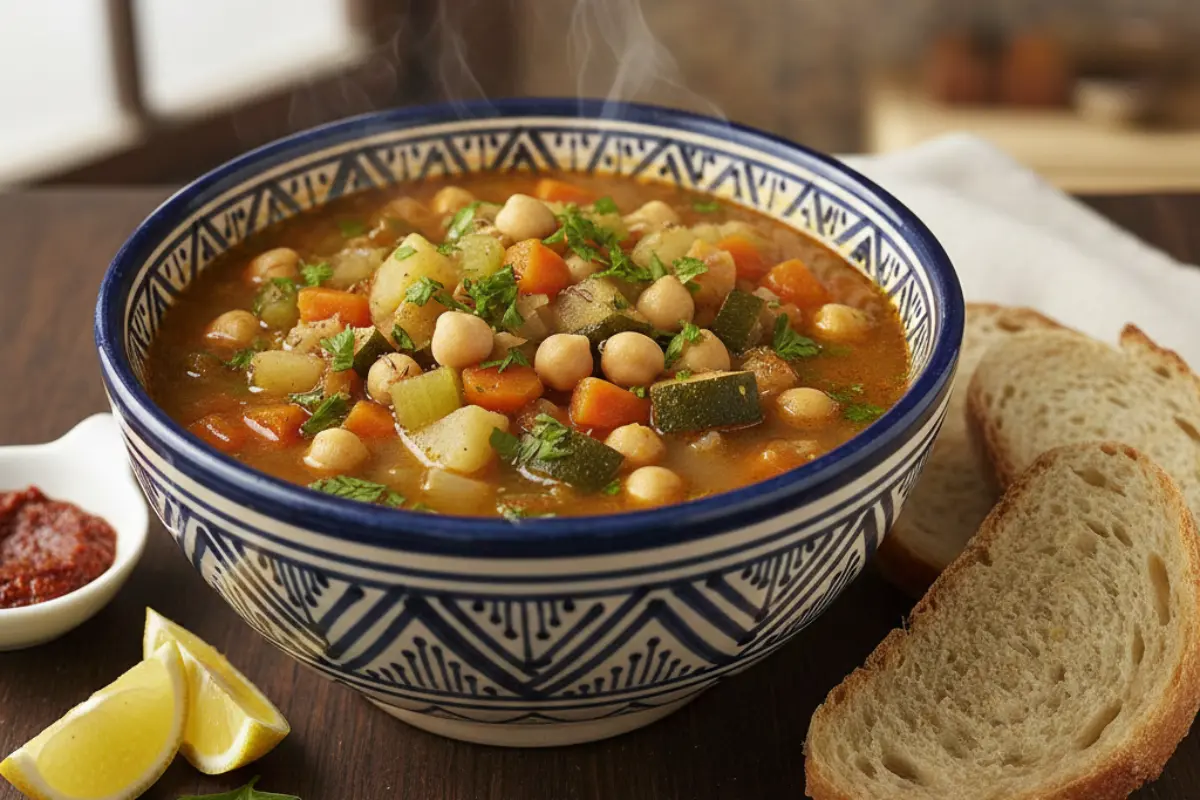
Chorba Khodra, often referred to as North African Vegetable Soup, is a vibrant and hearty dish popular in countries like Algeria and Morocco [citation:1]. This comforting soup is traditionally enjoyed during Ramadan but is also a staple in households throughout the year [citation:1]. The name itself reveals its essence: 'Chorba' meaning soup and 'Khodra' meaning vegetables [citation:1]. It is known for its rich, deep flavors, which result from a diverse array of fresh vegetables and fragrant spices like cumin and coriander. The addition of chickpeas makes it substantial and satisfying, embodying the harmony of North African home cooking [citation:1].
About This Recipe
Chorba Khodra is a vibrant and hearty dish popular in North Africa, particularly Algeria [citation:1]. This comforting soup is traditionally enjoyed during Ramadan but is also a staple in households throughout the year. It is known for its rich flavors, resulting from a diverse array of vegetables and fragrant spices [citation:1]. The vegetables used are native to the Mediterranean region, and the use of spices like coriander and cumin reflects the ancient spice trade routes that influenced North African cooking [citation:1].
Nutrition / serving
Recipe Tags
Understanding the Ingredients
Aromatic Base
The soup starts with a soffritto of onion and garlic, sautéed in olive oil until translucent. This forms the flavor foundation [citation:1].
Vegetable Medley
A colorful mix of vegetables native to the Mediterranean. Common choices include tomatoes, carrots, celery, zucchini, potatoes, and turnips [citation:1]. Their sizes should be uniform for even cooking.
Chickpeas
Chickpeas are a key component, adding a nutty flavor and hearty texture. They are prevalent in Middle Eastern and North African cuisine and contribute to the soup's protein content [citation:1].
Spices
The spice profile reflects the ancient trade routes that influenced North African cooking. Ground coriander and cumin are essential, providing warmth and earthiness [citation:1].
Fresh Herbs and Finish
Fresh parsley is used both during cooking and as a garnish, adding a burst of freshness. A squeeze of lemon juice just before serving brightens all the flavors, and a side of harissa paste is often offered for those who desire heat [citation:1].
Step-by-Step Cooking Guide
Sauté the Aromatics
7 minHeat 2 tablespoons of olive oil in a large pot over medium heat. Add 1 large chopped onion and sauté for 5-7 minutes until it becomes soft and translucent [citation:1].
Tip: Do not brown the onions, as this can alter the soup's light color and flavor profile.
Bloom the Spices
2 minAdd 3-4 minced garlic cloves, 1 teaspoon of ground cumin, and 1 teaspoon of ground coriander to the pot [citation:1]. Stir well and cook for about a minute until the spices become fragrant.
Tip: Blooming the spices in the oil releases their essential oils, deepening their flavor.
Add Vegetables and Liquid
10 minAdd the prepared vegetables: 3 chopped carrots, 2 chopped celery stalks, 2 diced potatoes, and 2 diced zucchini. Pour in 8 cups of vegetable broth or water and add 1 can (400g) of drained and rinsed chickpeas [citation:1].
Tip: Feel free to substitute with other seasonal vegetables like turnips or green beans.
Simmer the Soup
40 minBring the soup to a gentle boil, then reduce the heat to low. Cover the pot and let it simmer for 30 to 40 minutes, until all the vegetables are completely tender [citation:1].
Tip: A gentle simmer allows the flavors to meld beautifully without the vegetables falling apart.
Add Final Touches
5 minStir in a handful of fresh chopped parsley and let the soup cook for an additional 5 minutes [citation:1]. Season with salt and pepper to taste.
Tip: Adding herbs at the end preserves their fresh color and flavor.
Serve
5 minLadle the warm soup into bowls. Garnish with an extra sprinkle of fresh parsley. Serve with crusty bread, lemon wedges, and a side of harissa paste [citation:1].
Tip: A squeeze of fresh lemon juice just before eating brightens all the flavors beautifully.
Common Mistakes to Avoid
✗ Cutting Vegetables Too Large
Fix: Dice vegetables into uniform, bite-sized pieces to ensure they all cook in the same amount of time.
✗ Adding Herbs Too Early
Fix: Add fresh herbs at the very end of cooking to preserve their vibrant color and flavor. If added too early, they will turn dark and lose their brightness.
✗ Skipping the Lemon
Fix: The lemon juice is essential for brightening the soup and balancing the earthy spices. Do not skip it.
Ingredient Substitutions
Instead of: Fresh Tomatoes
Use: 1 can (400g) of crushed tomatoes can be used, especially when fresh tomatoes are not in season.
Instead of: Vegetable Broth
Use: Chicken broth can be used for a non-vegetarian version. Water with a vegetable bouillon cube also works well.
Serving Suggestions
Serve as a starter during Ramadan to break the fast [citation:1].
Pair with crusty bread or over a bed of steamed couscous for a more complete meal [citation:1].
Offer lemon wedges and a side of harissa paste for guests to customize their bowl [citation:1].
Storage & Reheating
Storage
Cool completely and store in an airtight container in the refrigerator for up to 4 days. The flavors deepen and improve overnight [citation:1].
Reheating
Reheat gently on the stovetop over medium-low heat. Add a splash of water or broth to restore the desired consistency, as the soup will have thickened upon standing [citation:1].
Frequently Asked Questions
Recipe by

Nora Alaoui
نورة العلوي
Soup & Stew Expert
View all recipes by Nora →
You May Also Like
Our Ebooks

The Moroccan Vegan
$12.56

Tables of Fez: A Royal Palace Legacy
$22.99

The Soul of Morocco
$20.00
YouTube
Watch step-by-step cooking videos and learn traditional Moroccan techniques.
450+
Subscribers
150+
Videos