
20
Prep (min)
45
Cook (min)
6
Servings
Easy
Level
Introduction
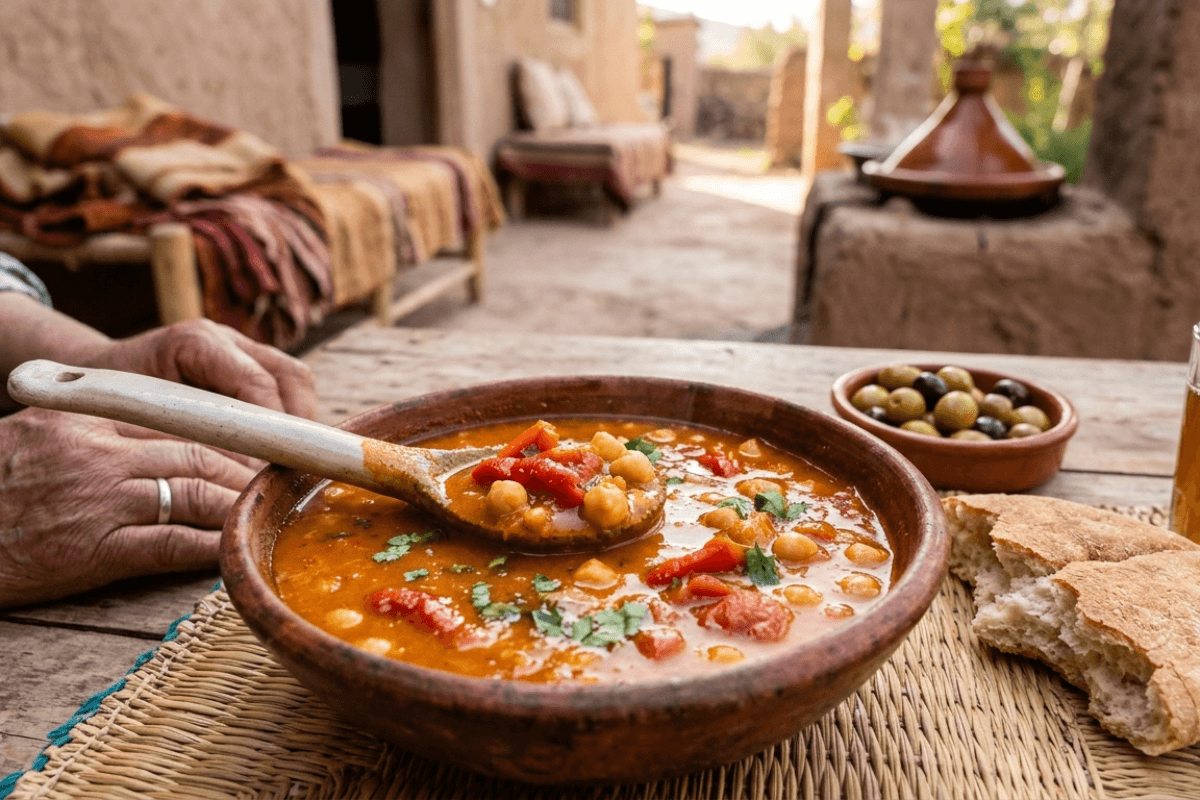
Countryside Soup with Red Pepper, known in Moroccan dialect as Sharbat Ad-Douar bil-Felfel Al-Ahmar, is one of the most beloved rustic soups found throughout the agricultural heartlands of Morocco. The word 'douar' literally refers to a cluster of rural dwellings or a village, and this soup embodies everything that rural Moroccan cooking stands for: resourcefulness, warmth, and the ability to transform humble produce into something truly magnificent. For centuries, families living in the foothills of the Atlas Mountains and across the fertile plains of central Morocco have simmered versions of this soup over wood fires, using whatever vegetables were ripest from their gardens.
The red pepper holds a place of particular pride in Moroccan cuisine, having been introduced to North Africa centuries ago through trade routes and quickly becoming a cornerstone of the national palate. In the countryside, red peppers are grown abundantly during summer and preserved through roasting or drying for use throughout the year. When blended or softened into a soup base, they lend a naturally sweet, slightly smoky depth that no other vegetable can replicate. Combined with earthy cumin, fragrant paprika, golden turmeric, and the slow-cooked richness of tomatoes and chickpeas, the red pepper transforms this simple soup into a dish of remarkable complexity.
Today, this countryside classic is enjoyed not only in rural homes but also in city restaurants and riads across Morocco, where chefs celebrate its unpretentious origins while presenting it with modern flair. It is commonly served during the cooler months of autumn and winter, often ladled into clay bowls and accompanied by freshly baked Moroccan khobz bread. Whether prepared by a grandmother in a remote Beni Mellal village or a contemporary chef in Marrakech, the soul of this soup remains unchanged: it is an act of love, community, and deeply rooted culinary heritage.
About This Recipe
Countryside Soup with Red Pepper has its roots deep in the agricultural traditions of Morocco's rural interior, particularly across the fertile plains and mountain foothills of central Morocco. For generations, families living in douars, the small traditional village clusters that dot the Moroccan landscape, built their culinary traditions around what the land provided each season. Red peppers, introduced to Morocco through Mediterranean and Atlantic trade routes during the sixteenth and seventeenth centuries, quickly became one of the most beloved vegetables in the Moroccan countryside, cultivated in kitchen gardens alongside tomatoes, onions, and herbs. Unlike the more elaborate and ceremonial harira that defines urban Moroccan cooking, this countryside soup was a daily working meal, prepared quickly and eaten communally, often from a single shared pot placed in the center of the family gathering. The chickpea was added not as an afterthought but as a deliberate source of protein and sustenance for families engaged in farming and physical labor. Over time, each region and each family developed its own version, adding local spice blends, seasonal herbs, or preserved ingredients based on what was available. The soup became a living document of Moroccan rural life, reflecting the ingenuity and warmth of a culture that has always known how to create abundance from simplicity. Today, as Moroccan food gains international recognition, this humble countryside soup is celebrated as a testament to the genius of traditional home cooking, a recipe that needs no embellishment because it was perfect from the very beginning.
Nutrition / serving
Recipe Tags
Understanding the Ingredients
Red Bell Peppers
The hero of this dish, red bell peppers provide natural sweetness, a vivid color, and a mild smoky undertone when sautéed. Choose firm, deeply colored peppers for the best flavor and highest vitamin C content. Roasting them briefly before adding to the pot intensifies their sweetness and adds another layer of complexity.
Canned Chickpeas
Chickpeas add protein, fiber, and a satisfying heartiness that transforms this soup from a light starter into a full meal. They are a staple of Moroccan countryside cooking, prized for their versatility and ability to absorb surrounding flavors. Rinse them well before use to remove excess sodium from the canning liquid.
Ripe Tomatoes
Tomatoes form the acidic backbone of the soup's broth, balancing the sweetness of the peppers with their natural tang. Use the ripest tomatoes available for the richest flavor. In winter months, good quality canned crushed tomatoes make an excellent substitute without compromising authenticity.
Yellow Onion
Onion is the aromatic foundation upon which all other flavors are built. Slowly sautéed until golden and translucent, it develops a natural sweetness that integrates beautifully with the spices and vegetables. Moroccan cooks traditionally use yellow onions for soups as they have a milder, sweeter profile than white or red varieties.
Garlic
Fresh garlic cloves bring pungency and warmth to the soup. In Moroccan cooking, garlic is rarely used raw in soups; instead, it is cooked down with the onion to mellow its sharpness and allow its deeper, nuttier notes to emerge. Use at least four cloves for a properly assertive flavor.
Ground Cumin
Cumin is perhaps the most quintessentially Moroccan spice and is indispensable in this soup. It provides an earthy, slightly bitter warmth that anchors all the other flavors. For the most vibrant result, toast whole cumin seeds and grind them fresh just before cooking.
Sweet Paprika
Moroccan sweet paprika, known as felfel hloo, gives the soup its characteristic deep red hue and a gently sweet, mildly smoky flavor. It differs slightly from Spanish paprika in that it tends to be finer and more fragrant. Do not substitute with hot paprika unless you specifically want a spicier soup.
Olive Oil
Extra virgin olive oil is used for sautéing the aromatics and is drizzled over the finished soup as a garnish. Moroccan olive oil, particularly from the Meknès or Marrakech regions, has a distinctively fruity and slightly peppery quality that elevates the entire dish. Use generously, as this is not a dish for restraint.
Fresh Cilantro
Fresh cilantro, known in Morocco as qsbour, is the classic finishing herb for this soup. Added at the very end of cooking, it brings brightness, freshness, and a herbal lift that cuts through the richness of the olive oil and the depth of the spices. Use both leaves and tender stems for maximum flavor.
Vegetable or Chicken Broth
A good quality broth forms the liquid base of the soup and provides the depth and savory backbone necessary to unify all the other ingredients. Homemade broth is always preferred in Moroccan country cooking, but a good low-sodium store-bought version works well. Adjust the quantity based on your desired soup consistency.
Step-by-Step Cooking Guide
Prepare and Sauté the Aromatics
12 minHeat three tablespoons of extra virgin olive oil in a large, heavy-bottomed pot or Dutch oven over medium heat. Add the finely diced yellow onion and cook, stirring occasionally, for eight to ten minutes until softened and beginning to turn golden at the edges. Add the minced garlic and cook for an additional two minutes, stirring frequently to prevent burning. The onion and garlic should be fragrant and deeply golden but not browned.
Tip: Resist the urge to rush the onion. Properly caramelized onions create a natural sweetness that forms the flavor foundation of the entire soup. If they begin to stick, add a small splash of broth or water.
Add Spices and Toast Briefly
3 minReduce the heat to medium-low and add the ground cumin, sweet paprika, turmeric, and a generous pinch of salt directly to the onion and garlic in the pot. Stir constantly for about sixty seconds, allowing the spices to bloom in the oil and coat the aromatics. This step is critical for developing the full depth of the spices' flavor and eliminating any raw, dusty notes.
Tip: Watch the heat carefully during this step. Spices can burn in seconds if the heat is too high, which will give the soup a bitter taste. If you see them darkening too fast, remove the pot from the heat while stirring.
Add Red Peppers and Tomatoes
15 minAdd the diced red bell peppers to the pot and stir well to coat them in the spiced oil. Cook for five minutes, stirring occasionally, until the peppers begin to soften. Add the chopped ripe tomatoes and stir everything together. Increase the heat to medium and cook the tomato and pepper mixture for another eight minutes, stirring occasionally, until the tomatoes break down and the mixture becomes saucy and fragrant.
Tip: If you prefer a richer, smokier flavor, you can roast the red peppers directly over a gas flame or under a broiler before adding them. Simply char the skin, peel it off, and dice the flesh before proceeding.
Add Broth and Chickpeas
28 minPour in the vegetable or chicken broth and bring the soup to a gentle boil over medium-high heat. Add the drained and rinsed chickpeas, stir well, and reduce the heat to medium-low. Allow the soup to simmer uncovered for twenty to twenty-five minutes, stirring occasionally, until the broth has reduced slightly and all the flavors have melded together beautifully.
Tip: Taste the broth after fifteen minutes of simmering and adjust the salt and spices as needed. Every batch of vegetables is slightly different in sweetness and acidity, so seasoning to taste is essential for a balanced final result.
Blend Partially and Finish
5 minUsing an immersion blender, partially blend the soup directly in the pot by blending about one-third of the contents while leaving the rest chunky. This technique creates a thick, creamy base while maintaining satisfying texture from the whole chickpeas and vegetable pieces. Alternatively, remove two ladles of soup, blend them separately, and stir back in. Finish by stirring in the freshly chopped cilantro and a drizzle of olive oil.
Tip: The partial blending step is what gives this countryside soup its characteristic body and richness. If you prefer a completely smooth texture, blend the entire pot. If you prefer all the vegetables intact, simply skip the blending step entirely.
Serve and Garnish
5 minLadle the hot soup into deep bowls. Garnish each serving with a small drizzle of extra virgin olive oil, a pinch of sweet paprika, and a few fresh cilantro leaves. Serve immediately alongside warm Moroccan khobz bread or crusty country bread for dipping. The soup should be steaming hot and vibrantly colored, with a deeply aromatic and inviting scent.
Tip: For a truly authentic countryside presentation, serve the soup in terracotta clay bowls, which retain heat beautifully and add to the rustic aesthetic. A wedge of lemon on the side allows guests to brighten the soup to their liking.
Common Mistakes to Avoid
✗ Adding spices to cold oil or not blooming them at all
Fix: Always add ground spices to warm oil or fat and stir for at least sixty seconds before adding liquids. This blooming process activates fat-soluble flavor compounds in the spices and dramatically deepens the soup's overall flavor profile.
✗ Using underripe or pale red peppers
Fix: Only use deeply colored, fully ripe red bell peppers. Pale or orange peppers lack the natural sugar content and sweetness that makes this soup distinctive. If good fresh peppers are unavailable, use high-quality jarred roasted red peppers as a substitute.
✗ Skipping the caramelization of the onion
Fix: Rushing the onion cooking stage produces a raw, sharp flavor that never properly integrates into the soup. Take the full eight to ten minutes to properly soften and golden the onion before proceeding. This patience pays enormous dividends in the final flavor.
✗ Over-blending the soup into a completely smooth purée
Fix: Countryside soups are meant to have texture and body. Only blend a portion of the soup to achieve the traditional semi-chunky consistency. Full blending removes the rustic character that defines this dish and makes it feel more like a commercial product than a homemade country soup.
Ingredient Substitutions
Instead of: Fresh ripe tomatoes
Use: One 400g can of good quality crushed or diced tomatoes works equally well, particularly outside of peak tomato season when fresh tomatoes lack flavor.
Instead of: Canned chickpeas
Use: Dried chickpeas soaked overnight and boiled until tender can be used for a more traditional result. They have a firmer texture and richer flavor than canned. Allow extra cooking time when using dried chickpeas.
Instead of: Fresh cilantro
Use: Flat-leaf parsley makes a milder but acceptable substitute for those who dislike cilantro. You can also combine both herbs for a more complex herbal finish.
Instead of: Vegetable broth
Use: Water with a bouillon cube works in a pinch, or simply use water for a lighter, cleaner-tasting soup that lets the vegetables shine more prominently. Chicken broth adds richness if a non-vegetarian version is preferred.
Instead of: Red bell peppers
Use: A combination of jarred roasted red peppers and a small amount of fresh pimiento peppers replicates the flavor profile closely. Avoid green peppers as a substitute, as they are too bitter and lack the necessary sweetness.
Serving Suggestions
Serve with thick slices of traditional Moroccan khobz bread, ideal for scooping up the hearty soup and soaking up every drop of the richly spiced broth.
Pair with a simple Moroccan salad of grated carrots seasoned with cumin and lemon juice for a complete and balanced countryside-style meal.
Offer a side of Moroccan olive oil and a small dish of ground cumin and paprika for guests to season their bowls individually at the table.
Top each bowl with a soft-poached egg for a more substantial one-bowl meal that is popular in rural Moroccan households, adding protein and richness.
Serve as a first course before a traditional Moroccan tagine, using the soup to warm up the palate for the more complex flavors that follow.
Storage & Reheating
Storage
Allow the soup to cool completely to room temperature before transferring it to airtight containers. Store in the refrigerator for up to four days. The soup actually improves in flavor after one or two days as the spices continue to meld and deepen. For longer storage, freeze in portion-sized containers for up to three months.
Reheating
Reheat gently on the stovetop over medium-low heat, stirring frequently to prevent the chickpeas from sticking to the bottom of the pot. Add a splash of broth or water if the soup has thickened too much during storage. Alternatively, reheat individual portions in a microwave on medium power for two to three minutes, stirring halfway through.
Do not add the fresh cilantro garnish before storing. Always add fresh herbs when serving reheated soup for the brightest flavor and most appealing presentation. If the soup was frozen, thaw it overnight in the refrigerator before reheating for the best texture.
Frequently Asked Questions
Recipe by

Nora Alaoui
نورة العلوي
Soup & Stew Expert
View all recipes by Nora →
You May Also Like
Our Ebooks

The Moroccan Vegan
$12.56

Tables of Fez: A Royal Palace Legacy
$22.99

The Soul of Morocco
$20.00
YouTube
Watch step-by-step cooking videos and learn traditional Moroccan techniques.
450+
Subscribers
150+
Videos