
30
Prep (min)
60
Cook (min)
6
Servings
Medium
Level
Introduction
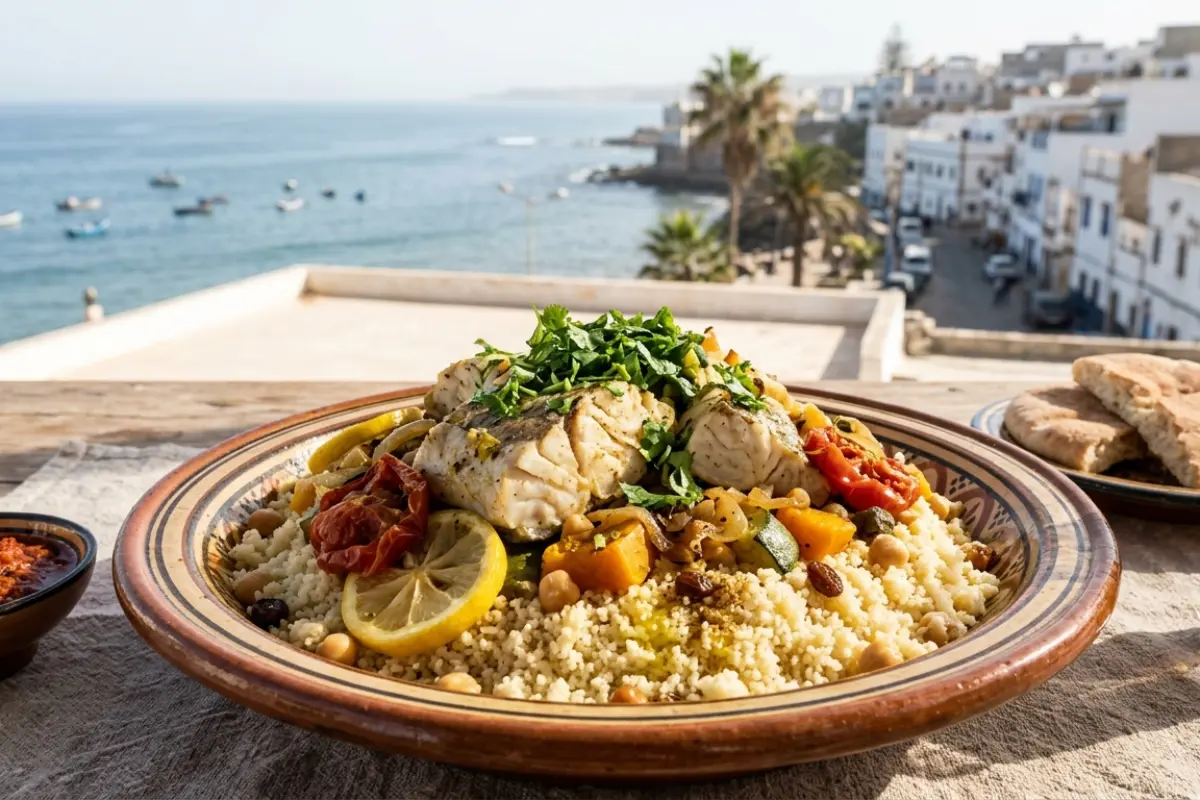
Couscous with Fish and Cilantro, known in Moroccan Arabic as كسكس بالسمك والكزبرة, is a cornerstone of coastal Moroccan gastronomy, particularly celebrated in the port city of Essaouira on the Atlantic coast. Unlike the inland versions of couscous that rely on lamb or beef, this coastal adaptation showcases the incredible bounty of Moroccan waters, using freshly caught white fish such as sea bass, grouper, or hake. The dish has been prepared for centuries by fishing families who would cook their daily catch with whatever vegetables and herbs were available, gradually refining the recipe into the aromatic, soul-warming meal enjoyed today.
About This Recipe
Couscous with Fish and Cilantro is a dish deeply rooted in the maritime culinary traditions of Morocco's Atlantic and Mediterranean coastal communities. For centuries, the fishermen of cities like Essaouira, Agadir, and Safi would return from sea with their daily catch and transform it into nourishing family meals built around couscous — Morocco's most sacred grain. Couscous itself has been a staple of North African cuisine for over a thousand years, with references to its preparation appearing in manuscripts dating back to the 13th century. Along the coast, the inland tradition of preparing couscous with lamb or chicken was naturally adapted to incorporate the freshest available protein: the sea's abundant fish. The chermoula marinade, a hallmark of Moroccan fish cookery, evolved in these coastal kitchens as a means of preserving and flavoring fish before refrigeration was available. Today, Couscous with Fish and Cilantro remains a Friday tradition in many Moroccan coastal households, reflecting both the Islamic tradition of eating fish on Fridays and the enduring cultural importance of couscous as a symbol of Moroccan hospitality and family gathering. In 2020, Moroccan couscous was inscribed on UNESCO's Intangible Cultural Heritage list, cementing its global significance and the importance of dishes like this in preserving Moroccan culinary identity.
Nutrition / serving
Recipe Tags
Understanding the Ingredients
White Fish (Sea Bass or Hake)
Fresh white fish is the heart of this dish. Sea bass and hake are the most traditional choices along the Moroccan Atlantic coast, prized for their firm, flaky texture that holds up well during the long steaming process. The fish is typically marinated in chermoula — a blend of herbs and spices — before cooking to infuse deep flavor throughout the flesh.
Couscous
Medium-grain couscous is the preferred variety for this recipe. Traditional Moroccan couscous is steamed multiple times in a couscoussier over the simmering broth below, which allows the grains to absorb the fragrant steam and become perfectly light and fluffy. Using instant couscous is acceptable for convenience but lacks the layered texture achieved through traditional steaming.
Fresh Cilantro
Cilantro is the defining herb of this dish, used both in the chermoula marinade and as a finishing garnish. Moroccan cilantro is intensely aromatic, and a generous hand with this herb is encouraged. It pairs naturally with fish, cutting through the richness and providing a clean, citrusy brightness that elevates the entire dish.
Preserved Lemon
A quintessentially Moroccan ingredient, preserved lemon adds a unique briny, tangy, and slightly fermented flavor that cannot be replicated by fresh lemon alone. It is used sparingly in the broth and as a garnish, providing a complex citrus note that ties all the flavors together.
Chermoula Spice Blend (Cumin, Paprika, Turmeric)
Chermoula is the traditional Moroccan marinade made from ground cumin, sweet paprika, turmeric, garlic, and herbs. These spices create a vibrant, earthy base that penetrates the fish during marination and forms the flavor foundation of the entire broth. Freshly ground spices are strongly recommended for the most authentic result.
Tomatoes and Zucchini
These vegetables are the classic accompaniments in the fish couscous broth. Tomatoes provide natural acidity and sweetness that balance the spices, while zucchini absorbs the aromatic broth and adds a tender, mild texture. They are added at different stages of cooking to ensure each reaches perfect doneness without becoming mushy.
Step-by-Step Cooking Guide
Prepare the Chermoula Marinade
15 minIn a large bowl, combine the chopped fresh cilantro, minced garlic, ground cumin, sweet paprika, turmeric, olive oil, fresh lemon juice, and a generous pinch of salt. Mix well until a thick, fragrant paste forms. Score the fish fillets or whole fish with a sharp knife, making shallow cuts to allow the marinade to penetrate deeply. Coat the fish thoroughly with the chermoula, cover, and refrigerate for at least 20 minutes, or up to 2 hours for maximum flavor.
Tip: The longer you marinate the fish, the more intense the flavor will be. However, avoid marinating for more than 4 hours as the acid in the lemon juice can begin to break down the fish texture.
Set Up the Couscoussier and Prepare the Broth
10 minFill the bottom pot of your couscoussier with water or a light fish stock. Add a chopped onion, diced tomatoes, a tablespoon of olive oil, and a pinch each of cumin, paprika, and salt to the water. Bring to a boil over medium-high heat. If you do not have a couscoussier, you can use a large pot with a steamer insert placed on top, ensuring a tight seal between the two parts to trap the steam.
Tip: Using fish stock instead of plain water for the broth dramatically increases the depth of flavor in both the sauce and the couscous.
First Steam of the Couscous
20 minPlace the dry couscous in the upper steamer basket of the couscoussier. When the broth below begins to steam vigorously, set the couscous basket on top without a lid. Allow the couscous to steam for 15 minutes. Transfer the couscous to a large bowl, sprinkle with a little cold water and a drizzle of olive oil, and rake with your fingers or a fork to break up any clumps. Season lightly with salt.
Tip: Raking the couscous with your hands while it is still warm helps to separate every grain and prevents clumping during subsequent steaming rounds.
Cook the Vegetables in the Broth
10 minAdd the diced zucchini and preserved lemon quarters to the simmering broth in the bottom pot. Allow the vegetables to cook for about 10 minutes until they begin to soften. Adjust seasoning with salt, pepper, and a touch more cumin if desired. The broth should be flavorful and aromatic at this stage, as it will continue to infuse the couscous during the second steam.
Tip: Taste the broth frequently and adjust spices as needed. A well-seasoned broth is the secret to a truly flavorful couscous.
Second Steam of the Couscous and Cook the Fish
20 minReturn the raked couscous to the steamer basket and place it back over the simmering broth for a second steam of 15 minutes. Meanwhile, in a separate skillet or directly in the broth basket area, arrange the marinated fish pieces. You can nestle the fish into the broth gently at this stage, allowing it to simmer and cook through for about 10 to 12 minutes until the flesh is opaque and flakes easily with a fork. Avoid overcooking the fish.
Tip: If using whole fish, turn it gently once halfway through cooking to ensure even cooking on both sides. Handle with care to prevent the fish from breaking apart.
Final Fluffing and Plating
10 minRemove the couscous from the steamer and transfer to a large serving platter. Add a generous knob of butter and rake the couscous once more to incorporate the butter and achieve the perfect, light, separate-grain texture. Create a well in the center of the couscous mound. Carefully arrange the cooked fish and vegetables in and around the center. Ladle several spoonfuls of the warm, aromatic broth over the entire platter. Garnish abundantly with fresh cilantro leaves and preserved lemon strips. Serve the remaining broth in a bowl on the side.
Tip: Serve the dish immediately for the best experience. The hot broth poured over the couscous at the table keeps everything warm and adds an interactive, communal element to the meal.
Common Mistakes to Avoid
✗ Using instant couscous and not steaming it properly
Fix: While instant couscous can be used, steaming couscous in a couscoussier in two rounds produces a far superior, light texture. If using instant couscous, follow the package directions but add a drizzle of olive oil and fluff repeatedly for best results.
✗ Overcooking the fish until it falls apart
Fix: Fish cooks quickly and should be watched carefully. Add the fish to the broth toward the end of cooking and remove it as soon as it flakes easily. Overcooked fish becomes dry and loses its delicate flavor.
✗ Skipping the chermoula marinade or not marinating long enough
Fix: The chermoula marinade is what gives the fish its distinctive Moroccan flavor. Do not skip this step and allow at least 20 minutes for the marinade to penetrate the fish before cooking.
✗ Adding too much liquid to the couscous during steaming
Fix: Add cold water to the couscous in small amounts during the raking stage. Too much water makes the couscous gummy and heavy. The goal is light, fluffy, separate grains that have absorbed flavor from the steam, not from soaking in water.
Ingredient Substitutions
Instead of: Sea Bass
Use: Hake, grouper, cod, or tilapia can all be used as substitutes. Choose a firm white fish that will hold its shape during the steaming and simmering process.
Instead of: Preserved Lemon
Use: If preserved lemon is unavailable, use a combination of fresh lemon zest and a small pinch of sea salt, though the flavor will be less complex and fermented.
Instead of: Fresh Cilantro
Use: Fresh flat-leaf parsley can replace cilantro for those who dislike its flavor. A combination of parsley and a small amount of fresh dill also works well with fish.
Instead of: Couscoussier
Use: A large pot with a tight-fitting steamer basket or colander lined with a damp cheesecloth can replicate the couscoussier effectively at home.
Serving Suggestions
Serve the couscous communally on a large, decorative Moroccan platter in the center of the table, with the fish and vegetables arranged on top and extra broth in a separate bowl for guests to add as desired.
Pair with a simple Moroccan salad of grated carrots with cumin and orange, or a fresh tomato and cucumber salad dressed with olive oil and lemon juice to balance the richness of the dish.
Offer warm Moroccan khobz bread on the side to mop up the delicious broth.
A glass of fresh mint tea or cold still water with orange blossom is the traditional beverage accompaniment to this meal.
Storage & Reheating
Storage
Store leftover couscous and fish separately in airtight containers in the refrigerator for up to 2 days. The broth can be stored separately in a sealed jar for up to 3 days. Avoid storing the assembled dish together as the couscous will absorb all the broth and become soggy.
Reheating
Reheat the couscous by sprinkling a few tablespoons of water over it and steaming it briefly, or microwaving it covered with a damp paper towel for 1 to 2 minutes. Reheat the fish gently in the warm broth over low heat for 3 to 4 minutes to prevent drying out. Do not microwave the fish directly as it will become rubbery.
The broth actually improves in flavor after a day in the refrigerator as the spices continue to meld. Reheat it separately and use it to refresh and moisten the couscous and fish when serving leftovers.
Frequently Asked Questions
Recipe by

Fatima El Amrani
فاطمة العمراني
Master Chef
View all recipes by Fatima →
You May Also Like
Our Ebooks

The Moroccan Vegan
$12.56

Tables of Fez: A Royal Palace Legacy
$22.99

The Soul of Morocco
$20.00
YouTube
Watch step-by-step cooking videos and learn traditional Moroccan techniques.
450+
Subscribers
150+
Videos