
15
Prep (min)
45
Cook (min)
6
Servings
Easy
Level
Introduction
Bedouin Couscous with Milk and Butter is a dish that speaks directly to the heart of Moroccan nomadic culture. Long before tagines and elaborate spice-laden stews became synonymous with Moroccan cuisine, the Bedouin and Amazigh peoples of the Saharan south and pre-Saharan regions sustained themselves on this elegantly simple preparation. Couscous, hand-rolled from semolina, was steamed over boiling water in a couscoussier and then blessed with the two most precious commodities a nomadic family could offer: fresh animal milk and smen or clarified butter rendered from sheep or cow milk. These ingredients were not merely food — they were symbols of wealth, hospitality, and care.
The dish carries profound cultural significance across generations of Moroccan families, particularly in the regions of Errachidia, Zagora, Ouarzazate, and the Draa Valley, where Bedouin communities have perfected its preparation over centuries. It is traditionally served in a large communal clay or wooden bowl, placed at the center of a low table, and eaten with hands or broad wooden spoons. Elders and children alike gather around the bowl in the evenings, making this dish not just a meal but a ritual of togetherness. In many households, it is prepared specifically on Friday evenings after the communal couscous meal, using leftover grains moistened and re-steamed to new softness.
What makes this dish truly remarkable is how its minimalism achieves maximum flavor. The quality of each ingredient is paramount — the couscous must be medium-grain and properly steamed at least twice to achieve the signature lightness, the milk must be full-fat and warmed to just below a simmer to preserve its natural sweetness, and the butter ideally should be smen, Morocco's aged clarified butter, which carries a distinctive nutty and slightly tangy richness that elevates the entire dish. In modern Moroccan kitchens, this dish has seen a gentle revival as people return to ancestral comfort foods, and it is increasingly celebrated at food festivals and family gatherings as a proud emblem of Moroccan culinary heritage.
About This Recipe
Bedouin Couscous with Milk and Butter is one of the oldest surviving culinary traditions in North Africa, with roots stretching back to the nomadic Amazigh and Bedouin peoples who traversed the Saharan and pre-Saharan landscapes of southern Morocco for millennia. Long before Morocco's urban cooking traditions developed their elaborate spice palettes and complex stewing techniques, the desert nomads of what are today the regions of Errachidia, Zagora, Draa-Tafilalet, and the Saharan provinces sustained themselves on this profoundly nourishing combination of hand-rolled couscous, fresh animal milk, and preserved butter. Couscous itself is believed to have originated among the Amazigh peoples of North Africa as early as the 9th or 10th century, and the pairing with milk is thought to be equally ancient, born from the practical reality that nomadic families who kept sheep, goats, and camels had consistent access to fresh milk and could churn butter and age it into smen as a preservation technique. The dish traveled with trade caravans along the trans-Saharan routes and became embedded in the cultural memory of communities from the Atlas Mountains to the Sahara. Unlike the elaborate vegetable and meat-topped couscous of Friday family meals in cities like Marrakech and Fez, this milk-and-butter version was the intimate, daily sustenance of the countryside and the desert — eaten at dawn before a long journey, shared in the evening under open skies, or offered to honored guests as the highest expression of available wealth. Today, this dish is experiencing a heartfelt revival in Morocco as younger generations reconnect with ancestral food traditions, and it has been recognized by food historians and chefs as a vital piece of Morocco's intangible culinary heritage, representing the dignity, ingenuity, and warmth of the Bedouin way of life.
Nutrition / serving
Recipe Tags
Understanding the Ingredients
Medium-grain couscous
The foundation of this dish. Medium-grain couscous is preferred over fine-grain because it holds its structure better during double steaming, becoming light and separate rather than clumping. Always use dry couscous and avoid instant varieties if possible, as traditional steaming develops a far superior texture and flavor.
Whole milk
Full-fat whole milk is essential to this recipe. Its natural sugars and fat content create the creamy, slightly sweet bath that soaks into the couscous grains. Fresh raw milk is traditionally used in Bedouin communities, but high-quality pasteurized whole milk works beautifully. The milk should be warmed gently — never boiled aggressively — to preserve its delicate sweetness.
Smen (aged clarified Moroccan butter)
Smen is Morocco's answer to ghee, but with a more complex, aged, and slightly tangy flavor that comes from traditional curing with salt and sometimes herbs. It is the soul of this dish. A generous spoonful melting over the warm couscous releases an intoxicating aroma. If unavailable, high-quality unsalted butter or ghee can substitute, though the depth of flavor will differ.
Salt
A small amount of salt is added during the steaming process to season the couscous grains from within. Salt also enhances the natural sweetness of the milk when the dish is assembled, creating a gentle sweet-savory balance that defines this recipe's unique appeal.
Sugar
Optional but widely used in Bedouin tradition, a light dusting of granulated sugar or drizzle of honey over the finished dish amplifies the milky sweetness and rounds out the richness of the butter. In some regions, orange blossom water is used alongside sugar for a floral fragrance.
Orange blossom water
A few drops of orange blossom water stirred into the warm milk or drizzled over the finished dish add a distinctly Moroccan aromatic dimension. This ingredient is optional but deeply traditional in the southern regions, where rose and orange blossom waters are used liberally in both savory and sweet preparations.
Vegetable oil or neutral oil
A small amount of oil is rubbed into the dry couscous grains before the first steaming. This step is critical — it coats each grain and prevents clumping, ensuring the final dish is airy and light rather than dense and gummy. Sunflower or light olive oil is traditionally used.
Step-by-Step Cooking Guide
Prepare and hydrate the couscous
10 minPlace the dry couscous in a large wide bowl. Drizzle with two tablespoons of neutral oil and a teaspoon of salt. Using your hands, rub the oil thoroughly into the grains, ensuring every grain is lightly coated. This step prevents clumping during steaming. Add one cup of cold water and mix gently with your hands, then spread the couscous loosely and let it absorb the water for 10 minutes.
Tip: Never skip the oiling step. Dry rubbing with oil is the single most important technique for achieving light, separate couscous grains.
First steam of the couscous
20 minFill the bottom pot of a couscoussier with water and bring to a boil. Line the steamer basket with a damp cloth if the holes are large, to prevent grains from falling through. Add the hydrated couscous to the steamer basket. Do not cover. Steam over vigorous steam for 20 minutes, or until the couscous is visibly puffing and the top grains appear dry and hot.
Tip: Make sure the steam is strong and continuous throughout the first steaming. Weak steam will result in undercooked, gummy grains.
Aerate and re-hydrate the couscous
8 minRemove the steamed couscous and turn it out into your large bowl again. Break up any clumps gently with a fork or your hands (protect them with a damp cloth as the couscous will be very hot). Add half a cup of warm water mixed with a pinch of salt, and again work the couscous with your hands, spreading and fluffing it. Allow it to rest and absorb the water for 5 minutes.
Tip: Work quickly but gently when breaking up clumps. The goal is to aerate the grains fully so they steam perfectly in the second round.
Second steam of the couscous
20 minReturn the couscous to the steamer and steam uncovered for another 15 to 20 minutes. By the end of the second steam, the couscous should be tender all the way through, with grains that are light, fluffy, and fully separate. Transfer back to the large bowl and fluff thoroughly once more. Add a tablespoon of smen or butter and mix it through while the couscous is hot, so it melts and coats every grain.
Tip: Testing doneness: take a few grains and press them between your fingers — they should crush easily with no hard or dry center remaining.
Warm the milk
5 minIn a medium saucepan, gently warm the whole milk over medium-low heat. Stir occasionally to prevent a skin from forming on the surface. If using orange blossom water, add it to the milk now and stir gently. Heat the milk until steaming and just about to simmer — do not allow it to boil vigorously, as this diminishes its natural sweetness and can affect the texture of the dish.
Tip: Keep the heat low and patient. Scalded milk loses much of its delicate flavor. Watch carefully and remove from heat as soon as you see the first gentle bubbles forming at the edges.
Assemble and serve
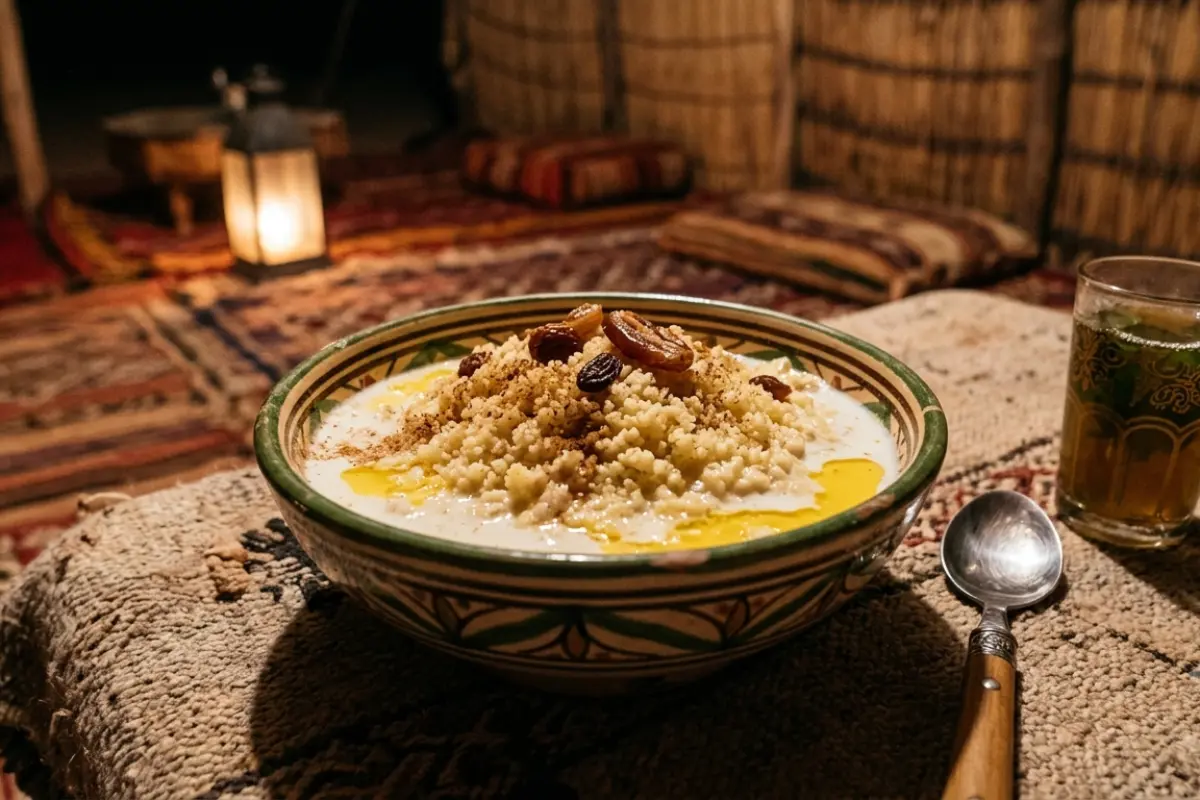
5 minTransfer the beautifully fluffed couscous to a large communal serving bowl, ideally a traditional clay or wooden gsaa. Create a gentle mound in the center. Pour a generous amount of warm milk over the couscous — traditionally enough to pool around the base of the mound. Place a large spoonful of smen or clarified butter on the very top of the mound and allow it to melt slowly in front of your guests. Sprinkle lightly with sugar if desired. Serve immediately, passing extra warm milk and butter on the side.
Tip: Serve this dish communally for the full Bedouin experience. The ritual of everyone eating from the same bowl deepens the cultural meaning of this humble and magnificent dish.
Common Mistakes to Avoid
✗ Using instant couscous without proper steaming
Fix: Instant couscous that is simply soaked in boiling water results in a mushy, dense texture that cannot hold up to the milk. Always use traditional medium-grain couscous and steam it at least twice for the authentic airy lightness this dish requires.
✗ Boiling the milk at high heat
Fix: High-heat boiling destroys the natural sugars in the milk that give this dish its characteristic gentle sweetness. Always warm the milk slowly over medium-low heat, removing it just as it begins to steam and show the first signs of simmering.
✗ Skipping the inter-steam aeration step
Fix: Many home cooks attempt a single long steam to save time, but this results in dense, clumped couscous. The crucial middle step of transferring, aerating, and re-hydrating the grains between steams is what creates the signature feather-light texture of properly prepared Bedouin couscous.
✗ Using too little butter or substituting with margarine
Fix: The richness and aroma of genuine smen or quality clarified butter is irreplaceable in this dish. Margarine or low-fat butter alternatives completely undermine the flavor. Use real butter generously — this dish is meant to be indulgent, and the butter is not an afterthought but a star ingredient.
Ingredient Substitutions
Instead of: Smen (aged clarified Moroccan butter)
Use: High-quality ghee or unsalted European-style butter can replace smen. Ghee comes closest in texture and smoke point, though it lacks the tangy aged notes of traditional smen. For a more authentic approximation, brown the butter lightly before adding.
Instead of: Whole cow's milk
Use: Fresh goat's milk is the traditional Bedouin alternative and lends a slightly earthier, richer flavor. Oat milk or full-fat coconut milk can be used for dairy-free versions, though the flavor profile will shift significantly toward sweetness with coconut milk.
Instead of: Medium-grain couscous
Use: Fine-grain couscous can be used but requires a shorter steaming time and less water. Maftoul (Palestinian pearl couscous) can also work for a chewier, more substantial texture variation. Avoid large Israeli couscous as it behaves very differently.
Instead of: Orange blossom water
Use: Rose water can be used in equal amounts for a different but equally traditional Moroccan floral note. Vanilla extract can provide an aromatic sweetness in non-traditional contexts, though it departs from authentic flavor.
Serving Suggestions
Serve in a large communal clay bowl or traditional wooden gsaa placed at the center of the table, allowing guests to eat directly from the shared vessel in the traditional Bedouin manner.
Accompany with a small pitcher of extra warm milk on the side so guests can add more according to their preference — some enjoy a drier, butter-forward couscous while others prefer it swimming in milk.
A light dusting of ground cinnamon or a drizzle of authentic honey such as Moroccan thyme or jujube honey over the finished dish pairs beautifully with the milk and butter.
This dish is best enjoyed as a late-evening meal, a breakfast, or a sweet conclusion to a large Moroccan feast — its comforting warmth and gentle sweetness make it ideal for any of these occasions.
Storage & Reheating
Storage
Store leftover couscous and milk separately in airtight containers in the refrigerator for up to 2 days. The couscous will firm up and clump when cold, which is normal. Do not store assembled portions as the milk will make the couscous waterlogged over time.
Reheating
To reheat the couscous, transfer it to a steamer basket and steam for 8 to 10 minutes, breaking up clumps with a fork as it warms. Alternatively, place in a microwave-safe bowl, add a tablespoon of water, cover with a damp paper towel, and microwave in 60-second intervals, fluffing between each interval. Warm the milk separately in a saucepan over gentle heat before reassembling.
Never reheat the couscous by pouring cold or hot milk directly over it without re-steaming first. The grains must be revived through steam or gentle moist heat to return to their original fluffy state before serving with fresh warm milk and butter.
Frequently Asked Questions
Recipe by

Fatima El Amrani
فاطمة العمراني
Master Chef
View all recipes by Fatima →
You May Also Like
Our Ebooks

The Moroccan Vegan
$12.56

Tables of Fez: A Royal Palace Legacy
$22.99

The Soul of Morocco
$20.00
YouTube
Watch step-by-step cooking videos and learn traditional Moroccan techniques.
450+
Subscribers
150+
Videos