
60
Prep (min)
120
Cook (min)
6
Servings
Hard
Level
Introduction
Couscous with Pigeon and Saffron stands as one of the crown jewels of Moroccan gastronomy, a dish that has graced the tables of sultans, scholars, and celebrated families in the ancient imperial city of Fez for centuries. Pigeon, known locally as hamam, was historically considered a prestigious ingredient reserved for the elite, prized for its rich, dark, and deeply flavorful meat that absorbs spices and broth in ways that chicken or lamb cannot replicate. Saffron, the most valuable spice in the world, was cultivated in the Moroccan region of Taliouine and found its way into the finest Fassi kitchens, imparting its unmistakable golden hue and floral complexity to this magnificent dish.
The city of Fez, Morocco's oldest imperial capital and a UNESCO World Heritage site, has long been considered the spiritual home of refined Moroccan cuisine. The culinary traditions of Fez are characterized by their sophistication, their layering of flavors, and their adherence to ancient techniques passed down through generations of skilled home cooks and palace chefs. Couscous itself, a dish with Berber origins dating back over a thousand years, reached its most elevated expression in the hands of Fassi cooks who learned to steam the semolina grain three times for perfect lightness and pair it with the most exquisite proteins and aromatics available. The combination of pigeon and saffron represents the pinnacle of this culinary philosophy.
Today, Couscous with Pigeon and Saffron is typically prepared for Friday family meals, weddings, and the holy month of Ramadan, where it appears on the iftar table as a gesture of abundance and hospitality. The preparation is labor-intensive and demands patience, skill, and the finest ingredients, which is why it is regarded as a mark of culinary mastery among Moroccan cooks. Each family guards its own variation of the recipe, adjusting the balance of cinnamon, ginger, and saffron to reflect their unique heritage, but all share the same commitment to producing a dish of extraordinary depth, beauty, and generosity.
About This Recipe
Couscous with Pigeon and Saffron is deeply embedded in the culinary history of Fez, Morocco's oldest imperial city founded in 789 CE by Moulay Idriss I. The dish reflects the extraordinary confluence of Berber, Arab, and Andalusian culinary traditions that characterizes Fassi cooking, widely acknowledged as the most refined and complex regional cuisine within Morocco. Pigeon was historically a prized and costly protein in North Africa and the Middle East, documented in medieval Arab culinary manuscripts as a prestige ingredient for royal and scholarly tables. Saffron, cultivated in Morocco's Anti-Atlas region around Taliouine for centuries, was equally prestigious and expensive, its use in a dish signaling both wealth and hospitality to honored guests. The combination of these two luxury ingredients over the foundational Berber grain of couscous represents a distillation of Moroccan culinary identity — ancient technique elevated by the finest available ingredients. During the Marinid and Saadian dynasties, the palace kitchens of Fez produced spectacular versions of this dish for royal banquets, and through the centuries the recipe filtered outward into the great medina households and eventually the broader Moroccan culinary tradition. Today it remains a centerpiece of Moroccan celebratory cooking, particularly in Fez, where it is prepared for weddings, the Prophet's birthday, and Eid al-Adha, embodying the Moroccan ideal that true hospitality is expressed through the quality and generosity of food shared with family and guests.
Nutrition / serving
Recipe Tags
Understanding the Ingredients
Pigeon (squab)
Fresh whole pigeons are the heart of this dish, prized in Moroccan cooking for their intensely rich, gamey, and tender dark meat. Younger birds, known as squab, are preferred as they are more tender and cook evenly. If purchasing from a Moroccan butcher, ask for them to be cleaned and halved. The bones contribute enormous depth to the braising broth.
Couscous (medium grain)
Authentic Moroccan couscous uses medium-grain semolina couscous that is rolled and dried traditionally. It must be hand-worked with water and oil between each steaming to separate the grains and achieve the characteristic light, fluffy texture. Avoid instant couscous for this recipe as the texture will not honor the dish's integrity.
Saffron threads
Moroccan saffron from the Taliouine region of the Anti-Atlas mountains is considered among the finest in the world. Saffron threads should be bloomed in warm water or warm broth before being added to the dish to fully release their color, aroma, and flavor compounds. Use a generous pinch — saffron is the defining spice of this recipe.
Smen (aged Moroccan butter)
Smen is a fermented, aged clarified butter central to Moroccan festive cooking, offering a pungent, nutty depth that ordinary butter cannot replicate. It is worked into the couscous after each steaming to enrich the grain. If smen is unavailable, clarified butter (ghee) can be used, though the flavor profile will be milder.
Onions
Large yellow or white onions are slowly cooked down in the braising liquid to create a sweet, melting base for the saffron sauce. They should be finely grated or thinly sliced to break down completely during the long cooking process, thickening the broth naturally and adding a gentle sweetness that balances the saffron's floral bitterness.
Ground ginger
Dried ground ginger is a foundational spice in Moroccan braised dishes, adding a warm, slightly sharp note that lifts and supports the heavier flavors of the pigeon and saffron. It works in harmony with cinnamon and black pepper to create the classic Fassi spice profile without overwhelming the delicate saffron.
Cinnamon stick
A whole cinnamon stick is added to the braising pot to slowly release its warming, sweet-spicy flavor into the broth throughout the long cooking process. It pairs beautifully with pigeon and saffron, adding a subtle warmth that is characteristic of Moroccan celebratory cooking. Remove it before serving.
Chickpeas (soaked overnight)
Dried chickpeas soaked overnight and cooked until tender are a traditional accompaniment in this couscous, adding a creamy, earthy counterpoint to the rich pigeon and aromatic saffron broth. They absorb the saffron-laced cooking liquid and become golden, nutty morsels that complement every element of the dish.
Fresh flat-leaf parsley and cilantro
A tied bouquet of fresh parsley and cilantro is cooked with the pigeon to add a fresh herbal brightness to the braising liquid. These herbs are foundational in Moroccan savory cooking and help balance the richness of the meat and butter. Additional fresh herbs can be finely chopped and scattered over the finished dish as a garnish.
Olive oil
High-quality Moroccan extra-virgin olive oil is used to begin the braising process, coating the pigeon pieces and onions before liquid is added. Moroccan olive oil, particularly from the Meknes or Marrakech regions, has a robust, slightly peppery character that enriches the broth and complements the saffron perfectly.
Step-by-Step Cooking Guide
Prepare and marinate the pigeons
40 minClean the whole pigeons thoroughly, removing any remaining feathers, and halve them through the breastbone. In a large bowl, combine the pigeon halves with olive oil, ground ginger, a generous pinch of bloomed saffron threads, salt, and black pepper. Massage the spice mixture thoroughly into every surface of the bird, ensuring even coverage. Cover and allow to marinate at room temperature for at least 30 minutes, or refrigerate for up to 2 hours for deeper flavor penetration.
Tip: To bloom saffron, place the threads in 3 tablespoons of warm water or warm chicken broth and allow to steep for at least 15 minutes. The liquid will turn deep golden and intensely aromatic. Use this saffron liquid rather than dry threads for more even color and flavor distribution throughout the dish.
Build the saffron braising base
20 minIn the bottom pot of a couscoussier or a large heavy-bottomed pot, heat olive oil over medium heat. Add the finely grated or thinly sliced onions and cook, stirring frequently, until they soften and become translucent, about 10 minutes. Add the marinated pigeon halves, skin-side down, and cook until lightly browned on both sides, about 5 minutes per side. Add the soaked chickpeas, cinnamon stick, tied herb bouquet, remaining bloomed saffron with its liquid, and enough water or light chicken stock to come three-quarters up the pigeons. Season generously with salt, bring to a vigorous boil, then reduce heat to a gentle simmer.
Tip: Do not rush the onion cooking stage. Properly softened onions dissolve into the broth during the long braise and create a naturally thickened, glossy sauce. This is a crucial step for achieving the characteristic Fassi sauce consistency.
First steaming of the couscous
25 minWhile the pigeon begins to braise, place the dry couscous in a large wide bowl. Sprinkle with lightly salted cold water, about 100ml per 500g of couscous, working it in with your fingertips in circular motions to evenly hydrate the grains. Allow to rest for 10 minutes. Break up any clumps gently with your hands, then place the couscous in the perforated upper basket of the couscoussier set over the simmering broth. Do not seal the joint too tightly at first. Steam uncovered for 15 minutes from the moment steam visibly rises through the couscous.
Tip: The technique of hand-working the couscous between steamings is the single most important factor in achieving the perfect texture. Never skip this step or compress the couscous in the steamer basket — it must remain loose to steam evenly from below.
Second and third steaming of the couscous
50 minTurn the steamed couscous out into the wide bowl and spread it out. Sprinkle with another 80ml of lightly salted warm water and work a generous tablespoon of smen or clarified butter through the grains with your palms, separating every clump until the grains are entirely individual and fluffy. Return to the steamer basket and steam for another 15 minutes. Turn out again, repeat the water and smen working process, and steam a third time for a final 15 minutes. The pigeon should now be nearly tender. After the third steaming, work through a final generous portion of smen.
Tip: Each steaming cycle further develops the couscous texture. After the third steam, the grains should be plump, glistening, completely separate, and melt on the tongue. This triple-steaming process is the authentic Moroccan method and cannot be shortcut for a truly special result.
Finish the saffron pigeon braise
20 minCheck the pigeon for tenderness — the meat should be falling easily from the bone when pressed. If not, continue simmering for an additional 15-20 minutes. Once tender, remove the pigeon pieces and chickpeas from the broth and set aside, keeping them warm. Increase the heat and reduce the saffron broth by one-third, stirring occasionally, until it thickens into a glossy, intensely golden sauce. Taste and adjust seasoning with salt and additional bloomed saffron if desired. Remove the cinnamon stick and herb bouquet.
Tip: The sauce should coat the back of a spoon but remain pourable. If it becomes too thick, add a small splash of hot water. The reduced saffron sauce is the soul of the dish — take time to taste and balance it perfectly before plating.
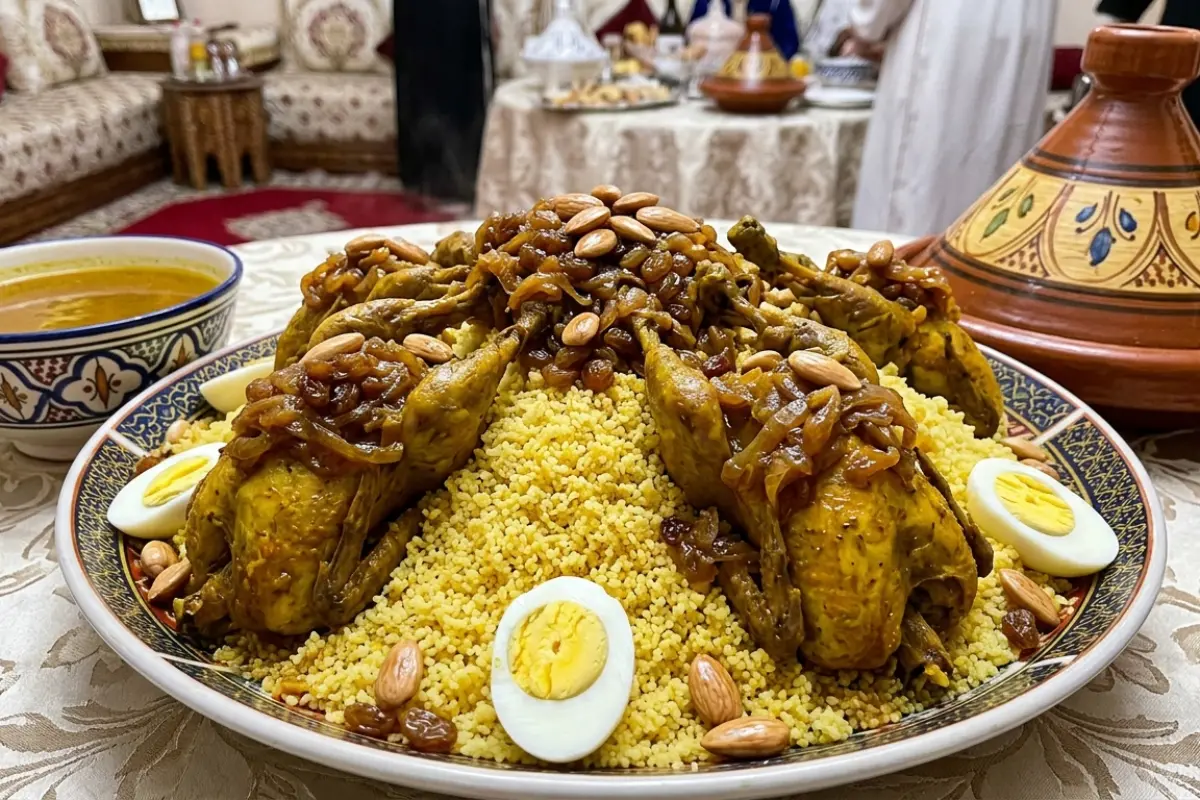
Plate and present the dish
10 minMound the finished couscous in a large, tall dome shape in the center of a wide traditional Moroccan serving platter. Create a well in the top of the couscous mound and arrange the braised pigeon halves artfully around and on top, nestling the golden chickpeas throughout. Ladle the brilliant saffron sauce generously over the entire dish, ensuring the couscous absorbs some of the liquid at the base. Pour any remaining sauce into a separate small bowl for guests to add as desired. Garnish with a few threads of fresh saffron and a scattering of finely chopped fresh parsley.
Tip: Traditional presentation calls for a high central dome of couscous with the protein arranged visibly on top and around the sides. The dish should look abundant and generous. Serve immediately as couscous loses its perfect texture as it sits and cools.
Common Mistakes to Avoid
✗ Using instant couscous and only preparing it once
Fix: Authentic Moroccan couscous requires three separate steamings with hand-working between each cycle. Instant couscous reconstituted with boiling water produces a dense, pasty texture entirely inappropriate for this celebratory dish. Purchase authentic medium-grain semolina couscous and commit to the traditional three-steam process.
✗ Adding saffron directly without blooming it first
Fix: Dry saffron threads added directly to the pot release their color and flavor unevenly and inefficiently. Always bloom saffron in warm water or warm broth for a minimum of 15 minutes before use. This step maximizes the color impact, releases the full aromatic complexity, and ensures even distribution throughout the dish.
✗ Rushing the pigeon braising time
Fix: Pigeon, particularly older birds, requires a long, gentle braise to become truly tender and to develop the deep flavors needed for a proper saffron broth. Attempting to speed the process with high heat toughens the meat and prevents the sauce from developing its characteristic body and depth. Maintain a gentle, patient simmer.
✗ Under-seasoning the couscous itself
Fix: Many cooks focus all their seasoning attention on the braise and neglect the couscous grains. Each addition of water during the steaming process should include a pinch of salt, and the smen worked into the grains should be generous. Unseasoned couscous tastes flat regardless of how perfect the pigeon and sauce are.
Ingredient Substitutions
Instead of: Fresh pigeon (squab)
Use: Cornish game hen or bone-in chicken thighs can replace pigeon in terms of cooking method, though the flavor will be significantly milder and less complex. Increase the spice quantities slightly to compensate for the less intensely flavored meat.
Instead of: Smen (aged Moroccan butter)
Use: High-quality clarified butter (ghee) is the best substitute for smen, providing a similar richness without the fermented complexity. A small piece of aged cheddar blended into soft butter can approximate some of the pungency of smen if desired.
Instead of: Moroccan saffron threads
Use: Spanish or Iranian saffron threads are excellent alternatives with very similar flavor profiles. Avoid powdered saffron as quality is difficult to assess and adulteration is common. If saffron is entirely unavailable, a small amount of turmeric can provide color but will not replicate the floral flavor.
Instead of: Dried chickpeas soaked overnight
Use: Canned chickpeas that have been drained and rinsed can be used to save time, added to the braise in the final 30 minutes of cooking rather than from the beginning. The texture will be slightly softer and they will absorb less of the saffron broth flavor.
Serving Suggestions
Serve the entire platter in the center of the table following Moroccan tradition, allowing guests to eat communally from the shared dish using the right hand or spoons. A small bowl of additional warm saffron sauce on the side allows guests to moisten their portion to their preference.
Accompany with a light Moroccan salad of finely diced tomatoes, cucumbers, and preserved lemon dressed with argan oil and fresh herbs, and offer warm khobz (Moroccan round bread) for soaking up the extraordinary saffron broth.
This dish pairs beautifully with chilled fresh mint tea or a glass of cold leben (cultured buttermilk) to refresh the palate between the rich, aromatic bites.
For a complete festive menu in the Fassi tradition, precede the couscous with a selection of cold Moroccan salads (zaalouk, taktouka, carrot with chermoula) and follow with a platter of seasonal fresh fruit and almond pastries.
Storage & Reheating
Storage
Store the couscous, pigeon pieces, and saffron sauce separately in airtight containers in the refrigerator. The pigeon and sauce will keep well for up to 3 days. The couscous is best consumed on the day it is made but can be refrigerated for up to 2 days. Do not combine them for storage as the couscous will absorb all the sauce and become saturated.
Reheating
Reheat the pigeon and saffron sauce together gently in a covered pot over low heat, adding a small splash of water if the sauce has thickened too much during refrigeration. Reheat the couscous by placing it in the couscoussier steamer basket over boiling water for 10-15 minutes, working through a small knob of butter with your hands after steaming to restore its fluffy texture.
The saffron broth actually deepens and improves in flavor overnight as the spices continue to meld. Many experienced Moroccan cooks prepare the pigeon braise the day before serving and find the results superior. Only prepare the couscous fresh on the day of serving for best results.
Frequently Asked Questions
Recipe by

Fatima El Amrani
فاطمة العمراني
Master Chef
View all recipes by Fatima →
You May Also Like
Our Ebooks

The Moroccan Vegan
$12.56

Tables of Fez: A Royal Palace Legacy
$22.99

The Soul of Morocco
$20.00
YouTube
Watch step-by-step cooking videos and learn traditional Moroccan techniques.
450+
Subscribers
150+
Videos