
20
Prep (min)
35
Cook (min)
8
Servings
Medium
Level
Introduction
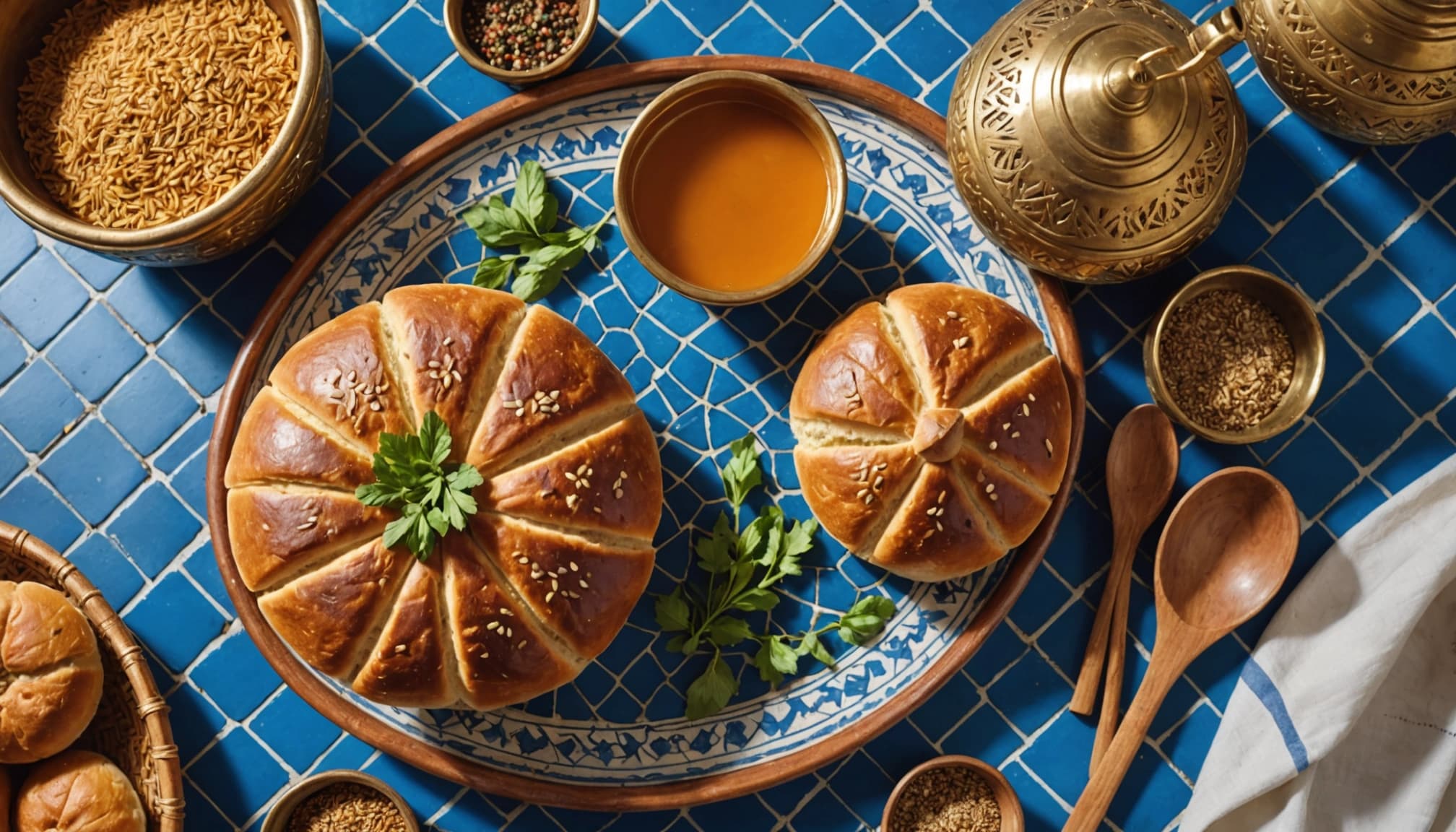
Cumin bread with sesame, known as 'Khubz al-Kamoun bil Simsim' in Arabic, represents one of Morocco's most beloved bakery traditions. This aromatic bread combines the warm, earthy essence of ground cumin with the nutty crunch of sesame seeds, creating a harmonious blend that has graced Moroccan tables for centuries.
Originating from the bustling markets of Casablanca and Rabat, this bread was traditionally baked in communal ovens where neighbors would gather to share recipes and stories. The distinctive aroma of cumin-scented dough would fill entire neighborhoods, signaling the start of meal preparations and bringing communities together around the universal love of fresh bread.
What makes this bread truly special is its versatility and the way it complements traditional Moroccan dishes. The cumin adds a subtle warmth without overwhelming the palate, while the sesame seeds provide a delightful textural contrast. Whether served alongside a hearty tagine, used to scoop up harira soup, or enjoyed simply with olive oil and za'atar, this bread embodies the essence of Moroccan hospitality and culinary craftsmanship.
About This Recipe
Cumin bread with sesame has deep roots in Morocco's rich culinary heritage, dating back to the medieval period when spice trade routes brought cumin from the eastern Mediterranean to North African markets. This bread became particularly popular in urban centers like Casablanca and Rabat, where bakers in the medinas would specialize in creating various spiced breads to accompany the diverse range of Moroccan dishes. The combination of cumin and sesame reflects the cultural exchange between Arab, Berber, and Mediterranean influences that shaped Moroccan cuisine. Traditionally baked in communal wood-fired ovens called 'furn,' this bread was often prepared for special occasions and religious holidays, with families marking their loaves with distinctive patterns before sending them to the neighborhood baker. The recipe has been passed down through generations of Moroccan bakers, each adding their own subtle variations while maintaining the essential character that makes this bread a beloved staple of Moroccan tables.
Nutrition / serving
Recipe Tags
Understanding the Ingredients
All-purpose flour
Forms the base structure of the bread, providing the gluten network necessary for a soft, chewy texture
Ground cumin
The star spice that gives this bread its distinctive earthy, warm flavor characteristic of Moroccan cuisine
Sesame seeds
Adds nutty flavor and creates the signature crunchy topping that contrasts beautifully with the soft interior
Active dry yeast
Essential for creating the light, airy texture and helps develop the bread's characteristic flavor through fermentation
Olive oil
Contributes to the tender crumb and adds richness while keeping the bread moist
Honey
Feeds the yeast and adds subtle sweetness that balances the earthiness of the cumin
Step-by-Step Cooking Guide
Activate the Yeast
10 minDissolve active dry yeast in warm water with a pinch of honey, whisking gently until foamy.
Tip: Water temperature should be between 105-110°F to properly activate yeast without killing it
Prepare Dry Ingredients
5 minIn a large mixing bowl, combine flour, ground cumin, salt, and mix thoroughly to distribute spices evenly.
Tip: Sift the flour for a lighter texture and ensure cumin is evenly distributed
Form the Dough
5 minCreate a well in the flour mixture, add activated yeast mixture, olive oil, and remaining water, mixing until a shaggy dough forms.
Tip: Don't overmix at this stage; the dough will come together during kneading
Knead the Dough
10 minTurn dough onto a floured surface and knead for 8-10 minutes until smooth and elastic.
Tip: The dough should spring back when poked and feel slightly tacky but not sticky
First Rise
60 minPlace dough in oiled bowl, cover with damp cloth, and let rise in warm place until doubled in size.
Tip: Create a warm environment by placing bowl near a warm oven or sunny window
Shape and Top
10 minPunch down dough, shape into a round loaf, place on parchment-lined baking sheet, brush with egg wash, and sprinkle generously with sesame seeds.
Tip: Score the top with a sharp knife to prevent cracking and ensure even baking
Final Rise
30 minCover shaped loaf and let rise for 30 minutes until puffy but not doubled.
Tip: Don't over-proof as this can cause the bread to collapse in the oven
Bake
35 minPreheat oven to 425°F and bake for 30-35 minutes until golden brown and hollow-sounding when tapped.
Tip: Place a pan of water on bottom rack for steam to create a crispy crust
Common Mistakes to Avoid
✗ Using water that's too hot for yeast activation
Fix: Test water temperature with a thermometer; it should feel warm but not hot to the touch
✗ Under-kneading the dough
Fix: Knead until the dough passes the windowpane test - you can stretch it thin without tearing
✗ Placing bread in a cold environment to rise
Fix: Find a draft-free warm spot around 75-80°F for optimal rising conditions
✗ Over-proofing the final shaped loaf
Fix: Watch for the dough to increase by about 50% rather than doubling during the second rise
Ingredient Substitutions
Instead of: All-purpose flour
Use: Bread flour for chewier texture or whole wheat flour for nuttier flavor
Instead of: Ground cumin
Use: Coriander or fennel seeds for different aromatic profiles
Instead of: Sesame seeds
Use: Nigella seeds, poppy seeds, or sunflower seeds
Instead of: Honey
Use: Maple syrup or brown sugar for yeast activation
Serving Suggestions
Serve warm with Moroccan mint tea and honey for breakfast
Use as a base for Moroccan-style avocado toast with harissa
Accompany hearty tagines and stews for sopping up flavorful sauces
Slice and toast for making unique sandwich bread with Middle Eastern fillings
Serve alongside harira soup during Ramadan breaking fast meals
Storage & Reheating
Storage
Store at room temperature wrapped in clean kitchen towel for up to 3 days or freeze sliced bread for up to 3 months
Reheating
Warm in 350°F oven for 5-7 minutes or toast slices in a dry skillet
Brush with water before reheating to restore moisture and prevent drying out
Frequently Asked Questions
Recipe by

Abdrahman Idrissi
عبد الرحمن الإدريسي
Pastry & Bread Chef
View all recipes by Abdrahman →
You May Also Like
Our Ebooks

The Moroccan Vegan
$12.56

Tables of Fez: A Royal Palace Legacy
$22.99

The Soul of Morocco
$20.00
YouTube
Watch step-by-step cooking videos and learn traditional Moroccan techniques.
450+
Subscribers
150+
Videos