
20
Prep (min)
40
Cook (min)
4
Servings
Easy
Level
Introduction
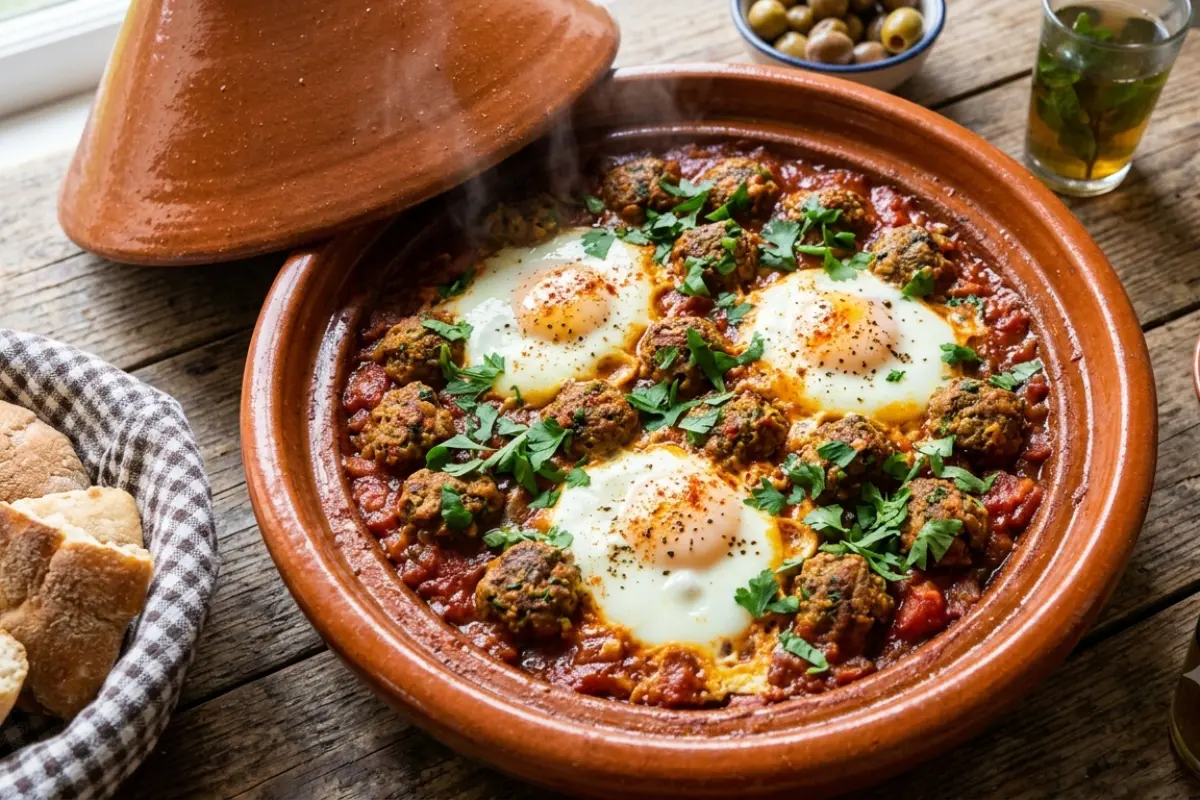
Egg Tagine with Kofta and Fresh Tomatoes, known in Moroccan Arabic as Tagine Beid bil Kofta wal Tamatim, is one of the most iconic and comforting dishes in the Moroccan culinary tradition. Originating in the bustling medinas of cities like Marrakech and Fes, this dish has been passed down through generations of Moroccan families who perfected the art of balancing bold spices with the natural sweetness of sun-ripened tomatoes. The clay tagine vessel in which it is cooked plays an essential role, trapping steam and circulating moisture in a way that no other cookware can replicate, producing a sauce that is deeply flavored and silky in texture.
The concept of cooking eggs directly into a simmering sauce is deeply rooted in North African and Middle Eastern culinary philosophy, where simplicity of technique meets complexity of flavor. In Morocco, this dish is often prepared on weekday mornings as a nourishing family breakfast, served communally with rounds of crusty khobz bread for dipping. Yet it is equally at home on the dinner table, where the addition of spiced kofta meatballs elevates it into a full and satisfying main course. Each household carries its own closely guarded variation, with some cooks adding preserved lemon, others folding in fresh cilantro or a drizzle of argan oil just before serving.
Beyond its delicious taste, this tagine reflects the broader values of Moroccan cuisine: generosity, communal eating, and a deep respect for quality ingredients. The use of fresh tomatoes rather than canned preserves the brightness of the sauce, while hand-mixed kofta ensures a tender, flavorful meatball that holds together beautifully during the slow cooking process. Whether you are a seasoned cook or preparing your first Moroccan dish, this egg tagine is an accessible and deeply rewarding recipe that will transport you straight to the heart of a Moroccan family kitchen.
About This Recipe
The tradition of cooking eggs in a spiced tomato sauce with meat has deep roots across North Africa and the broader Mediterranean world, but the Moroccan version with its distinctive blend of ras el hanout, cumin, and paprika is uniquely its own. Tagine cooking itself dates back many centuries in Morocco, with the conical clay vessel perfectly adapted to the cooking methods of the Amazigh Berber people who originally populated the Atlas Mountains and pre-Saharan regions. Tomatoes arrived in Morocco through trade and colonial contact during the sixteenth and seventeenth centuries and were quickly integrated into the local culinary repertoire, where they found a natural home in the clay tagine alongside indigenous spices and techniques. The combination of spiced minced meat kofta with eggs and tomatoes in a tagine became particularly popular in the cities of Marrakech, Fes, and Meknes, where bustling food stalls and family restaurants served the dish to workers and travelers as an affordable, nourishing, and deeply satisfying meal. Today, Tagine Beid bil Kofta wal Tamatim is recognized across Morocco and the Moroccan diaspora worldwide as a quintessential expression of the country's culinary identity, embodying the Moroccan gift for transforming humble, everyday ingredients into something that is far greater than the sum of its parts.
Nutrition / serving
Recipe Tags
Understanding the Ingredients
Ground Beef
Freshly ground beef with a medium fat content of around 15 to 20 percent is ideal for making kofta that is juicy and flavorful without being greasy. The fat content is important because it keeps the meatballs moist during the slow cooking process in the tagine. Lamb can also be used for a more traditional and richer flavor profile common in many Moroccan households.
Fresh Tomatoes
Ripe, fleshy tomatoes such as Roma or plum tomatoes are preferred for this tagine because they have a lower water content and a concentrated, sweet flavor that forms the base of the sauce. The tomatoes are grated directly into the tagine, which removes the skin and creates a smooth, naturally thick purée. Using fresh tomatoes is essential to achieving the vibrant, bright sauce that defines this dish.
Eggs
Fresh large eggs are cracked directly into wells made in the simmering tomato sauce during the final stage of cooking. The eggs are cooked just until the whites are set but the yolks remain soft and runny, creating a luscious, creamy element that contrasts beautifully with the spiced tomato sauce. The quality of the eggs matters greatly here, as free-range or farm-fresh eggs have richer yolks and superior flavor.
Ras el Hanout
Ras el Hanout is a complex, aromatic Moroccan spice blend whose name translates to 'top of the shop,' indicating that it traditionally contains the best spices a merchant has to offer. It typically includes cumin, coriander, cinnamon, ginger, turmeric, cardamom, and black pepper among many other spices. A small amount added to the kofta mixture and the tomato sauce gives this tagine its distinctly Moroccan character and depth.
Sweet Paprika
Sweet paprika adds a beautiful red color and a mild, slightly sweet pepper flavor to both the kofta and the tomato sauce. It is a foundational spice in Moroccan cooking and contributes significantly to the visual appeal of the finished dish. Smoked paprika can be used as a variation to add a subtle smokiness that complements the other spices beautifully.
Ground Cumin
Cumin is one of the most essential spices in Moroccan cuisine and brings an earthy, warm depth of flavor to the kofta mixture. It pairs naturally with tomatoes and beef, enhancing the savory quality of the sauce. Freshly ground cumin seeds will deliver the most potent and aromatic result compared to pre-ground cumin that has been stored for a long time.
Fresh Parsley and Cilantro
A generous mix of freshly chopped flat-leaf parsley and cilantro is incorporated directly into the kofta mixture and used as a finishing garnish. These herbs provide brightness, freshness, and a distinctive herbal note that balances the richness of the meat and the acidity of the tomatoes. In Morocco, these two herbs are almost always used together in savory dishes, each one complementing the other.
Olive Oil
A generous amount of good-quality extra virgin olive oil is used to sauté the onion base and is also drizzled over the dish during cooking to enrich the sauce. Moroccan olive oil, produced in regions like Meknes and the Beni Mellal-Khenifra area, is known for its fruity and slightly peppery character. Olive oil contributes to the silky texture of the finished sauce and carries fat-soluble spices throughout the dish.
Onion
A finely grated or very finely diced yellow onion forms the aromatic foundation of the tomato sauce. When cooked slowly in olive oil, the onion becomes sweet and translucent, melting into the sauce and adding body and sweetness without overwhelming the other flavors. Grating the onion rather than dicing it ensures it disappears completely into the sauce, which is important for texture.
Garlic
Fresh garlic cloves are used both in the kofta mixture and in the tomato sauce base, adding pungent, savory depth to the entire dish. Garlic is indispensable in Moroccan cooking and when it is cooked slowly in olive oil it becomes sweet and mellow, contributing a rich, rounded flavor to the sauce rather than a sharp bite.
Step-by-Step Cooking Guide
Prepare the Kofta Mixture
15 minIn a large mixing bowl, combine the ground beef with the finely grated onion, minced garlic, chopped parsley, chopped cilantro, ground cumin, sweet paprika, ras el hanout, salt, and black pepper. Mix everything together thoroughly using your hands, working the mixture for at least two to three minutes until all the spices and herbs are evenly distributed throughout the meat. Cover the bowl and refrigerate the mixture for at least fifteen minutes to allow the flavors to meld together.
Tip: Do not over-mix the kofta or it can become dense and tough. Mix just until the ingredients are combined and uniform in color and texture.
Shape the Kofta Meatballs
10 minRemove the kofta mixture from the refrigerator and shape it into small, walnut-sized meatballs roughly three centimeters in diameter. Roll each meatball gently between your palms until smooth and round. Alternatively, you can shape the kofta into small oval or finger-shaped pieces, which is another traditional presentation style. Place the shaped kofta on a plate and set aside while you prepare the tomato sauce.
Tip: Slightly wet hands will prevent the meat from sticking and help you achieve smooth, evenly shaped meatballs without cracks.
Build the Tomato Sauce Base
12 minHeat the olive oil in the base of the tagine over medium-low heat on the stovetop, or use a heavy-bottomed skillet if you do not have a traditional tagine. Add the finely grated onion and cook gently for five minutes until soft and translucent. Add the minced garlic and cook for another one minute. Stir in the sweet paprika, cumin, and ras el hanout and cook the spices in the oil for thirty seconds until fragrant. Grate the fresh tomatoes directly into the pan using a box grater, discarding the tomato skins, and stir everything together. Season with salt and a pinch of sugar to balance the acidity.
Tip: Cooking the spices briefly in the oil before adding the tomatoes, a technique called blooming, releases their fat-soluble flavor compounds and creates a much more aromatic and complex sauce.
Simmer the Kofta in the Sauce
25 minCarefully nestle the shaped kofta meatballs into the tomato sauce, arranging them in a single layer. Drizzle a little extra olive oil over the top and cover the tagine with its conical lid. Reduce the heat to low and allow the kofta to simmer gently in the sauce for twenty to twenty-five minutes, turning the meatballs once halfway through the cooking time. The sauce should reduce and thicken considerably during this time, becoming deeply colored and intensely flavored.
Tip: Resist the temptation to lift the lid frequently during cooking. Each time you lift the lid, steam escapes and the sauce takes longer to develop its proper consistency and flavor.
Add the Eggs
7 minUsing a spoon, create four evenly spaced wells or indentations in the tomato sauce between the kofta meatballs. Crack one fresh egg carefully into each well, keeping the yolk intact. Season the eggs lightly with salt and a pinch of paprika. Replace the tagine lid and continue cooking over low heat for five to seven minutes, or until the egg whites are fully set and opaque but the yolks are still soft, runny, and glossy. The residual heat of the sauce will gently cook the eggs from below while the steam under the lid sets the whites from above.
Tip: For perfectly cooked eggs, have the tomato sauce at a gentle simmer before adding the eggs and watch the timing carefully. Overcooked yolks will be chalky and dense, losing the luxurious, runny quality that makes this dish so appealing.
Garnish and Serve
3 minRemove the tagine from the heat as soon as the eggs have reached your desired level of doneness. Scatter a generous amount of freshly chopped parsley and cilantro over the top of the entire dish. Add a pinch of cumin and a light dusting of paprika for color and aroma. Serve the tagine immediately and piping hot, directly from the clay vessel placed in the center of the table. Accompany with plenty of warm, freshly baked Moroccan khobz bread for dipping into the rich sauce and breaking the soft egg yolks.
Tip: The tagine retains heat exceptionally well, so it will stay warm at the table for a long time. Always place the hot tagine on a wooden board or trivet to protect your table surface from the heat.
Common Mistakes to Avoid
✗ Using cold eggs directly from the refrigerator
Fix: Allow eggs to come to room temperature for at least fifteen minutes before adding them to the hot tagine. Cold eggs can cause the surrounding sauce to seize up briefly and the whites may cook unevenly, resulting in rubbery whites before the yolk has had a chance to warm through.
✗ Cooking the tomato sauce on too high a heat
Fix: Keep the heat consistently low to medium-low throughout the entire cooking process. High heat will cause the tomato sauce to scorch on the bottom, become bitter, and reduce too quickly before the kofta has had time to cook through and absorb the flavors of the sauce.
✗ Making the kofta meatballs too large
Fix: Shape the kofta to be no larger than a walnut, approximately three centimeters in diameter. Oversized meatballs take much longer to cook through and can be difficult to nestle around the eggs in the tagine. Smaller meatballs cook more evenly and absorb more sauce per serving.
✗ Using canned tomatoes instead of fresh tomatoes
Fix: While canned tomatoes can work in a pinch, fresh ripe tomatoes that are grated directly into the pan produce a sauce with a brighter, more vibrant flavor and a more appealing color. The natural pectin in fresh tomatoes also helps the sauce achieve the right body and consistency without becoming watery.
Ingredient Substitutions
Instead of: Ground beef
Use: Ground lamb provides a richer, more traditional Moroccan flavor. Ground turkey can be used for a lighter, lower-fat alternative, though the cooking time may need to be reduced slightly as turkey dries out faster than beef.
Instead of: Ras el Hanout
Use: A combination of equal parts ground cumin, ground coriander, ground cinnamon, and ground ginger can approximate the warmth and complexity of ras el hanout if the blend is not available. Alternatively, a Moroccan-style seven spice mix works well as a direct swap.
Instead of: Fresh tomatoes
Use: One 400-gram can of good-quality crushed or whole peeled tomatoes can be substituted during winter months when fresh tomatoes are out of season. Add a pinch of sugar to balance the acidity of canned tomatoes and reduce the sauce a little longer to achieve the right consistency.
Instead of: Cilantro
Use: For those who find cilantro unpleasant, flat-leaf parsley alone can be used in double the quantity. Fresh mint can also be used in smaller amounts as a garnish, adding a different but equally refreshing herbal note to the finished dish.
Serving Suggestions
Serve the tagine directly from the clay vessel placed in the center of the table with a generous pile of warm, freshly baked Moroccan khobz bread for communal dipping. The bread is essential for scooping up the rich tomato sauce and breaking open the soft egg yolks.
Accompany with a simple Moroccan chopped salad of diced tomatoes, cucumber, onion, and fresh herbs dressed with olive oil and lemon juice to provide a fresh, acidic contrast to the rich, hearty tagine.
A side of Moroccan-style pickled vegetables such as preserved lemon wedges, green olives, or harissa paste on the side allows guests to customize the heat level and add additional layers of flavor to each bite.
For a more elaborate spread, serve alongside a plate of zaalouk, the Moroccan roasted eggplant and tomato salad, and warm argan oil for dipping the bread as an appetizer before the main tagine arrives at the table.
Storage & Reheating
Storage
Allow the tagine to cool completely to room temperature before transferring any leftovers to an airtight glass or ceramic container. Store in the refrigerator for up to two days. Note that the eggs will continue to cook slightly in the residual heat of the sauce and the yolks will firm up during storage, so this dish is genuinely best enjoyed immediately after cooking.
Reheating
Reheat leftovers gently in a covered saucepan over low heat, adding a small splash of water or tomato juice to loosen the sauce if it has thickened too much in the refrigerator. Stir occasionally and heat until steaming throughout. Avoid microwaving if possible, as it tends to make the egg whites rubbery and can cause the sauce to splatter.
If you anticipate having leftovers, consider making the kofta and tomato sauce in advance and refrigerating them separately. When ready to serve, reheat the sauce with the kofta and then add fresh eggs to the pan for perfectly cooked eggs every time, just as good as the first serving.
Frequently Asked Questions
Recipe by

Fatima El Amrani
فاطمة العمراني
Master Chef
View all recipes by Fatima →
You May Also Like
Our Ebooks

The Moroccan Vegan
$12.56

Tables of Fez: A Royal Palace Legacy
$22.99

The Soul of Morocco
$20.00
YouTube
Watch step-by-step cooking videos and learn traditional Moroccan techniques.
450+
Subscribers
150+
Videos