
5
Prep (min)
20
Cook (min)
4
Servings
Easy
Level
Introduction
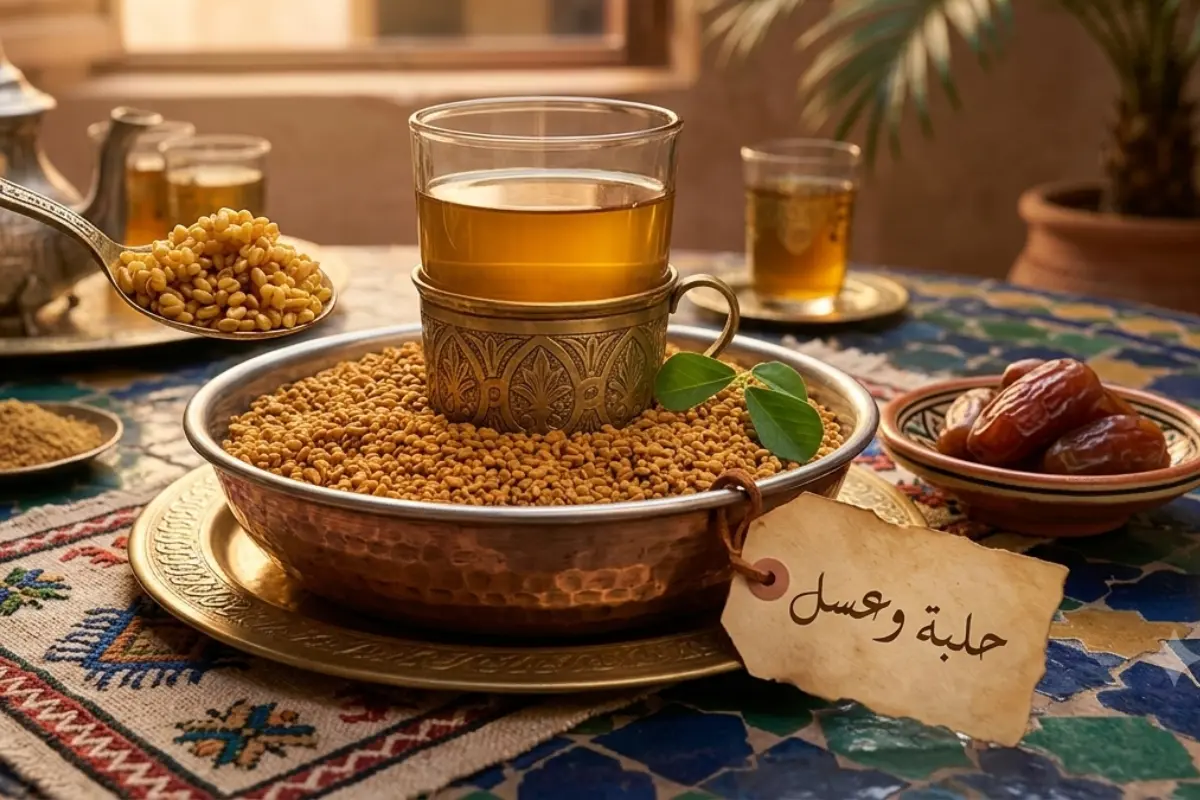
Fenugreek and Honey Infusion, known in Moroccan households as Shrab El-Helba, is one of the oldest and most revered herbal drinks in North African traditional medicine and culinary culture. The use of fenugreek, called helba in Darija, dates back thousands of years across the Mediterranean and the Arab world, where it was prized not only as a spice but as a powerful medicinal herb. In Morocco, the drink became deeply embedded in domestic life, passed down from grandmother to granddaughter as a trusted remedy for cold nights, digestive discomfort, and general fatigue.
The city of Fez, with its ancient medina and rich tradition of Andalusian-Moroccan herbalism, is particularly associated with the careful preparation of spiced infusions. The spice bazaars of Fez, known as the attarine souks, have long supplied families with whole fenugreek seeds, dried ginger, and fragrant spices used to craft this drink. Traditionally, a herbalist or attarine would advise customers on the precise proportions needed to maximize the warming and nourishing qualities of the infusion, turning a simple hot drink into a personalized wellness ritual.
Today, Fenugreek and Honey Infusion remains a staple of Moroccan home kitchens, particularly during the month of Ramadan and the cold winter season. It is customarily prepared for women after childbirth, as fenugreek is believed to support recovery and promote milk production. The addition of raw Moroccan honey, especially thyme or sidr honey, transforms the slightly bitter, nutty liquid into a rich and satisfying beverage that warms the body from within. Whether enjoyed as a morning tonic or a bedtime remedy, this infusion represents the deeply rooted Moroccan philosophy that food and drink are medicine.
About This Recipe
Fenugreek has been used in Moroccan domestic medicine and cooking for at least a thousand years, its roots tracing back to ancient Egyptian and Arabic herbalism that spread across North Africa with the expansion of trade routes and Islamic scholarship. In Morocco, fenugreek seeds, known locally as helba, found their way into the kitchens and herb stores of major imperial cities such as Fez, Marrakech, and Meknes, where learned herbalists and traditional healers, called fuqaha or attarine, prescribed them for a wide range of ailments including digestive complaints, fatigue, and respiratory conditions. The practice of brewing a warm fenugreek infusion sweetened with honey became particularly associated with postpartum recovery, and Moroccan mothers have traditionally been offered this drink for forty days after childbirth to support their strength and wellbeing. The addition of mountain honey, spices such as cinnamon and ginger, and aromatic seeds like anise reflects the sophisticated layering of flavors that characterizes Moroccan culinary philosophy, where no ingredient is chosen without both sensory and functional purpose. The drink endured through centuries of changing food culture precisely because it sits at the intersection of pleasure and nourishment, a liquid expression of the Moroccan belief that the kitchen is also a place of healing.
Nutrition / serving
Recipe Tags
Understanding the Ingredients
Fenugreek Seeds
Whole fenugreek seeds are the heart of this infusion. They have a distinctive bitter, slightly maple-like flavor that mellows and sweetens as they simmer. In Morocco, whole seeds are preferred over ground fenugreek for infusions, as they release their compounds gradually without making the drink cloudy or overly bitter. Look for plump, golden-yellow seeds at Moroccan or Middle Eastern grocery stores.
Raw Moroccan Honey
Moroccan honey, particularly sidr or thyme honey from the Atlas Mountains, is prized for its robust flavor and natural sweetness. Raw honey is added after the infusion is removed from the heat to preserve its beneficial enzymes and floral aroma. It balances the natural bitterness of the fenugreek while adding depth and warmth to the finished drink.
Fresh Ginger
Fresh ginger root adds a lively, spicy heat that complements the earthiness of the fenugreek seeds. In Moroccan herbalism, ginger is considered an essential warming ingredient that improves circulation and settles the stomach. Slicing the ginger thinly rather than grating it allows for a cleaner, more refined infusion without a harsh raw bite.
Cinnamon Stick
A whole cinnamon stick simmered with the seeds imparts a gentle sweetness and warm woody fragrance. Moroccan cinnamon, often sourced from Ceylon, is prized for its delicate and complex aroma. Using a whole stick rather than ground cinnamon keeps the infusion clear and allows the spice to integrate subtly over the simmering time.
Anise Seeds
Anise seeds, called nafaa in Moroccan Arabic, contribute a subtle licorice-like sweetness that rounds out the earthy fenugreek. They are a common addition to Moroccan herbal drinks and are traditionally known for their digestive and soothing properties. A small quantity is all that is needed to add a pleasing aromatic complexity to the drink.
Lemon Juice
A squeeze of fresh lemon juice added just before serving brightens the entire infusion, lifting the heavy earthiness of the fenugreek and providing a pleasant contrast to the sweetness of the honey. Lemon also enhances the absorption of the drink's beneficial compounds and adds a refreshing note that makes the infusion feel balanced rather than overly medicinal.
Water
The quality of water significantly impacts the final flavor of any herbal infusion. Filtered or spring water is recommended to avoid any chlorine or mineral interference that could alter the delicate balance of spice flavors in this drink. The water must be brought to a gentle simmer rather than a rolling boil to allow the fenugreek seeds to release their compounds slowly.
Step-by-Step Cooking Guide
Rinse and Prepare the Fenugreek Seeds
2 minPlace 3 tablespoons of whole fenugreek seeds in a fine mesh strainer and rinse them under cold running water for about 30 seconds, swirling them with your hand to remove any dust or impurities. Shake the strainer gently and allow the seeds to drain completely before adding them to the pot. This simple step removes any surface residue and ensures a clean, pure flavor in the final infusion.
Tip: Do not soak the seeds beforehand unless you prefer a thicker, more gel-like consistency in the drink, as fenugreek seeds release a natural mucilage when soaked.
Combine Seeds and Water in a Pot
5 minIn a medium saucepan, combine the rinsed fenugreek seeds, 4 cups of filtered water, the cinnamon stick, the sliced fresh ginger, and the anise seeds. Place the pot over medium heat and bring the mixture to a gentle simmer, stirring once or twice to distribute the spices evenly. You should begin to see tiny bubbles forming at the edges of the pot after 3 to 4 minutes.
Tip: Avoid using high heat, which can cause the fenugreek to release excessive bitterness and make the infusion taste harsh and unpleasant.
Simmer the Infusion
15 minReduce the heat to low and allow the infusion to simmer uncovered for 15 minutes, stirring gently every few minutes. The water will gradually take on a warm golden-amber color as the fenugreek and spices release their essential oils and compounds. The aroma should be earthy, slightly sweet, and warmly spiced. Keep the heat gentle enough that the surface of the liquid barely trembles.
Tip: If you find the flavor too bitter after simmering, you can extend the honey addition to compensate rather than increasing the spices, which would make the drink more complex but potentially overwhelming.
Strain the Infusion
3 minRemove the pot from the heat and allow the infusion to rest for 2 minutes. Place a fine mesh strainer or a piece of cheesecloth over a large heatproof pitcher or serving vessel. Carefully pour the entire contents of the pot through the strainer, pressing lightly on the seeds and spices with a spoon to extract every last drop of the flavorful liquid. Discard the strained solids.
Tip: For an especially clear and refined infusion, strain the liquid twice through a fine mesh strainer lined with cheesecloth.
Sweeten and Finish
3 minAllow the strained infusion to cool for approximately 2 minutes until it is warm but no longer steaming vigorously. Stir in 2 to 3 tablespoons of raw Moroccan honey until it dissolves completely, tasting as you go to adjust the sweetness to your preference. Add a small squeeze of fresh lemon juice and stir once more to integrate. The finished infusion should be golden, fragrant, aromatic, and perfectly balanced between sweet, bitter, and spiced.
Tip: Never add honey to boiling liquid, as high temperatures destroy the beneficial enzymes and delicate floral notes that make raw Moroccan honey so special.
Common Mistakes to Avoid
✗ Boiling the infusion at too high a temperature
Fix: Always simmer fenugreek gently over low to medium-low heat. A vigorous boil will extract excessive bitter compounds from the seeds and produce a harsh, unpleasant drink. The goal is a slow, gentle extraction that yields a mellow, rounded flavor.
✗ Adding honey to boiling hot liquid
Fix: Always allow the infusion to cool slightly to warm drinking temperature before stirring in the honey. Adding honey to boiling liquid degrades its beneficial enzymes, alters its flavor, and wastes the premium quality of authentic Moroccan raw honey.
✗ Using too many fenugreek seeds
Fix: Fenugreek is a bold and assertive ingredient. Using more than the recommended amount will result in an overwhelmingly bitter and heavy drink that is difficult to enjoy. Start with 3 tablespoons for 4 cups of water and adjust gradually in future batches based on your personal taste.
✗ Skipping the straining step
Fix: Always strain the infusion thoroughly before serving. Leaving the seeds and spice pieces in the drink results in an unpleasant gritty texture and continues to intensify the bitterness as the drink cools. Proper straining is essential for a smooth, enjoyable beverage.
Ingredient Substitutions
Instead of: Raw Moroccan honey
Use: Pure wildflower honey or Manuka honey can be used as alternatives, though the flavor profile will differ slightly. Avoid processed or blended honeys, which lack the complexity needed to balance the fenugreek.
Instead of: Fresh ginger
Use: Half a teaspoon of ground dried ginger can be used if fresh ginger is unavailable, though the flavor will be slightly less vibrant and more concentrated. Reduce the quantity slightly to avoid overpowering the infusion.
Instead of: Anise seeds
Use: A small pinch of fennel seeds or a single star anise pod can replace anise seeds and will provide a similar sweet, licorice-like note with a slightly different aromatic character.
Instead of: Cinnamon stick
Use: A small pinch of ground cinnamon, approximately one quarter teaspoon, can be stirred in during the last 5 minutes of simmering if a whole cinnamon stick is not available.
Serving Suggestions
Serve the infusion in traditional Moroccan clay or ceramic cups to retain heat and enhance the authentic presentation. Garnish each cup with a thin slice of fresh ginger or a small drizzle of honey over the surface for a beautiful and aromatic finishing touch.
Pair the infusion with a small plate of Moroccan msemen flatbread, sellou energy balls, or a handful of roasted almonds and dates to create a satisfying and nourishing morning or evening ritual.
Offer the drink at the end of a Moroccan dinner as a digestive alternative to Moroccan mint tea, particularly after heavy or richly spiced dishes such as tagine or couscous.
Prepare a larger batch and keep it warm in a traditional Moroccan teapot wrapped in a small cloth to serve guests throughout a long evening gathering, refilling cups as desired.
Storage & Reheating
Storage
Allow the strained infusion to cool completely to room temperature before transferring it to a sealed glass jar or airtight container. Store in the refrigerator for up to 3 days. Do not store with the honey already added if you plan to keep it for more than one day, as the flavor will intensify and the honey may affect the shelf life.
Reheating
Pour the desired amount of refrigerated infusion into a small saucepan and warm it gently over low heat, stirring occasionally, until it reaches a comfortable drinking temperature. Alternatively, heat it in a microwave-safe cup in 30-second intervals, stirring between intervals. Do not allow the infusion to come to a boil during reheating.
For best results, add fresh honey to each individual serving at the time of reheating rather than storing the sweetened infusion, as this preserves the quality of the honey and allows each person to adjust the sweetness to their own preference.
Frequently Asked Questions
Recipe by

Mohammed Benali
محمد بن علي
Beverage Specialist
View all recipes by Mohammed →
You May Also Like
Our Ebooks

The Moroccan Vegan
$12.56

Tables of Fez: A Royal Palace Legacy
$22.99

The Soul of Morocco
$20.00
YouTube
Watch step-by-step cooking videos and learn traditional Moroccan techniques.
450+
Subscribers
150+
Videos