
30
Prep (min)
45
Cook (min)
4
Servings
Medium
Level
Introduction
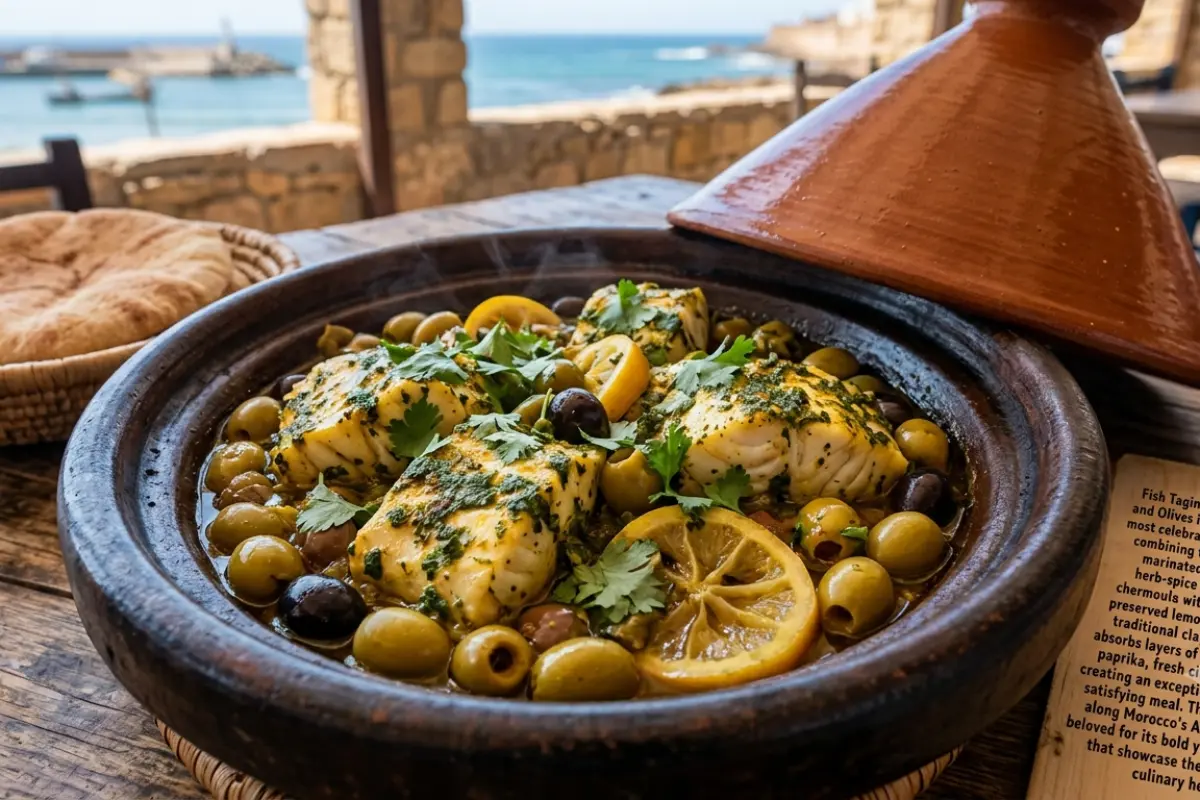
Fish Tagine with Chermoula and Olives holds a place of deep cultural importance along Morocco's sweeping Atlantic coast, particularly in the historic port city of Essaouira, known to ancient traders as Mogador. For centuries, Berber and Arab fishermen returned from the sea with their daily catch and prepared it using chermoula, a versatile marinade made from fresh herbs, aromatic spices, and citrus, which not only added extraordinary flavor but also helped preserve the fish in the warm North African climate. The dish emerged as a cornerstone of coastal Moroccan cooking, passed down through generations of families who understood how to coax maximum depth and complexity from simple, fresh ingredients.
Chermoula itself is one of Morocco's most iconic culinary contributions, a paste or marinade built on the foundation of fresh cilantro, flat-leaf parsley, garlic, cumin, paprika, lemon juice, and olive oil. Each family along the Moroccan coast maintains its own chermoula recipe, some adding saffron for golden color and floral fragrance, others incorporating preserved lemon rind for a distinctive tangy depth. When fish is bathed in this marinade for at least thirty minutes before cooking, the acid from the lemon juice begins to gently cure the flesh while the spices and herbs penetrate every fiber, resulting in a piece of fish that is deeply seasoned rather than merely coated on the surface. The addition of Moroccan olives, typically the pungent purple or green varieties cured in brine and herbs, brings a satisfying salty counterpoint that elevates the entire dish.
The tagine vessel itself plays an essential role in achieving the authentic texture and flavor of this dish. The conical clay lid traps steam rising from the cooking ingredients, allowing it to condense and drip back down over the fish, basting it continuously without the need for additional liquid. This gentle, moist cooking environment ensures the fish remains tender and flaky rather than dry or tough, and the vegetables layered beneath the fish soften into a rich, sauce-like base that is mopped up eagerly with crusty Moroccan khobz bread. Today, fish tagine with chermoula and olives is served in homes and restaurants from Agadir to Tangier, and its enduring popularity speaks to the timeless genius of Moroccan coastal cuisine.
About This Recipe
Fish Tagine with Chermoula and Olives traces its origins to the ancient coastal cities of Morocco, where Phoenician and later Arab traders, Berber fishermen, and Andalusian refugees all contributed to a rich and layered culinary tradition centered on the sea. The port city of Essaouira, once known as Mogador and established as a major trading hub in the 18th century by Sultan Mohammed III, became particularly famous for its fish cookery, and chermoula is believed to have developed in part from the spice trading routes that passed through these coastal medinas. The combination of cumin, paprika, and saffron in Moroccan fish preparations reflects the influence of Middle Eastern spice caravans crossing the Sahara, while the use of preserved lemon and olives speaks to the ancient local agriculture of the Maghreb. During the medieval period, Moroccan cookery manuals such as the 13th-century Andalusian cookbook Al-Andalus described fish preparations using herb marinades and citrus that bear remarkable resemblance to modern chermoula, confirming the deep historical roots of this culinary tradition. As tagine cooking spread throughout Morocco from the Berber heartland into coastal cities, fish naturally became incorporated into the vessel that had previously been used for slow-cooked meats and vegetables, creating a uniquely coastal interpretation of an inland cooking technique. Today, fish tagine with chermoula and olives is considered one of Morocco's definitive national dishes, served at celebrations, family gatherings, and in restaurants across the country, and it remains a living testament to the extraordinary culinary synthesis that has defined Moroccan cooking for more than a thousand years.
Nutrition / serving
Recipe Tags
Understanding the Ingredients
White Fish Fillets (sea bass or cod)
Firm, white-fleshed fish such as sea bass, cod, or hake are ideal for this tagine because they hold their shape during the slow cooking process without falling apart. Sea bass is particularly prized in Essaouira for its delicate yet rich flavor that pairs beautifully with bold chermoula spices. Choose fillets that are at least 1 inch thick for best results.
Fresh Cilantro
Cilantro is one of the two essential herbs in chermoula, providing a bright, citrusy, slightly peppery flavor that is fundamental to Moroccan fish cookery. Fresh cilantro must be used rather than dried, as drying destroys its volatile aromatic oils. Use both the leaves and the tender upper stems for maximum flavor in the marinade.
Fresh Flat-Leaf Parsley
Flat-leaf parsley works alongside cilantro in the chermoula to provide a clean, grassy herbaceous base. It is milder than cilantro and helps balance the bolder spices without overwhelming the delicate fish. Always choose flat-leaf rather than curly parsley, which lacks the same depth of flavor.
Preserved Lemon
Preserved lemon is a uniquely Moroccan ingredient made by packing whole lemons in salt and their own juice for weeks until the rind becomes soft, complex, and intensely fragrant. Only the rind is used in cooking; the pulp is typically discarded. The preserved lemon rind adds a mellow, fermented citrus note that is impossible to replicate with fresh lemon alone and is one of the defining flavors of this dish.
Moroccan Olives
Morocco produces a wide variety of olives, and for this tagine, the purple-brown olives cured in olive oil and herbs or the cracked green olives marinated with cumin and preserved lemon are most traditional. These olives contribute a rich, briny, slightly bitter depth that contrasts beautifully with the aromatic chermoula and the sweetness of slow-cooked tomatoes and peppers.
Ground Cumin
Cumin is the backbone spice of chermoula and one of the most widely used spices in Moroccan cuisine. It provides a warm, earthy, slightly smoky flavor that ties all the other ingredients together. Freshly ground cumin from whole seeds toasted in a dry pan will deliver significantly more aroma and flavor than pre-ground cumin from a jar.
Sweet Paprika
Sweet paprika gives chermoula its characteristic warm red color and a subtle sweetness that balances the acidity of lemon juice. Moroccan paprika, when available, has a richer, more complex flavor than generic supermarket varieties. A small amount of smoked paprika can be combined with sweet paprika for additional depth.
Tomatoes
Ripe tomatoes are layered at the base of the tagine beneath the fish, where they slowly break down during cooking to form a light, flavorful sauce. They provide natural acidity, sweetness, and moisture that prevent the fish from sticking and create a delicious broth for dipping bread. Plum tomatoes or ripe vine tomatoes are preferred for their lower water content and concentrated flavor.
Garlic
Garlic is essential to chermoula, providing pungency and depth that mellows considerably during cooking. Fresh garlic cloves should be minced or pounded in a mortar for the marinade to release their maximum flavor. Moroccan cooks typically use generously sized cloves and are not shy about the quantity used in fish preparations.
Extra Virgin Olive Oil
High-quality Moroccan extra virgin olive oil is the fat that binds the chermoula together and is also used to line the tagine before cooking. Morocco is one of the world's great olive oil producers, and the local oils have a distinctive fruity, slightly peppery character. The olive oil carries fat-soluble flavor compounds from the spices and herbs and helps the marinade penetrate the fish effectively.
Step-by-Step Cooking Guide
Prepare the Chermoula Marinade
10 minIn a food processor or using a mortar and pestle, combine 1 large bunch of fresh cilantro (leaves and tender stems), half a bunch of flat-leaf parsley, 4 minced garlic cloves, 1.5 teaspoons ground cumin, 1 teaspoon sweet paprika, half a teaspoon of cayenne pepper, the rind of half a preserved lemon (finely chopped), the juice of one fresh lemon, half a teaspoon of salt, and 4 tablespoons of extra virgin olive oil. Blend or pound everything together until you have a coarse, fragrant paste. Taste and adjust seasoning as needed. The chermoula should be boldly flavored, vibrant green, and intensely aromatic.
Tip: Do not over-process the chermoula into a completely smooth paste; a slightly coarse texture with visible herb pieces gives better flavor and visual appeal. If using a mortar, work the garlic and salt first into a smooth paste before adding the herbs.
Marinate the Fish
5 minPat the fish fillets completely dry with paper towels to remove excess moisture, which would dilute the marinade and prevent good penetration of flavor. Score the fish lightly with a sharp knife if using skin-on fillets. Coat each fillet generously on all sides with approximately two-thirds of the prepared chermoula, pressing the marinade gently into the flesh. Place the coated fish in a covered dish and refrigerate for a minimum of 30 minutes and up to 4 hours. Reserve the remaining one-third of the chermoula to add during cooking.
Tip: Longer marination times produce more deeply flavored fish, but do not exceed 4 hours as the lemon juice will begin to break down the fish proteins and turn the texture mushy. Bring the fish to room temperature for 15 minutes before cooking.
Prepare the Tagine Base
8 minLightly coat the bottom of a traditional clay tagine or a wide, heavy-bottomed pan with 2 tablespoons of extra virgin olive oil. Slice 3 ripe tomatoes into rounds approximately half a centimeter thick and arrange them in a single, overlapping layer across the entire base of the tagine. Slice one green pepper and one red pepper into thin rings and layer them over the tomatoes. Season the vegetable base lightly with salt, a pinch of cumin, and a pinch of paprika. This vegetable layer will prevent the fish from sticking, create steam during cooking, and form the flavorful sauce base of the finished dish.
Tip: If your tagine is made of unglazed clay, place it on a heat diffuser over the flame to prevent cracking. For oven cooking, preheat to 180°C (350°F) before placing the tagine inside.
Assemble and Add the Fish
5 minRemove the marinated fish from the refrigerator and allow it to rest at room temperature for 15 minutes. Carefully arrange the chermoula-coated fish fillets in a single layer on top of the prepared vegetable base, skin-side down if applicable. Spoon the reserved chermoula over and around the fish. Scatter the Moroccan olives generously around and between the fish fillets. Add 2 to 3 thin rings of preserved lemon rind on top of each fillet for additional flavor and visual appeal. Drizzle a final tablespoon of olive oil over the entire assembly.
Tip: Do not pile the fish fillets on top of each other, as this will result in uneven cooking with the bottom pieces steaming while the top pieces remain undercooked. Each fillet should have contact with the vegetable base.
Cook the Tagine
40 minPlace the lid on the tagine and set it over medium-low heat on a heat diffuser. Allow the tagine to come to a gentle simmer slowly over approximately 10 minutes without lifting the lid, then reduce the heat to low and continue cooking for 25 to 30 additional minutes. The fish is done when it flakes easily when tested with a fork at its thickest point and the tomatoes at the base have completely broken down into a rich, fragrant sauce. Avoid lifting the lid unnecessarily during cooking, as releasing the steam interrupts the gentle braising process essential to this dish.
Tip: If cooking in the oven, bake covered at 180°C for 30 to 35 minutes. Check doneness by inserting a thin knife into the thickest part of the fish; the flesh should be opaque throughout with no translucent areas remaining.
Garnish and Serve
7 minRemove the tagine from heat and allow it to rest with the lid on for 5 minutes before serving, which allows the residual steam to finish cooking any remaining translucent areas and allows the flavors to settle. Remove the lid at the table for dramatic presentation and the release of aromatic steam. Garnish with a generous handful of fresh cilantro leaves, a few additional lemon slices, and a drizzle of your best extra virgin olive oil. Serve immediately directly from the tagine at the center of the table with warm Moroccan khobz bread to soak up the flavorful juices.
Tip: Never move a hot clay tagine to a cold surface, as the thermal shock can crack it. Place it on a wooden board or folded kitchen towel. Serve the dish communally from the center of the table in the traditional Moroccan style.
Common Mistakes to Avoid
✗ Using frozen fish that has not been fully thawed and dried
Fix: Always thaw frozen fish completely in the refrigerator overnight and then pat thoroughly dry with paper towels before applying the chermoula marinade. Excess water from frozen fish dilutes the marinade and creates too much steam during cooking, resulting in a watery, under-flavored dish.
✗ Cooking the tagine over high heat to speed up the process
Fix: Fish tagine requires gentle, patient low-to-medium heat to cook properly. High heat will scorch the vegetable base before the fish is cooked through, dry out the fish, and prevent the slow melding of flavors that makes this dish exceptional. Always use a heat diffuser with a clay tagine and keep the flame low.
✗ Skipping or shortening the marination time
Fix: Chermoula needs a minimum of 30 minutes in contact with the fish to begin flavoring the flesh beyond just the surface. Applying chermoula and immediately cooking results in a fish that tastes lightly seasoned on the outside but bland inside. Plan ahead and allow at least 30 minutes of marination, or ideally 2 to 4 hours.
✗ Using low-quality or imported olives instead of authentic Moroccan varieties
Fix: The olives are not merely a garnish in this dish; they contribute significant flavor to the sauce and the overall taste profile. Seek out Moroccan olives from a Middle Eastern or North African grocery store. If unavailable, use high-quality Kalamata olives or cracked green olives rather than generic canned black olives, which lack the necessary flavor complexity.
Ingredient Substitutions
Instead of: Sea bass fillets
Use: Cod, hake, halibut, snapper, or any firm white-fleshed fish can be used. Avoid very delicate fish like tilapia or sole, which will fall apart during the slow cooking process. Salmon can also be used for a richer, more robust result.
Instead of: Preserved lemon
Use: If preserved lemons are unavailable, use a combination of fresh lemon zest and a tiny splash of white wine vinegar to approximate the fermented citrus note. However, making your own preserved lemons takes only minutes of active work and just 4 weeks of curing time and is highly recommended.
Instead of: Fresh cilantro
Use: For those who dislike cilantro, substitute with an equal quantity of fresh flat-leaf parsley or a combination of parsley and fresh mint. The flavor profile will be different but still delicious and authentically Moroccan.
Instead of: Traditional clay tagine
Use: A heavy-bottomed Dutch oven or wide, deep skillet with a tight-fitting lid can produce very similar results. Alternatively, the dish can be assembled in a deep baking dish, covered tightly with aluminum foil, and baked in the oven at 180°C for 30 to 35 minutes.
Serving Suggestions
Serve the fish tagine directly from the clay vessel at the center of the table alongside a basket of warm, freshly baked Moroccan khobz bread for scooping up the fragrant sauce and olives in the traditional communal dining style.
Accompany the tagine with a simple Moroccan carrot salad dressed with cumin and orange blossom water, a plate of zaalouk (smoky eggplant and tomato salad), and a bowl of olives marinated with preserved lemon and harissa for a complete traditional Moroccan meal.
For a lighter presentation suitable for summer dining, serve the fish tagine with a side of couscous steamed with orange zest and golden raisins, which absorbs the tagine juices beautifully and provides a contrast of sweet and savory flavors.
Finish the meal with traditional Moroccan mint tea poured from a height into small decorative glasses and a plate of assorted cookies such as ghriba (almond cookies) or chebakia (sesame and honey pastries) to honor the full arc of a traditional Moroccan dining experience.
Storage & Reheating
Storage
Allow the fish tagine to cool completely to room temperature before transferring leftovers to an airtight glass or ceramic container. Refrigerate for up to 2 days. Do not store the fish in the clay tagine overnight, as the porous clay can absorb odors and the extended contact with acidic ingredients may affect the vessel. Fish does not freeze well after cooking, so freezing leftover tagine is not recommended.
Reheating
Reheat leftovers gently in a covered saucepan over very low heat with a splash of water or olive oil to prevent sticking and drying out. Alternatively, place in an oven-safe dish, cover tightly with foil, and warm in a 160°C oven for 10 to 15 minutes until just heated through. Avoid reheating in a microwave if possible, as it tends to make the fish tough and rubbery.
The chermoula flavors actually intensify overnight, making day-old fish tagine arguably even more delicious than freshly made. Serve reheated leftovers with fresh bread and a squeeze of lemon juice to brighten the flavors. Add a few fresh cilantro leaves as garnish before serving to restore the visual freshness of the dish.
Frequently Asked Questions
Recipe by

Fatima El Amrani
فاطمة العمراني
Master Chef
View all recipes by Fatima →
You May Also Like
Our Ebooks

The Moroccan Vegan
$12.56

Tables of Fez: A Royal Palace Legacy
$22.99

The Soul of Morocco
$20.00
YouTube
Watch step-by-step cooking videos and learn traditional Moroccan techniques.
450+
Subscribers
150+
Videos