
15
Prep (min)
0
Cook (min)
4
Servings
Easy
Level
Introduction
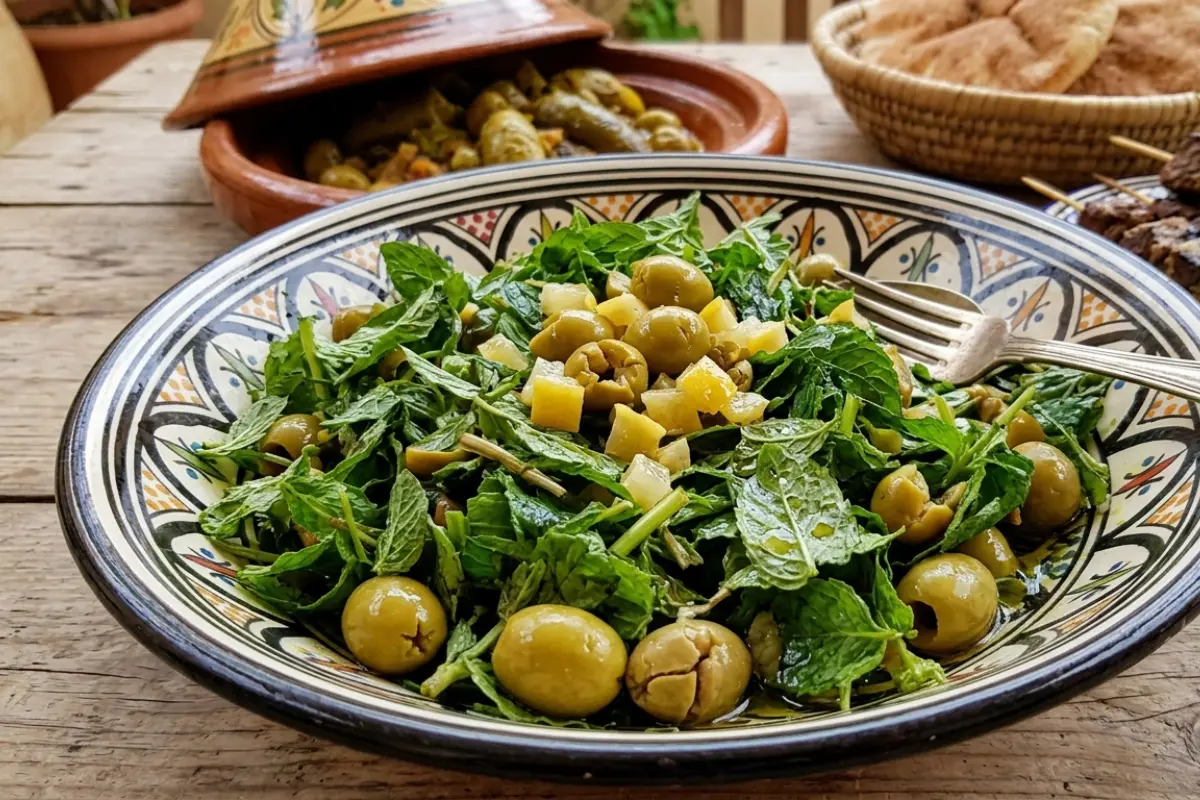
Fliou, known botanically as Mentha pulegium or pennyroyal, is one of the most cherished aromatic herbs in Moroccan culinary tradition. Unlike common mint, fliou carries a more intense, slightly camphor-like fragrance that has been used for centuries both in cooking and in traditional Moroccan herbal medicine. The Fliou Salad with Green Olives is one of the simplest and most authentic expressions of Moroccan herb cuisine, requiring no heat, no complex technique, and yet delivering an extraordinary depth of flavor that few other salads can match. It is a dish born from the wisdom of frugal, ingredient-focused cooking that has defined Moroccan home kitchens for generations.
This salad is particularly associated with the imperial city of Fez, where the medina's ancient spice markets overflow with bundles of fresh fliou alongside piles of cured olives, preserved lemons, and cold-pressed argan oil. Fez has long been considered the cultural and culinary capital of Morocco, and its cuisine reflects centuries of Andalusian, Berber, and Arab influences. The combination of fliou with green olives and preserved lemon is a distinctly Fassi flavor profile — assertive, herbaceous, and perfectly balanced between salt, acid, and fat. Families in Fez have passed down this recipe through oral tradition, with each household adding their own small variation, whether a pinch of cumin, a thread of saffron-infused water, or a drizzle of argan oil instead of olive oil.
Beyond its cultural significance, the Fliou Salad with Green Olives is a nutritional powerhouse. Green olives provide healthy monounsaturated fats, vitamin E, and antioxidants, while fliou is revered in Moroccan folk medicine for its digestive properties and its ability to soothe stomach ailments. Preserved lemon contributes probiotics, vitamin C, and a complex umami depth that fresh lemon simply cannot replicate. Together, these ingredients create a salad that is not merely a side dish but a celebration of Morocco's rich botanical heritage and its deeply intentional approach to eating well and eating wisely.
About This Recipe
The Fliou Salad with Green Olives is rooted in the ancient culinary traditions of Morocco's imperial cities, particularly Fez and Meknès, where the cultivation of olive trees and the gathering of wild aromatic herbs have been intertwined with daily life for millennia. Fliou, or pennyroyal mint, was documented by Andalusian Arab scholars as far back as the 10th and 11th centuries as both a culinary herb and a medicinal plant used to aid digestion, relieve headaches, and calm the nervous system. When the Moors were expelled from Andalusia in the 15th century, thousands of sophisticated families settled in Fez, bringing with them refined culinary traditions that blended seamlessly with existing Berber and Arab Moroccan practices. The combination of green olives — cultivated in Morocco since the time of the Phoenicians and Romans — with aromatic herbs and preserved citrus became a hallmark of the Fassi kitchen. This simple salad, requiring no heat and no complex preparation, embodied the Moroccan culinary philosophy of elevating humble, seasonal ingredients through thoughtful seasoning and the intelligent combination of flavors. For generations, Moroccan women have served variations of this salad as part of the elaborate cold salad spreads that precede traditional lunches and celebration feasts, ensuring that the ancient knowledge of fliou's culinary and medicinal virtues is passed forward from mother to daughter, from generation to generation.
Nutrition / serving
Recipe Tags
Understanding the Ingredients
Fresh Fliou (Pennyroyal Mint)
Fliou is the undisputed hero of this salad. It is a wild-growing variety of mint native to North Africa and the Mediterranean, with a more pungent, slightly medicinal aroma compared to common spearmint or peppermint. In Morocco, fliou is sold in fresh bundles at souks and is also dried for year-round use. For this salad, fresh fliou leaves are preferred as they deliver maximum aromatic intensity and a pleasant chewy texture. Choose bright green, perky leaves without yellowing or wilting for the best results.
Green Olives
Moroccan green olives are harvested before full ripeness, giving them a firmer texture, a slightly bitter edge, and a clean, grassy flavor that complements fliou beautifully. The best choices for this salad are whole or pitted Moroccan cracked olives or Picholine-style olives. Look for olives cured in brine rather than oil for a cleaner taste profile. If purchasing from a Moroccan souk, green olives marinated with herbs and lemon are an excellent ready-seasoned option.
Preserved Lemon
A cornerstone of Moroccan cuisine, preserved lemons are whole lemons packed in salt and left to ferment for weeks or months until the rind becomes silky, complex, and deeply savory. For this salad, only the rind is used — the pulp is typically discarded or saved for other uses. The preserved lemon rind should be rinsed briefly to remove excess salt before slicing into thin strips or small dice. It adds a unique umami-citrus dimension that transforms this simple salad into something extraordinary.
Extra Virgin Olive Oil
Moroccan extra virgin olive oil, particularly from the Meknès region, is world-renowned for its fruity, peppery character. A generous drizzle of high-quality olive oil is essential to bind the salad, carry the aromatic compounds of the fliou, and provide a luscious mouthfeel that balances the bitterness of the olives. Do not substitute with refined or light olive oil, as the flavor contribution of a true extra virgin oil is irreplaceable in this recipe.
Fresh Garlic
One or two cloves of garlic, finely minced or grated, add a sharp, pungent backbone to the dressing. In some Moroccan households, the garlic is left raw for maximum intensity, while others prefer to mellow it slightly by letting it macerate in lemon juice for a few minutes before adding it to the salad. Either approach works well; the key is to use fresh garlic rather than pre-minced jarred versions, which lack the volatile aromatic compounds that make fresh garlic so essential.
Fresh Lemon Juice
A squeeze of fresh lemon juice brightens the entire salad and balances the richness of the olive oil and the saltiness of the olives and preserved lemon. Use it judiciously, as the preserved lemon already contributes significant citrus notes. The acidity of fresh lemon also helps to slightly soften the raw garlic and brings all the flavors into a cohesive, vibrant whole.
Ground Cumin
A pinch of ground cumin is a classic Moroccan finishing touch that adds earthy warmth and complexity to this salad. In Moroccan culinary tradition, cumin is used as a table condiment almost as universally as salt and pepper are in Western cooking. Freshly toasted and ground cumin seeds offer the most vibrant flavor, but good-quality pre-ground cumin works perfectly well for this simple preparation.
Sea Salt and Black Pepper
Because both the green olives and preserved lemon contribute significant saltiness, seasoning must be done carefully and tasted before adding. A small pinch of coarse sea salt and freshly cracked black pepper are all that is needed to round out the dressing and enhance the natural flavors of the herbs and olives without overpowering them.
Step-by-Step Cooking Guide
Prepare the Fliou Leaves
5 minPick the fliou leaves from their stems, discarding any tough or woody stems. Rinse the leaves thoroughly under cold running water to remove any soil or debris. Lay them on a clean kitchen towel or paper towels and pat gently until completely dry. Excess moisture will dilute the dressing and make the salad watery, so take care to dry the leaves well. Once dried, roughly chop or tear the leaves into bite-sized pieces to release their essential oils and make the salad easier to eat.
Tip: If fliou is unavailable, fresh spearmint or a combination of spearmint and dried pennyroyal can be used, though the flavor will be milder. Always use fresh fliou when possible for authentic Moroccan character.
Prepare the Green Olives
3 minIf using whole olives with pits, use a small knife to slice the flesh away from the pit in thin strips, or press each olive firmly with the flat side of a knife to crack and remove the pit. If using pre-pitted olives, simply slice them in half or leave them whole depending on your preference. Rinse the olives briefly under cold water if they taste excessively salty, then drain and pat dry. The olives should be flavorful and briny but not overwhelmingly salty.
Tip: Moroccan cracked green olives sold at specialty stores or Middle Eastern markets are ideal for this recipe. Their slightly fermented, herbaceous flavor pairs most authentically with fliou.
Prepare the Preserved Lemon
2 minRemove one quarter of a preserved lemon from the jar. Use a spoon or your fingers to scoop out and discard the soft pulp from the interior, leaving only the golden-yellow rind. Rinse the rind under cold water to remove excess salt. Slice the rind into very thin strips or fine small dice. The preserved lemon rind should be used sparingly as it is intensely flavored — a little goes a long way in seasoning and elevating the entire dish.
Tip: If preserved lemon is unavailable, you can simulate a similar effect by combining fresh lemon zest with a small pinch of salt and allowing it to sit for 10 minutes, though the complexity will be different.
Make the Dressing
3 minIn a small bowl, combine the freshly squeezed lemon juice, finely minced garlic, ground cumin, a small pinch of sea salt, and freshly cracked black pepper. Whisk together until the salt dissolves. Slowly drizzle in the extra virgin olive oil while whisking continuously to create a lightly emulsified dressing. Taste the dressing and adjust the balance of acid, salt, and richness as needed before adding it to the salad.
Tip: Allow the minced garlic to sit in the lemon juice for at least two minutes before adding the olive oil. This brief maceration softens the raw garlic's sharpness and creates a more harmonious, rounded flavor in the dressing.
Assemble and Dress the Salad
2 minIn a large mixing bowl, combine the prepared fliou leaves, green olives, and preserved lemon strips. Pour the dressing over the salad and toss gently but thoroughly using clean hands or two large spoons, ensuring every leaf and olive is well coated. Taste the finished salad and adjust seasoning if necessary, keeping in mind the preserved lemon and olives contribute significant saltiness. Transfer to a serving plate or shallow bowl and arrange attractively.
Tip: Dress the salad just before serving rather than in advance to keep the fliou leaves fresh, vibrant, and aromatic. Overdressed or pre-dressed herb salads quickly wilt and lose their appealing texture.
Common Mistakes to Avoid
✗ Using dried fliou instead of fresh
Fix: While dried fliou can be used in cooked dishes like teas and stews, it lacks the texture and brightness needed for a fresh salad. Always seek out fresh fliou for this recipe. Check Moroccan or Middle Eastern grocery stores, or grow your own from seeds or seedlings.
✗ Not rinsing the preserved lemon before using it
Fix: Preserved lemons are packed in very high concentrations of salt. Failing to rinse the rind before adding it to the salad will make the entire dish unpleasantly salty and unbalanced. Always rinse under cold running water and taste a small piece before adding it.
✗ Over-dressing the salad with too much olive oil
Fix: More is not always better with fresh herb salads. Too much oil will weigh down the delicate fliou leaves, making the salad greasy and heavy. Start with a modest amount of dressing, toss, taste, and add more only if necessary.
✗ Preparing the salad too far in advance
Fix: Fresh herb salads, particularly those featuring fliou or mint, deteriorate quickly once dressed. The leaves wilt, the colors darken, and the texture becomes unpleasant. Prepare all components in advance but dress and toss the salad only within minutes of serving.
Ingredient Substitutions
Instead of: Fresh Fliou (Pennyroyal Mint)
Use: Fresh spearmint combined with a small amount of fresh oregano or marjoram to approximate the slightly earthy, intense character of fliou
Instead of: Preserved Lemon
Use: Fresh lemon zest mixed with a pinch of fine sea salt, rested for 10 minutes to slightly soften; the flavor will be brighter and less complex but still pleasant
Instead of: Moroccan Green Olives
Use: Picholine, Castelvetrano, or Cerignola green olives, which offer a similar mild bitterness and firm texture
Instead of: Extra Virgin Olive Oil
Use: Argan oil for a distinctly Moroccan flavor profile with a richer, nuttier character; use cold-pressed culinary-grade argan oil only
Serving Suggestions
Serve as part of a traditional Moroccan spread alongside other cold salads such as zaalouk, taktouka, and beet salad, with warm khobz bread for scooping.
Pair alongside grilled kefta, lamb chops, or whole roasted fish to cut through the richness of the meat with the salad's bright, herbaceous freshness.
Serve in small individual bowls as a starter or appetizer at a Moroccan-style dinner party, garnished with a few whole olives and a thin strip of preserved lemon rind for visual elegance.
Enjoy as a light lunch alongside a bowl of harira soup and warm bread for a simple, satisfying, and authentically Moroccan midday meal.
Storage & Reheating
Storage
Store undressed components separately in airtight containers in the refrigerator. The prepared fliou leaves will keep for up to 24 hours, the prepared olives for up to 5 days, and the dressing for up to 3 days. Once dressed and assembled, the salad is best consumed immediately and does not store well.
Reheating
This salad is served at room temperature or slightly chilled and requires no reheating whatsoever. Remove refrigerated components from the fridge 10 minutes before assembling to allow them to come to room temperature, which enhances the aromatic quality of the fliou and the flavor of the olive oil.
If you must store a dressed salad, place it in a sealed container and consume within 2 hours. The leaves will wilt but the flavors will meld and intensify, creating a different but still enjoyable experience. Add a few fresh fliou leaves on top before re-serving to restore some visual freshness.
Frequently Asked Questions
Recipe by

Samira Tazi
سميرة تازي
Salad & Meze Specialist
View all recipes by Samira →
You May Also Like
Our Ebooks

The Moroccan Vegan
$12.56

Tables of Fez: A Royal Palace Legacy
$22.99

The Soul of Morocco
$20.00
YouTube
Watch step-by-step cooking videos and learn traditional Moroccan techniques.
450+
Subscribers
150+
Videos