
30
Prep (min)
25
Cook (min)
4
Servings
Medium
Level
Introduction
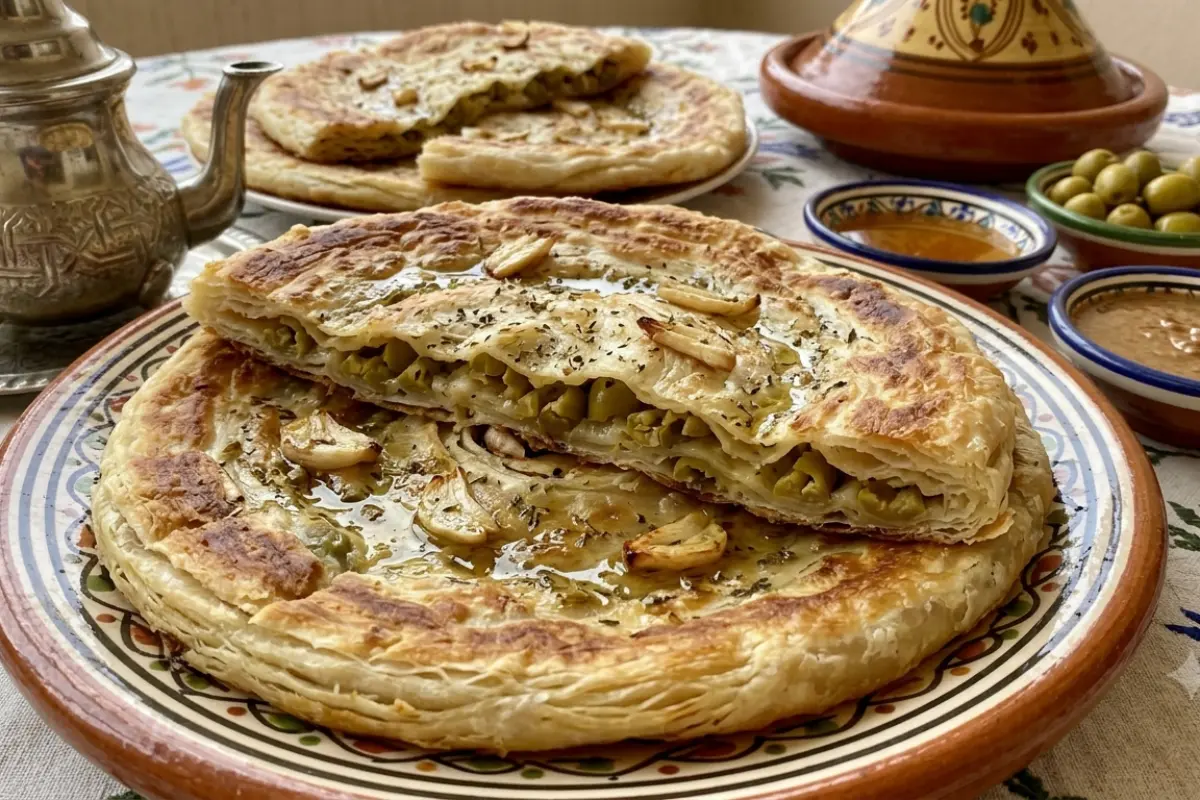
Ftir, known in Moroccan Arabic as فطير, is one of the oldest and most revered forms of flatbread in Moroccan culinary tradition. Unlike the more commonly known msemen or meloui, ftir is distinguished by its characteristic layered structure achieved through a careful folding process with olive oil or butter, resulting in a flaky, rich bread that has nourished Moroccan families for centuries. Its origins trace back to ancient Berber baking practices in the Maghreb region, where flatbreads were cooked on clay griddles over open fires long before conventional ovens were introduced to the region. The addition of olives and garlic elevates this simple bread into a truly memorable creation that reflects the bounty of Moroccan agriculture.
Morocco is one of the world's largest producers of olives, and olive cultivation has been deeply intertwined with Moroccan culture and daily life for thousands of years. The fertile plains surrounding Fez, Meknes, and the Haouz region are blanketed with ancient olive groves that produce some of the finest olives in the Mediterranean world. Incorporating olives directly into ftir dough is a time-honored practice that transforms the bread into a complete snack or meal accompaniment, infusing every bite with the briny, fruity richness that Moroccan olives are celebrated for. Garlic, another cornerstone of Moroccan cooking, adds a pungent warmth that balances the saltiness of the olives beautifully.
In the medinas of Fez and Meknes, it is still common to find neighborhood bakers — known as ferranin — preparing ftir in communal wood-fired ovens called farran. Families bring their shaped dough to be baked alongside others, creating a deeply communal experience that has persisted through generations. Ftir with olives and garlic is particularly popular during the olive harvest season in autumn, when fresh olives are abundantly available at local souks. Whether served at a leisurely breakfast with argan oil and honey or alongside a bowl of harira soup, this bread carries within it the soul of Moroccan hospitality and the wisdom of a culinary heritage stretching back millennia.
About This Recipe
Ftir is one of the most ancient and beloved breads in the Moroccan culinary canon, with roots stretching back to the indigenous Berber (Amazigh) populations of North Africa who baked simple layered flatbreads on clay tiles and hot stones long before the Arab conquests of the 7th and 8th centuries introduced new culinary influences to the Maghreb. The word ftir derives from the Arabic root meaning to break or split open, a reference to the bread's characteristic flaky layers that naturally pull apart when torn. For centuries, ftir was the bread of rural communities and nomadic tribes across the Atlas Mountains and the plains of central Morocco, made from little more than flour, water, salt, and whatever fat was available — typically animal butter or the precious olive oil pressed from the ancient groves that dotted the landscape. The practice of enriching ftir with olives and garlic developed as a natural expression of Moroccan terroir, particularly in olive-producing regions such as the Meknès-Fez corridor and the Haouz plain near Marrakech, where olives are harvested between October and January each year. During the olive harvest season, women would press fresh oil and set aside the finest olives to fold into their bread dough, creating a seasonal tradition that has endured through the generations. Today, ftir with olives and garlic remains a symbol of Moroccan home cooking at its finest — humble in its ingredients yet extraordinary in its flavor and deeply connected to the land, the harvest, and the unbroken chain of culinary tradition that defines Moroccan food culture.
Nutrition / serving
Recipe Tags
Understanding the Ingredients
All-purpose flour
The backbone of the ftir dough, all-purpose flour provides structure and a slightly chewy texture. In Morocco, finely milled wheat flour is traditionally used, and some bakers blend in a small amount of semolina for added texture and a golden hue. Using good quality flour ensures the dough is workable and produces a bread with the right balance of tenderness and bite.
Green olives (pitted and chopped)
Moroccan green olives are prized for their meaty texture and complex flavor, ranging from mildly bitter to richly savory. They are pitted and roughly chopped before being folded into the dough, releasing their brine and oils during cooking to create pockets of intense flavor throughout the bread. Marinated Moroccan olives with herbs work especially well in this recipe.
Garlic cloves
Fresh garlic is roasted or finely minced and incorporated into the dough layers, contributing a warm, mellow pungency that complements the olives perfectly. Roasting the garlic beforehand softens its sharpness and adds a subtle sweetness, while raw minced garlic provides a more assertive, vibrant flavor. Both methods are authentic to Moroccan home cooking.
Olive oil
Extra-virgin olive oil is used both in the dough and for brushing the layers during the folding process, which is essential for creating ftir's signature flaky texture. Moroccan olive oil, often cold-pressed from varieties like Picholine or Dahbia, has a rich, grassy flavor that adds depth to the bread. It also keeps the bread moist and helps develop a golden, crispy exterior during cooking.
Fine semolina
A small quantity of fine semolina is added to the flour mixture to give the dough a slightly grainy texture and a warm golden color once cooked. Semolina also helps the dough handle better and prevents it from becoming too sticky, making the folding process easier. It is a traditional addition used by Moroccan bakers to improve the final crumb structure of ftir.
Salt
Salt is essential for seasoning the dough and enhancing all the other flavors in the bread. Moroccan recipes typically use fine sea salt, which dissolves evenly throughout the dough. Since the olives also contribute saltiness, the amount of salt should be adjusted accordingly to avoid an overly salty final product.
Instant dry yeast
A small amount of instant yeast is used to give the ftir dough a gentle rise, making it slightly lighter and more tender without transforming it into a fully leavened bread. Ftir is not meant to be as puffy as sandwich bread; the yeast simply ensures the dough is pliable and easy to work with while contributing a subtle fermented aroma to the finished bread.
Warm water
Warm water hydrates the flour and activates the yeast, bringing the dough together to the proper consistency. The temperature should be around 38 to 40 degrees Celsius — warm to the touch but not hot — to ensure the yeast activates properly without being killed. The amount of water may need slight adjustment depending on the absorption capacity of the flour being used.
Step-by-Step Cooking Guide
Prepare the Garlic
10 minPeel the garlic cloves and either roast them whole in a dry skillet over medium-low heat for 8 to 10 minutes, turning occasionally until golden and fragrant, or mince them finely if you prefer a stronger garlic flavor. If roasting, allow them to cool slightly then roughly chop or crush them. Set aside while you prepare the dough.
Tip: Roasting the garlic before adding it to the dough mellows its sharpness significantly and adds a pleasant sweetness. Do not let the garlic burn as it will turn bitter.
Make the Dough
15 minIn a large mixing bowl, combine the all-purpose flour, semolina, salt, and instant yeast. Mix the dry ingredients together thoroughly. Make a well in the center and add the olive oil and most of the warm water. Begin mixing with your hands, gradually bringing the flour into the liquid, adding the remaining water as needed until a soft, slightly tacky dough forms. Knead the dough on a lightly floured surface for 8 to 10 minutes until it is smooth, supple, and elastic.
Tip: The dough should be soft and pliable but not sticky. If it sticks to your hands excessively, add a small amount of flour. Proper kneading is crucial for developing the gluten structure needed for a flaky ftir.
Rest the Dough
15 minForm the kneaded dough into a ball, coat it lightly with olive oil, cover it with a clean kitchen towel or plastic wrap, and let it rest at room temperature for 15 minutes. This resting period relaxes the gluten, making the dough much easier to roll out and fold without it springing back. Do not skip this step as it is essential for achieving the characteristic layered texture of ftir.
Tip: If your kitchen is very warm, rest the dough in a slightly cooler spot to prevent over-fermentation during this short rest period.
Incorporate the Fillings and Layer the Dough
10 minDivide the rested dough into 4 equal portions. Working one portion at a time on an oiled work surface, flatten the dough into a thin round or rectangle using your hands or a rolling pin. Drizzle generously with olive oil, then scatter a portion of the chopped olives and garlic evenly over the surface. Fold the dough over itself — first from the bottom third up, then the top third down like a letter — then fold again in the other direction to form a layered square. Gently press and flatten the square slightly.
Tip: Work on an oiled surface rather than a floured one for better layering. Be generous with the olive oil between layers as this is what creates the flaky texture that defines ftir.
Shape and Rest Again
10 minOnce all four portions are folded and layered, gently flatten each one with the palm of your hand or a rolling pin into a disc or square approximately 15 to 18 centimeters wide and about 1 centimeter thick. Be careful not to press so hard that you force all the air out between the layers. Place the shaped ftirs on a lightly oiled surface, cover loosely, and let them rest for another 10 minutes before cooking.
Tip: A second brief rest allows the dough to relax after shaping, making it easier to achieve an even thickness without tearing. The ftir should look slightly puffed and feel airy when ready to cook.
Cook the Ftir
10 minHeat a large, heavy-bottomed skillet or traditional Moroccan griddle (tajen) over medium heat. When the pan is hot, place one or two ftirs in the pan without overlapping. Cook for 4 to 5 minutes on the first side until the bottom is deep golden brown with darker spots. Flip carefully and cook for another 4 to 5 minutes on the second side. The ftir is ready when both sides are evenly golden and the edges look fully cooked. If you prefer a crispier result, brush the outside with a little extra olive oil while cooking.
Tip: Resist the urge to press down on the ftir while cooking as this will flatten the layers you worked hard to create. Medium heat is ideal — too high and the outside burns before the inside cooks through.
Common Mistakes to Avoid
✗ Using too little olive oil between layers
Fix: Generosity with olive oil during the folding process is what creates ftir's signature flaky, layered texture. Be liberal when drizzling oil between each layer of dough to ensure proper separation and a rich, moist interior.
✗ Rolling the dough too thin before folding
Fix: If the dough is rolled out too thin, it becomes difficult to fold without tearing and the layers merge together rather than remaining distinct. Aim for a thickness of about 3 to 4 millimeters before adding the fillings and folding.
✗ Cooking over heat that is too high
Fix: High heat causes the exterior of the ftir to brown and char before the interior cooks through, leaving a doughy center. Always cook over medium heat and be patient, allowing each side to develop an even, deep golden color gradually.
✗ Adding too many olives which makes the dough tear
Fix: While olives add wonderful flavor, overloading the dough makes it difficult to fold and can cause the layers to break apart during cooking. Chop the olives finely and distribute them evenly to ensure the dough holds together well.
Ingredient Substitutions
Instead of: Green olives
Use: Black or purple Moroccan olives can be used for a richer, more intense flavor. Kalamata olives are also a good substitute and are widely available internationally.
Instead of: All-purpose flour
Use: Whole wheat flour can replace up to half of the all-purpose flour for a nuttier, more rustic ftir with additional fiber and a denser crumb.
Instead of: Olive oil
Use: Smen, the traditional Moroccan aged fermented butter, can be used instead of or alongside olive oil for an even richer and more authentically traditional flavor.
Instead of: Instant dry yeast
Use: Active dry yeast can be used in the same quantity but should be proofed in warm water with a pinch of sugar for 5 to 10 minutes before adding to the flour to ensure it is active.
Serving Suggestions
Serve ftir warm directly from the pan with a small dish of extra-virgin argan oil or olive oil for dipping and a drizzle of raw honey for a traditional Moroccan breakfast experience.
Pair with a bowl of harira soup, Moroccan mint tea, and a side of amlou (almond and argan oil spread) for a complete and nourishing midday meal.
Cut into wedges and serve alongside a Moroccan chicken or lamb tagine to use the flaky bread as a vehicle for soaking up the fragrant sauce.
Enjoy at room temperature with a selection of Moroccan salads such as zaalouk (roasted eggplant and tomato), taktouka (roasted pepper salad), and carrot salad with cumin.
Storage & Reheating
Storage
Allow cooked ftir to cool completely before storing. Wrap individual pieces in aluminum foil or place them in an airtight container and store at room temperature for up to 2 days, or refrigerate for up to 5 days. For longer storage, ftir can be frozen for up to 2 months when individually wrapped in foil and placed in a freezer bag.
Reheating
To reheat, place the ftir directly in a dry skillet over medium-low heat for 2 to 3 minutes per side until warmed through and the exterior is slightly crispy again. Alternatively, wrap in foil and heat in an oven preheated to 180 degrees Celsius for 8 to 10 minutes. Avoid using a microwave as it will make the bread soft and chewy rather than flaky.
For the best texture when reheating from frozen, thaw the ftir at room temperature for 30 minutes before reheating in a skillet. Brushing the surface with a small amount of olive oil before reheating helps restore the crispy exterior and enhances the flavor.
Frequently Asked Questions
Recipe by

Abdrahman Idrissi
عبد الرحمن الإدريسي
Pastry & Bread Chef
View all recipes by Abdrahman →
You May Also Like
Our Ebooks

The Moroccan Vegan
$12.56

Tables of Fez: A Royal Palace Legacy
$22.99

The Soul of Morocco
$20.00
YouTube
Watch step-by-step cooking videos and learn traditional Moroccan techniques.
450+
Subscribers
150+
Videos