
90
Prep (min)
25
Cook (min)
24
Servings
Hard
Level
Introduction
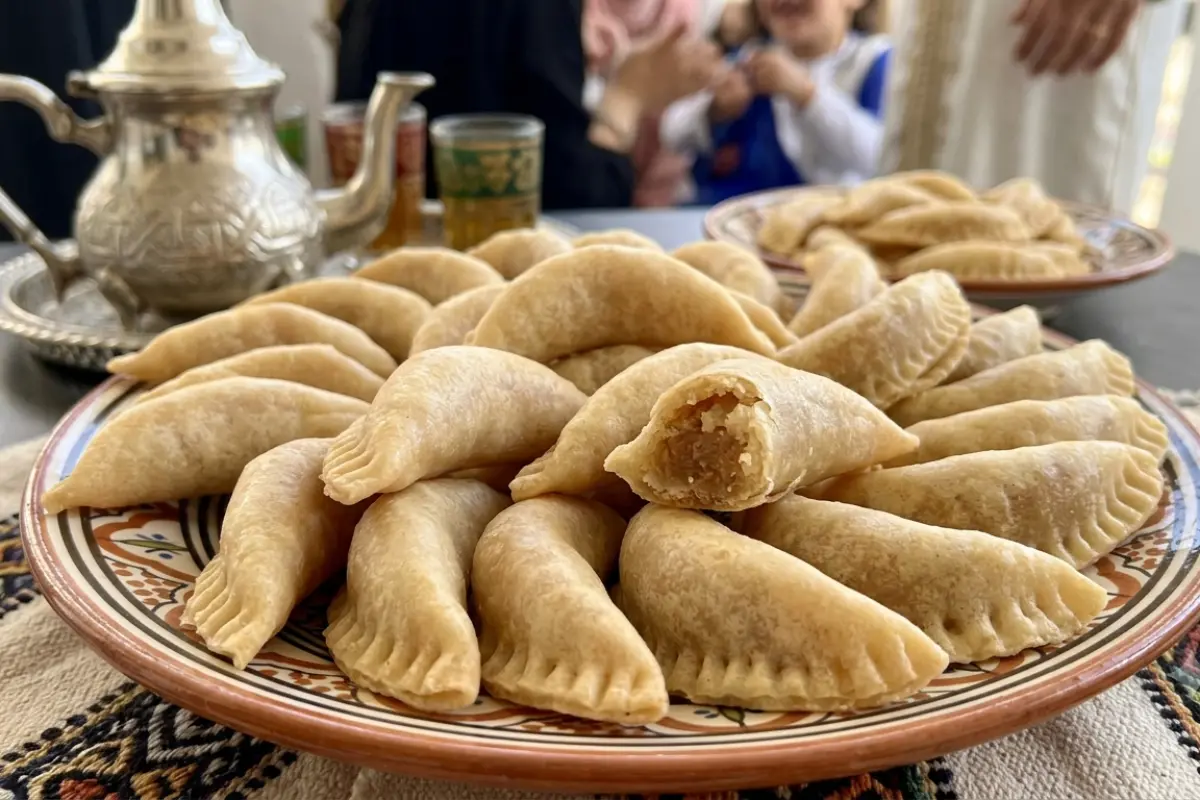
Gazelle horns, or 'Kaab el Ghzal' in Arabic, are among Morocco's most celebrated pastries, representing the pinnacle of Moroccan confectionery artistry. These delicate, crescent-shaped cookies are traditionally prepared for weddings, religious holidays, and special family gatherings, where their elegant appearance and exquisite taste symbolize hospitality and celebration.
The addition of rose water and cardamom to the classic almond filling elevates these pastries to new heights of aromatic sophistication. The rose petals add a floral sweetness that complements the nutty richness of almonds, while cardamom brings warm, citrusy notes that create a complex flavor profile reminiscent of ancient spice routes that passed through Morocco.
Mastering gazelle horns requires patience and skill, as the pastry must be rolled paper-thin to achieve the characteristic delicate texture. The art lies in creating a wrapper so fine that it becomes translucent, yet strong enough to hold the precious filling within. When baked to golden perfection, these pastries offer a satisfying contrast between the crisp exterior and the soft, fragrant interior.
About This Recipe
Gazelle horns originated in Andalusian Spain and were brought to Morocco during the Islamic period, where they became deeply embedded in Moroccan culinary tradition. The name derives from their distinctive crescent shape, resembling the elegant curve of a gazelle's horn. Originally prepared in the royal kitchens of Fez and Meknes, these pastries were considered a luxury item due to the skill required and the expensive ingredients like almonds and rose water. Over centuries, they became the centerpiece of Moroccan celebrations, symbolizing hospitality and culinary mastery.
Nutrition / serving
Recipe Tags
Understanding the Ingredients
Blanched almonds
The foundation of the filling, providing richness and texture. Must be finely ground to create a smooth paste.
Rose water
Adds delicate floral notes that are characteristic of Persian and Moroccan cuisine. Use high-quality rose water for best results.
Ground cardamom
Provides warm, aromatic complexity that balances the sweetness and adds depth to the filling.
Orange blossom water
Enhances the floral profile and adds brightness to complement the rose water.
All-purpose flour
Forms the base of the delicate pastry wrapper that must be rolled extremely thin.
Step-by-Step Cooking Guide
Prepare the Almond Filling
20 minGrind blanched almonds until very fine, then mix with powdered sugar, rose water, cardamom, and orange blossom water until it forms a moldable paste.
Tip: The paste should hold together but not be wet. Add liquid gradually.
Make the Pastry Dough
35 minCombine flour, melted butter, egg, and a pinch of salt. Knead until smooth and elastic. Rest covered for 30 minutes.
Tip: The dough should be soft but not sticky. Adjust flour as needed.
Shape the Filling
15 minForm the almond mixture into small logs about 3 inches long and ½ inch thick. Set aside on a floured surface.
Tip: Keep logs uniform in size for even baking and consistent appearance.
Roll the Pastry
20 minDivide dough into portions and roll each extremely thin. Cut into rectangles large enough to wrap the almond logs.
Tip: The pastry should be nearly transparent. Work quickly to prevent drying.
Assemble and Shape
25 minWrap each almond log in pastry, seal edges, and curve into crescent shapes. Trim excess pastry and ensure smooth curves.
Tip: Brush edges with water to help seal. Handle gently to maintain shape.
Bake to Perfection
25 minPlace on lined baking sheets and bake at 325°F for 20-25 minutes until lightly golden. Cool completely before serving.
Tip: Don't overbake - they should be pale golden, not brown.
Common Mistakes to Avoid
✗ Rolling pastry too thick
Fix: Roll until nearly transparent - the thinness is crucial for authentic texture
✗ Overfilling the pastries
Fix: Use just enough filling to create the shape without bursting the delicate wrapper
✗ Adding too much liquid to filling
Fix: Add rose water and cardamom gradually until mixture just holds together
Ingredient Substitutions
Instead of: Rose water
Use: Extra orange blossom water or vanilla extract (use half the amount)
Instead of: Ground cardamom
Use: Ground cinnamon or a pinch of ground cloves
Instead of: Blanched almonds
Use: Combination of almonds and pistachios for color variation
Serving Suggestions
Serve with traditional Moroccan mint tea
Arrange on decorative platters for special occasions
Dust lightly with powdered sugar before serving
Pair with other Moroccan pastries for a dessert selection
Storage & Reheating
Storage
Store in airtight containers at room temperature for up to one week. Layer between parchment paper to prevent sticking.
Reheating
Not typically reheated, but can be warmed briefly in a low oven if desired to restore crispness.
Keep away from humidity to maintain the crisp texture of the pastry wrapper.
Frequently Asked Questions
Recipe by

Abdrahman Idrissi
عبد الرحمن الإدريسي
Pastry & Bread Chef
View all recipes by Abdrahman →
You May Also Like
Our Ebooks

The Moroccan Vegan
$12.56

Tables of Fez: A Royal Palace Legacy
$22.99

The Soul of Morocco
$20.00
YouTube
Watch step-by-step cooking videos and learn traditional Moroccan techniques.
450+
Subscribers
150+
Videos