
20
Prep (min)
15
Cook (min)
4
Servings
Easy
Level
Introduction
Green Fava Bean Salad with Oil and Cumin is one of Morocco's most beloved springtime dishes, rooted in centuries of culinary tradition that celebrates the land's seasonal bounty. Fava beans, known locally as ful in Arabic, have been cultivated across North Africa and the Mediterranean since antiquity, and Moroccan cooks have long honored them with simple, soulful preparations that let their natural sweetness and earthy character shine. This salad in particular is associated with the medinas of cities like Fez and Meknes, where street vendors and home cooks alike prepare large batches each spring when fresh favas flood the markets.
The beauty of this dish lies in its elegant simplicity. Just a handful of carefully chosen ingredients — tender blanched fava beans, fruity extra virgin olive oil, earthy ground cumin, bright lemon juice, fresh garlic, and a scattering of herbs — come together to create something far greater than the sum of their parts. Cumin, called kamun in Moroccan Arabic, is perhaps the most essential spice in the Moroccan pantry, and its warm, slightly smoky depth transforms the fava beans into something truly extraordinary. The combination of cumin and olive oil is a signature flavor pairing found throughout Moroccan salads and cooked vegetable dishes.
This salad is a fixture on the Moroccan table during Ramadan, served as part of the traditional iftar spread alongside harira soup, dates, and other small plates. Outside of Ramadan, it appears as a mezze-style starter, a side to grilled meats, or a light lunch eaten with khobz, the Moroccan round bread. It is naturally vegan and gluten-free, making it a nourishing and inclusive dish that has transcended generations and continues to be prepared in Moroccan households around the world.
About This Recipe
Green fava beans have been a cornerstone of North African and Mediterranean cuisine for thousands of years, with archaeological evidence of their cultivation dating back over 6,000 years across the region. In Morocco, the fava bean — known as ful in Darija — has long been a vital source of plant-based protein for both rural and urban communities, appearing in everything from hearty winter soups to light spring salads. This particular preparation, dressing freshly blanched green fava beans with olive oil, cumin, lemon, and garlic, is rooted in the culinary traditions of Morocco's ancient imperial cities, particularly Fez and Meknes, where sophisticated spice usage and a culture of mezze-style vegetable salads have flourished since at least the medieval period. The combination of cumin and olive oil as a dressing base is a distinctly Moroccan flavor signature seen across dozens of cooked vegetable salad preparations. This salad became especially prominent as a Ramadan dish, where its lightness and nutritional density made it a perfect component of the iftar meal that breaks the day's fast. As Moroccan food culture has spread globally through diaspora communities and the growing international appreciation for Mediterranean and North African cuisines, this humble but exquisite fava bean salad has found admirers far beyond its origins, remaining a timeless expression of Morocco's philosophy that the finest ingredients, treated with simplicity and respect, produce the most memorable food.
Nutrition / serving
Recipe Tags
Understanding the Ingredients
Fresh Green Fava Beans (shelled)
The star of this salad, fresh fava beans offer a creamy texture and mildly sweet, grassy flavor that frozen or dried beans cannot fully replicate. Look for bright green, plump beans at the market in spring. For the best texture, double-peel the beans by removing both the outer pod and the thin inner skin to reveal the vivid emerald bean inside.
Extra Virgin Olive Oil
A high-quality Moroccan extra virgin olive oil is ideal here, as its fruity, slightly peppery character complements the fava beans beautifully. The olive oil is used generously and acts not just as a dressing but as an integral part of the flavor profile of the salad.
Ground Cumin
Freshly ground cumin is strongly preferred in this recipe. Toasting whole cumin seeds in a dry skillet before grinding releases volatile aromatic oils that produce a far more complex and nuanced flavor than pre-ground cumin. Cumin is the defining spice of this salad and should not be reduced.
Fresh Lemon Juice
Freshly squeezed lemon juice adds brightness and acidity that balances the richness of the olive oil and the earthiness of the cumin. Always use fresh lemons rather than bottled juice for the cleanest, most vibrant flavor.
Garlic
Garlic adds a pungent, savory depth to the dressing. It can be used raw for a more assertive bite or very lightly sautéed in olive oil for a mellower sweetness. Moroccan cooks often mash the garlic to a paste with a pinch of salt to better incorporate it into the dressing.
Fresh Flat-Leaf Parsley
Finely chopped fresh parsley adds a clean, herbal freshness and a pop of color to the finished salad. Flat-leaf parsley is preferred over curly parsley for its more robust flavor. It is added just before serving to keep it bright and vibrant.
Salt
Fine sea salt is used both in the blanching water to season the beans as they cook and in the final dressing. Proper seasoning is essential to bring out the full depth of flavor in the fava beans and the cumin.
Paprika (optional, for garnish)
A light dusting of sweet or smoked paprika over the finished salad adds a gentle warmth and an appealing splash of red color against the green beans. This is a purely optional garnish but is commonly seen in Moroccan presentations of this dish.
Step-by-Step Cooking Guide
Shell and Prepare the Fava Beans
10 minRemove the fava beans from their large outer pods. You should end up with approximately 2 cups of shelled beans. At this stage the beans are enclosed in a thin, pale green inner skin. For the best texture and visual appeal, plan to remove these skins after blanching.
Tip: Choose pods that feel heavy and full. Avoid pods that are yellowing or feel dry, as the beans inside will be starchy and less flavorful.
Blanch the Fava Beans
8 minBring a medium pot of well-salted water to a rolling boil. Add the shelled fava beans and blanch for 3 to 4 minutes until just tender but still bright green. Do not overcook — they should be creamy inside but hold their shape. Immediately drain and transfer to a bowl of ice water to stop the cooking and preserve their vivid green color.
Tip: The ice bath is a critical step. It locks in the brilliant green color and ensures the beans remain firm rather than turning mushy.
Double-Peel the Fava Beans
8 minOnce the beans are cool enough to handle, gently pinch the skin of each bean between your fingers to pop out the bright emerald inner bean. Discard all the pale outer skins. Double-peeled fava beans have a far more delicate texture and a sweeter, cleaner flavor that makes this salad exceptional.
Tip: This step is time-consuming but well worth the effort. The inner beans should be a vivid, jewel-like green color. If any beans are yellowish or hard, discard them.
Toast and Grind the Cumin
3 minPlace a small dry skillet over medium heat. Add 1 teaspoon of whole cumin seeds and toast them, shaking the pan frequently, for 1 to 2 minutes until fragrant and lightly darkened. Transfer immediately to a mortar and pestle or spice grinder and grind to a fine powder. This freshly toasted cumin will be noticeably more aromatic and complex than store-bought ground cumin.
Tip: Watch the cumin seeds carefully as they can go from perfectly toasted to burnt in seconds. As soon as you smell their fragrance intensifying, remove them from the heat.
Prepare the Dressing
3 minIn a small bowl, combine the olive oil, freshly squeezed lemon juice, mashed garlic, freshly ground cumin, and a generous pinch of salt. Whisk or stir vigorously until emulsified and well combined. Taste and adjust the balance of lemon, cumin, and salt to your preference. The dressing should be boldly flavored since it needs to coat and season the entire batch of beans.
Tip: Mash the garlic with a flat knife and a pinch of salt to create a smooth paste. This helps it distribute evenly throughout the dressing rather than leaving harsh raw garlic chunks.
Dress and Rest the Salad
10 minPlace the peeled fava beans in a serving bowl. Pour the dressing over the beans and toss gently to coat every bean thoroughly. Allow the salad to rest for at least 5 to 10 minutes so the beans can absorb the flavors of the dressing. This resting period is important — the flavors meld and deepen significantly even in a short time.
Tip: If you are making this salad ahead of time, dress the beans and refrigerate. Pull it out 15 minutes before serving so it comes back to room temperature, which is when the flavors are at their best.
Garnish and Serve
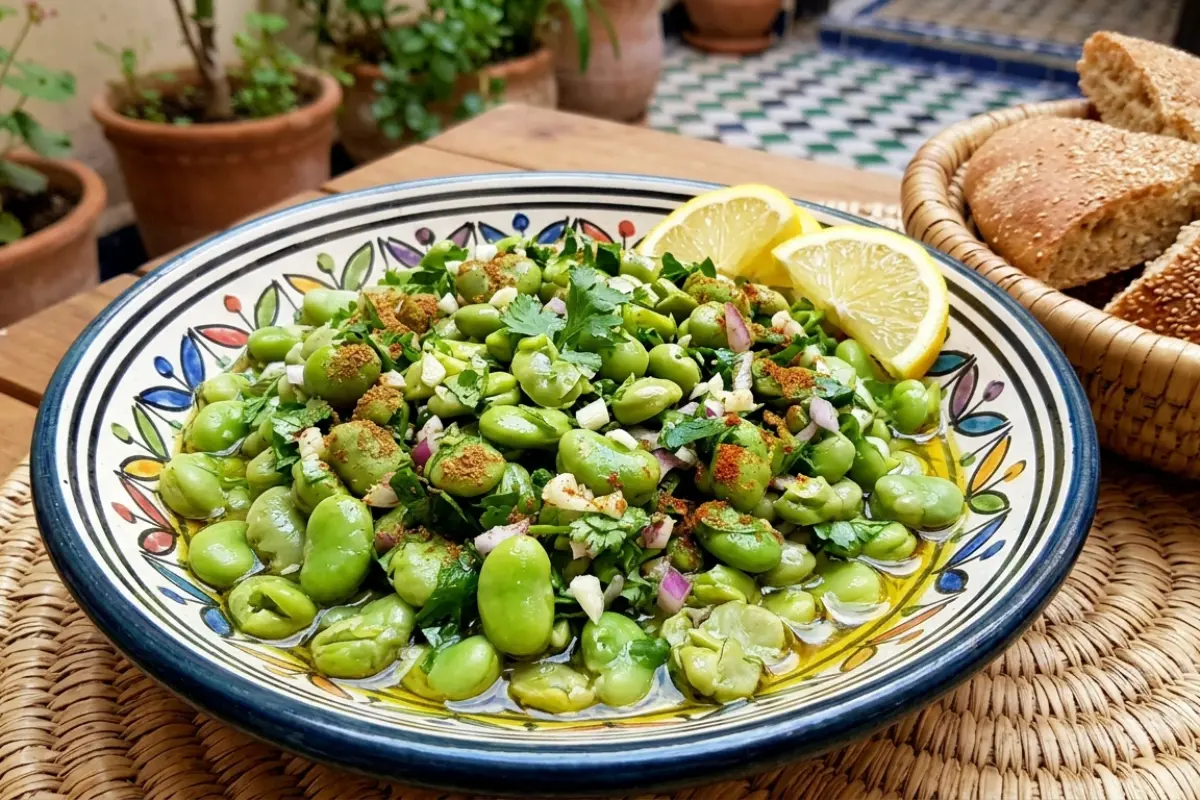
2 minJust before serving, scatter freshly chopped flat-leaf parsley generously over the salad. If using, add a light dusting of sweet paprika for color and warmth. Taste one final time and adjust seasoning if needed. Serve at room temperature with warm Moroccan bread for scooping.
Tip: Add the parsley at the very last moment to prevent it from wilting. A few thin lemon slices arranged around the bowl make for a beautiful and traditional Moroccan presentation.
Common Mistakes to Avoid
✗ Skipping the double-peeling step
Fix: Always remove the thin inner skin from each blanched fava bean. The outer skin is tough and slightly bitter, and skipping this step results in a salad with an unpleasant texture and dull color.
✗ Overcooking the fava beans
Fix: Blanch the beans for no more than 3 to 4 minutes and transfer immediately to an ice bath. Overcooked fava beans turn mushy, lose their bright color, and fall apart when tossed with the dressing.
✗ Using pre-ground cumin straight from the jar
Fix: Toast whole cumin seeds in a dry pan and grind them fresh just before using. Pre-ground cumin loses its aromatic potency quickly, and freshly ground cumin makes a significant and noticeable difference in this simple salad.
✗ Dressing the salad and serving immediately
Fix: Allow the dressed salad to rest for at least 5 to 10 minutes before serving. This resting time allows the fava beans to absorb the cumin, garlic, and lemon flavors, resulting in a much more cohesive and deeply flavored dish.
✗ Under-seasoning the dish
Fix: Fava beans need assertive seasoning to taste their best. Be generous with the salt, cumin, and lemon juice. Taste the dressing and the finished salad at every stage and adjust until the flavors are bold and vibrant.
Ingredient Substitutions
Instead of: Fresh green fava beans
Use: Frozen fava beans work well and are available year-round. Thaw them completely and double-peel before using. Canned fava beans can also be used in a pinch — drain, rinse, and peel them, then skip the blanching step.
Instead of: Extra virgin olive oil
Use: A good quality argan oil, which is native to Morocco, makes an extraordinary and authentically Moroccan substitute that imparts a unique nutty depth to the salad.
Instead of: Fresh lemon juice
Use: Fresh lime juice works as a substitute, offering a slightly more tropical citrus note. Preserved lemon rind, finely minced, can also add a distinctly Moroccan salty-citrus dimension in place of fresh lemon.
Instead of: Fresh flat-leaf parsley
Use: Fresh cilantro (coriander leaves) is a popular and equally authentic Moroccan alternative that pairs beautifully with cumin and fava beans.
Serving Suggestions
Serve as part of a traditional Moroccan mezze spread alongside other salads such as zaalouk (roasted eggplant salad), taktouka (roasted pepper and tomato salad), and carrot salad with harissa for a vibrant and colorful appetizer course.
Serve warm in small individual bowls alongside a bowl of harira soup and fresh khobz bread for a satisfying and traditional Moroccan iftar or light lunch.
Pair with grilled lamb chops or kefta skewers as a bright, fresh side salad that cuts through the richness of the meat.
Spoon generously onto thick slices of warm Moroccan bread and top with a drizzle of extra olive oil and a pinch of flaky salt for a simple and delicious open-faced snack.
Storage & Reheating
Storage
Store leftover fava bean salad in an airtight container in the refrigerator for up to 3 days. The flavors actually improve after the first day as the beans continue to absorb the cumin and lemon dressing.
Reheating
This salad is traditionally served at room temperature rather than hot. Remove from the refrigerator 15 to 20 minutes before serving to allow it to come to room temperature. If you prefer it warm, gently heat it in a small pan over low heat for 2 to 3 minutes, stirring carefully to avoid breaking the beans.
Hold off on adding the fresh parsley garnish until just before serving, even for leftovers, as the parsley wilts and discolors when stored mixed into the salad. Keep extra parsley on hand to add fresh each time you serve.
Frequently Asked Questions
Recipe by

Samira Tazi
سميرة تازي
Salad & Meze Specialist
View all recipes by Samira →
You May Also Like
Our Ebooks

The Moroccan Vegan
$12.56

Tables of Fez: A Royal Palace Legacy
$22.99

The Soul of Morocco
$20.00
YouTube
Watch step-by-step cooking videos and learn traditional Moroccan techniques.
450+
Subscribers
150+
Videos