
15
Prep (min)
10
Cook (min)
4
Servings
Easy
Level
Introduction
Figs have held a sacred place in Moroccan culture for millennia, cultivated across the fertile plains and mountain valleys of the country since ancient Berber civilizations first tended their orchards. The fig, known locally as 'karmous,' appears in Moroccan poetry, proverbs, and religious tradition, symbolizing abundance, sweetness, and the generosity of the land. In the imperial city of Fès, figs have long been used in both sweet and savory preparations, weaving their luscious flavor into the rich tapestry of Moroccan gastronomy.
About This Recipe
Figs are among the oldest cultivated fruits in the world, and their deep roots in Moroccan culture stretch back thousands of years to the ancient Amazigh (Berber) peoples who first cultivated fig orchards across the fertile plains of northern Morocco, the Rif mountains, and the valleys surrounding the Atlas ranges. The city of Fès, Morocco's spiritual and intellectual capital, has long been associated with sophisticated culinary traditions that masterfully blend sweet and savory elements, and the use of figs with honey is a pairing that appears throughout classical Andalusian-Moroccan cooking manuscripts dating to the medieval period. When Moorish scholars and cooks were expelled from Andalusia and settled in Fès and other Moroccan imperial cities in the 15th century, they brought with them refined culinary techniques and a love of fruit-based salads that merged with existing Berber traditions. Moroccan honey, harvested from the cedar forests of the Middle Atlas and the wildflower meadows of the Rif, has been traded along ancient caravan routes for centuries and remains one of the country's most prized artisanal products. The combination of fire-kissed figs and aromatic honey represents one of the purest expressions of Moroccan culinary philosophy — the marriage of earth, fire, and sweetness in perfect, effortless balance.
Nutrition / serving
Recipe Tags
Understanding the Ingredients
Fresh Figs
Choose ripe but firm Black Mission or Turkish figs for the best grilling results. Overripe figs will collapse on the grill, while underripe ones lack the natural sugars needed for proper caramelization. Moroccan figs from the Zerhoun region near Meknes are particularly prized for their intense sweetness and rich flavor.
Moroccan Honey
Authentic Moroccan honey, particularly thyme honey from the Middle Atlas mountains or jujube honey from the south, carries floral and herbaceous notes that pair beautifully with grilled fruit. It is thicker and more aromatic than commercial varieties. If available, sourcing raw Moroccan honey from specialty stores will dramatically enhance the final dish.
Fresh Arugula
Arugula provides a peppery, slightly bitter counterpoint to the sweetness of the figs and honey. Its delicate leaves wilt quickly, so it should be added to the salad at the very last moment before serving. In Morocco, bitter greens have traditionally been used in salads to balance sweet and rich elements.
Soft Goat Cheese
Creamy goat cheese, known locally as fromage de chèvre, adds a tangy richness that ties all the salad components together. Morocco has a strong tradition of goat and sheep cheese production, particularly in mountain regions. Choose a fresh, soft variety rather than an aged one so it crumbles easily over the warm figs.
Toasted Walnuts
Walnuts grown in the Oulmès and Azrou regions of Morocco are celebrated for their rich, buttery flavor. Toasting them lightly in a dry pan before use intensifies their nuttiness and adds a satisfying crunch that contrasts beautifully with the soft, caramelized figs. They are a traditional ingredient in Moroccan sweets and savory dishes alike.
Orange Blossom Water
A cornerstone of Moroccan cooking and confectionery, orange blossom water (ma zahr) adds an unmistakably Moroccan perfume to the honey dressing. Just a few drops is sufficient — too much can overwhelm the palate. It is distilled from the blossoms of bitter orange trees, which line the streets of Moroccan medinas and fill the air with intoxicating fragrance in spring.
Extra Virgin Olive Oil
Morocco is one of the world's premier olive oil producers, and using a high-quality Moroccan extra virgin olive oil for this salad is essential. The oil is used to brush the figs before grilling, helping them caramelize evenly and preventing sticking. Its fruity, slightly grassy notes complement the sweetness of the figs and honey perfectly.
Fresh Mint Leaves
Mint is perhaps the most beloved herb in Moroccan cuisine, used generously in teas, salads, and meat dishes. Fresh mint leaves scattered over the finished salad add a cool, aromatic brightness that cuts through the richness of the cheese and honey. Always use fresh mint rather than dried for the best flavor impact.
Step-by-Step Cooking Guide
Prepare the Figs
5 minWash the fresh figs gently under cold water and pat them dry with a clean kitchen towel. Trim off any tough stem ends. Cut each fig in half lengthwise from top to bottom, exposing the beautiful pink interior. Place the halved figs cut-side up on a clean plate and brush the cut surfaces generously with extra virgin olive oil, ensuring even coverage to promote caramelization on the grill.
Tip: Select figs that give slightly when pressed — they should be ripe but not mushy. If your figs are very large, you can quarter them instead of halving for more even cooking.
Toast the Walnuts
5 minPlace a small dry skillet over medium heat. Add the walnuts in a single layer and toast them, stirring frequently, for 3 to 4 minutes until they are fragrant and lightly golden. Watch them carefully as walnuts can go from perfectly toasted to burnt very quickly. Remove from heat immediately and transfer to a plate to cool. Once cooled, roughly chop them into coarse pieces.
Tip: You can toast the walnuts up to a day in advance and store them in an airtight container. This step can also be done in a 180°C oven for 5 to 8 minutes if you prefer.
Prepare the Honey Dressing
3 minIn a small bowl, combine the Moroccan honey with a few drops of orange blossom water and a squeeze of fresh lemon juice. Whisk together until the mixture is smooth and slightly loosened. Taste and adjust the balance — the dressing should be floral, sweet, and gently acidic. If the honey is very thick, you can warm it briefly by setting the bowl over a cup of hot water to make it easier to drizzle.
Tip: Add the orange blossom water one drop at a time and taste as you go — its flavor is intensely aromatic and a little goes a long way. Do not substitute with rose water as the flavor profile is quite different.
Grill the Figs
5 minHeat a grill pan or outdoor grill over high heat until very hot. Place the fig halves cut-side down on the grill and cook without moving them for 2 to 3 minutes until they develop beautiful caramelized grill marks and their natural sugars begin to bubble and slightly char at the edges. Carefully flip them over and grill the skin side for 1 minute. Remove from heat and set aside to rest for 1 to 2 minutes.
Tip: A very hot grill is essential for proper caramelization. If your grill pan is not hot enough, the figs will steam rather than grill. You can also use a kitchen blowtorch to caramelize the cut surfaces for an equally impressive result.
Assemble the Salad
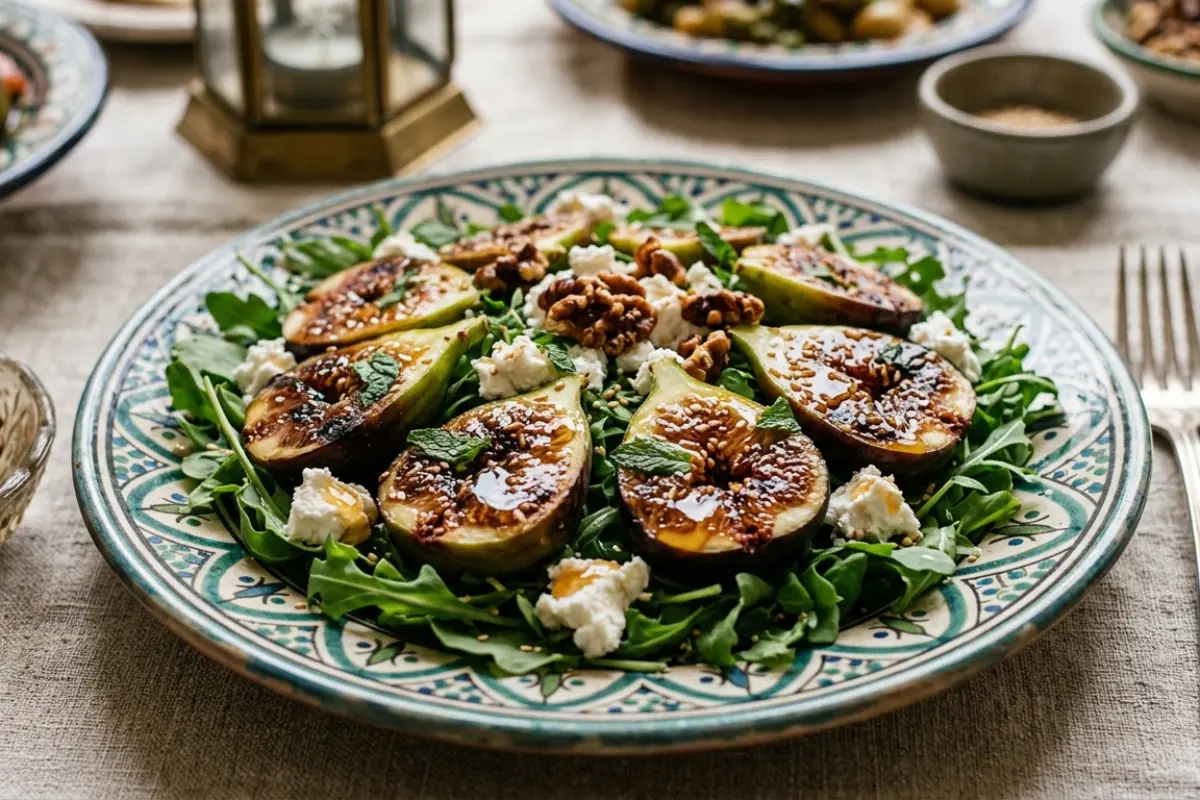
5 minArrange a generous bed of fresh arugula on a large serving platter or individual plates. Nestle the warm grilled fig halves among the arugula, cut-side up to showcase their caramelized surfaces. Crumble the soft goat cheese generously over the figs and greens. Scatter the toasted walnuts across the salad. Drizzle the honey and orange blossom dressing over everything in a slow, deliberate stream. Finish with fresh mint leaves and a final drizzle of extra virgin olive oil.
Tip: Serve this salad immediately while the figs are still warm, as the contrast of warm figs against the cool arugula and creamy goat cheese is a key part of the dish's appeal. Assemble it at the table for maximum visual impact.
Common Mistakes to Avoid
✗ Using overripe or very soft figs for grilling
Fix: Always select figs that are ripe but still firm enough to hold their shape on the grill. Overripe figs will fall apart and turn mushy when exposed to high heat, ruining the texture of the salad. Gently press the fig before purchasing — it should yield slightly but spring back.
✗ Grilling figs on a pan that is not hot enough
Fix: The grill or grill pan must be preheated until very hot before the figs are placed on it. A pan that is too cool will cause the figs to steam and become soggy rather than developing those essential caramelized grill marks and smoky sweetness.
✗ Adding too much orange blossom water to the dressing
Fix: Orange blossom water is intensely aromatic and should be used sparingly. Start with just two to three drops, taste, and add more only if needed. Too much will make the dressing taste soapy or perfumed in an unpleasant way, overpowering the natural sweetness of the honey and figs.
✗ Assembling the salad too far in advance
Fix: This salad should be assembled and served immediately. If the arugula sits with the warm figs and dressing for more than a few minutes, it will wilt and become limp. Prepare all components in advance but do the final assembly just before bringing the dish to the table.
Ingredient Substitutions
Instead of: Fresh Figs
Use: Ripe peaches or nectarines can be halved and grilled in the same way, providing a similar caramelized sweetness. Pears also work beautifully in autumn months when fresh figs are out of season.
Instead of: Moroccan Honey
Use: Good quality wildflower honey or acacia honey can be used in place of Moroccan honey. Add a small pinch of cinnamon to the dressing to mimic some of the warm, spiced notes found in Moroccan honey varieties.
Instead of: Soft Goat Cheese
Use: Fresh ricotta, labneh (strained yogurt cheese), or fresh mozzarella can substitute for goat cheese. Labneh is particularly authentic to the region and provides a similar tangy creaminess.
Instead of: Arugula
Use: Baby spinach, watercress, or a mix of tender bitter greens can replace arugula. Young dandelion greens, which are used in traditional Moroccan cooking, are an especially authentic substitute.
Instead of: Toasted Walnuts
Use: Toasted almonds, pistachios, or pine nuts can all be used in place of walnuts. Almonds are particularly Moroccan and would be an equally authentic choice for this recipe.
Serving Suggestions
Serve as an elegant starter before a traditional Moroccan diffa feast, accompanied by warm Moroccan flatbread (khobz) to soak up the honey dressing.
Pair with a glass of chilled Moroccan mint tea or a light sparkling water infused with orange blossom to complement the floral notes of the salad.
Present on a large decorative Moroccan ceramic platter garnished with additional fresh mint sprigs and a light dusting of ground cinnamon for a beautiful festive table centerpiece.
Serve alongside a spread of other Moroccan appetizers such as zaalouk, taktouka, and harira soup for a complete traditional Moroccan feast experience.
Storage & Reheating
Storage
Store any leftover grilled figs separately from the arugula and other components. Place the figs in an airtight container in the refrigerator for up to 2 days. Keep the arugula, cheese, and walnuts each in separate containers to preserve their individual textures and flavors.
Reheating
Gently warm the leftover grilled figs in a dry skillet over low heat for 1 to 2 minutes, or briefly under a broiler for 30 seconds. Do not microwave the figs as this will make them rubbery and cause the cheese to melt unpleasantly.
The honey dressing can be made up to one week in advance and stored at room temperature in a sealed jar. The toasted walnuts can be prepared up to 3 days ahead and stored in an airtight container at room temperature. Always assemble the full salad fresh just before serving for the best results.
Frequently Asked Questions
Recipe by

Samira Tazi
سميرة تازي
Salad & Meze Specialist
View all recipes by Samira →
You May Also Like
Our Ebooks

The Moroccan Vegan
$12.56

Tables of Fez: A Royal Palace Legacy
$22.99

The Soul of Morocco
$20.00
YouTube
Watch step-by-step cooking videos and learn traditional Moroccan techniques.
450+
Subscribers
150+
Videos