
20
Prep (min)
35
Cook (min)
4
Servings
Easy
Level
Introduction
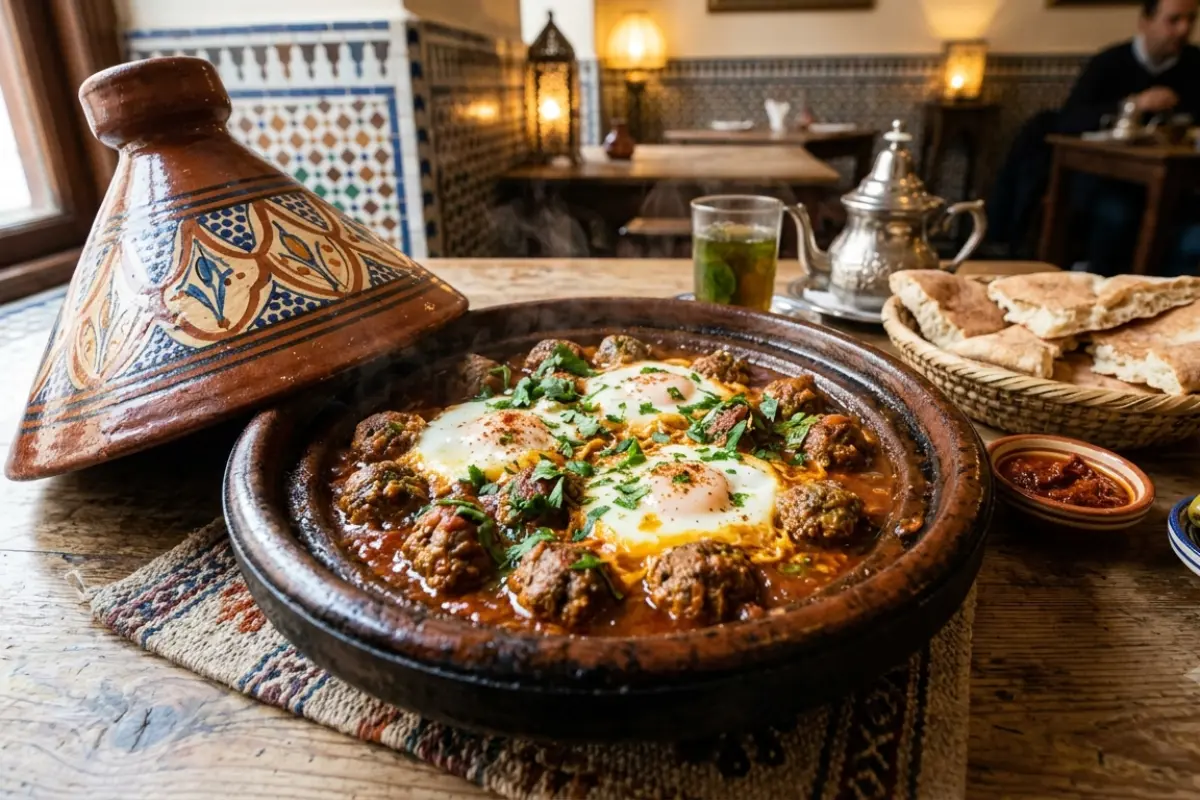
Kefta Tagine with Eggs, known in Moroccan Arabic as Tagine Kefta Bel Beid, is one of the most iconic and comforting dishes in the Moroccan culinary repertoire. Originating in the imperial city of Marrakech, this dish has been prepared in Moroccan households and medina restaurants for centuries, drawing on the rich tradition of spiced ground meat cookery that traveled through North Africa along ancient trade routes. The combination of hand-rolled meatballs, slow-cooked tomato sauce, and eggs poached directly in the tagine reflects the ingenuity of Moroccan cooks who mastered the art of layering flavors within a single clay vessel.
The dish holds a special place in Moroccan culture as a communal meal, typically placed in the center of the table and shared directly from the tagine. It is a popular choice for casual family lunches and festive gatherings alike, often served alongside warm khobz bread for scooping. The spice blend used in the kefta — a harmonious mixture of cumin, paprika, cinnamon, and fresh herbs — reflects the Moroccan philosophy that spices should enhance and balance rather than overwhelm, creating a sauce that is both robust and nuanced in flavor.
What makes this recipe particularly special is the moment when the eggs are cracked directly into the simmering tomato and kefta sauce, absorbing the fragrant juices as they set to a silky, just-cooked perfection. This technique, practiced across Morocco from street food stalls to fine dining establishments, transforms a simple tagine into a visually dramatic and deeply nourishing dish. Whether prepared in a traditional clay tagine over charcoal or adapted for a modern stovetop, Kefta Tagine with Eggs delivers an authentic taste of Moroccan home cooking with every single bite.
About This Recipe
Kefta Tagine with Eggs traces its culinary lineage back through centuries of Moroccan cooking, deeply rooted in the traditions of Marrakech and the broader Maghreb region. The concept of cooking spiced ground meat in a clay tagine vessel reflects the influence of Berber culinary practices, which long predate Arab and Andalusian influences on Moroccan cuisine. Ground meat preparations seasoned with aromatic spice blends appear in medieval Moroccan cookbooks, and the pairing of kefta with eggs — which adds both richness and a visually compelling presentation — is thought to have become widespread during the period of the Saadian dynasty in the 16th century when Marrakech flourished as a cosmopolitan imperial capital. The dish also reflects the broader North African tradition of one-pot communal cooking, where a single vessel placed at the center of the table encourages shared meals and family gathering. Over centuries, the recipe traveled across Morocco and beyond, with regional variations incorporating preserved lemon, harissa, or additional spices depending on local tastes. Today, Kefta Tagine with Eggs remains a cherished everyday dish as well as a restaurant staple across Morocco, served from humble roadside cookhouses to elegant riads, always evoking the warmth and generosity that define Moroccan hospitality.
Nutrition / serving
Recipe Tags
Understanding the Ingredients
Ground Beef or Lamb
The foundation of the kefta, ground beef or lamb is preferred for its richness and ability to absorb the spice blend fully. Lamb adds a slightly gamier, more traditional Moroccan flavor, while beef provides a milder base. Choose meat with a moderate fat content of around 15-20% to ensure the meatballs remain moist and tender during cooking.
Ripe Tomatoes
Fresh ripe tomatoes are essential for building the sauce base in this tagine. They are typically grated on a box grater to create a smooth pulp that cooks down into a thick, sweet, and tangy sauce. Using overripe or vine-ripened tomatoes will yield the best flavor, as their natural sweetness balances the bold spices perfectly.
Cumin
Ground cumin is the cornerstone spice of Moroccan kefta, lending an earthy warmth and depth that is unmistakably characteristic of the dish. Moroccan cumin is known for its particularly intense aroma, and freshly ground cumin seeds will provide the most vibrant flavor. It is used both in the meatball mixture and in the sauce.
Sweet Paprika
Sweet paprika adds a gentle warmth and a beautiful red color to both the kefta and the tomato sauce. In Moroccan cuisine, paprika is used generously without adding excessive heat, contributing a subtle smokiness and a visually appealing deep orange-red hue to the finished dish.
Fresh Parsley and Cilantro
A combination of fresh flat-leaf parsley and cilantro is finely chopped and incorporated into the kefta mixture and used as a garnish. These herbs bring brightness and freshness that lift the richness of the meat and sauce. In traditional Moroccan cooking, both herbs are considered essential and are used in roughly equal proportions.
Eggs
Whole eggs are cracked directly into the simmering tagine sauce toward the end of cooking, where they are gently poached until the whites are just set but the yolks remain slightly runny. The eggs enrich the dish with creaminess and provide a striking visual presentation. Using fresh, high-quality eggs will yield the best results both in flavor and appearance.
Olive Oil
Extra virgin olive oil is used to sauté the base aromatics and adds a fruity richness to the sauce. Moroccan olive oil, particularly from the Meknes region, is prized for its robust flavor and is an integral part of authentic Moroccan tagine cooking. It also helps to keep the kefta moist as it cooks.
Cinnamon
A small amount of ground cinnamon adds a subtle sweet warmth to the kefta that is characteristic of Moroccan meat dishes. This spice reflects the historical influence of the spice trade on Moroccan cuisine and provides a complex, slightly exotic undertone that distinguishes Moroccan kefta from other Mediterranean meatball dishes.
Step-by-Step Cooking Guide
Prepare the Kefta Mixture
10 minIn a large mixing bowl, combine the ground beef or lamb with finely chopped onion, minced garlic, chopped parsley and cilantro, ground cumin, sweet paprika, cinnamon, salt, and black pepper. Mix thoroughly with your hands until all the spices and herbs are evenly distributed throughout the meat. Knead the mixture for about 2 minutes to ensure a smooth, cohesive texture that will hold its shape during cooking.
Tip: Chill the meat mixture in the refrigerator for 10 minutes before shaping if it feels too soft — this makes rolling much easier and helps the kefta hold their shape.
Shape the Meatballs
10 minWith lightly moistened hands, pinch off small portions of the kefta mixture and roll them between your palms into smooth, evenly sized balls approximately the size of a large marble or walnut, about 2-3 cm in diameter. Place the shaped kefta on a plate or tray. Aim for uniform size to ensure even cooking. A standard recipe yields approximately 20-24 small meatballs.
Tip: Keeping your hands slightly damp with cold water prevents the meat from sticking and helps you achieve a smooth surface on each meatball.
Prepare the Tomato Sauce Base
15 minHeat olive oil in a tagine or heavy-bottomed wide pan over medium heat. Add finely chopped onion and cook for 4-5 minutes until softened and translucent. Add minced garlic and cook for another minute until fragrant. Grate the fresh tomatoes directly into the pan or add crushed tomatoes, then stir in the cumin, paprika, a pinch of cinnamon, salt, and a small amount of chopped parsley and cilantro. Stir to combine and let the sauce simmer for 8-10 minutes until it thickens slightly.
Tip: Grating whole tomatoes rather than chopping them creates a silkier sauce that coats the kefta beautifully. Discard the tomato skins after grating.
Cook the Kefta in the Sauce
18 minGently nestle the shaped kefta into the simmering tomato sauce, arranging them in a single layer. Spoon a little sauce over each meatball, then cover the tagine with its lid. Cook over medium-low heat for 15-18 minutes, gently shaking the pan occasionally to prevent sticking. The kefta should be cooked through and the sauce should have thickened and deepened in color.
Tip: Avoid stirring the kefta aggressively once they are in the sauce, as they can break apart. Gently tilt and rotate the tagine instead to redistribute the sauce.
Add the Eggs and Finish Cooking
7 minUsing the back of a spoon, create small wells in the sauce between the kefta. Carefully crack one egg into each well, keeping the yolks intact. Season the eggs lightly with salt and a pinch of cumin. Replace the lid and cook for 5-7 minutes over low heat until the egg whites are fully set but the yolks remain slightly soft and runny. Watch carefully during this step as the eggs can overcook quickly.
Tip: For perfectly set whites with runny yolks, remove the tagine from the heat as soon as the whites are no longer translucent — residual heat will continue to cook them slightly.
Garnish and Serve
5 minRemove the tagine from the heat and scatter a generous handful of freshly chopped parsley and cilantro over the top. A light drizzle of extra virgin olive oil adds a final flourish of richness and aroma. Serve immediately directly from the tagine, accompanied by warm Moroccan khobz bread or crusty baguette for scooping. Place the tagine in the center of the table for a traditional communal dining experience.
Tip: Serve within 5 minutes of finishing to enjoy the eggs at their ideal consistency — the residual heat in the clay tagine will continue to cook the eggs if left too long.
Common Mistakes to Avoid
✗ Overcooking the eggs
Fix: Remove the tagine from the heat as soon as the egg whites are just set. The heat retained in the sauce and the tagine clay will finish cooking them gently without making the yolks rubbery.
✗ Making the kefta too large
Fix: Keep the meatballs small, around 2-3 cm in diameter. Oversized kefta take longer to cook through and may not fit elegantly in the tagine, making it difficult to add the eggs at the end.
✗ Not seasoning the sauce enough
Fix: Taste and adjust the salt and spices in the tomato sauce before adding the kefta. The sauce is the flavor backbone of the entire dish, so it should be well-seasoned and balanced before the meatballs are added.
✗ Cooking on too high a heat
Fix: A tagine requires gentle, low-to-medium heat to allow flavors to meld and develop. High heat will cause the sauce to splatter, dry out, and burn, resulting in a bitter taste and tough meatballs.
Ingredient Substitutions
Instead of: Ground Lamb
Use: Ground beef or a 50/50 mix of beef and lamb can be used. Ground turkey is a leaner alternative, though it will produce a milder flavor and slightly drier meatballs.
Instead of: Fresh Tomatoes
Use: One 400g can of good quality crushed tomatoes or passata can replace fresh tomatoes, especially outside of tomato season. Add a pinch of sugar to balance the acidity of canned tomatoes.
Instead of: Fresh Cilantro
Use: If cilantro is unavailable or disliked, additional flat-leaf parsley can be used in its place. The flavor will be slightly less complex but still authentically Moroccan.
Instead of: Clay Tagine
Use: A wide, heavy-bottomed skillet or a Dutch oven with a tight-fitting lid works well as a substitute. The cooking principles remain the same — low heat, covered, with gentle simmering.
Serving Suggestions
Serve the tagine in the center of the table directly in the cooking vessel alongside warm, freshly baked Moroccan khobz bread for scooping — this is the traditional and most authentic way to enjoy this dish.
Pair with a simple Moroccan cucumber and tomato salad dressed with lemon juice, olive oil, and fresh mint for a refreshing contrast to the richness of the tagine.
A glass of hot Moroccan mint tea served after the meal is the perfect way to complete the dining experience in true Moroccan tradition.
For a more substantial meal, serve alongside steamed couscous or a side of roasted vegetables seasoned with ras el hanout spice blend.
Storage & Reheating
Storage
Allow the tagine to cool completely before transferring to an airtight container. Store in the refrigerator for up to 3 days. It is best to store the tagine without the eggs if possible, as poached eggs do not reheat well and are best freshly cooked.
Reheating
Reheat the kefta and tomato sauce gently in a covered pan over low heat, adding a splash of water if the sauce has thickened too much. Once the sauce is simmering, crack fresh eggs into the pan and cook as per the original recipe for the best results.
The kefta and tomato sauce base actually improve in flavor the next day as the spices continue to develop. Freeze only the kefta and sauce without eggs for up to 2 months in a freezer-safe container.
Frequently Asked Questions
Recipe by

Fatima El Amrani
فاطمة العمراني
Master Chef
View all recipes by Fatima →
You May Also Like
Our Ebooks

The Moroccan Vegan
$12.56

Tables of Fez: A Royal Palace Legacy
$22.99

The Soul of Morocco
$20.00
YouTube
Watch step-by-step cooking videos and learn traditional Moroccan techniques.
450+
Subscribers
150+
Videos