
20
Prep (min)
30
Cook (min)
4
Servings
Medium
Level
Introduction
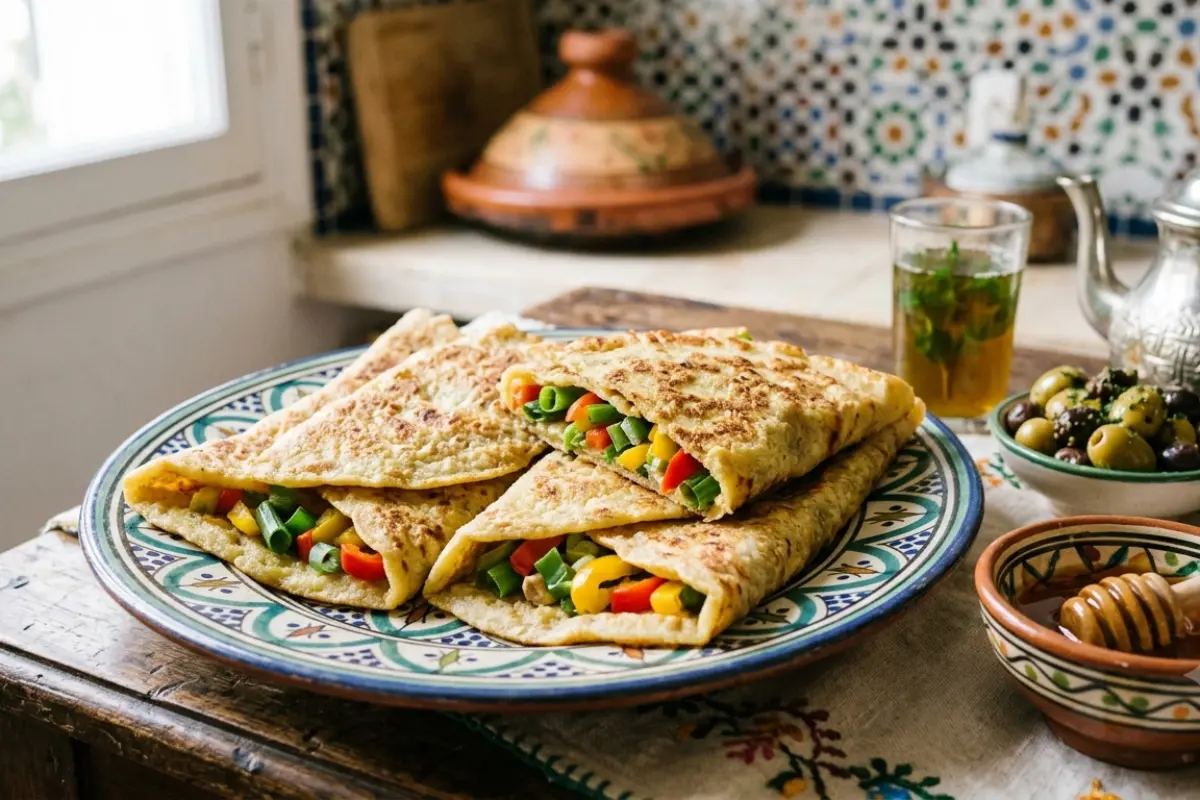
Krinitta, also spelled grinitta or krinitta, is one of the most cherished pan-fried breads in the Moroccan culinary tradition. Rooted deeply in the street food culture of cities like Fes, Meknes, and Marrakech, this savory crepe has been prepared by Moroccan grandmothers for generations, passed down through family kitchens with subtle regional variations in filling and technique. Its name is believed to derive from a Berber or Andalusian influence, reflecting the rich tapestry of cultures that shaped Moroccan cuisine over the centuries.
About This Recipe
Krinitta is a dish deeply embedded in the culinary heritage of northern and central Morocco, with its roots tracing back to the Berber and Andalusian cooking traditions that shaped the region over many centuries. The dish is thought to have been influenced by the influx of Moorish refugees who arrived in Morocco from Andalusia in the fifteenth and sixteenth centuries, bringing with them a rich culinary tradition of savory pan-fried breads and semolina-based dishes. Over time, Moroccan cooks adapted these influences using locally available ingredients, including semolina milled from the hard durum wheat grown across the Moroccan plains. In cities like Fes and Meknes, krinitta became a morning staple sold by street vendors from large iron griddles, feeding artisans, traders, and families before the long working day began. The addition of green onions and bell peppers to the classic recipe reflects Morocco's affinity for fresh vegetables and the influence of the country's fertile agricultural regions, where these ingredients are grown abundantly. Today, krinitta remains a symbol of Moroccan domestic cooking, a dish that requires patience, skill, and love, and one that continues to bring Moroccan families together around the morning table.
Nutrition / serving
Recipe Tags
Understanding the Ingredients
Fine Semolina
Fine semolina is the backbone of authentic krinitta, giving it a slightly gritty, golden texture that is distinctly Moroccan. It absorbs liquid well and creates a batter that cooks evenly on a hot pan, producing a crepe with a tender crumb and lightly crispy edges.
All-Purpose Flour
Combined with semolina, all-purpose flour smooths out the batter and helps create a cohesive, pliable dough that is easy to spread on the pan. The balance between semolina and flour is key to achieving the ideal krinitta texture.
Green Onions
Green onions provide a fresh, mild onion flavor without the sharpness of regular onions. Both the white bulb and the green tops are used in this recipe, adding layers of flavor and a pleasant visual contrast within the golden crepe.
Bell Pepper
Red or green bell pepper is finely diced and added to the filling for sweetness, color, and a gentle crunch. Moroccan cooks often prefer red bell pepper for its sweeter taste, but any color works beautifully in this recipe.
Dry Yeast
A small amount of dry yeast is added to the batter to give krinitta its characteristic slight lift and airy interior. The yeast also contributes a subtle fermented depth of flavor that distinguishes krinitta from a simple pancake.
Vegetable Oil
Vegetable oil is used both in the batter and for cooking the krinitta on the pan. It prevents sticking and helps develop the golden, slightly crispy exterior that makes krinitta so appealing.
Salt
Salt is essential for seasoning the batter and the vegetable filling. It draws out moisture from the peppers and onions, concentrating their flavors and ensuring the krinitta is well-seasoned throughout.
Water
Warm water is used to hydrate the batter to the correct consistency, which should be slightly thinner than pancake batter but thick enough to coat the back of a spoon. The temperature of the water activates the yeast.
Step-by-Step Cooking Guide
Prepare the Batter
15 minIn a large mixing bowl, combine the fine semolina and all-purpose flour. Add the dry yeast and salt, then gradually pour in the warm water while whisking continuously to avoid lumps. Add one tablespoon of vegetable oil and whisk until a smooth, slightly runny batter forms. Cover the bowl with a clean kitchen towel and let the batter rest for 15 minutes to allow the yeast to activate and the semolina to hydrate fully.
Tip: The batter should be thin enough to spread easily on the pan but not so watery that it runs off the edges. Adjust with a little water or flour if needed.
Prepare the Vegetable Filling
5 minWhile the batter rests, finely chop the green onions, using both the white and green parts. Dice the bell pepper into small, uniform pieces. Place the chopped vegetables in a bowl, season lightly with salt and a pinch of black pepper, and toss to combine. Set aside until ready to use.
Tip: Chop the vegetables as finely as possible so they integrate smoothly into the krinitta without creating bulky lumps that could tear the crepe.
Heat the Pan
3 minPlace a non-stick or well-seasoned cast iron skillet over medium heat. Allow the pan to heat thoroughly for at least two minutes before adding any oil. Add a small amount of vegetable oil and spread it across the surface using a paper towel or brush to create a thin, even coating.
Tip: A properly preheated pan is the secret to a krinitta that does not stick and cooks evenly. Test the heat by dropping a tiny bit of batter onto the surface; it should sizzle immediately.
Cook the Krinitta
4 minLadle a portion of batter onto the center of the hot pan and quickly spread it into a thin, even circle using the back of the ladle in a circular motion. Immediately scatter a generous handful of the green onion and bell pepper mixture over the surface of the crepe. Cook over medium heat for three to four minutes, until the edges begin to look set and the bottom turns golden brown.
Tip: Do not spread the batter too thick. A thin, even layer ensures the krinitta cooks through without becoming doughy in the center.
Flip and Finish
3 minOnce the bottom of the krinitta is golden and the edges pull away slightly from the pan, carefully flip it using a wide spatula. Press gently on the surface to help the vegetables adhere and cook the second side for an additional two to three minutes until golden and slightly crispy. Repeat the process with the remaining batter and filling, adding a little oil between each krinitta.
Tip: Press the krinitta gently with the spatula after flipping to ensure even contact with the pan and to help the vegetables cook into the surface of the crepe.
Common Mistakes to Avoid
✗ Making the batter too thick
Fix: The batter should be thin and pourable. If it is too thick, add warm water a tablespoon at a time and whisk until the desired consistency is reached before cooking.
✗ Not letting the batter rest
Fix: Skipping the resting time leads to a dense, flat krinitta. Always allow the batter to rest for at least 15 minutes so the yeast can activate and the semolina can absorb the liquid fully.
✗ Using a cold pan
Fix: A cold pan causes the batter to stick and cook unevenly. Always preheat the pan thoroughly over medium heat before adding the oil and batter.
✗ Overloading with vegetables
Fix: Adding too many vegetables at once makes it difficult to flip the krinitta without it falling apart. Use a moderate, even layer of vegetables so the crepe remains cohesive.
Ingredient Substitutions
Instead of: Fine semolina
Use: All fine semolina can be replaced with a 50/50 mix of medium semolina and all-purpose flour if fine semolina is unavailable, though the texture will be slightly coarser.
Instead of: Bell pepper
Use: If bell pepper is not available, finely diced tomato with seeds removed or roasted red pepper strips can be used as an alternative for a similarly colorful filling.
Instead of: Vegetable oil
Use: Butter or a mixture of butter and oil can be used for a richer flavor, though oil is more traditional and gives a crispier finish.
Serving Suggestions
Serve krinitta warm from the pan alongside a glass of freshly brewed Moroccan mint tea for a classic and satisfying breakfast.
Drizzle finished krinitta with local argan oil or Moroccan wild honey for a sweet-savory combination that is a favorite in many Moroccan households.
Stack several pieces of krinitta on a decorative plate and serve with a side of fresh tomato salad and olives for a complete light meal.
Serve alongside fried eggs and harissa for a more substantial and spicy Moroccan morning spread.
Storage & Reheating
Storage
Allow cooked krinitta to cool completely before stacking with parchment paper between each piece to prevent sticking. Store in an airtight container in the refrigerator for up to two days.
Reheating
Reheat krinitta in a dry non-stick pan over medium-low heat for one to two minutes per side until warmed through and slightly crispy again. Alternatively, warm briefly in a preheated oven at 160 degrees Celsius for five minutes.
Avoid microwaving krinitta as it will become soft and lose its characteristic crispy edges. The pan method is always preferred for the best texture.
Frequently Asked Questions
Recipe by

Abdrahman Idrissi
عبد الرحمن الإدريسي
Pastry & Bread Chef
View all recipes by Abdrahman →
You May Also Like
Our Ebooks

The Moroccan Vegan
$12.56

Tables of Fez: A Royal Palace Legacy
$22.99

The Soul of Morocco
$20.00
YouTube
Watch step-by-step cooking videos and learn traditional Moroccan techniques.
450+
Subscribers
150+
Videos