
25
Prep (min)
90
Cook (min)
4
Servings
Medium
Level
Introduction
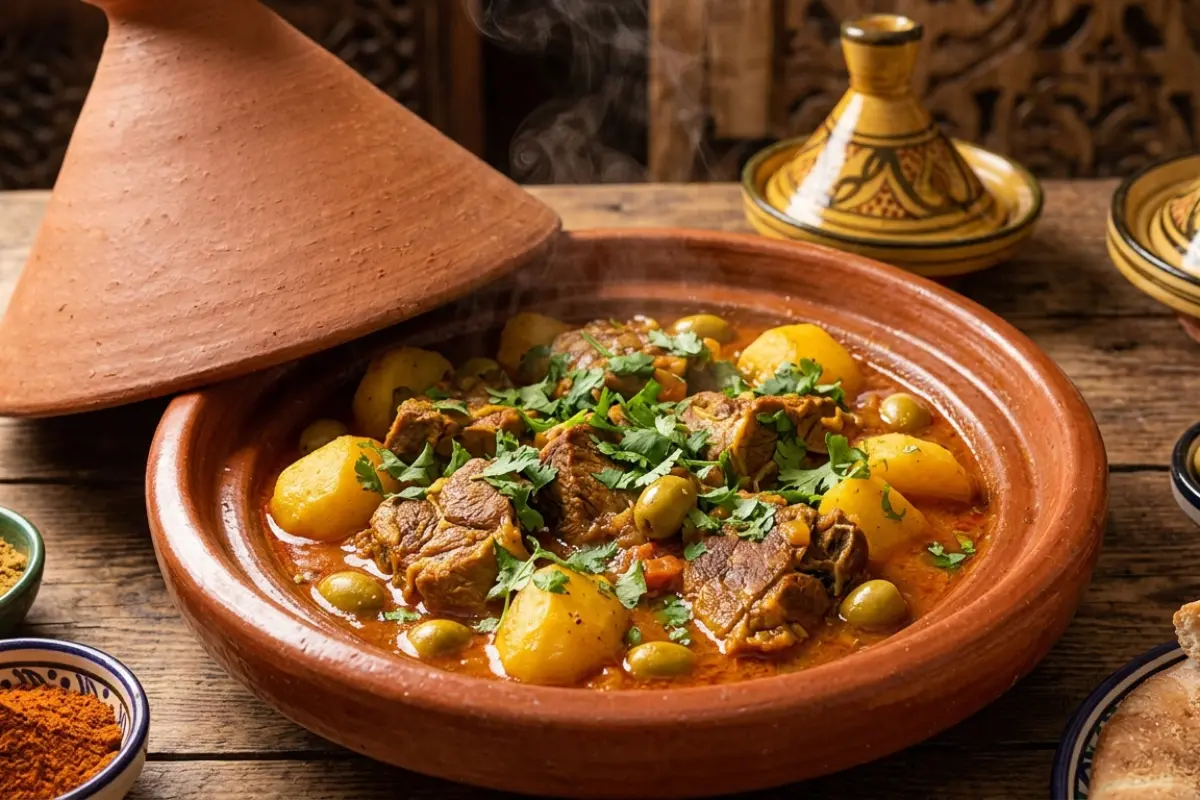
The lamb tagine is one of the most iconic dishes in Moroccan cuisine, with roots stretching back centuries through the Berber, Arab, and Andalusian culinary traditions that together shaped the rich food culture of Morocco. The word 'tagine' refers both to the conical clay cooking vessel and the slow-cooked stew prepared within it. This ingenious pot design allows steam to circulate continuously, keeping the meat extraordinarily tender while concentrating all the aromatic spices and natural juices into a deeply flavorful sauce. The combination of lamb with potatoes and cilantro is particularly beloved in the ancient city of Fez, where home cooks have perfected this recipe across generations.
In Moroccan culture, preparing a tagine is an act of love and patience. Families traditionally gather around a single communal tagine placed at the center of the table, eating together with pieces of crusty Moroccan bread used to scoop up the tender meat and vegetables. The dish is a fixture at Friday family lunches, religious celebrations such as Eid al-Adha, and welcoming feasts for honored guests. The use of lamb is particularly significant in Moroccan tradition, as it is considered the most noble and celebratory of meats, often reserved for special occasions and religious observances.
The spice profile of this tagine — featuring cumin, ginger, turmeric, and paprika — reflects Morocco's historical position as a crossroads of trade routes linking sub-Saharan Africa, the Arab world, and Europe. Fresh cilantro, known locally as kzbar, adds a vibrant herbal brightness that balances the earthiness of the spices and the richness of the lamb. Potatoes, introduced to Morocco through Spanish and Portuguese contact, have become so thoroughly integrated into the local culinary tradition that they now feel inseparable from dishes like this one, absorbing the spiced cooking juices and becoming meltingly soft and flavorful.
About This Recipe
The tagine as a cooking method has been central to North African cuisine for over a thousand years, with evidence of conical clay cooking vessels found at archaeological sites across the Maghreb region dating back to the 9th century. The dish evolved through the successive cultural layers of Moroccan history — Berber cooking traditions provided the foundational techniques of slow-braising meat over low heat, Arab and Andalusian influences introduced the sophisticated spice combinations, and trade routes across the Sahara brought new ingredients and flavor pairings that were absorbed into the local culinary canon. The specific combination of lamb with potatoes and cilantro became widespread in Morocco after the 16th century, when potatoes were introduced through Iberian contact. In the imperial city of Fez, which was for centuries the culinary and cultural heart of Morocco, home cooks refined this tagine to its most elegant form, balancing the richness of slow-cooked lamb with the brightness of preserved lemon and the freshness of abundant cilantro. Today, this tagine remains one of the most prepared dishes in Moroccan homes, passed down through generations of mothers and grandmothers who teach their children that the secret to a great tagine lies not in expensive ingredients but in patience, quality spices, and the willingness to let time do the work of transforming humble ingredients into something extraordinary.
Nutrition / serving
Recipe Tags
Understanding the Ingredients
Bone-in Lamb Shoulder
Bone-in lamb shoulder is the preferred cut for tagine cooking because the bone adds richness and depth to the braising liquid while the connective tissue in the shoulder slowly melts during the long cook, producing exceptionally tender and flavorful meat. Look for pieces with good marbling for the best results.
Yukon Gold Potatoes
Yukon Gold or similar waxy potatoes hold their shape during slow cooking while absorbing the flavorful spiced broth. They become creamy on the inside and slightly golden on the outside, making them the ideal companion to the lamb. Avoid floury potatoes like Russets, which may fall apart during the long simmer.
Fresh Cilantro
Cilantro, called kzbar in Moroccan Arabic, is used both during cooking and as a fresh garnish. When cooked, it imparts a subtle herbal sweetness to the sauce; when added fresh at the end, it provides a bright, vibrant flavor contrast to the rich, slow-cooked elements of the tagine.
Ras el Hanout
Ras el hanout is a complex Moroccan spice blend whose name translates to 'top of the shop,' implying it contains the very best spices a merchant carries. It typically includes cardamom, cinnamon, clove, coriander, cumin, paprika, turmeric, and many more. It provides the foundational aromatic character of this tagine.
Preserved Lemon
Preserved lemons are a cornerstone of Moroccan cooking, made by curing whole lemons in salt and their own juice for several weeks. They contribute a unique briny, tangy, deeply lemony flavor that no other ingredient can replicate. Only the rind is used; the pulp is discarded or reserved for other uses.
Saffron
Moroccan saffron, particularly from the Taliouine region, is among the finest in the world. When bloomed in warm water, saffron releases its distinctive golden color and subtle honeyed, floral aroma that is a hallmark of high-quality Moroccan tagines. Even a small pinch transforms the dish significantly.
Yellow Onions
Onions form the aromatic base of the tagine sauce. When slow-cooked, they break down completely and melt into the braising liquid, creating body and natural sweetness that balances the acidity of the preserved lemon and the earthiness of the spices.
Olive Oil
Extra-virgin olive oil is used for searing the lamb and sweating the onions. Moroccan olive oil, primarily produced in the Marrakech and Meknes regions, has a mild, fruity character that complements the spices without overpowering them. It also helps carry the fat-soluble spice compounds throughout the dish.
Step-by-Step Cooking Guide
Marinate the Lamb
20 minIn a large bowl, combine the lamb pieces with ras el hanout, ground cumin, ground ginger, turmeric, paprika, half of the minced garlic, a generous pinch of salt, and 2 tablespoons of olive oil. Toss everything together thoroughly so each piece of lamb is evenly coated with the spice mixture. Cover the bowl with plastic wrap and allow the lamb to marinate at room temperature for at least 20 minutes, or ideally refrigerate overnight for maximum flavor penetration.
Tip: Marinating overnight develops a significantly deeper flavor. If marinating in the refrigerator, bring the lamb back to room temperature 30 minutes before cooking.
Bloom the Saffron
10 minCrumble a generous pinch of saffron threads into a small bowl and pour 3 tablespoons of warm (not boiling) water over them. Allow the saffron to steep for at least 10 minutes until the water turns a deep golden orange. This process, called blooming, releases the maximum color, aroma, and flavor from the saffron threads before they are added to the tagine.
Tip: Never add saffron directly to very hot liquid as it can destroy its delicate aromatic compounds. Warm water between 60-70°C is ideal for blooming.
Sear the Lamb
15 minHeat the remaining olive oil in the base of a tagine or a heavy-bottomed Dutch oven over medium-high heat. When the oil shimmers, add the marinated lamb pieces in a single layer without overcrowding. Sear the lamb for 3-4 minutes per side until a deep golden-brown crust forms. Work in batches if necessary. Remove the seared lamb and set aside. This step is critical as it creates the Maillard reaction, developing complex roasted flavors that form the backbone of the tagine's sauce.
Tip: Do not move the lamb while it is searing. Letting it sit undisturbed allows a proper crust to form that will add tremendous depth of flavor to the finished dish.
Build the Aromatic Base
15 minReduce the heat to medium and add the sliced onions to the same pot, scraping up the browned bits from the bottom. Cook the onions for 8-10 minutes, stirring occasionally, until they are soft, translucent, and beginning to turn golden. Add the remaining garlic and cook for another 2 minutes. Pour in the saffron water, 1 cup of water or light lamb stock, and season with salt and pepper. Stir to combine all the flavors.
Tip: The browned bits stuck to the bottom of the pan are called fond and contain concentrated flavor. Make sure to scrape them up as they dissolve into the sauce.
Slow Cook the Tagine
45 minReturn the seared lamb to the pot, nestling the pieces into the onion base. Add the quartered preserved lemon rind and half of the fresh cilantro. Place the lid on the tagine or Dutch oven, reduce the heat to low, and allow the tagine to cook undisturbed for 45 minutes. The low, steady heat and sealed environment will gently braise the lamb, breaking down the tough connective tissue into silky collagen that enriches the sauce.
Tip: Resist the urge to lift the lid frequently, as each time you do, valuable steam and moisture escape, which can dry out the meat and extend the cooking time.
Add Potatoes and Finish Cooking
35 minAfter 45 minutes, arrange the potato wedges around and between the lamb pieces. Add a splash more water if the sauce looks too thick. Replace the lid and continue to cook on low heat for an additional 30-35 minutes, until the potatoes are completely tender when pierced with a fork and the lamb is falling off the bone. Check the seasoning and adjust salt as needed.
Tip: Cut the potatoes into uniform wedges so they cook evenly. Placing them in the sauce rather than on top ensures they absorb maximum flavor from the braising liquid.
Garnish and Serve
5 minRemove the tagine from the heat and let it rest for 5 minutes with the lid on. Just before serving, scatter the remaining fresh cilantro generously over the top of the tagine. Optionally, add a few thin slices of fresh lemon for brightness. Serve the tagine directly in its cooking vessel placed at the center of the table, accompanied by warm Moroccan khobz bread or crusty country bread for scooping.
Tip: Presenting the tagine in its cooking vessel keeps it warm longer and creates a beautiful, authentic table presentation that guests will appreciate.
Common Mistakes to Avoid
✗ Skipping the searing step and adding raw lamb directly to the pot
Fix: Always sear the lamb over high heat before braising. The golden-brown crust created by searing adds enormous depth and complexity to the final sauce through the Maillard reaction. Without it, the tagine sauce will taste flat and one-dimensional.
✗ Cooking the tagine at too high a temperature
Fix: A tagine must be cooked low and slow. High heat causes the lamb to tighten and toughen, and burns the delicate spices. Keep the heat at the lowest possible simmer and be patient — the extended cooking time is what makes the lamb fall-off-the-bone tender.
✗ Using too much preserved lemon or including the pulp
Fix: Only the rind of the preserved lemon should be used, and in moderate amounts. The pulp is intensely salty and can overwhelm the dish. Scrape out the pulp before slicing the rind and add just one quarter of a preserved lemon for a balanced flavor.
✗ Adding the potatoes at the beginning of cooking
Fix: Potatoes added too early will turn to mush by the time the lamb is cooked. Always add potatoes during the last 30-35 minutes of cooking so they become tender but retain their shape and do not disintegrate into the sauce.
Ingredient Substitutions
Instead of: Bone-in Lamb Shoulder
Use: Bone-in lamb shank or bone-in goat meat can be used as direct substitutes. For a lighter version, bone-in chicken thighs work well but reduce the total cooking time to about 50-60 minutes total.
Instead of: Preserved Lemon
Use: If preserved lemon is unavailable, combine 1 teaspoon of fresh lemon zest with 1 teaspoon of salt and allow it to sit for 10 minutes before using. It will not replicate the fermented depth of preserved lemon but will provide similar citrus brightness.
Instead of: Ras el Hanout
Use: Create a simplified substitute by combining 1 teaspoon ground cinnamon, 1 teaspoon ground coriander, half a teaspoon ground cardamom, half a teaspoon ground allspice, and a pinch of ground clove. It will not be as complex but will provide a similar warm spice character.
Instead of: Saffron
Use: A small pinch of turmeric mixed with a tiny pinch of paprika can approximate the golden color of saffron, though the flavor will be different. Saffron is strongly recommended for authenticity and should be sourced if at all possible.
Instead of: Fresh Cilantro
Use: Flat-leaf parsley can be used as a substitute for those who dislike cilantro. It provides a similar fresh herbal quality and bright green color, though the flavor profile will be milder and less distinctly Moroccan.
Serving Suggestions
Serve the tagine directly in its clay vessel at the center of the table alongside a large round of warm Moroccan khobz bread, which is used to scoop up the meat, potatoes, and fragrant sauce in the traditional communal style.
A simple Moroccan carrot salad dressed with cumin, lemon, and olive oil makes an excellent starter before the tagine, providing a refreshing contrast to the rich, slow-cooked main dish.
Pair the tagine with a chilled glass of Moroccan mint tea served before or after the meal as a digestive, or with a light citrus-based beverage during the meal to balance the richness of the lamb.
For a more elaborate spread, serve alongside a zaalouk (smoky eggplant and tomato salad) and a fresh cucumber and tomato salad dressed with argan oil and preserved lemon for a full Moroccan feast experience.
Storage & Reheating
Storage
Allow the tagine to cool completely to room temperature before transferring it to an airtight container. Store in the refrigerator for up to 3 days. The flavors actually deepen and improve overnight, making day-two leftovers particularly delicious. For longer storage, freeze in airtight containers for up to 2 months.
Reheating
Reheat the tagine gently on the stovetop over low-medium heat, adding a splash of water or stock to loosen the sauce as it has likely thickened during refrigeration. Stir occasionally and heat until the lamb and potatoes are heated all the way through. Alternatively, reheat covered in a 160°C oven for 20-25 minutes.
Never reheat the tagine in the clay tagine vessel on direct high heat as it can crack. If reheating in the clay pot, use a diffuser and very low heat. Always add fresh cilantro after reheating, as the herbs lose their vibrant color and fresh flavor during storage.
Frequently Asked Questions
Recipe by

Fatima El Amrani
فاطمة العمراني
Master Chef
View all recipes by Fatima →
You May Also Like
Our Ebooks

The Moroccan Vegan
$12.56

Tables of Fez: A Royal Palace Legacy
$22.99

The Soul of Morocco
$20.00
YouTube
Watch step-by-step cooking videos and learn traditional Moroccan techniques.
450+
Subscribers
150+
Videos