
60
Prep (min)
30
Cook (min)
40
Servings
Medium
Level
Introduction
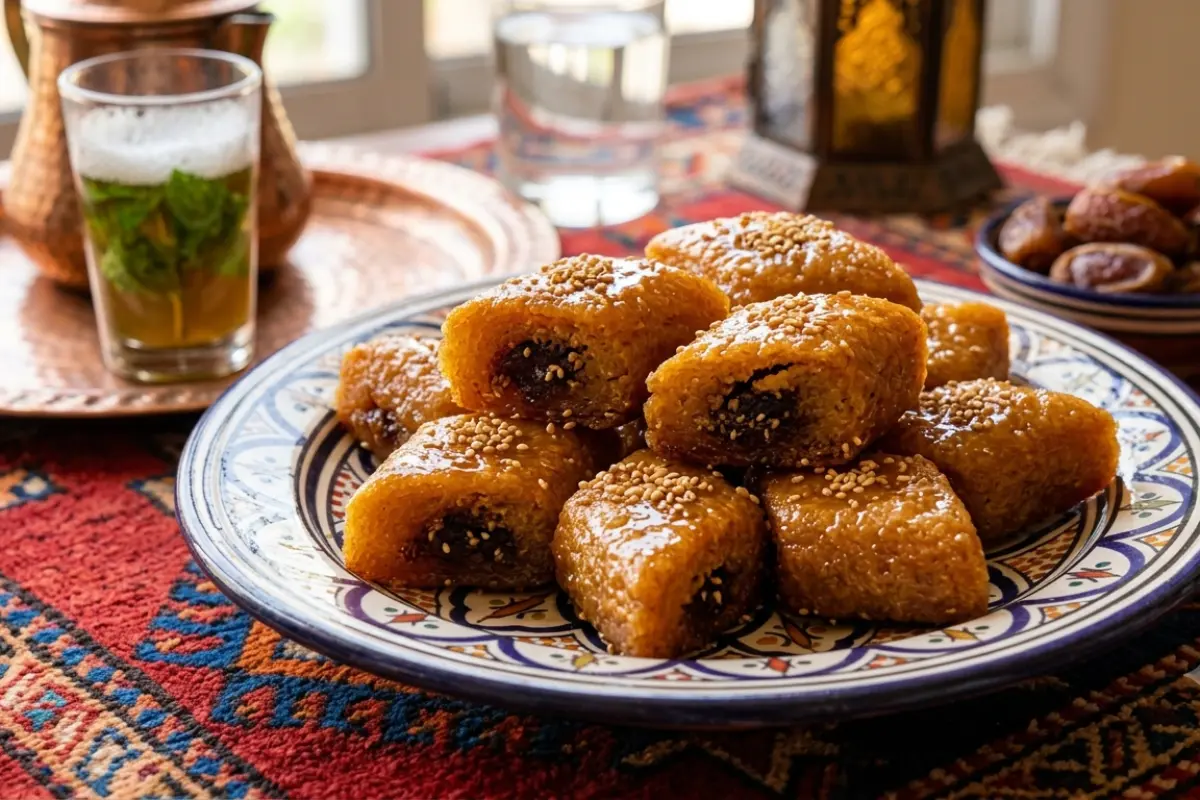
Makrout, also spelled maqrout or makroud, is one of the most iconic pastries in the Maghreb culinary tradition, shared with deep pride across Morocco, Algeria, and Tunisia. In Morocco, particularly in the ancient imperial city of Fez, makrout holds a place of honor on the sweets tray at nearly every significant occasion — from Ramadan iftars to wedding celebrations, from Eid al-Fitr feasts to intimate family gatherings. The name itself is derived from the Arabic root meaning 'cut' or 'notched,' referring to the characteristic diamond or lozenge shape that gives these pastries their distinctive visual identity. Moroccans have perfected the art of makrout over centuries, passing down techniques through generations of home cooks and professional confectioners alike.
The magic of makrout lies in the harmonious marriage of textures and flavors: a semolina dough that is neither too firm nor too soft, enriched with butter and scented with a touch of orange blossom water, encasing a filling of tender Medjool or Deglet Nour dates kneaded with sesame seeds, argan oil, and warm spices like cinnamon. Once shaped and sliced into their signature diamond forms, the pastries are deep-fried until they achieve a glorious golden hue, then immediately plunged into warm honey or sugar syrup infused with orange blossom water. This final honey bath is essential — it is what transforms these fried pastries into glistening, aromatic jewels that are simultaneously crisp on the outside and lusciously moist within. The addition of toasted sesame seeds both in the filling and as a garnish adds a nutty depth that elevates the traditional recipe.
In Moroccan culture, makrout is more than just a confection — it is an expression of hospitality, love, and culinary heritage. Grandmothers and mothers are often the custodians of the most treasured family recipes, each with their own small secrets: the precise ratio of coarse to fine semolina, the exact amount of orange blossom water, or whether to use butter, olive oil, or a combination of both to bind the dough. During Ramadan, the scent of makrout frying in the kitchen is as evocative as the call to prayer, signaling the approaching iftar and the joy of breaking the fast with family. Today, makrout remains a living tradition, sold in every patisserie and confiserie from Marrakech to Casablanca, yet most prized when made at home with care and generosity.
About This Recipe
Makrout is a pastry with deep roots in the Amazigh (Berber) culinary tradition of the Maghreb, with its history stretching back many centuries across what is now Morocco, Algeria, and Tunisia. The pastry is believed to have originated in the semolina-rich cooking culture of North Africa, where fine-ground durum wheat and dates — two of the most abundant and prized ingredients of the region — were naturally combined to create a nourishing and transportable sweet. In Morocco, the city of Fez emerged as a particularly important center of makrout craftsmanship, where the confectioners of the ancient medina refined the recipe over generations, adding distinctly Moroccan touches such as orange blossom water, argan oil, and the characteristic diamond shape associated with Berber geometric artistry. During the medieval Islamic golden age, such pastries traveled with trade caravans across the Sahara, and the honey-soaked semolina sweet became associated with prosperity, celebration, and religious observance. Makrout became especially tied to the holy month of Ramadan, when Moroccan families would prepare enormous quantities of the pastry in communal cooking sessions, filling the air of entire neighborhoods with the scent of frying dough and warm honey. The addition of sesame seeds to both the filling and garnish is a specifically Moroccan elaboration, reflecting the country's long tradition of using sesame — brought by Arab traders and cultivated across the Maghreb for millennia — as a flavor-enhancing and health-promoting ingredient in both sweet and savory cooking. Today, makrout remains a living symbol of Moroccan cultural identity and culinary heritage, made in home kitchens and professional patisseries alike, and proudly presented to guests as an expression of warmth and generosity.
Nutrition / serving
Recipe Tags
Understanding the Ingredients
Fine semolina (smida)
Fine semolina, known locally as smida, forms the backbone of the makrout dough. Its slightly coarse texture creates a pastry that is crumbly and tender rather than chewy, absorbing the honey syrup beautifully while maintaining structural integrity. Use the finest grind available for the smoothest, most refined texture in the finished pastry.
Unsalted butter
Melted unsalted butter is rubbed into the semolina to create a crumbly, shortbread-like texture before any liquid is added. This fat-coating technique, called sablage, prevents gluten development and ensures the pastry stays delicate. Some traditional recipes use vegetable oil or a combination, but butter imparts the richest flavor and golden color.
Orange blossom water (ma zhar)
Orange blossom water, or ma zhar in Moroccan Arabic, is a signature aromatic used in both the dough and the syrup. Distilled from the blossoms of bitter orange trees, it imparts a delicate floral fragrance that is central to Moroccan pastry-making. Use a good-quality Moroccan or Lebanese brand for the most authentic aroma.
Medjool or Deglet Nour dates
The date filling is the heart of makrout. Soft, plump Medjool dates provide the sweetest, most luxurious filling, while Deglet Nour dates offer a slightly firmer, less sweet alternative. The dates should be pitted and worked by hand into a smooth paste, often with a small amount of argan or vegetable oil to help them bind and become pliable.
Toasted sesame seeds
Sesame seeds are incorporated into the date filling and also used as a garnish, adding a rich, nutty flavor and pleasant textural contrast to the sweet, soft dates. Toast them lightly in a dry skillet until golden before use to maximize their flavor. Sesame is rich in healthy fats, calcium, and adds a distinctly Moroccan character to this pastry.
Ground cinnamon
A small but important quantity of ground cinnamon is blended into the date filling, providing warmth and spice that balances the intense sweetness of the dates and honey. Moroccan cinnamon is often fragrant and slightly woody; use a high-quality ground cinnamon for the best results. Some cooks also add a pinch of ground anise for additional complexity.
Honey
Pure Moroccan honey, ideally thyme or wildflower honey, is used to make the warm soaking syrup that gives makrout its characteristic glaze and moist interior. The honey is gently warmed and infused with orange blossom water before the fried pastries are dipped into it. The quality of the honey significantly impacts the final flavor, so use the best available.
Vegetable oil for frying
A neutral-flavored vegetable oil with a high smoke point — such as sunflower or canola oil — is used for deep-frying the makrout. The oil must be maintained at a consistent temperature of around 170-180°C (340-355°F) to ensure the pastries cook evenly, developing a golden exterior without burning before the inside is cooked through.
Step-by-Step Cooking Guide
Prepare the Semolina Dough
20 minPlace the fine semolina in a large mixing bowl and pour the melted butter over it. Using your hands, rub the butter thoroughly into the semolina, working it between your fingers until every grain is coated and the mixture resembles damp sand. This sablage step is critical for a crumbly, melt-in-the-mouth texture. Cover the bowl and let the mixture rest for 15 minutes to allow the semolina to absorb the fat fully. After resting, add the orange blossom water and a pinch of salt. Gradually add small amounts of warm water, kneading gently between each addition, until the dough comes together into a smooth, firm but pliable ball that does not stick to your hands. The dough should hold its shape without cracking. Do not overwork it.
Tip: The key is to add water very gradually — too much water will make the dough sticky and difficult to shape, resulting in pastries that fall apart during frying.
Make the Date and Sesame Filling
15 minRemove the pits from the dates if not already done and roughly chop them. Place the dates in a food processor or work them by hand on a clean surface, kneading them into a smooth, unified paste. Add the toasted sesame seeds, ground cinnamon, and a small drizzle of argan oil or vegetable oil to help bind the filling and make it pliable. Continue kneading until all the ingredients are evenly distributed and the filling is smooth and moldable without being sticky. If the filling feels too firm, add a few drops of orange blossom water. Taste and adjust the spicing if needed.
Tip: If your dates are very dry, soak them in warm water for 10 minutes and pat them dry before processing. This makes the paste much smoother and easier to work with.
Shape the Makrout
20 minDivide the semolina dough into portions and roll each portion into a log approximately 3-4 cm in diameter. Using your finger or the back of a spoon, create a channel lengthwise down the center of each dough log, pressing deep enough to hold the filling without breaking through. Roll the date filling into thin logs of the same length and place them into the channel of each dough log. Carefully close the dough over the filling, pressing the edges together firmly to seal, then roll the log gently on the work surface to smooth and round it. Using a sharp knife or a special makrout mold if available, cut the log on the diagonal at approximately 3-4 cm intervals to create diamond or parallelogram-shaped pieces.
Tip: Dip your fingers lightly in oil when shaping to prevent sticking. A special wooden makrout comb mold (available in Moroccan markets) gives the pastries their traditional ridged surface pattern.
Fry the Makrout
20 minHeat vegetable oil in a deep heavy-bottomed pot or deep fryer to 170-180°C (340-355°F). Test the temperature by dropping a small piece of dough into the oil — it should sizzle gently and rise to the surface without browning immediately. Fry the makrout in batches, being careful not to overcrowd the pot, which would lower the oil temperature and result in greasy pastries. Fry for approximately 5-7 minutes, turning occasionally, until they are uniformly golden brown on all sides. Remove with a slotted spoon and drain briefly on paper towels.
Tip: Maintain a consistent oil temperature throughout frying. If the oil is too hot, the outside will burn before the dough cooks through; if too cool, the pastries will absorb excess oil and become heavy.
Prepare the Honey Syrup
10 minWhile the makrout are frying, gently warm the honey in a wide, shallow saucepan over low heat. Do not allow it to boil. Stir in a generous splash of orange blossom water and, if desired, a cinnamon stick. Keep the honey warm throughout the dipping process. Immediately after draining the fried makrout from the oil, while they are still hot, transfer them directly into the warm honey. Let them soak for 1-2 minutes, turning gently to coat all sides thoroughly. The hot pastries will absorb the honey rapidly.
Tip: Dipping the makrout in honey while they are still hot from the fryer is essential — cold pastries will not absorb the syrup properly and will remain dry in the center.
Garnish and Cool
5 minRemove the honey-soaked makrout from the syrup using a slotted spoon and arrange them on a wire rack or a large plate lined with parchment paper to catch any dripping honey. While the honey is still wet, sprinkle each piece generously with additional toasted sesame seeds for garnish. Allow the makrout to cool completely at room temperature for at least one hour before serving. During this time, the honey coating will set to a beautiful glaze and the pastries will continue to absorb moisture from the filling.
Tip: Do not place makrout directly on top of each other while they are still warm and sticky, as they will adhere together and break when separated. Arrange in a single layer until fully cooled.
Common Mistakes to Avoid
✗ Adding too much water to the semolina dough all at once
Fix: Add warm water very gradually, one tablespoon at a time, kneading between additions. The dough should be firm and pliable, not soft or sticky. Overly wet dough results in pastries that crack or fall apart during frying.
✗ Not soaking the makrout in honey immediately after frying
Fix: The honey-dipping must happen while the pastries are still very hot from the oil. Hot makrout have open pores that absorb the honey deeply, creating a moist, flavorful interior. If you wait until they cool, the honey will only coat the surface.
✗ Frying at incorrect oil temperature
Fix: Use a kitchen thermometer to maintain oil at 170-180°C. Oil that is too hot burns the exterior while leaving the inside undercooked; oil that is too cool results in greasy, pale pastries. Fry in small batches to maintain temperature.
✗ Date filling that is too dry and crumbly
Fix: If dates are not fresh and moist, they will produce a crumbly filling that falls out during shaping and frying. Soak dry dates in warm water for 10-15 minutes, drain well, and add a teaspoon of argan or vegetable oil when kneading the paste to ensure a smooth, cohesive filling.
Ingredient Substitutions
Instead of: Unsalted butter
Use: Vegetable oil or ghee can be used in equal amounts. Oil produces a slightly less rich dough while ghee gives an even deeper, nuttier flavor similar to traditional preparations.
Instead of: Orange blossom water
Use: Rose water can be substituted in equal measure for a different but equally traditional Moroccan floral note. Use it sparingly as it can be quite strong.
Instead of: Honey for dipping
Use: A simple sugar syrup flavored with orange blossom water can be used for a less expensive and lighter alternative. Combine 1 cup sugar with 1/2 cup water, simmer until slightly thickened, then add orange blossom water.
Instead of: Medjool dates
Use: Any variety of soft, flavorful dates works well, including Deglet Nour, Kholas, or Halawi varieties. Avoid hard, dry dates unless you soak and hydrate them thoroughly first.
Serving Suggestions
Arrange makrout on a traditional Moroccan ceramic platter lined with parchment paper and serve alongside a pot of freshly brewed Moroccan mint tea, allowing guests to help themselves as part of the classic Moroccan tea ceremony.
Include makrout as part of a Moroccan sweets tray (siniya) alongside kaab el ghazal, briouats with almonds, and coconut balls for a festive Eid or Ramadan celebration spread.
Serve at room temperature garnished with an extra drizzle of warm honey and a sprinkle of sesame seeds just before presenting to guests for maximum visual appeal and aroma.
Pair with a glass of cold milk or warm almond milk as a satisfying afternoon snack or a treat to break the Ramadan fast alongside dates and water.
Storage & Reheating
Storage
Store cooled makrout in an airtight container at room temperature for up to 10 days. Place pieces in a single layer or separate layers with parchment paper to prevent sticking. In a cool, dry kitchen they will keep well without refrigeration. For longer storage, freeze in an airtight container for up to 3 months.
Reheating
Makrout are best enjoyed at room temperature and do not typically require reheating. If frozen, thaw at room temperature for 2-3 hours. If you prefer them slightly warm, place briefly in an oven at 150°C for 5 minutes, but avoid overheating as this can dry out the filling.
The flavor and texture of makrout actually improves after the first day as the honey continues to permeate the dough. Many Moroccan cooks consider two-day-old makrout to be at their best. Keep away from humidity, which can make the exterior soft and sticky.
Frequently Asked Questions
Recipe by

Abdrahman Idrissi
عبد الرحمن الإدريسي
Pastry & Bread Chef
View all recipes by Abdrahman →
You May Also Like
Our Ebooks
The Moroccan Vegan
$12.56
Tables of Fez: A Royal Palace Legacy
$22.99
The Soul of Morocco
$20.00
YouTube
Watch step-by-step cooking videos and learn traditional Moroccan techniques.
450+
Subscribers
150+
Videos